





TVE takes advantage of virtual and augmented reality to recreate engineering in the Roman Empire in a documentary
The series 'Roman Engineering', co-produced by TVE, Digivision and Structuralia, is the first transmedia project with virtual and augmented reality videos from the RTVE Lab.
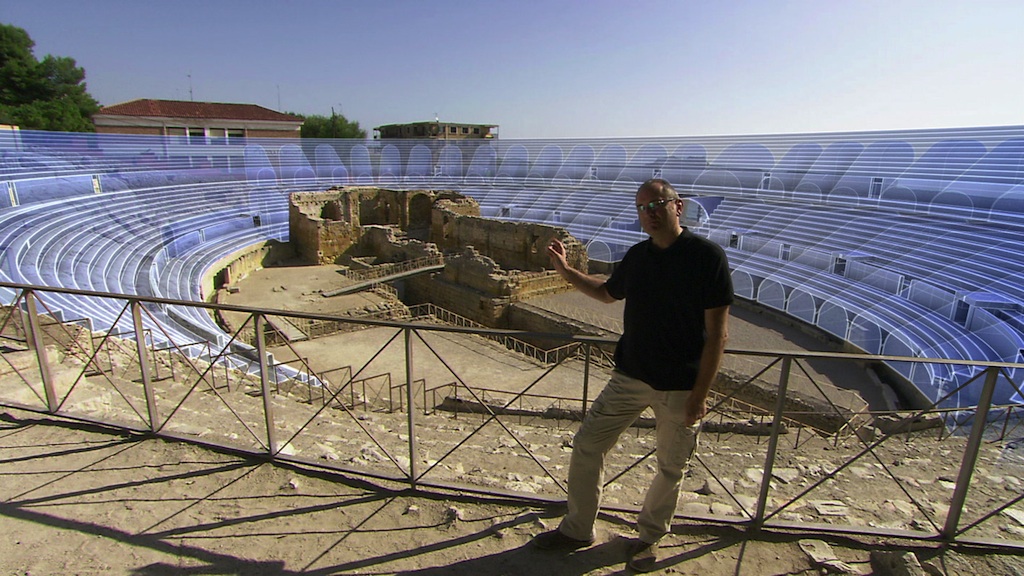
RTVE presented the documentary series this Tuesday at the Tarragona Theater Roman Engineering. The ingenuity of Rome at the service of the people, RTVE's first interactive special. The series is a co-production of TVE, Digivision and Structuralia that explains the challenges that Roman engineers faced to build prodigious works and connect the vast territories of the Roman Empire. The first two episodes of the series will air on Saturday, October 24 at 5:05 p.m. on La 2.
In the presentation, Samuel Martín Mateos, director of Culture and Society of TVE, explained that "with this series TVE fulfills three of its public service television objectives: cultural dissemination, the dissemination of our historical heritage and the technological avant-garde."
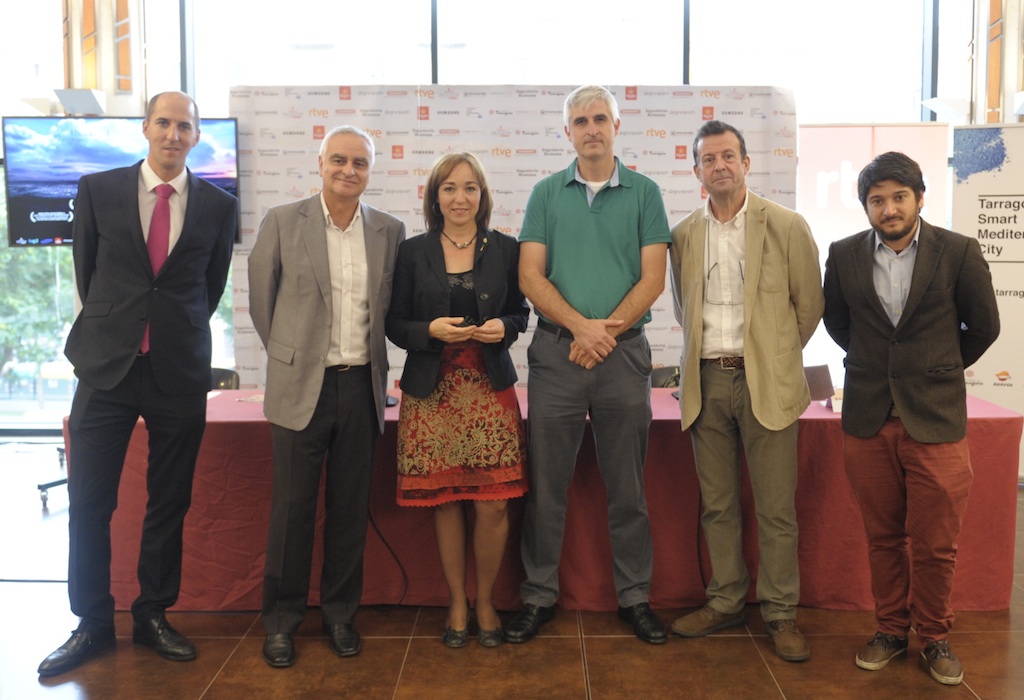 TVE's executive producer, Andrés Luque, added that TVE was interested in the project because it adapted to the contents of La 2 and because it was a project made in Spain, with an international vocation. “It is a series comparable to any international production profile,” he commented.
Begoña Floría, Deputy Mayor and Councilor for Heritage and Culture of the Tarragona City Council, recalled that with this series the projection of the city at an international level is reinforced: "If you want to see a theater you go to Mérida, some Roman baths, to Bath, the Colosseum to Rome. But if you want to know how the Romans lived, you come to Tarragona."
For the president of Structuralia, Andrés Serrano, “we wanted to convey what the archaeologist feels when seeing the ruins and make it available to the general public.” He also explained the importance of technology and how they have provided the city of Tarragona with six points where, through a mobile application, virtual reality images can be seen.
The director of the series José Antonio Muñiz has explained that the series seeks to be an educational series "because when it is understood, it entertains." Furthermore, he highlighted that it is an ambitious project in animation and innovation with virtual technology and of maximum rigor.
And Alberto Fernández, deputy director of content and transmedia at RTVE Digital, has detailed the work that the RTVE Lab has done to be able to offer the web viewer of the series 360º images and virtual reality, as well as extra content. “It is important that the viewer enjoys these videos and can virtually immerse themselves in the city of Tarragona.” And he has highlighted the importance of virtual reality, which will be one of RTVE Digital's bets for 2016.
Colossal works of engineering
During the Roman Empire, colossal engineering works were built, some of which have survived to this day, such as the aqueducts of Nimes or Segovia or the theater of Mérida. Roman Engineering, presented by Isaac Moreno, shows how they were built and describes the ability of the Romans to assimilate and accept the knowledge they collected from diverse sources, such as ancient Greece, and then perfected.
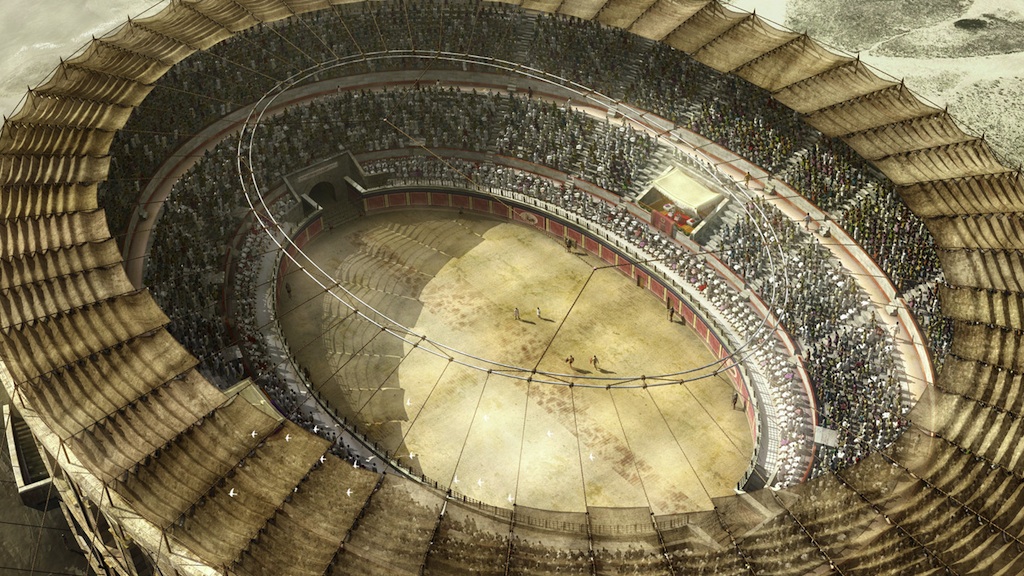 Directed by José Antonio Muñiz, it consists of eight episodes that show how they built great works designed to communicate their vast territories, dominate the waters and have extraordinary cities.
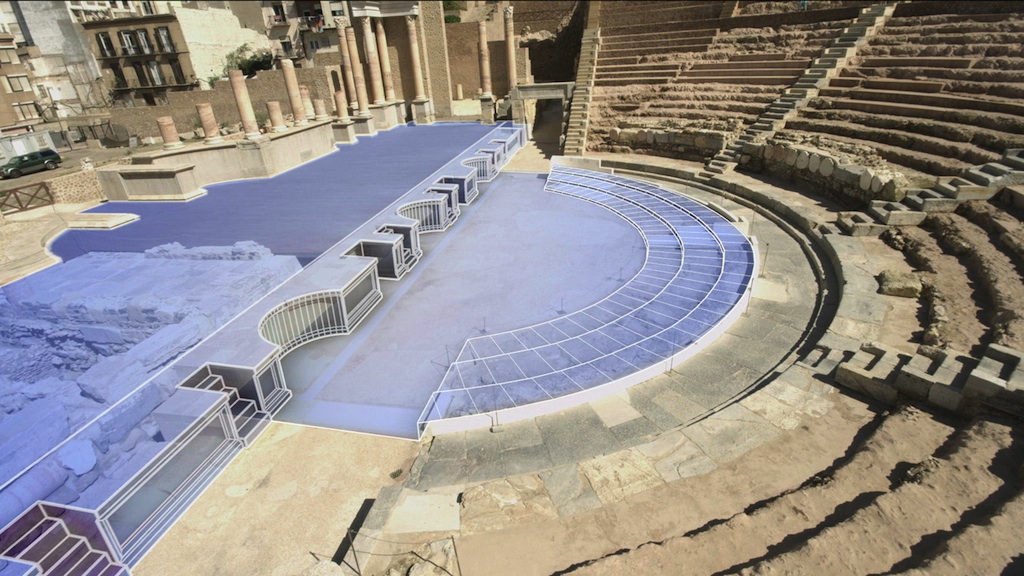
The series shows the challenges they faced, how they addressed them and resolved them in colossal works, such as the Cartagena Theater or the Colosseum in Rome. The series travels around the world, and especially the Iberian Peninsula, to discover the remains that remain. The viewer will discover a glorious past that will leave them surprised and amazed and that will make them ask themselves the question: how is it possible that such a splendorous empire, and such an advanced style and standard of living, disappeared so abruptly?
Immersive technology
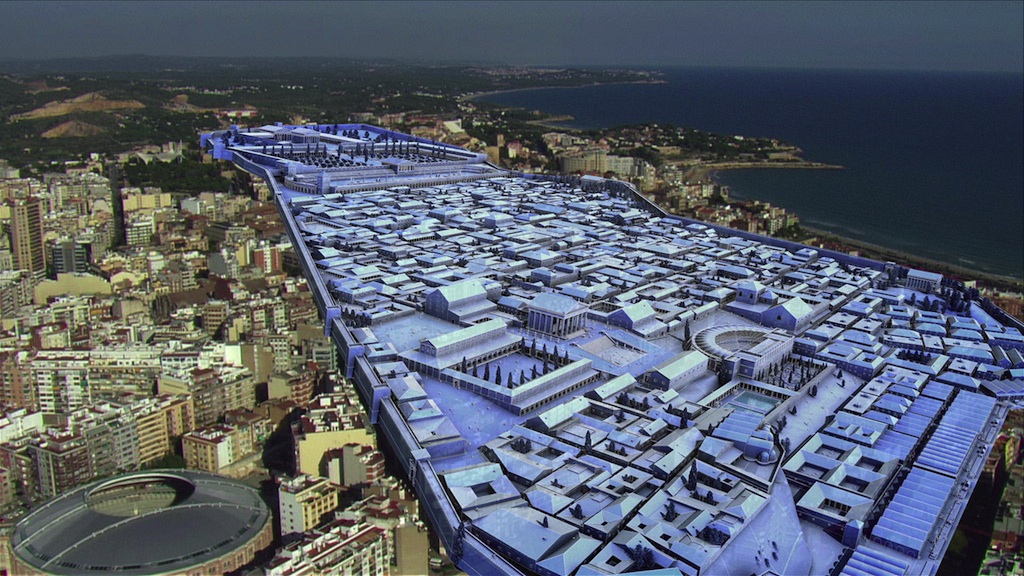
This is RTVE's great commitment to immersive audiovisual technologies. The RTVE Lab has created its first interactive special with virtual and augmented reality videos. The user can see current Tarragona and ancient Tarraco on their mobile or tablet with 360º videos that reproduce some of its most impressive monuments, such as the circus, the amphitheater or the cult temple. You will learn some of the secrets about the construction techniques of that era of splendor and you will be able to access a virtual reality App to experience in first person the reconstruction of enclaves of which hardly any remains remain. This is a transmedia project developed in collaboration with the documentary authors that allows you to make the most of technology to live in the shoes of a citizen of the Empire.
[youtube]https://www.youtube.com/watch?v=pH1szYDEovY[/youtube]
Did you like this article?
Subscribe to our NEWSLETTER and you won't miss anything.
Related articles
 The Kings League takes advantage of augmented reality with wTVision
 Cherry Wallis makes the most of DaVinci Resolve for her videos on her 'Harry Potter' channel on YouTube
 Mo-Sys offers a pre-assembled kit for virtual and augmented reality to the market
 Moov chooses Brainstorm for the creation of augmented reality, graphic animation and virtual scenery
 The match between Real Madrid and RC Celta offered the first augmented reality experience for smartphones in a stadium
 Televisions will present their advances in augmented and virtual reality at the Malaga Observatory
 Sony takes advantage of artificial intelligence to facilitate video production
 Moncada y Lorenzo begins the distribution of Mo-Sys augmented and virtual reality systems
 Odyssey expands the documentary experience beyond television with augmented reality
 Secuoya and HP sign an agreement for the development of virtual and augmented reality solutions
 ChyronHego develops a joint solution with Mo-Sys for virtual and augmented reality
 Elemental leverages Amazon cloud to deliver highly differentiated viewing experiences
 Shotoku partners with CamMate to develop supports for virtual and augmented reality
 'Imperium': Antena 3 recreates the pomp of the Roman empire in Cinecittà