





Cintel allows the restoration of Mexican cinema classics
Cinema Arts uses Cintel Film Scanner, DaVinci Resolve Studio digital grading solution, and Thunderbolt technology to scan and restore Mexican film backgrounds.
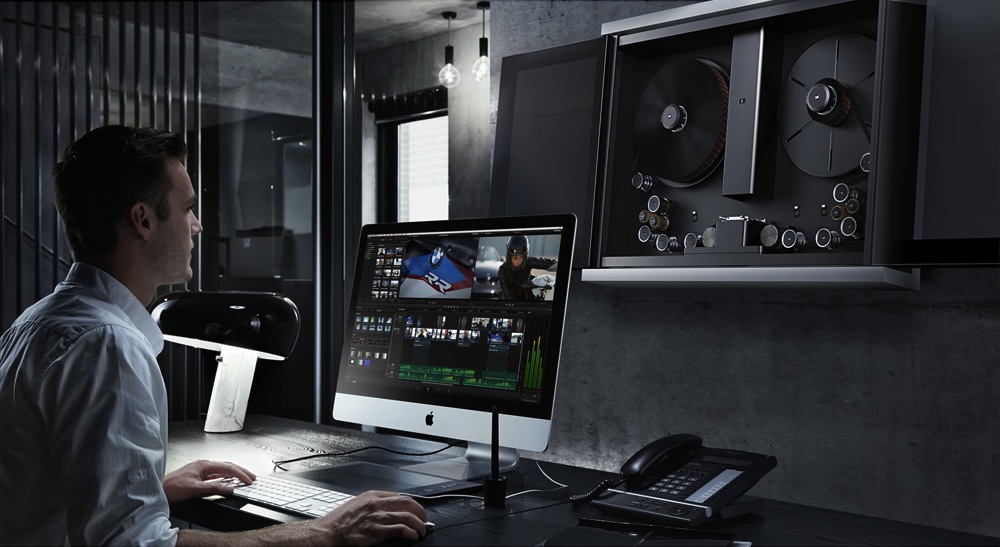
Blackmagic Design's Cintel scanner has allowed Cinema Arts, a subsidiary company of the Vasallo Vision group, to restore more than 20 classics of Mexican cinema that will be distributed to the Cine Nostalgia and Cine Estelar channels, aimed at Spanish-speaking audiences.
Ambos broadcasters también funcionan bajo la órbita de la cadena de TV Vasallo Vision, y su programación incluye diferentes tipos de largometrajes, tales como películas del oeste, de acción, comedias y dramas de la década de los 50, 60 y 70 en alta definición. A su vez, estos contenidos son difundidos a través de plataformas televisivas como DirectTV, AT&T, Verizon, Cox y Frontier, e incluso mediante el Canal 41 en Miami, perteneciente a America TeVé. Este último le encargó a la empresa Cinema Arts, situada en México, que convirtiera una gran cantidad de cintas de 35 mm al formato HD digital.
Carlos Vasallo, executive director of Cinema Arts, recognizes that "it is not about restoring films. Our objective is to achieve the best quality and be faithful to the artistic and historical work of the original producers, directors and scriptwriters."
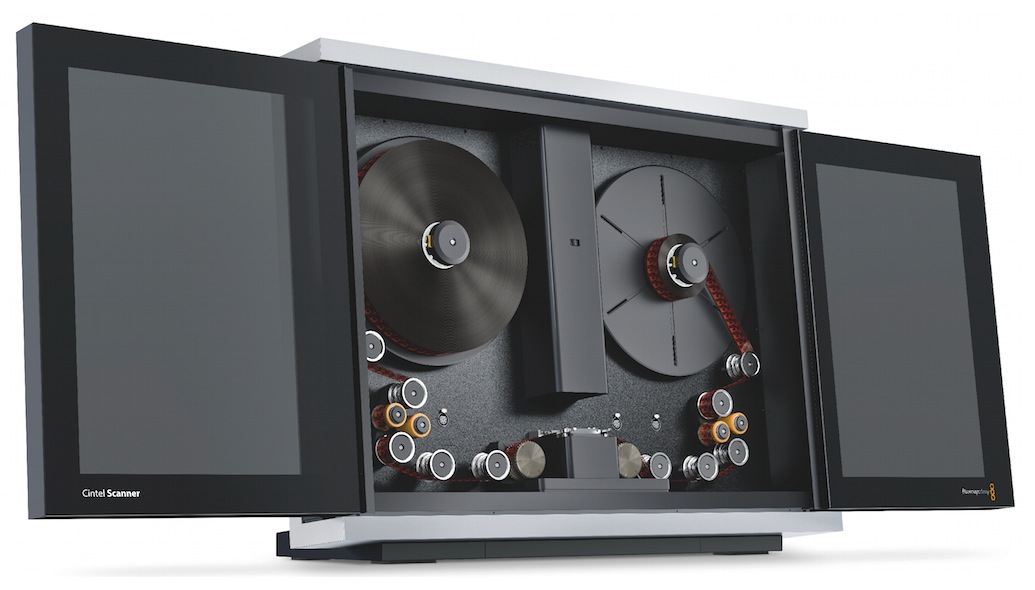
More than 2,000 restored films
Over the last three decades, Cinema Arts has restored one thousand of the two thousand films preserved in the Cine Nostalgia and Cine Estelar archives, which range from 35 mm tapes to films in Full HD resolution. The company's goal is to achieve complete material migration before the end of 2016, with the help of the Cintel scanner. Consequently, in order to meet this tight deadline, Cinema Arts decided to purchase one of the first Cintel scanners in Mexico.
Vasallo highlights that "thanks to Thunderbolt technology and the perfect integration capacity offered by DaVinci Resolve Studio, the Cintel scanner has allowed us to restore films much faster than other similar products on the market. In just a few weeks we were able to convert more than 20 films. That is to say, we did it in less than half the time than before. The people who attended our training on Cintel had the same perception. Many had tried other models, but were completely surprised with the performance of this equipment. Once "If we incorporate the accessories to process audio and 16 mm films, the results will be even better, and the time each project takes will be reduced exponentially, so we will be able to achieve our goal more easily."
The procedure for restoring tapes from this company is based on the Cintel Film Scanner device, the DaVinci Resolve Studio digital grading program and Thunderbolt technology. First, staff remove visible physical damage, and then use the scanner, which connects to a Mac computer system via a Thunderbolt port. In this way, it is possible to scan the content in real time. Cintel's calibration capability gives staff the ability to make digital adjustments and obtain a final DPX file with quality equivalent to the original.
"The calibration tool takes into consideration the photographic and chromatic quality of the original tape. This has allowed us to correct between 70 and 80 percent of the normal deterioration caused by use," Vasallo added.
Once the content is scanned following the parameters established by the production and post-production teams, the files are downloaded and converted to the DPX digital format before beginning the grading phase in DaVinci Resolve Studio. There is no need to reload or transfer material.
The Cinema Arts restoration project includes feature films from the golden age of Mexican cinema, with actors such as Andrés García, Jorge Rivero, Sasha Montenegro and Maribel Guardia, among others.
Did you like this article?
Subscribe to our NEWSLETTER and you won't miss anything.
Related articles
 Blackmagic URSA Cine 12K LF allows you to film scenes from the 'LAID' series in 4K at full frame and 220 fps
 ITV Content Services highlights its classics with the Cintel G3 HDR+ scanner
 Digital Sprockets trusts Cintel to restore classics of Mexican cinema
 Grass Valley equips the Mexican Canal Judicial
 The Cintel scanner allows the recovery of archival material for the documentary 'George Michael: Freedom'
 The Doré Cinema and the Conservation and Restoration Center celebrate World Audiovisual Heritage Day
 Cherry Towers launches new 4K digitization, restoration and cataloging infrastructure
 The Mexican satellite Centenario disintegrates seconds after its launch
 Mexican Cinema Exhibition, from May 23 to 28 at the Sala Berlanga
 EVS allows the Éclair group to distribute the films at the Cannes Film Festival
 'Presumed guilty', the most viewed Mexican documentary in history
 Cintel Origin, a new step in restoration
 'Chicogrande', by Mexican Felipe Cazals, will open the San Sebastián Film Festival
 MOG enters the Mexican market with Excellence