





The Cintel scanner allows the recovery of archival material for the documentary 'George Michael: Freedom'
The documentary produced by British television Channel 4 includes never-before-seen archive footage, as well as current interviews with artists such as Elton John, Stevie Wonder and James Corden.
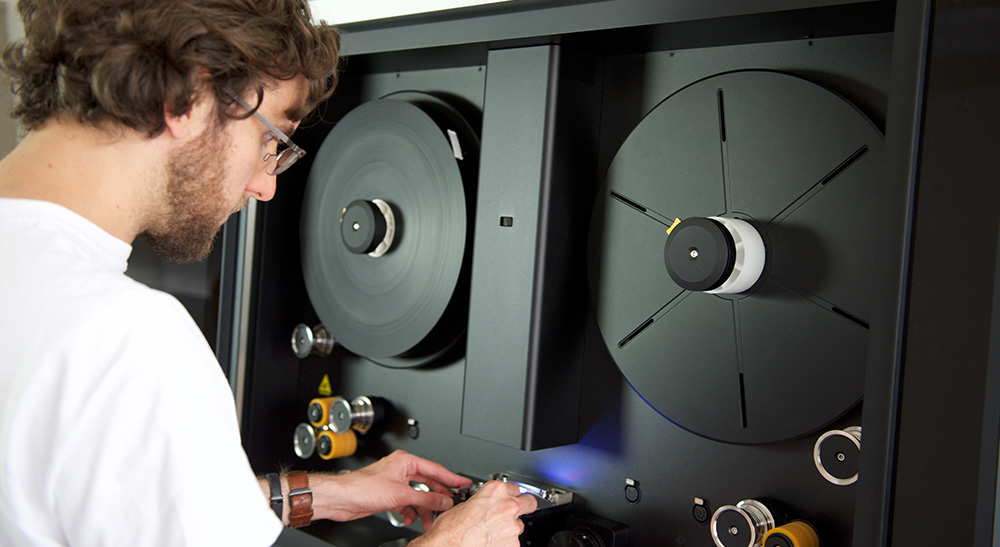
The Cintel scanner Blackmagic Design It has been used by the British television channel Channel 4 to digitize footage shot on 16 and 35 mm film. for his autobiographical documentary titled George Michael: Freedom.
The 90-minute film shows the biography of one of the most influential artists in modern history. Narrated by George Michael himself, it reveals candid details of his life, from his ill-fated first love to his infamous court battle against Sony, which challenged the way the music industry approached recording contracts.
The documentary includes never-before-seen archival footage, as well as current interviews with artists such as Elton John, Stevie Wonder and James Corden. The task of uniting all these different sources was entrusted to the producer and post-producer Headjar Productions, owned by editor Gwyn Moxham, which completed the first version of the film.
Colorist Dan Moran, from the London post-production studio Coffee and TV, graded and finalized the documentary with DaVinci Resolve Studio.
Moxham acknowledges that "our biggest challenge was figuring out how we would unify all the footage in order to incorporate the recent interviews, which had been recorded with an Ursa Mini 4.6K camera. We worked with multiple formats, from Video 8 and Betacam SP tapes to HDCAM units, among other types of tapes."
In addition, he added that “not only were there more than 18 meters of masters that were only from the video clip Freedom! 90, but we also discovered tour reels Faith, as well as essays for MTV Unplugged, and we had to digitize them before we could review them and decide if they would work for us or not. Likewise, we find a South Bank Show program filmed on 16 mm film in which George participated during the time of Listen Without Prejudice. “We had a lot of material we had to work with.”
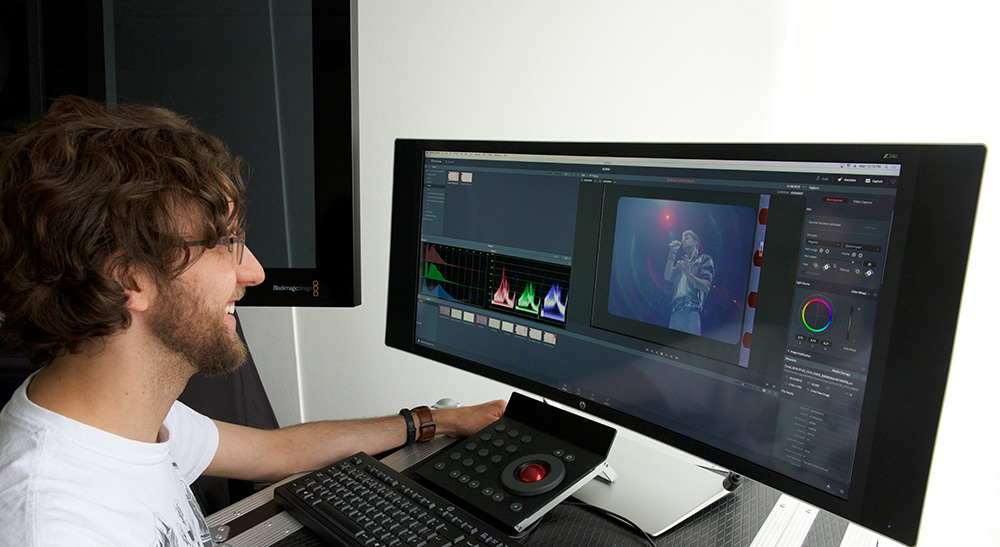
Scanning with 4K quality
Instead of using a telecine to digitize the reels, the team opted for a more affordable Blackmagic Cintel unit to scan material recorded on both 16mm and 35mm tapes. Moxham drew on his early experiences as a film projectionist to help in this process.
"Of course working with negatives made me much more nervous than working with digital images, but I never had to worry. The Cintel scanner is ideal. It is very easy to install and, once connected to a computer, it is very intuitive to use, even if you have never worked with this type of film before," adds Moxham.
Thanks to Cintel, Moxham was able to digitize more than nine meters of tape from the final rolls in 4K quality and in real time. Each shot was compared to the original video clips for accuracy, and once fully restored, Jerry Chater completed the editing process. “Working on this project was a great experience, especially because I had the opportunity to see Freedom! 90 remastered in 4K, video clip that marked a milestone in the music industry. It truly was an awe-inspiring moment,” Moxham concluded.
Did you like this article?
Subscribe to our NEWSLETTER and you won't miss anything.
Related articles
 ITV Content Services highlights its classics with the Cintel G3 HDR+ scanner
 Egypt's cinematic treasures come to life with the Cintel G3 HDR+ scanner
 The Japan Archive prepares its films to make the leap to streaming with Cintel
 Bolivian Cinemateca Foundation restores its historical collections with a Cintel scanner
 Blackmagic's new Cintel G3 HDR+ scanner digitizes UHD HDR images in real time
 Blackmagic's Cintel scanner, used to digitize hundreds of hours of 'Playing with Sharks'
 Cintel scanner and DaVinci Resolve make it easy for the French Athenaeum in Tokyo to restore its funds
 Afinal Filmes restores Brazilian feature films and Hollywood silent films with the Cintel scanner
 Blackmagic will incorporate a code reader and audio in its Cintel scanner
 Cintel allows the restoration of Mexican cinema classics
 Tokyo Laboratory (Togen) installs new Cintel film scanner
The Cintel scanner and the Ursa camera awarded at the 2015 edition of the IDEA Awards
Tokyo Laboratory (Togen) installs new Cintel film scanner
The Cintel scanner and the Ursa camera awarded at the 2015 edition of the IDEA Awards
 Blackmagic will market the legendary Cintel scanner for less than $30,000
 Cintel will demonstrate the new 6K version of the DiTTo scanner at NAB 2012