





Cintel scanner and DaVinci Resolve make it easy for the French Athenaeum in Tokyo to restore its funds
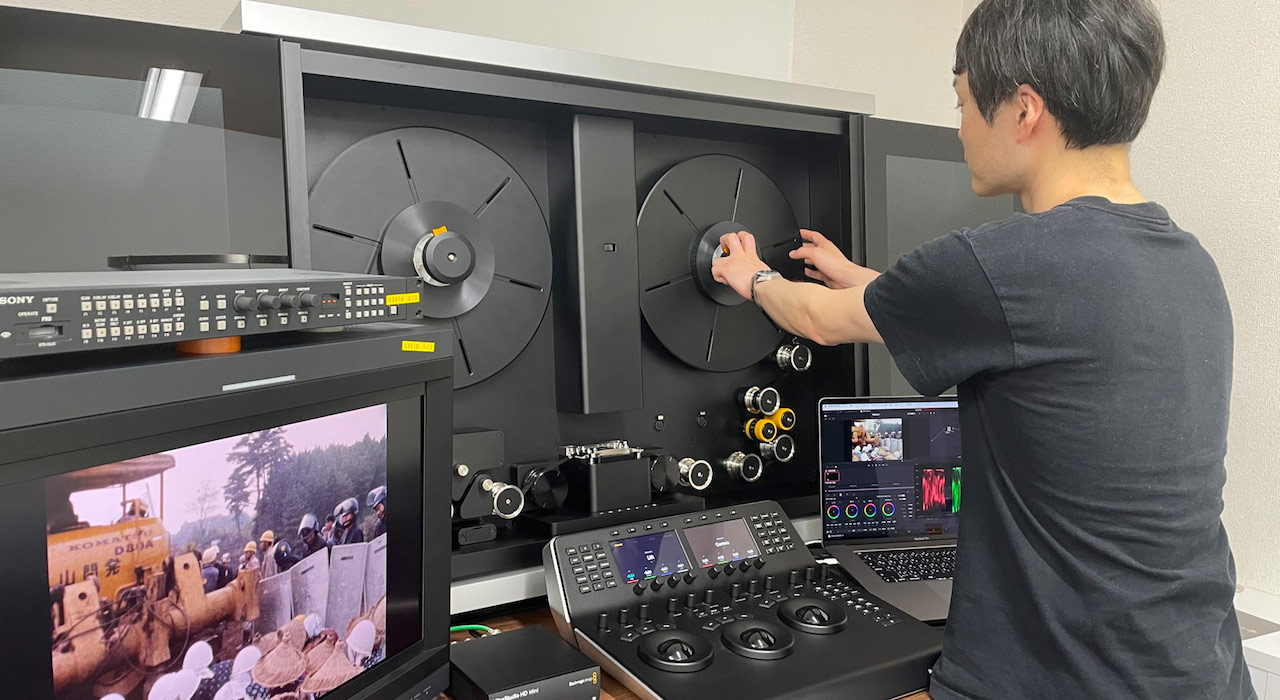
The Athénée Français cultural center in Tokyo uses the Cintel scanner (Blackmagic Design) to digitize 16 and 35 mm tapes. Additionally, DaVinci Resolve allows you to process and restore decades of old art and animation films.
Athénée Français was born from a French school with more than 100 years of history and emerged as the International Exchange division of said institution in the 1970s, in order to achieve an international exchange between France and Japan through seminars, workshops on cinema and films, which were screened all over the world. Eventually, it became an independent organization and has participated in different film screenings and productions, for example in creating subtitles and DCP versions of the films.
One of the cultural center's tasks has been to manage the digital restoration of old tapes, which, due to the high price of the physical support, was always outsourced to other laboratories.
Yukihiro Akamatsu, from Athénée Français, comments that "we had wanted to change the dynamics of digitization to in-house production for a long time, so we considered installing a Cintel scanner as soon as it was launched on the market. However, when thinking about the computer equipment and peripheral accessories that would be needed to carry out all the processing, we decided to postpone the purchase. Finally, today peripheral devices are much more specific, while the price is cheaper, so we decided it was time to install the scanner. “We chose the Cintel model thanks to its profitability and speed, which allowed us to digitize the material in real time.”
The center regularly screens various independent films and plans to digitize content such as old Russian feature films, art films from the 1970s, Japanese documentaries from the 1960s and 1970s, and other domestic independent films from the 1990s. "For example, we have restored old works by director Takahisa Zeze, made in the 1990s from original negatives and screened retrospectively in March this year. In addition, we have been restoring various documentaries by director Shinnosuke “Ogawa.”
"The Cintel scanner is compact, so we didn't have to worry about where to install it. It's even very simple to use and is designed to be able to handle the tapes with great care. On the other hand, it is an advantage to be able to review the video and audio in real time during scanning. We have hundreds of old films and we used to use a German editor to monitor the condition of those tapes. However, it has been difficult to maintain it, so now we also use the Cintel to view the contents," he continues.
In addition to the Cintel scanner, Athénée Français uses other Blackmagic solutions, such as ATEM Television Studio switchers, UltraStudio 4K, UltraStudio HD Mini and UltraStudio 3G units, Teranex AV converters, Smart Scope Duo and SmartView HD monitors, DaVinci Resolve Mini Panel devices, and HyperDeck Studio recorders.
"We bought the ATEM switcher to switch signals during screening events, but currently we mainly use it for live streaming over the Internet. The DaVinci Resolve Mini Panel is extremely portable, so we can take it anywhere, for example, to the scanning room to polish the colors during the process, or to the studio to achieve more precise grading on the scanned material," says Hirotaka Kuwahara, who participated in a post-production at Athénée Français.
Cintel and DaVinci, the perfect duo
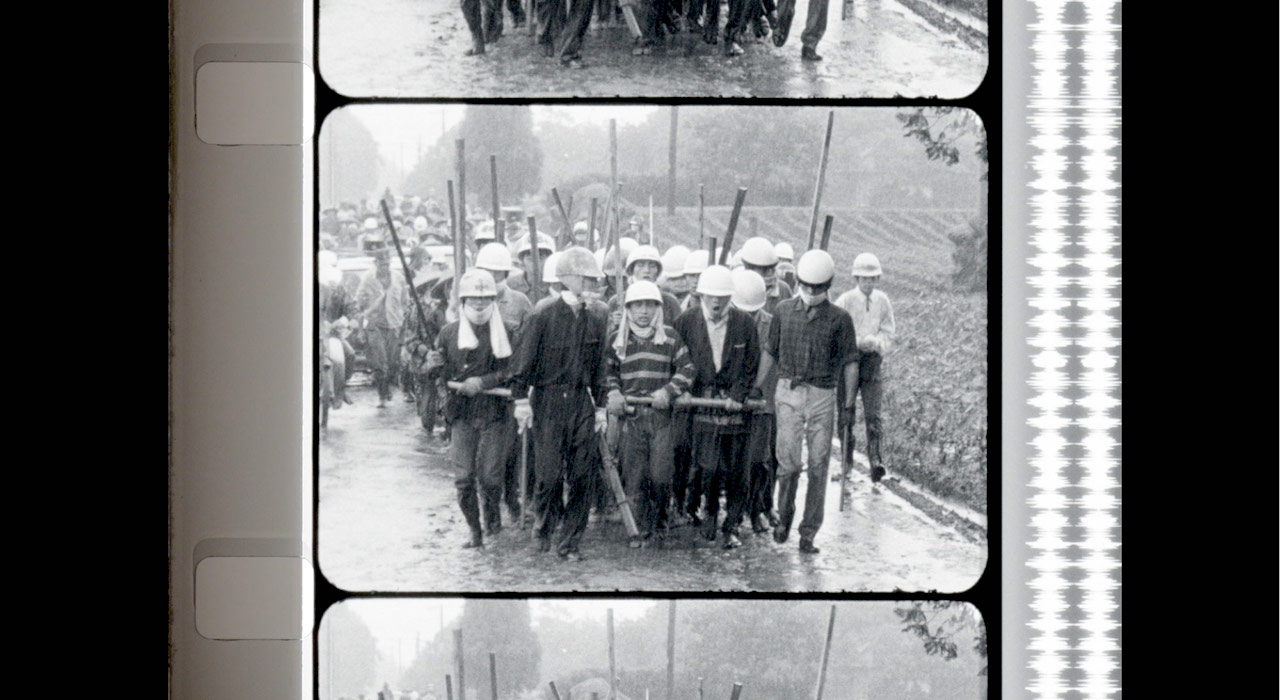
On the other hand, he adds that "working with the Cintel and DaVinci is a big advantage. Because I handle old tapes, it is necessary to fix color deterioration, as well as the presence of dust, grain and marks. DaVinci Resolve helps to achieve all that. By having the Resolve Mini Panel device, I was also able to make more precise adjustments during grading, something that is not possible to do by looking at the interface and using a mouse."
"Working at screenings and film festivals, I have realized that there are many beautiful films that are not seen and are simply forgotten. Of course, we have restored recognized works of art, but the independent feature films that we are used to are not digitized due to budget problems. In addition, the cinemas that have the possibility of reproducing these films are fewer and fewer, so it is more difficult for them to be projected. There are even some digital masterings for broadcast on television and DVD that do not present the quality enough for cinema. I want to share these works with the public with extraordinary quality through the Cintel scanner,” concludes Akamatsu.
Did you like this article?
Subscribe to our NEWSLETTER and you won't miss anything.
Related articles
 ITV Content Services highlights its classics with the Cintel G3 HDR+ scanner
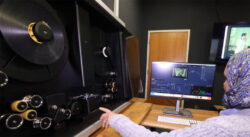 Egypt's cinematic treasures come to life with the Cintel G3 HDR+ scanner
 Moon Garden’, from 35 mm to digital with Cintel and DaVinci Resolve Studio
'Moon Garden', from 35 mm to digital with Cintel and DaVinci Resolve Studio
Moon Garden’, from 35 mm to digital with Cintel and DaVinci Resolve Studio
'Moon Garden', from 35 mm to digital with Cintel and DaVinci Resolve Studio
 Cintel and DaVinci Resolve give new life to ‘Perth’, a Super 16 film
Cintel and DaVinci Resolve give new life to 'Perth', a film shot in Super 16
Cintel and DaVinci Resolve give new life to ‘Perth’, a Super 16 film
Cintel and DaVinci Resolve give new life to 'Perth', a film shot in Super 16
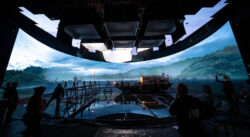 Basis Berlin processed the reality-blending images and LED backgrounds of the '1899' series with DaVinci Resolve
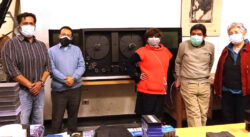 Bolivian Cinemateca Foundation restores its historical collections with a Cintel scanner
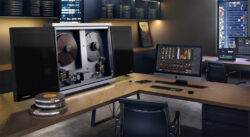 Blackmagic's new Cintel G3 HDR+ scanner digitizes UHD HDR images in real time
 Artone Film in Tokyo installs Blackmagic's DaVinci Resolve Advanced Panel
 DaVinci Resolve, protagonist of the online training of TUIS students (Tokyo)
 Digital Sprockets trusts Cintel to restore classics of Mexican cinema
 Blackmagic will incorporate a code reader and audio in its Cintel scanner
 Blackmagic will market the legendary Cintel scanner for less than $30,000