





The audiovisual sector will grow with less employment and more working hours
The Atresmedia Foundation and the PwC Foundation publish the study 'Jobs of the future in the audiovisual sector'.
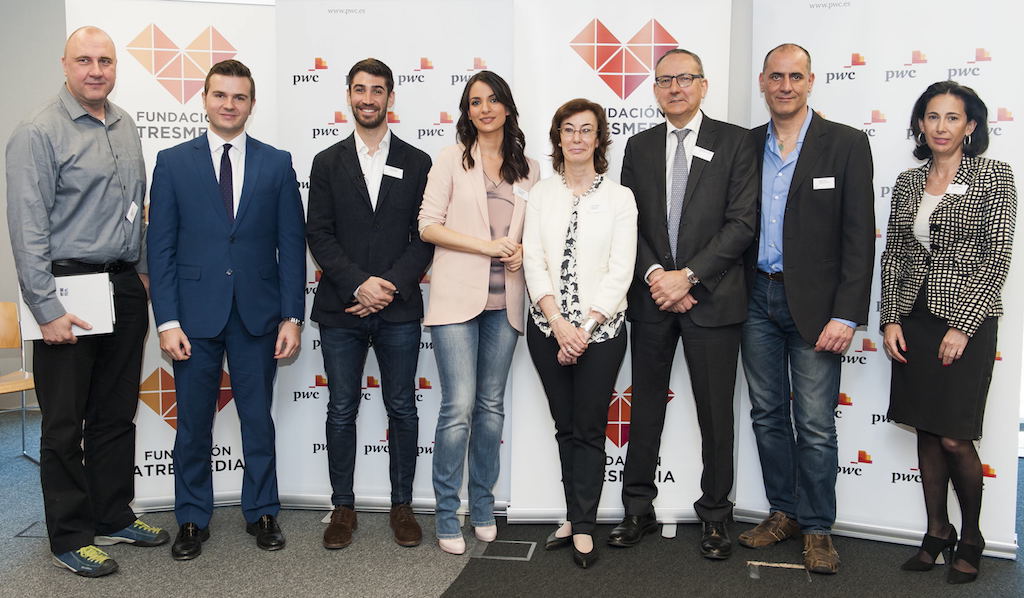
The Atresmedia Foundation and the PwC Foundation have presented the study The jobs of the future in the audiovisual sector. Of great relevance for the training of current and future professionals in the sector, its main objective is to identify the new types of jobs that will be generated in the coming years and the capabilities and skills that will be needed.
How will current jobs evolve, which positions will disappear and which will be created? What knowledge will be valued most? In what areas will new types of employment be developed and what will they be? Do the profiles that will be in demand in the future currently exist?
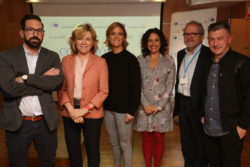
The president of the PwC Foundation, Jesús Díaz de la Hoz, highlighted following the presentation of this report that one of its strategic lines is to "promote employability, with a special focus on the youth group", for this reason it has been "a pride" to participate in this study to analyze the employment of the future and he recalled that the entity's mission is to "put the capabilities of our professionals at the service of society's challenges and act as a catalyst for change."
For her part, the director of the Atresmedia Foundation, Carmen Bieger, has indicated her concern about the current rates of youth unemployment. “We aspire to be part of your solution, which is why this study takes on special relevance by becoming a solid tool with which to design training and job placement projects.”
The manager of PwC's Entertainment and Media sector, Jorge Planes, presented the main conclusions of the study. Jaume Gurt, director of Organization and People Development at Schibsted Spain, participated in the subsequent debate; Luis Martín, CEO of Barrabes.biz, and Pedro Clavería, Co-founder and Managing Director at Cuponation Spain, Italy and Mexico.
 Survey among a hundred managers
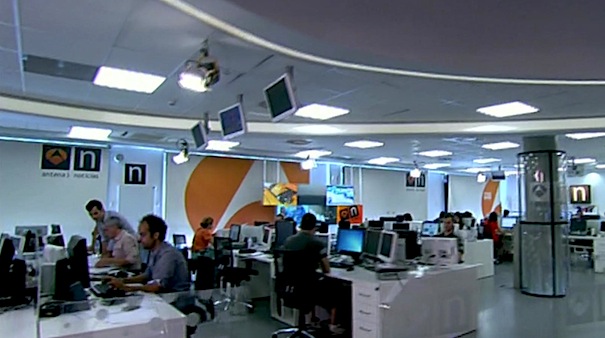
The study, promoted by the Atresmedia Foundation and the PwC Foundation, was carried out based on a survey carried out between January and March 2016, in which more than 100 human resources managers collaborated, as well as numerous experts from the most relevant companies in the Spanish audiovisual panorama. Likewise, three Focus Groups have been carried out with professionals from the sector and from the academic and employability fields. Another source used has been an analysis of market information.
The data collected highlights that the work areas with the greatest employment growth will be: animation and 3D, video games, content networks and marketing and multimedia. Traditional media (press, outdoor advertising, news agency) will be those that present the greatest risk of a decrease in the number of jobs. It also reveals that more audiovisual content will be used, which will cause the sector to grow, however, there is a trend towards less employment and more work.
Regarding the professions that will generate more employment, professions related to content creation, programming and IT development will have high growth. On the contrary, those that will generate the least employment will be those that have a manual component (camera, decoration, styling), which will be more easily replaceable by technology. The new professions will focus on areas such as Big Data, cybersecurity, cloud computing, application development and MCN networks (content aggregation). These professions, along with robotic intelligence or virtual reality, will begin a stage of consolidation in the coming years, which will lead them to generate a greater number of jobs.
 Professional profile
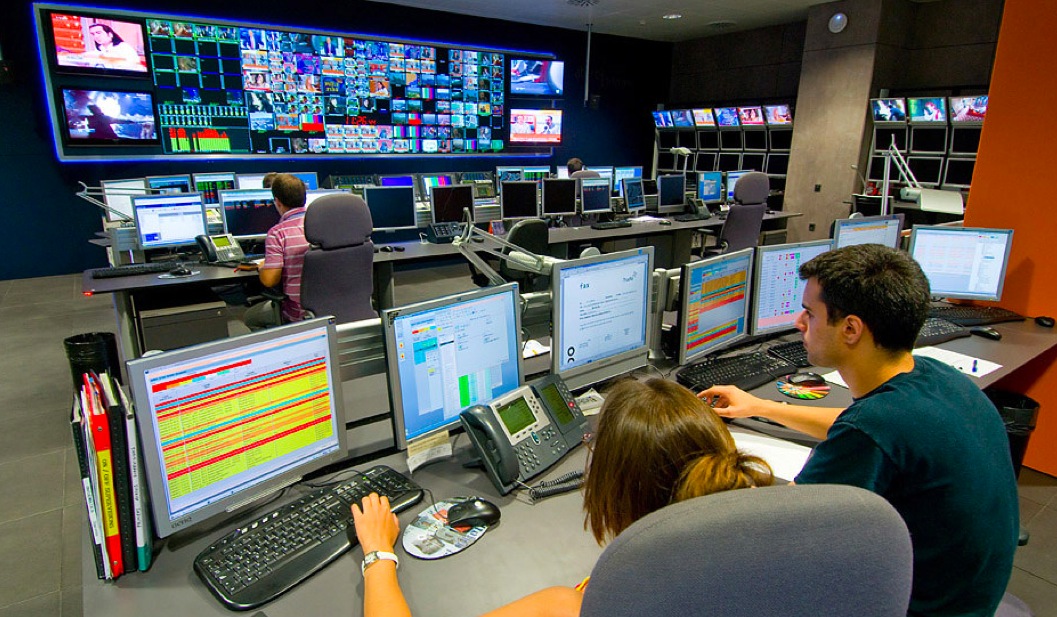
Regarding the type of profile needed, more specialist than generalist profiles will be in demand. In addition, they will be expected to be multipurpose and to be continuously recycled. General knowledge will be mainly related to the technological field, although knowledge of marketing and advertising or mathematics will also stand out.
For the employees of the future, it will be key to acquire, in addition to knowledge, technical skills, such as multilingualism or the adaptation of the business model to digital transformation, and develop personal skills, such as the capacity for innovation, teamwork, flexibility, leadership and people management, among others.
Likewise, employers will also need to develop skills and capabilities to get the most out of employees in the years to come. Thus, they will need to enhance skills related to empathy, the ability to understand and flexibility in order to retain talent. For their part, the employees of the future must be flexible in the face of changes, and will require a proactive attitude in training and in the search for professional projects.
The main environment for the development of personal skills will be the family and school; For technical knowledge it will be universities, companies and Vocational Training centers. Precisely, vocational training, with its numerous and varied training cycles, is positioned as one of the educational fields with the greatest capacity to cover the training demand that the jobs of the future will require.
The conclusions of the study also show that the jobs of the future will be an opportunity to improve the labor integration of people with disabilities. Thus, technological development will open the door to the labor market for people with disabilities, facilitating their training and providing them with greater opportunities. And, in addition to improving their image and materializing principles of inclusion, solidarity and diversity, companies will benefit from the values they bring and which are closely related to the new needs of the jobs of the future, such as positivity or the ability to excel.
Did you like this article?
Subscribe to our NEWSLETTER and you won't miss anything.
Related articles
 The SETT announces to the Galician Audiovisual Cluster its support mechanisms for the audiovisual sector
 Spain Audiovisual Hub publishes the 2nd Report on the audiovisual sector
 Diboos and MIA will fight to promote the employment of women in the animation sector
 Vitec streamlines workflows helping broadcast professionals do more with less
 Streaming, at low times: slowdown and fewer subscriptions
 What advantages and risks will 5G mean for the audiovisual sector?
 The audiovisual sector analyzes the presence of people with disabilities in the profession
 Weereel: new professional employment platform in the audiovisual sector
 Digital Agenda will create a working group to address the gender gap in the technology sector
 Sony and Swisscom present the industry's first fully virtual workflow
 David Shing, at MABS2017: “you have to concentrate on the story and less on how to tell it: more story and less telling”
 Atresmedia Formación and iFP-Grupo Planeta aim to promote FP in the audiovisual sector
 Atresmedia Formación: an initiative that aims to contribute to the progress of the audiovisual sector
 The telecommunications sector had a turnover of 38,000 million euros in 2011, 4.6% less