





Huawei aims to speed up the digital transformation of the media
Huawei seeks to develop new media architectures in the digital era and how to drive media business innovation using ICT technology.
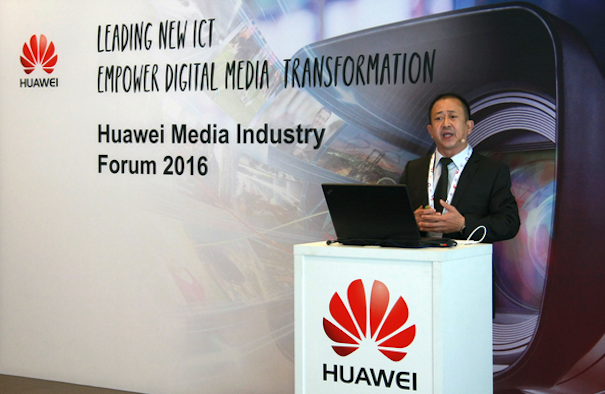
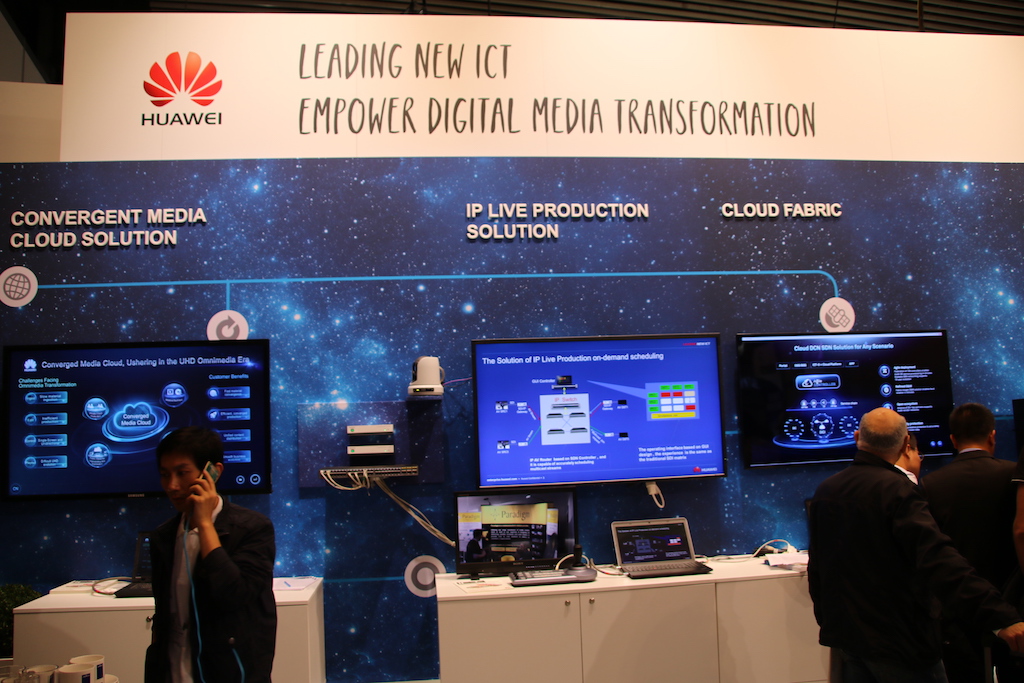
An IBC 2016, Huawei and its partners jointly demonstrated their latest ICT solutions. Some of the products showcased included the converged media architecture developed using innovative ICT technology, IP-based ingest and playout solution that supports flexible service escalation, and 4K program production and playout system with superior audio and video experience. During IBC, Huawei successfully held the third Global Media Industry Forum which attracted hundreds of customers, partners and analysts from around the world, including the United Kingdom, France, Spain and Indonesia. Industry leaders and experts shared their views on how to develop new media architectures in the digital era and how to drive media business innovation using ICT technology.
Nube e IP
The global media industry is undergoing a complete digital transformation, and this evolution has accelerated in recent years. Media companies are looking for effective methods and innovative ICT technologies to improve the quality of information service.
Joe So, CTO Industry Solutions, EBG Solutions Marketing and Sales Department, Huawei, said: "During this digital transformation, ICT technology has changed from a mere business support to a key measure that drives business development. To continue its success, media groups must coordinate 'Cloud-Pipe-Device' and use innovative ICT technology to create open media information service platforms that support real-time data sharing and full-time connection."
The radio and television business involves the time of massive processing of high-quality audio and video data. Traditional networks and cloud architectures cannot cope with the strict service requirements. Huawei uses its latest solution, cloud on desktop, which includes HD, 8-track and dual-screen video editing to attract customers in the United Kingdom, France and Italy. As an example, Huawei Desktop Protocol (HDP+) intelligently identifies video, texts, windows and lines used in non-linear editing applications, and compresses these contents (lossy or lossless) based on service requirements to ensure VM transmission efficiency and VDI quality. Dual-screen editing and voice ingest features deliver physical workstation-level editing experiences. This desktop cloud has been successfully deployed at several global media institutions such as TF1.
The evolution of 4K, SDN and 40GE IP technologies allows television broadcasters to modernize their current systems to all-IP architectures. During IBC 2016, Huawei and Sony jointly demonstrated the IP production system, attracting the attention of many. Peter Sykes, Director of Strategic Technology Development, Sony Professional Solutions Europe, said: "Sony uses the AIMS Alliance to regulate business operations and develop on-site, real-time, IP-based production solutions. To ensure the success of the project, Sony must work with partners, such as Huawei, to improve interoperability and robustness."
New ecosystem
In recent years, the media industry has gone through major changes. Both media institutions and Internet service vendors in the industry are looking for strong technological support, so they can focus on high-level strategic business operations. Huawei takes advantage of its accumulated experiences in technologies and excellent capabilities in innovation to contribute to the development of the industry.
Based on customers' business needs, Huawei carries out open cooperation and joint innovation with industry-renowned Internet service providers such as Sony, Dalet and VSN. To date, Huawei has enabled more than 1,000 media groups to reshape and improve ICT architectures, such as France's TF1, Italy's RAI, Mediaset, UK's SKY, South Korea's KBS, Hong Kong's Phoenix TV, Mainland China's CCTV, and many more.
Did you like this article?
Subscribe to our NEWSLETTER and you won't miss anything.
Related articles
 RTVE's news programs focus on digital transformation and transversality
 Grass Valley accelerates its digital transformation with a strategic plan
 'The digital transformation of radio' from the perspective of 35 professionals
 Almudena Ariza will direct TVE News and its digital transformation
 NextRadioTV accelerates its digital transformation and network expansion with Dalet
 Grass Valley aims to streamline how to reach viewers anywhere and on any device
 RTVE and the Academy of Engineering create an Observatory on digital transformation of the media
 MediaContinuitySystem, the new Huelva software that aims to speed up continuity on television
 Pedro Mier: “the digital transformation has only just begun”
 The 31st Digital Economy and Telecommunications Meeting will focus on the transversality of digital transformation
 Genius Digital aims to help understand offline content consumption
 Sony aims to speed up live streaming from the camera itself with the new PXW-X400
 Ericsson drives transformation in the TV and media industry
 The EBU aims to promote digital radio with the generalization of the Euro-chip