





Manufacturers and broadcasters take an x-ray of the present and future of connected TV under HbbTv
El 5º Simposio Anual sobre HbbTv reúne en Madrid a los principales agentes de la industria para debatir sobre televisión conectada con las posibilidades que abre la última versión 2.0.1 del estándar en el punto de mira.
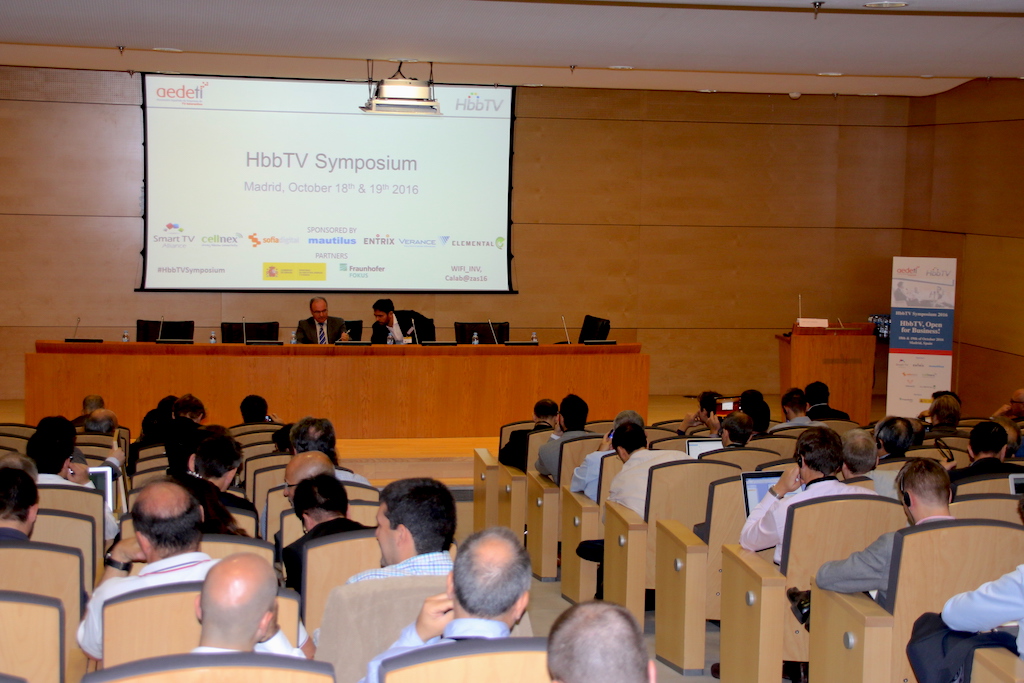
HbbTv Association, destinada a promover un estándar abierto para la distribución de servicios broadcast y broadband a través de televisores conectados y set-top boxes, y AEDETI, asociación española que agrupa a empresas y entidades relacionadas con la televisión interactiva, organizan hoy y mañana en Madrid el 5º simposio anual sobre HbbTv.
Este encuentro coincide con un momento crucial para el desarrollo de la televisión híbrida tras la publicación de la última versión del estándar HbbTv 2.0.1, cuyos primeros desarrollos podemos ver ya en Reino Unido e Italia.
Por otro lado, la Smart Tv Alliance y la HbbTv Association han anunciado una estrecha colaboración para ampliar la especificación HbbTv a servicios Over-The-Top.
Antonio Fernández-Paniagua, subdirector general de Planificación y Gestión del Espectro Radioeléctrico del Ministerio de Industria, ha sido el encargado de abrir estas jornadas y dar la bienvenida a cuantos profesionales de todo el mundo se congregan estos días en Madrid para debatir sobre el presente y futuro de la televisión híbrida.
José Luis Vázquez, presidente de AEDETI y CEO de Mirada, ha repasado algunos de los hitos más importantes que desde 2008 hasta hoy han consolidado la televisión interactiva en España. Vázquez ha reconocido el importante empuje que tanto por parte de RTVE como de otros broadcasters y fabricantes se ha dado al desarrollo del HbbTv 2.0.1 con un canal de retorno entre los receptores y el emisor. “En este sentido, estamos en el mercado español en el punto más alto del sector”, ha afirmado.
“La nueva norma de televisión híbrida 2.0.1. permite sincronización, multidispositivo, HTML5… Su publicación oficial en las próximas semanas permitirá el desarrollo de potentes aplicaciones para el usuario. Ya no estamos ante la definición de un estándar de radiodifusión, estamos ante algo vivo y estamos listos para el mercado, para el negocio”, señaló Vázquez, ante un auditorio prácticamente lleno, con cerca de 200 representantes de la industria audiovisual de España y del ámbito internacional.
El HbbTv en el mundo
Juergen Boyny, director global de electrónica de consumo en la empresa de estudios de mercado GFK, ha hecho un repaso a la situación actual de la televisión conectada en el mundo. “La conectividad está alineada con los consumidores desde la aparición de los primeros dispositivos electrónicos. Más allá de una conexión mediante cableado, la conectividad supone una experiencia diferente gracias a Internet y la movilidad”, ha asegurado.
En la actualidad, el HbbTV está disponible en la gran mayoría de los países de Europa, entre los que destaca la alta implantación de la norma en España y Alemania. En la mayoría de los territorios analizados, la presencia de HbbTV está también muy ligada a la penetración de los Smart TVs en los hogares.
La electrónica de consumo está cambiando coincidiendo con el aug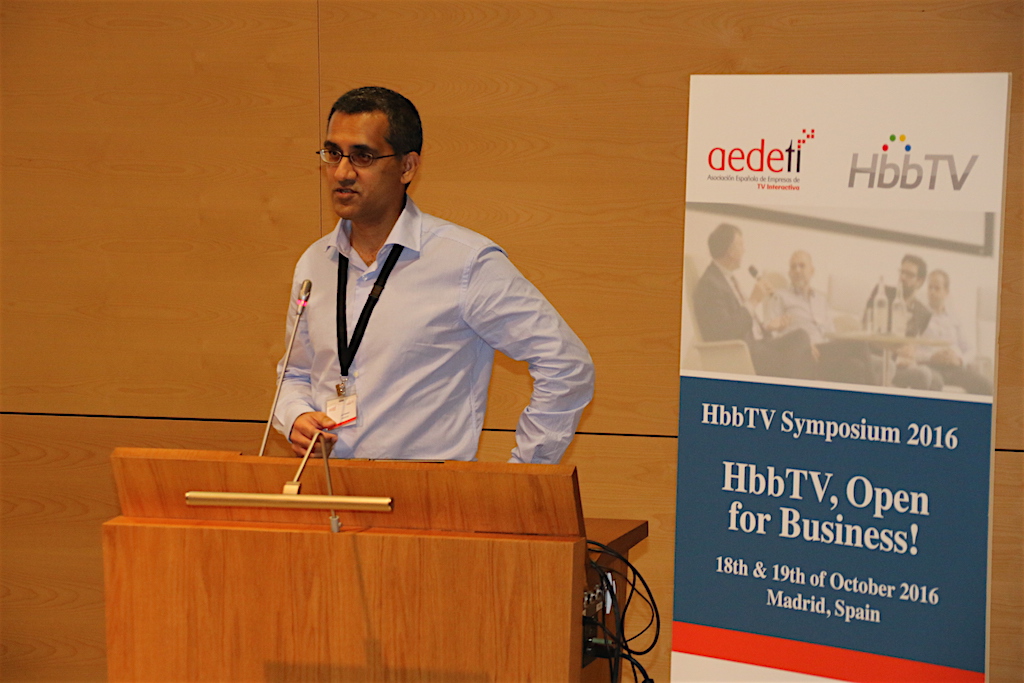 e de nuevos mercados emergentes como el africano o el indio con una tendencia a la posesión de varios dispositivos por habitante. La familia de productos conectados crece exponencialmente y lo hará aún más con la agregación de nuevos dispositivos en relación al Internet de las Cosas y al concepto “smart”, ha afirmado Boyny.
“Las consecuencias es que la industria de la electrónica está transformado un alto valor en un gran volumen con la entrada de nuevos participantes que entran en la producción de pequeños dispositivos como drones, cámaras, altavoces…”, subraya.
En cuanto a la televisión, las ventas mundiales de televisores es un mercado estable que crece lentamente (se esperan unas ventas de 231,3 millones de unidades en 2017). Según GFK los consumidores que se lancen a comprar un nuevo televisor apostarán por un gran formato de pantalla superior a 60 pulgadas (un 6% en 2017). En 2017, las previsiones marcan que el 35% de las ventas de televisores se corresponderá a televisores con resolución 4K UHD. En cuanto a televisión conectada, las pantallas de reducido tamaño no suelen contar con conexión a Internet. Sin embargo, del total de ventas, un 47% serán smart en 2017.
Boyny ha hecho hincapié en que el HbbTv está presente hoy en una veintena de países con 18 millones de televisores conectados este año y una fuerte penetración en países como Alemania, Suiza, Francia, Austria, Holanda, Estonia, Austria o Polonia.
En Alemania, por ejemplo, el HbbTv está presente en el 84% de las pantallas vendidas con un tamaño superior de 50 pulgadas, cifra que desciende al 24% para aquellas por debajo de las 32 pulgadas.
En cuanto al uso de las smarts tv, el 53% de los alemanes afirman que tienen conectado su televisor a Internet, mientras que en España ya supone el 48%. En cuanto a los servicios que utilizan, destacan aplicaciones de catch up, Youtube y VoD.
En cuanto al futuro, el consumidor, familiarizado a aplicaciones para smartphones, adoptará esta apps paulatinamente en su televisor. “El consumidor quiere ver sus contenidos favoritos sin importa de dónde proceden o cuándo se transmiten. Siempre existirán las películas en primetime pero ahora tendremos oportunidad de verla en cualquier momento. No importará tanto cuándo un contenido se programe”, ha remarcado Boyny. El usuario también demandará más información y contenidos procedentes de Internet con un nivel de detalle mayor que en el pasado. Además, subraya que “tenemos que tener en cuenta que para los consumidores es importante su programa favorito en televisión y tienen en mente servicios como YouTube, Netflix o Amazon pero no saben qué es la HbbTv. Es necesario transmitir al consumidor qué es el concepto de HbbTv para que sea tan familiar como el concepto del mando a distancia. Si un producto tecnológico no es fácil de utilizar será muy difícil desarrollarlo”.
Los datos de GfK muestran que la mayor parte de los usuarios utilizan el HbbTV para acceder al contenido a la carta de sus canales favoritos (un 58% de los usuarios HbbTV lo hace), ver vídeos en YouTube (57%) y visualizar otras plataformas de vídeo bajo demanda (48%).
Valor diferencial del HbbTv
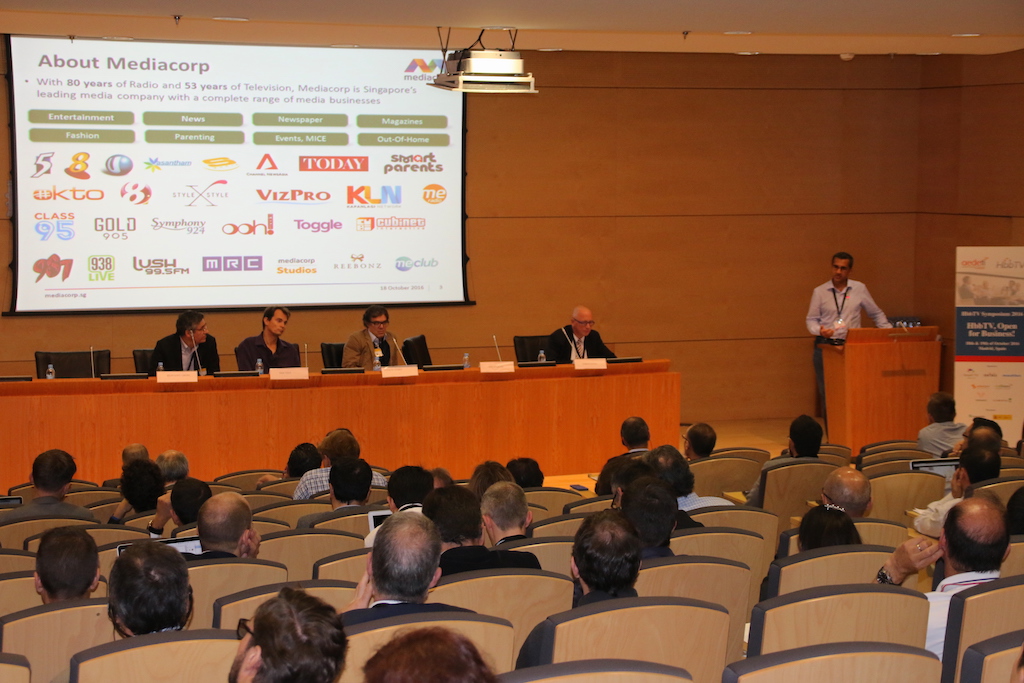
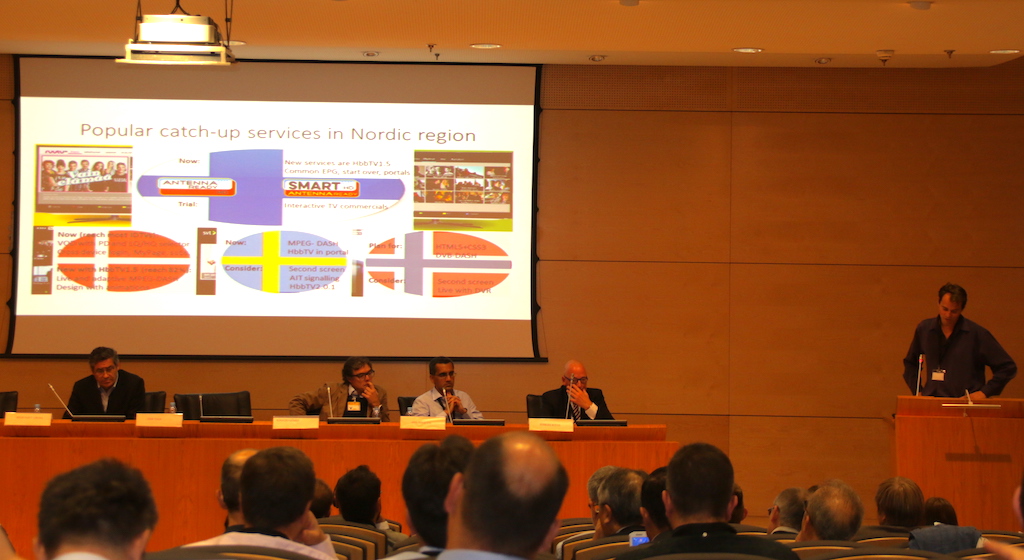
Ignacio Gómez (director de innovación en RTVE), Regis Saint Girons (co-presidente del grupo de Marketing en HbbTv), Erik Vold (ingeniero broadcast e IT en NRK) y Anil Nihalani (director de televisión conectada en Mediacorp) han participado en una mesa redonda moderada por Juergen Boyny en la que se han puesto sobre la mesa diferentes experiencias de televisión conectada en el mundo.
Mediacorp lleva ya tres años ofreciendo servicios OTT en Singapur tanto gratuitos como premium bajo la marca Toggle con una oderta de catch up, VoD, linear streaming y distribución de contenidos en directo en cualquier dispositivo. Nihalani ha hecho un repaso a la experiencia de Mediacorp en DVB-T2 cuya emisión inició a finales de 2013, con una cobertura del 98% de la población. A su juicio, es necesario integrar contenidos sin fisuras combinando radiodifusión con contenido bajo demanda y servicios como el botón rojo.
Ignacio Gómez ha destacado que en 2015 se vendieron en España 1,06 millones de televisores HbbTv, lo quye sitúa en 4,5 millones los hogares con televisión conectada mediante estándar HbbTv (el 85% son HbbTv 1.2.1).
Solo en 2015, de los 3,2 millones de televisores vendidos, 1.4 millones fueron conectados y la gran mayoría soportaban HbbTV. Según los datos presentados por el director de innovación de RTVE, dos millones son usados regularmente para acceder a diferentes aplicaciones de televisión conectada.
“A través de HbbTV podemos generar diferentes señales en streaming y mostrarlas en el televisor, para, por ejemplo, cubrir contenido simultáneo desde diferentes localizaciones”, explicó Ignacio Gómez.
En su ponencia, Gómez ha hecho un repaso a algunos de los servicios híbridos que ofrece RTVE como +24, +TDP o su plataforma de vídeo catch up Alacarta. Por otro lado, ha destacado que con motivo de los Juegos de Río 2016 los usuarios pudieron acceder a 19 señales en directo con streaming (DASH + HLS) lo que supuso unos 350 TB en vivo y 55 TB en VoD.
También ha presentado el servicio de RNE para la distribución de programas radiofónicos con sonido Dolby Digital (DD+) y el nuevo servicio de contenidos en 4K que estará disponible para quienes tengan un ancho de banda suficiente.
Gómez se ha detenido también en el servicio que la catalana TV3 ofrece para subtitulado basado en EBU-TT así como en la propuesta bajo HbbTv que ofreció la vasca EiTB con motivo de las últimas elecciones autonómicas.
Con respecto a los retos que tiene el HbbTv, Gómez ha señalado la transición a la versión 2.0.1 trabajando mano a mano con los fabricantes para que admitan aplicaciones de última generación asegurando la compatibilidad con la versión anterior del estándar. “Además, habrá que trasmitir un valor claro y diferencial del HbbTv frente a un entorno de smart Tv”, ha asegurado.
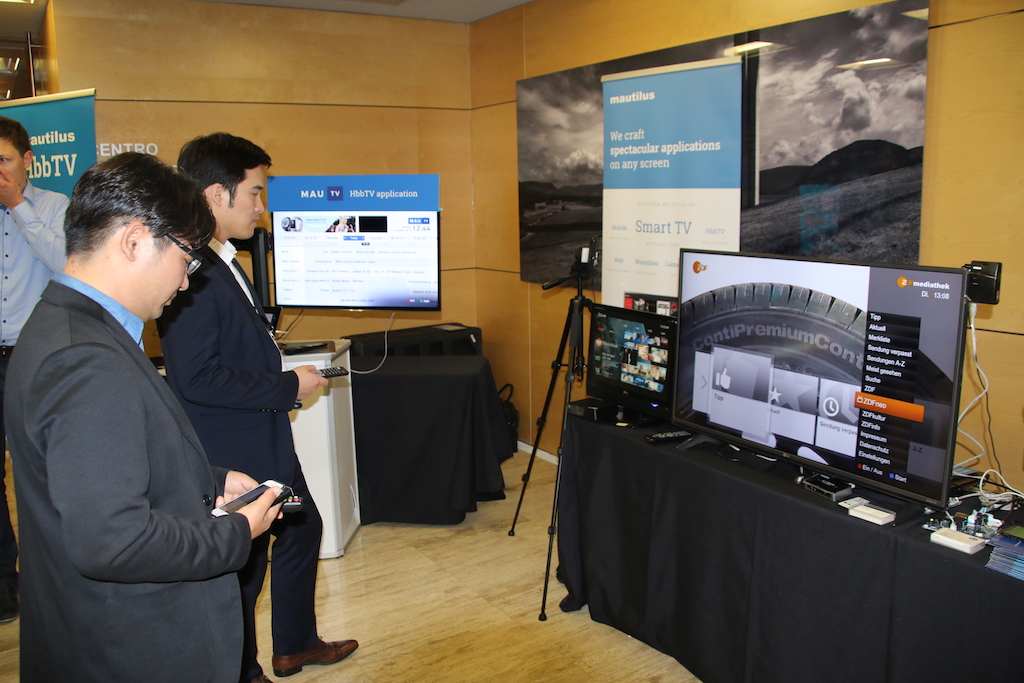 Erik Vold ha indicado que el broadcaster nórdico trabajará desde diciembre de este año con experiencias con estándar HbbTv 2.0.1, especialmente en cuestiones relacionadas con la accesibilidad. La utilización de una segunda pantalla está creciendo en la población más joven por lo que deberemos contar con un protocolo dual para que las aplicaciones se puedan comunicar entre ellas y los diferentes dispositivos, ha comentado Vold. “El uso de segundas pantallas es muy popular entre los más jóvenes. Necesitamos aplicaciones conectadas que conecten con ellos e integren la conversación de las redes sociales”, puntualizó Erik Vold.
Otro factor notable será la sincronización exacta con los smartphones en un entorno HbbTv, lo que permitirá el desarrollo de aplicaciones multicámara y de accesibilidad (subtítulos, lengua de signos…) así como funciones de control remoto desde un smartphone o tableta.
Por otro lado, también ha remarcado la importancia de poder reutilizar en entornos televisivos aplicaciones desarrolladas en HTML5 así como emplear codificación HEVC para la distribución de contenidos en Ultra Alta Definición en OTT.
Régis Saint Girons ha hecho un repaso al punto en el que se encuentra la norma en diferentes territorios europeos, desde Alemania, donde hay 10 millones de dispositivos HbbTV y el 90% se usan a diario, hasta Reino Unido, donde el HbbTV da todavía sus primeros pasos.
“La televisión antes era películas y entretenimiento, pero ahora evoluciona hacia algo nuevo que integra multitud de aplicaciones conectadas e interactivas”, ha sentenciado.
Con respecto al futuro del HbbTv en América, Régis Saint Girons ha adelantado que existen conversaciones con las partes implicadas en Brasil para un posible desarrollo del estándar en el país.
HbbTv: potencial de negocio
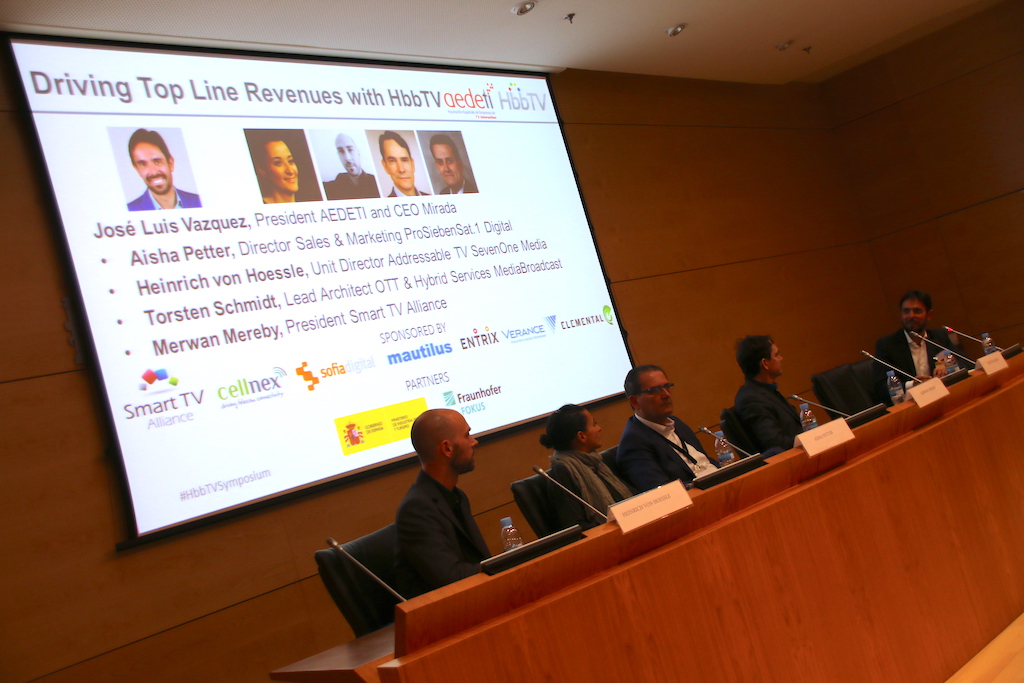
Broadcasters, operadores de red y fabricantes se han sentado en una mesa redonda para debatir sobre las posibilidades de negocio que brinda el HbbTv.
Aisha Petter (directora de ventas y marketing en ProSiebenSat1 Digital), ha centrado su intervención sobre las opciones que abre el botón rojo para acceder a entretenimiento, información y servicios haciendo hincapié, además, en la valiosa información que proporcionan los metadatos en cuanto a magnitudes demográficas y de consumo de los usuarios. Petter ha mostrado algunas iniciativas desarrolladas por el broadcaster alemán para ofrecer contenidos relacionados con el programa principal así como servicios relacionados con el ecommerce o los videojuegos.
También ha querido destacar la importancia de la sincronización del botón rojo con segundas pantallas a través de HbbTv 2.0.
Heinrich von Hoessle, director de la unidad Addresable Tv en SevenOneMedia, ha mostrado los resultados de campañas de markting llevadas a cabo en diferentes broadcasters mediante el uso del botón rojo con experiencias de éxito por parte de marcas como Burguer King, Opel o T Mobile. Schmidt se ha detenido en las posibilidades que se abren a la hora de targetizar el mensaje publicitario según el perfil del potencial consumidor.
Torsten Schmidt, al frente de los servicios OTT e híbridos en la alemana MediaBroadcast, ha explicado las ventajas que supone la plataforma Freenet Tv que permite conectar a los proveedores de contenidos con los usuarios mediante una interfaz de fácil uso. Freenet ofrece, además, numerosas aplicaciones basadas en HbbTv y funciones especiales para los usuarios suscritos a la modalidad de pago. Una de las ventajas de esta plataforma es que ofrece una integración sin costuras en la lista de canales permitiendo así una verdadera experiencia de zapping.
Schmidt ha concluido su intervención asegurando que “MPEG DASH, H264 y HEVC elevan la calidad de los servicios OTT a un nivel muy competitivo”.
Merwan Mereby, presidente de la Smart Tv Alliance y vicepreisdente de estrategia de producto en Panasonic, ha comentado los problemas a los que se enfrenta el sector en relación a la televisión conectada por la falta de interoperabilidad. A su juicio el lema debería ser “Build once, run everywhere – desarrolla una vez, ejecuta en todas partes-“. Los retos ahora pasan por desarrollar aplicaciones de alta calidad para lograr audiencias atractivas con cierta escala para las marcas, ha afirmado.
Retos y dudas
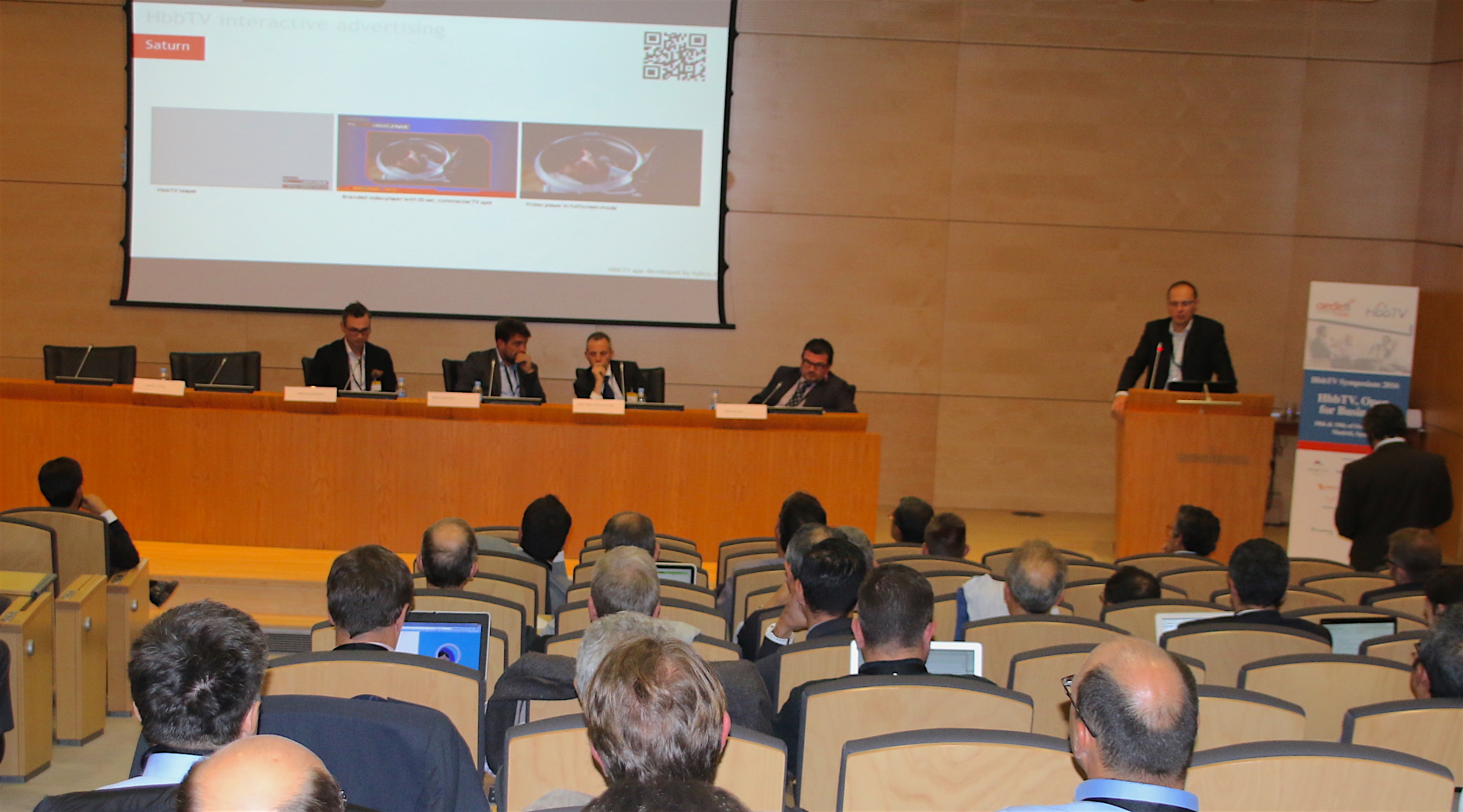
Petr Mazanec (CTO Mautilus), Pawel Tutka (experto en HbbTv en Hydra.Tv), Matthew Huntington (CTO de Freesat) y Mikko Karppinen (director de de Icareus) han intervenido en una mesa moderada por Niko Muñoz, Innovation Hunter Chief en Inicia Corporate.
Mazanec ha destacado que el HbbTv está lleno de retos y dudas frente a iniciativas OTT puras como Netflix o Amazon. “Tenemos que monetizar lo que tenemos y para ello deberemos ser más ‘tiburones’ de lo que hemos sido hasta ahora. Creemos en esta tecnología pero los broadcasters la consideran como otra tecnología más”, ha comentado. El directivo de Mautilus ha presentado su iniciativa de canal virtual de televisión desarrollado en la República Checa.
Por su parte, Pawe Tutka ha compartido algunos ejemplos de desarrollos bajo HbbTv para la televisión polaca. “Muchas agencias creen que el HbbTv es adecuado para incluir su spot típico. Pero si transmites el mismo spot, no ofreceremos algo interactivo que cautive a los usuarios”, ha defendido. Por ello, Hydra.Tv ha desarrollado formatos más interactivos para introducirlos en televisión mediante teasers y aplicaciones interactivas. Como hemos podido comprobar en este Simposio, marcas como Axa, Philips, Orange o Nescafé ya han podido probar con éxito en el mercado polaco el potencial del HbbTv con elementos de vídeo interactivo a través de HbbTv junto a aplicaciones interactivas “sin limitaciones de espacio o tiempo”.
Desde su punto de vista “es muy importante habalr con los clientes sobre la interactividad del producto. Hay clientes que sí invertirían en una campaña HbbTv pero desconocen su potencial real”.
Matthew Huntington ha expuesto la posición del operador británico por satélite Freesat con respecto al HbbTv. A su entender, uno de los objetivos que permite el HbbTv está sustituir la publicidad lineal por una publicidad gestionada y direccionable. Sin embargo, en el Reino Unido el 73% de la población consume contenidos en vivo frente al 14% que consume televisión grabada y solo un 4% accede a servicios on-demand y catch-up tv.
Huntington ha recordado que en EE.UU. la publicidad direccionable ha permitido a los canales temáticos multiplicar por cuatro sus ingresos publicitarios en los últimos dos años.
“Tenemos la tecnología para distribuir la publicidad direccionable y el modelo de negocio pero serán necesario un modelo colaborativo entre empresas ya que un broadcaster solo no podría implementar esta publicidad y explotar el inventario. Para desarrollar este marco podemos utilizar una tecnología introducida en los dispositivos o bien sacar partido del HbbTv para contar con un segmento específico para publicidad con videostream para distribuirlo a un usuario específico”, ha comentado.
Mikko Karppinen ha compartido la experiencia de Icareus para desarrollar servicios innovadores de televisión. El reto principal para hacer publicidad en televisión es “llevar a los espectadores a las tiendas”. En esta línea ha destacado una campaña que desarrollaron basada en cupones para móviles que permitían obtener gratis una botella de agua el pasado verano a quien lo presentara en una red de kioscos. Esta campaña se basó en una sincronización entre televisión y móvil logrando magníficos resultados. Pese al reducido uso de HbbTv en Finlandia, un 4% de los espectadores interactuaron con la campaña (frente al 1% de media).
Publicidad adressable
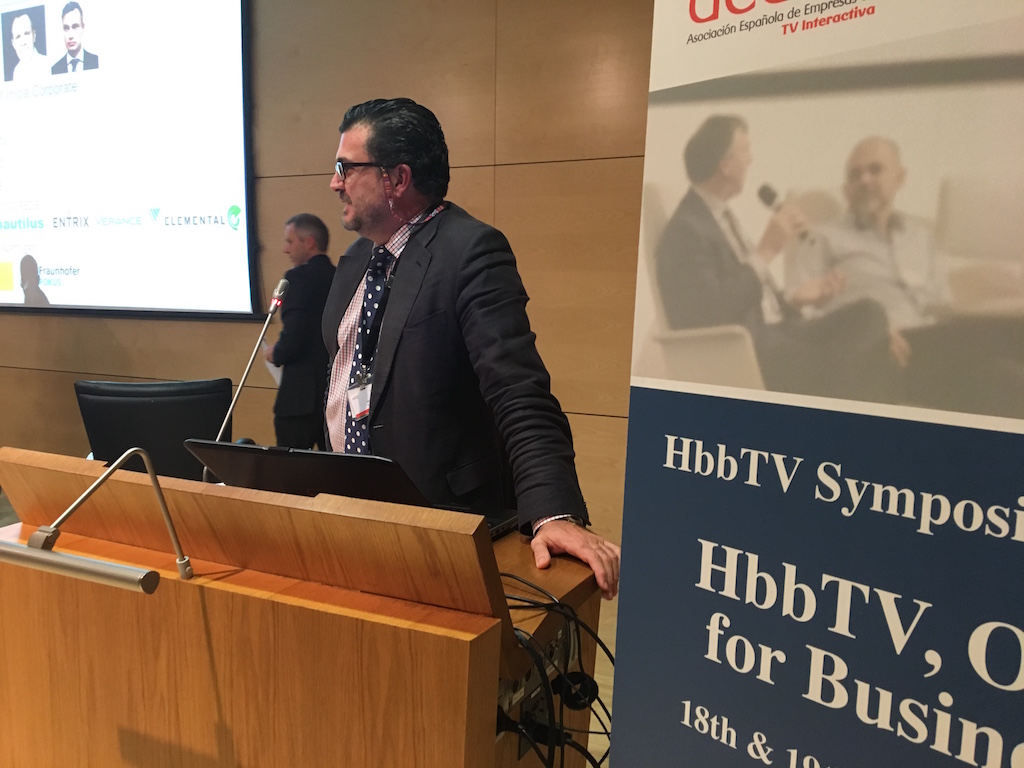
“Sustituir los anuncios en directo durante la pausa publicitaria es posible a través de una señal IP, con lo que podríamos tener anuncios dirigidos a una audiencia muy concreta dentro de un hogar”, señaló el ejecutivo británico. Iniciativas similares ya han sido desarrolladas en Estados Unidos y Reino Unido por plataformas de televisión de pago como DirecTV o SKY.
“Si la televisión en abierto no se lanza a por los anuncios dirigidos (conocidos como addressable ads en el argot publicitario), va a perder la batalla contra la televisión de pago, que ya presenta una mayor capacidad de segmentación”, añadió Huntington. “Y eso la TV en abierto ya lo puede hacer a través del HbbTV”.
Iniciativas similares se han desarrollado también de forma experimental en Finlandia a través de la televisión digital terrestre (TDT). “La televisión ya no es algo lineal, ahora la forman muchos más servicios, por ello hay que trabajar en publicidad dirigida e interactiva”, explicó Mikko Karpinen, director de Icareus.
“Finlandia es un mercado pequeño, pero este tipo de publicidad logró un nivel de interacción del 4%, mientras que los otros tipos de anuncios están por debajo del 1%”, dijo Karpinen. “Y los datos de audiencia que se obtuvieron fueron mucho más detallados”. Además, señaló el ejecutivo finlandés, durante el estudio del impacto publicitario, los espectadores aseguraban haber percibido la publicidad dirigida como algo poco invasiva, como un servicio.
A modo de resumen, las líneas generales destacadas por los ocho expertos en publicidad que tuvieron la palabra en la primera jornada del HbbTV Symposium 2016 señalan que la HbbTV permite una mayor segmentación de la audiencia, a niveles que antes solo lograban los operadores de pago, y una gran interactividad. Aunque existen desafíos propios de una tecnología que da sus primeros pasos a nivel comercial, la televisión híbrida brinda nuevas oportunidades de ingresos para los operadores de televisión abierta.
STREAMING DIRECTO
https://www.youtube.com/watch?v=QLsNtAGd3pg
Did you like this article?
Subscribe to our NEWSLETTER and you won't miss anything.
Related articles
 The present of EITB on HbbTV: real UHD, interactivity and defense of DTT
 The present and future of televisions goes through IP
 Aitor Rubio (Cellnex): “el 5G no es el futuro, es el presente”
 Riedel opens its NMOS control API to third-party manufacturers
 HbbTV at the heart of the new OTT platforms of European broadcasters
 HbbTv will allow a more personal relationship between broadcasters and consumers
 The 3D Wire Fest brings together the present and future of animation
 The CCMA releases the software to display subtitles under the HbbTV standard
 The V HbbTv Symposium will bring together broadcasters, operators, manufacturers and developers in Madrid
 The present and future of television news, up for debate
 Abertis demuestra el potencial de la televisión híbrida bajo estándar HbbTv
 TDF launches Restart, its new connected television service under HbbTv
 Radio Television of Galicia begins connected TV tests under the HbbTv standard
 Digital cinema: the future in the present