





The present of EITB on HbbTV: real UHD, interactivity and defense of DTT
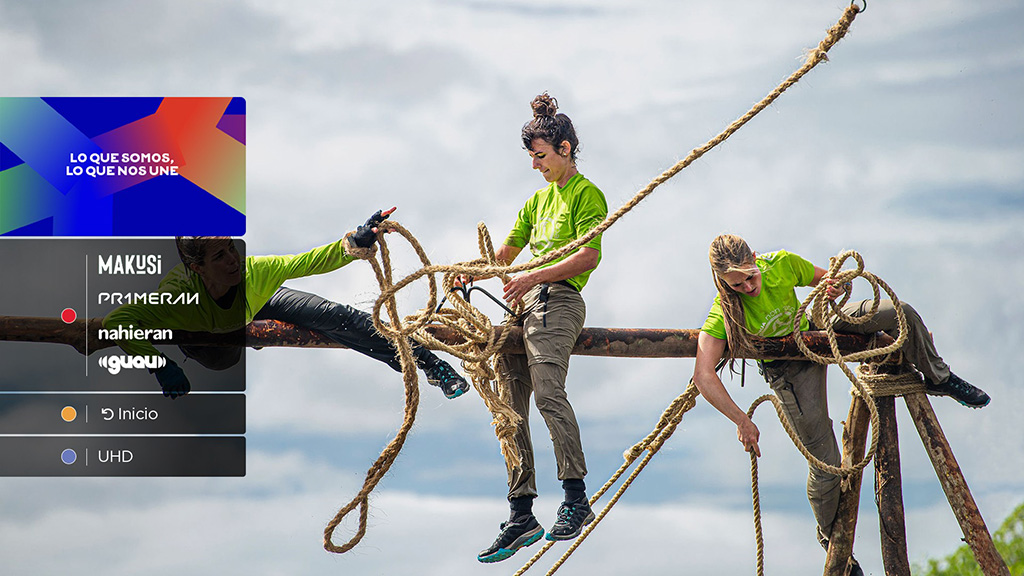

Igor Jainaga, director of technology and exploitation, and Amaya Remon, deputy director of engineering, review the current situation of EITB in the contexts of HbbTV, a hybrid television solution that could be an important asset for Spanish public television in the face of the push for IPTV by operators, platforms and ISPs.
It has been more than 10 years since RTVE will activate the famous “red button” and began the history of HbbTV (Hybrid Broadcast Broadband TV). The technological platform, a project paneuropeo and delocalized that seeks combine broadcast emissions with broadband services, opened the door to new interactive television experiences, many of which have been assimilated and implemented by audiovisual agents from the IP world.

Igor Jainaga and Amaya Remon
Year after year, the service continues to improve with new specifications and standardizations created to make it easier for broadcasters to make these services available. with the association HbbTV as a driving force, improvements have recently been published aimed at optimizing areas such as security via DRM; audio playback with codecs MPEG y Dolby; features of voice control; customizable advertising, o dialogue improvements, among many other initiatives.
HbbTV: potentiality and opacity
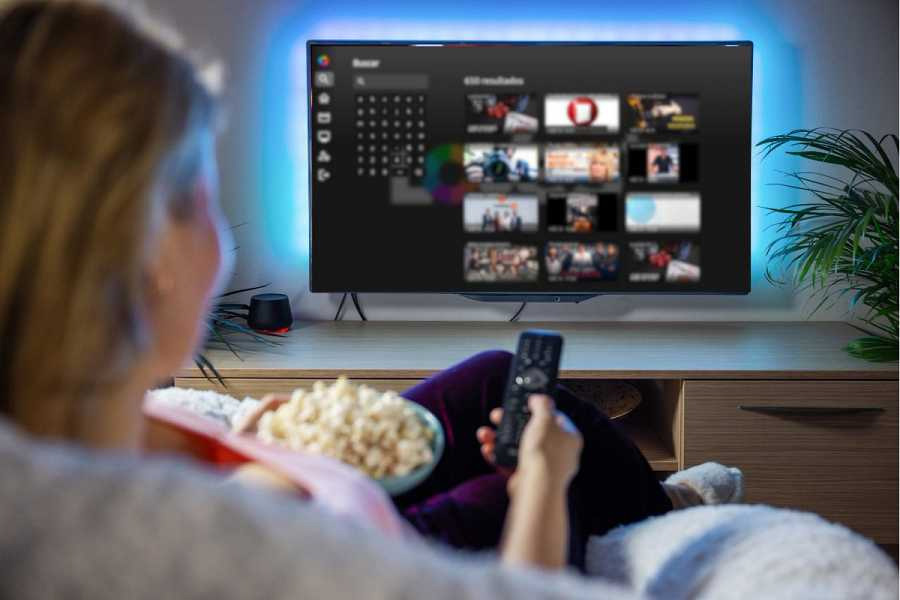
According to data from Dataxis, 94% of Spanish television homes have at least one device compatible with HbbTV. Of the 29.5 million Smart TVs installed, 18.6 million are compatible with HbbTV functions, a more than enough reason for public and private radio and television to invest in initiatives aimed at bringing these services closer to viewers. However, there are no detailed studies on the number of viewers who use these services. Being clearly measurable, everything seems to indicate that, despite being a service whose technical support is more than consolidated, there is still a barrier to its adoption.
Currently, there are no detailed studies on the number of spectators that use the HbbTV services in Spain.
The multiple layers of FAST added services with which SmartTVs “disguise” their grill DTV, the lack of content with a differentiable added value or one lack of promotion of these services by the same operators can explain the opacity of a service that does not even appear in the main market studies of Spain. The value and advertising potential of the tool is in the foreground, but reaching users who divide their television viewing time between digital services and linear television It represents one of the main challenges for the industry.
EITB, the digital world and HbbTV
The Basque public radio and television stands as one of the members of the FORCE which is more decisively committed to the capabilities of HbbTV to provide viewers with a better public service, marked not only by the quality of its programming but also by the user experience. "Our commitment to HbbTV is strategic. We see it as an inherent element of the DTT broadcast itself and we use it to offer the greatest possible added value to our broadcasts," he explains. Igor Jainaga.
The digital services of EITB, Perfectly, willingly, Wow and Makusi, are accessible through the broadcast HbbTV.
At EITB, the hybridization of digital terrestrial television is combined with a multiplatform digital strategy. perfectly fine It serves as a reference platform for the distribution of video content in Basque or with a Basque seal, whether or not it comes from the corporation itself; at will, for its part, serves as the classic “a la carte”, bringing together the main contents of linear channels and their digital production. Meanwhile, the audio proposal is channeled into Wow, bringing together access to EITB radios, podcasts and all types of added content, while children's and youth material arrives through Your taste.
All of these services, available through different applications and accessible through web browsers, also reach viewers' televisions directly through the app itself. HbbTV, available through the famous service color buttons.
HbbTV's colored buttons: an expanded experience
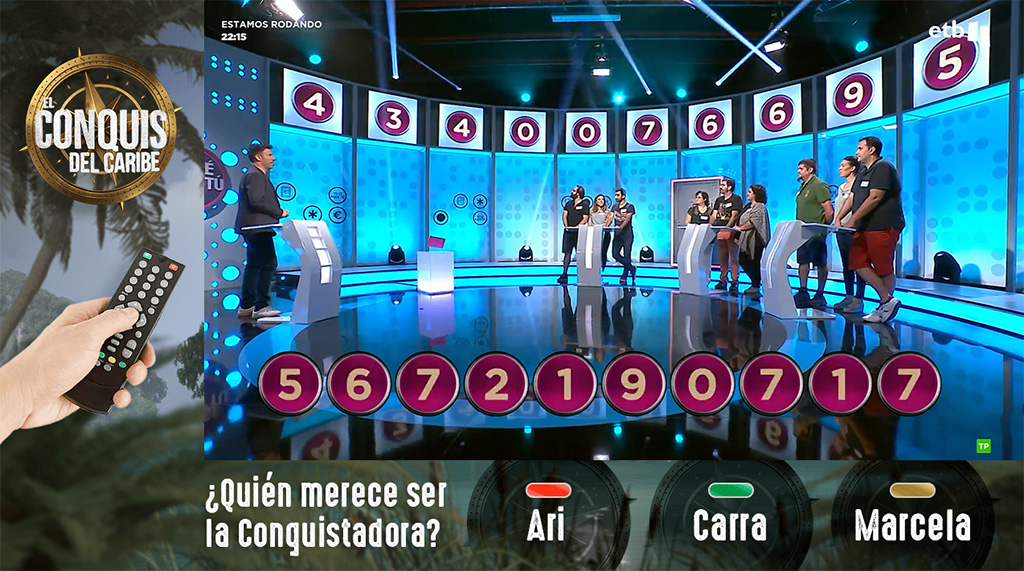
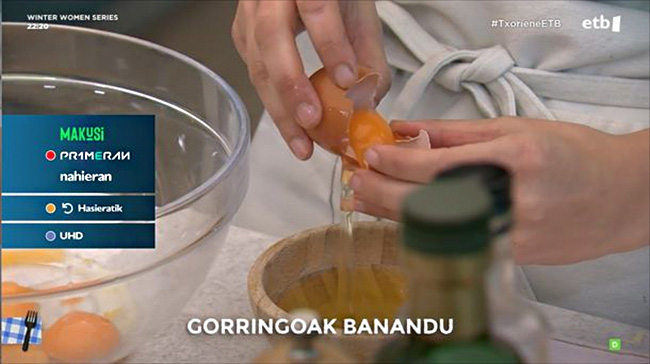
Currently, the EITB engineering team offers the usual expertise of the hybrid platform. Through access buttons with different colors, users can access expanded services. In this way, the red button allows access to the corporation's digital services; he yellow, view the content from the beginning, and the verde, is used to host the CMP (Consent Management Services), although in the future it will allow new accessibility options to be incorporated.
The button azul is used to offer extra or value-added services. EITB has used this option for initiatives such as making available four independent regatta racing video signals. However, since last June, the main protagonist of this color is the possibility of alternating the signal with the UHD broadcast of the channels ETB1 y ETB2. Likewise, in the future new accessibility options may be incorporated into this same button.
The best UHD experience, via HbbTV
EITB, aware of the value of ultra high definition and the compatible television extension with this resolution in the homes of its target population, recently carried out the renewal of your continuity environment. Now, the challenge is different: although they are already prepared to offer 24/7 signals in UHD (with the corresponding scaling for those formats still offered in HD today), the corporation is still waiting for the consolidation and evolution of the new Television Technical Plan that allows the standardization of new coding systems and the corresponding rearrangement of the radio spectrum.
Igor Jainaga: “By not having the bandwidth limit that we could have in DTT broadcasting, we are encoding our UHD broadcast via HbbTV at 25 MB/s and H.265, allowing us to offer the premium experience we want to make available.”
In this context, HbbTV ha posibilitado adelantar la puesta a disposición de los canales UHD de ETB1 y ETB2: “No queríamos dejar de ofrecer la emisión de canales en UHD, dado que ya teníamos esa capacidad”. Para hacer realidad estas emisiones, se ha enlazado el botón azul con una URL de streaming que ofrece la mejor experiencia de visualización posible de los dos canales principales de televisión lineal. En palabras de Jainaga: “Contamos con una virtud, y es que no tenemos el límite de ancho de banda que podríamos tener en la emisión TDT. Estamos codificando a 25 Mbps en H.265, lo que nos permite ofrecer la experiencia premium que queremos poner a disposición del televidente”.
La infraestructura tecnológica permite una difusión de producciones propias en UHD extremo a extremo: “Tenemos la posibilidad de transportar contenido capturado en estas resoluciones desde nuestra unidad móvil UHD, enrutarlo hasta el entorno de continuidad y procesarlo nativamente”.

Los retos de llevar el mundo HbbTV a los espectadores
Para el equipo de EITB, el mayor condicionante de los entornos híbrido va ligado a su propia naturaleza: la connectivity. Los espectadores deben contar con conexión a Internet, compatibilidad con HbbTV and a ancho de banda suficiente para poder explorar las ventajas de este entorno, que aún en este punto presenta un desafío adicional: su curva de aprendizaje para el espectador “menos digital”. “Nosotros naturalizamos estos servicios por el entorno en el que estamos, pero debemos tener en cuenta que vamos a llegar a todo tipo de usuarios”, comenta Jainaga.
Para llevar a cabo esta adaptación, así como dar a conocer las ventajas de este sistema, EITB apuesta por una estrategia de promoción propia, con diferentes campañas dirigidas a enseñar al espectador cómo podrá disfrutar de estos servicios. Aun así, todavía queda camino que recorrer. Como explica Jainaga, cada vez más personas acceden a los servicios habilitados por HbbTV, pero no es un uso “ni masivo ni intensivo”.
Igor Jainaga: “No solo hay que ir normalizando la norma o la versión que deben traer los nuevos televisores, sino también garantizar que los más antiguos mantengan el ritmo de actualizaciones. La retroactualización ahora mismo se encuentra muy limitada”.
“Aparte de que la gente tiene que sentirse cómoda en el entorno, si no aportas un valor añadido complementario o una necesidad, el uso es residual. Trabajamos para que los espectadores noten el valor de estos servicios, ya sea con la emisión en UHD o con la mejora de las producciones con experiencias como las cámaras asociadas a las embarcaciones de las regatas”, añade.
Otro tema que deberá ser abordado para mejorar la consolidación del HbbTV será la compatibilidad con el parque de televisiones. Según remarca el equipo de EITB, se debería abordar de una manera coordinada la estandarización de las versiones entre las Smart TVs, de modo que se pueda producir una actualización y activación de los servicios de forma universal: “No solo hay que ir normalizando la norma o la versión que deben traer los nuevos televisores, sino también garantizar que los más antiguos mantengan el ritmo de actualizaciones. La retroactualización ahora mismo se encuentra muy limitada”.
HbbTV: defensa de la TDT
A pesar de que el HbbTV evoluciona lentamente en España, las public radio and television no tiran la toalla; siguen invirtiendo en un entorno con la potencialidad de seguir poniendo en valor los entornos de televisión digital terrestre frente a un hipotético mercado dominado por los ISPs, que podría limitar el acceso de la población a los servicios digitales. Para ello, EITB utiliza los entornos de la FORTA para canalizar la conversación con respecto al HbbTV, trasladando necesidades y compartiendo hitos para contribuir a la consolidación de este entorno y hará fuerza para reivindicar su relevancia como medio para seguir garantizando la existencia de una televisión “en abierto y universal”.
“Debemos mantener el camino de adaptación al DVB-T2 para hacer sitio al UHD, pero también hay que seguir potenciando el HbbTV, ya que puede complementar la oferta con extras de accesibilidad o nuevas experiencias de consumo”.
Y es que Igor Jainaga y Amaya Remon no dudan del potencial de la HbbTV: “Nuestra apuesta por la televisión en abierto y universal es clarísima. Lógicamente, aquellos que no tienen la capacidad de formar parte de la TDT para brindar a los espectadores su oferta tienen interés en impulsar otras vías para llegar al usuario final. Pero nosotros seguimos siendo firmes defensores de la TDT como una oferta plural, universal, de acceso libre y sin otros condicionantes de pago. Debemos mantener el camino de adaptación al DVB-T2 para hacer sitio al UHD, pero también hay que seguir potenciando el HbbTV, ya que puede complementar la oferta con extras de accesibilidad o nuevas experiencias de consumo. Es un complemento a la emisión base que siempre debe existir”.
A report by Sergio Julián Gómez
Did you like this article?
Subscribe to our NEWSLETTER and you won't miss anything.
Related articles
 EiTB begins its broadcasts in UHD through HbbTV
 Telling what is real: the legal limits of telling a true story
 TeleElx muestra en pantalla su audiencia en tiempo real en TDT gracias a la HbbTv
 In defense of mobile units: a secure future
 In defense of dubbing: What are your needs and challenges in 2021?
 EITB premiere las applications EITB News and EITB Desire
 HbbTV Association updates the specifications of its HbbTV-TA targeted advertising standard
 The Russian channel NTV incorporates interactivity with HbbTv
 The XXIV Cable and Broadband Conference in Catalonia will analyze interactivity and HbbTV
 Royalmedia carried out the coverage of 'Real, the concert' for Real Madrid TV
 Manufacturers and broadcasters take an x-ray of the present and future of connected TV under HbbTv
 Telefónica integrates social television and interactivity
 The industry mobilizes in defense of the MEDIA Program
 Never.no proposes cloud-based interactivity