





RTVE migrates its satellite broadcasts for Africa to the DVB-S2 standard
Users of RTVE's Africa International Channel will now be able to follow their programming in high definition, with a more updated transmission system and with television services connected under HbbTv.
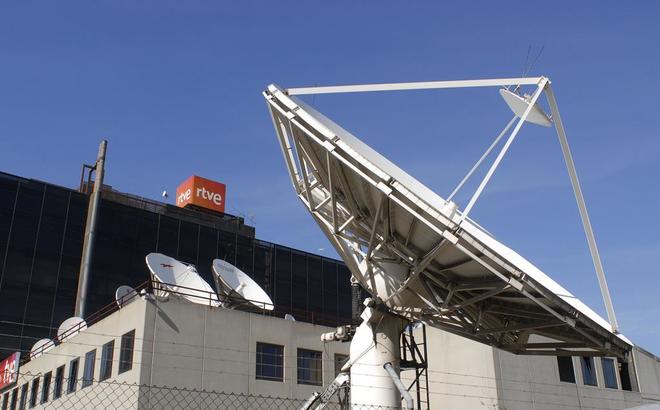
RTVE has renewed for two years, with the possibility of extending it up to four, the satellite platform for Africa. Viewers on these continents will be able to continue enjoying the Africa International Channel (since January in high definition), Radio Exterior and RNE 1.
Continuing with its commitment to broadcast the International Channel, Radio Exterior and RNE 1 in Africa in open air, in the best conditions for its users, RTVE has opted for the change to high definition on the International Channel, thus offering an improvement in the quality of its images. It will also change to DVB-S2 satellite transmission/reception standard, a more advanced system than the current one, which provides greater efficiency. This standard is currently being used by numerous satellite operators. Finally, it will incorporate the standard HbbTv in order to have access to services connected television.
This update, on which the public channel is committed to providing a better service to its viewers throughout Africa, will soon bring with it some changes in the signal reception conditions. These changes are inevitable and require viewers or radio listeners who are in the affected countries and currently receive the RTVE signal to slightly reorient their reception satellite dishes from the current orbital position (5º West) to the new position (8º West).
Los usuarios del continente africano que reciban actualmente la señal de RTVE deben modificar, por una sola vez, sus instalaciones de recepción, para poder continuar recibiendo correctamente las emisiones actuales. Aunque la variación es muy pequeña, es indispensable girar las antenas para apuntar correctamente al nuevo satélite y poder seguir recibiendo las emisiones.
Dado que no se podrá seguir recibiendo en el estándar actual (DVB-S) ni en definición estándar (SD) a partir de una fecha determinada, es preciso también que los usuarios dispongan de un receptor de satélite que sea de alta definición (HD) y que pueda recibir en el sistema DVB-S2. Actualmente la gran mayoría de receptores en el mercado trabajan de esta manera, por lo que, si fuera el caso, podrían seguir recibiendo también otros canales que operen en DVB-S o/y MPEG-2. En el manual técnico del equipo -o a menudo en el propio receptor- debe aparecer la información sobre los sistemas de transmisión que soporta.
Una vez orientada la antena a la nueva posición orbital y si ya disponen de un receptor que opere en DVB-S2 y en HD, podrán seguir recibiendo los canales de RTVE con sólo resintonizar el equipo y configurándolo con los nuevos parámetros técnicos. En la mayoría de los receptores este proceso es muy sencillo y se realiza de forma automática, una vez elegido el menú correspondiente de su equipo. Los parámetros técnicos de las emisiones por satélite de las plataformas de RTVE, tanto los actuales como los nuevos, están disponibles, here.
Tiempo de adaptación
Con el fin de facilitar esta operación a los usuarios, se ha previsto un amplio tiempo de solape de emisiones en ambos sistemas de transmisión. Esto significa que las emisiones con las nuevas condiciones empezarán un tiempo antes de finalizar las actuales. Durante ese periodo de emisión simultánea con los parámetros actuales y los nuevos, los usuarios podrán hacer los cambios en el momento que deseen.
Este periodo de emisión simultánea será de dos meses y medio (desde el 15 de enero al 31 de marzo de 2019). Las programaciones respectivas de ambas plataformas serán las mismas en todo momento.
Sin embargo, a partir del 31 de marzo de 2019 cesarán definitivamente las emisiones como se han venido efectuando hasta la fecha y ya sólo permanecerán en el aire las nuevas, por lo que, si no se han realizado antes los cambios indicados, no se podrán recibir las señales de RTVE en los países del continente africano. Este proceso de emisión simultánea se complementará en los próximos días con un rótulo que aparecerá periódicamente en las pantallas, que notificará la necesidad de efectuar los cambios. Este rótulo aparecerá sólo en la señal que desaparecerá el 31 de marzo, es decir, la de definición estándar.
Los cambios indicados son sólo de tipo técnico, por lo que no se verán afectados los contenidos de los programas ni los horarios. Tampoco se verá afectada la calidad de las señales de radio, que seguirán manteniéndose con el nivel actual. En cambio, la calidad de la señal TV se verá incrementada al pasar a ser de alta definición.
Did you like this article?
Subscribe to our NEWSLETTER and you won't miss anything.
Related articles
 RTVE and FORTA join forces to test DVB-I, a standard that takes the union of TV and Internet to the next level
 BBC World migrates its satellite operations to IP with the help of Encompass and Zixi
 Countdown to the start of La 1 (RTVE) broadcasts in UHD: 4K, HDR, immersive audio…
 Estrella Media migrates from satellite to linear distribution over IP with Zixi
 The VVC would improve the compression efficiency in UHD satellite emissions by 50% compared to the HEVC
 Aicox supplies RTVE with more than three hundred satellite receivers for America
 LiveU Expands Hybrid Satellite-Cellular Service Across Europe and North Africa
 África Huerta, new director of RTVE in Murcia
 Eurona renews contract with RTVE and Aragón TV for satellite transmissions
 RTVE begins regular broadcasts of Star HD, its new high definition channel for America
 TVE includes HbbTV in its satellite broadcasts for Europe
 TVE renews its satellite broadcasts for Africa and Asia-Oceania for the next two years
 Sapec will supply the new RTVE header for Africa
 Chile begins digital emissions in tests under the ISDB-Tb standard