





ATG Danmon begins Riverside Studios relocation project in London
The facility will feature three flexible studio spaces for television, theatre, dance, opera, music and comedy, as well as a cinema, screening room, archive, community and rehearsal space, as well as a local event and entertainment space.
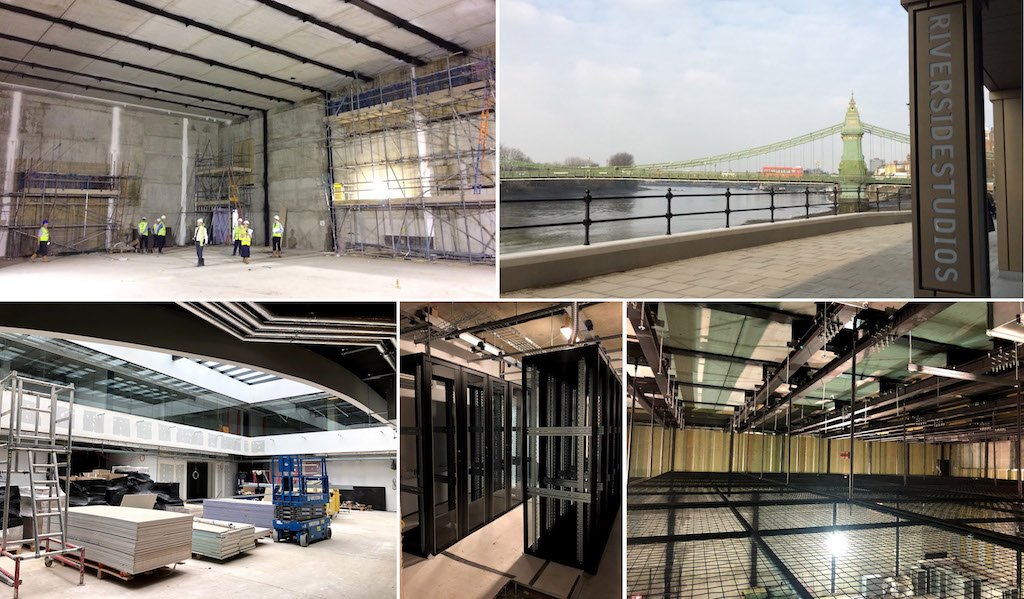
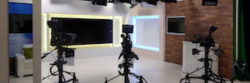
ATG Danmon has started the large-scale systems integration project to Riverside Studios in Hammersmith, west London. The new venture will include the installation and interconnection of production infrastructure.
The former studios in Riverside and neighboring Queen's Wharf have been replaced by a new building. The venue will feature state-of-the-art facilities with three flexible studio spaces for television, theatre, dance, opera, music and comedy, as well as a cinema, screening room, archive, community and rehearsal space, plus a local event and entertainment space.
Duncan Stewart, technical director of Riverside Studios, comments that "connectivity throughout the building has driven the design of Riverside from the beginning. We have worked with ATG Danmon for the last two years to present our new state-of-the-art facility in a way that is familiar to the freelancers who will work with us in the future."
Howard Dixon, project manager at ATG Danmon, notes: "We are working on all three floors of the new building. Our role is to integrate technical systems in all key production areas, including the control gallery, lighting control room, audio control room and central apparatus room. The equipment itself is mostly new acquisitions, complemented by some from the previous building. A key element of the project is the interconnection of 42 positions at various locations, including camera cabling. triax and SMPTE, video, audio and data cabling, fiber patch lines and low voltage power cables for facility boxes. Construction of the building is ongoing, so we are in close collaboration with the Riverside technical team and other contractors on site.”
For his part, the general director of ATG Danmon, Russell Peirson-Hagger, recognizes that "we are pleased to have been chosen to partner with Riverside on this new high-profile project. These types of multi-functional rooms are increasingly popular around the world and appear to be one of the most advanced of their kind in the UK."
A historic site
The Riverside site dates back to 1933, when the Triumph Film Company acquired a former engineering factory and created two large sound stages. The BBC bought the site in 1954 and turned it into the country's first purpose-built television facility. The facility was in continuous use until the early 1970s, and its rooftop camera position provided one of the best views for the University's annual boat race. In 1975, a charitable trust formed by Hammersmith and Fulham Council took control of the building. Shortly afterwards, architect Michael Reardon created two large multi-purpose spaces from the two main sound stages, which will be used for a mixed program of live theatre, music, dance and film.
A four-year redevelopment of the site has completely rebuilt Riverside Studios, whose facilities occupy most of the ground floor and parts of the basement, first and second floors. The venue will host contemporary shows, films, visual art exhibitions and television production. Its largest studio, Studio 1, has an area of more than 600 square meters and a capacity of 400 seated spectators. The facility will be able to capture UHD productions or stream live to BT Tower.
Did you like this article?
Subscribe to our NEWSLETTER and you won't miss anything.
Related articles
 Amazon's Project Kuiper begins deorbiting broadband satellite prototypes
 TV3 begins filming 'Artistes', a project dedicated to art promoted by YouPlanet and Bah! Studios
 Filming begins on 'Santo', a Spanish-Brazilian project produced by Nostromo and promoted by Netflix
 ATG Danmon integrates 4K production and streaming from Lafayette London
 Zeta Studios begins filming 'We were songs', the new Netflix original project
 ATG Danmon completes Westminster links upgrade
 ATG Danmon begins 2020 with full activity
 'Little coincidences', the new project from Atresmedia Studios, will debut on Amazon Prime Video
 Riverside TV automates its coverage with JVC IP robotic cameras and Blackmagic mixers
 ATG Danmon completes technical upgrade of Record TV office in London
 Danmon Group will celebrate 35 years of success at IBC
 Sony to open Digital Motion Picture Center at Pinewood Studios near London
 BBC Studios opens new independent post-production facility in London
 Vision Project: an ambitious immersive telepresence project