





Cuando el 4K no es solo imagen: el Audio de Nueva Generación
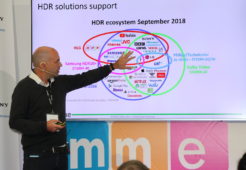
Mickaël Raulet, Director of Research and Innovation en Ateme, interviene en la 4K HDR Summit para dar conocer las experiencias con Next Gen Audio (NGA) que lleva a cabo desde hace ocho años.
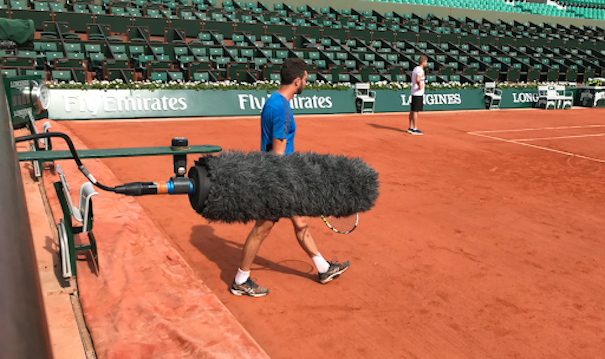
He audio de nueva generación (Next Gen Audio, NGA) está teniendo un lugar relevante en la agenda de la sexta edición de la 4K HDR Summit.
Con el reciente caso práctico del último Roland Garros y la 13ª victoria del tenista español Rafa Nadal, la multinacional francesa Atem está mostrando en el evento sus últimos avances en codificación y audio inmersivo.
 Mickaël Raulet, Director of Research and Innovation en Ateme, ha centrado su intervención en exponer cómo la compañía ha convertido desde el año 2012 el Open de Tenis de Francia en su laboratorio de experimentación para que el audio y el vídeo lleguen a cada rincón del planeta, con la calidad adecuada a las necesidades de cada televisión.
Para enmarcar su ponencia, ha hecho inicialmente un repaso a los grandes hitos tecnológicos de la última década, destacando la irrupción del estándar de compresión HEVC en 2013, las primeras pruebas en Ultra Alta Definición (High Dynamic Range HDR + Wide Color Gamut WCG) en 2015, el impacto del High Frame Rate HFR en 2017; y finalmente hace apenas dos años la aparición del audio de nueva generación (Next Generation Audio NGA).
Las primeras experiencias en UHD con codificación HEVC con producción SDR las llevó a cabo Ateme en las ediciones del Roland Garros de 2014 y 2015.
Al año siguiendo comenzó a experimentar en esta cita deportiva con la producción en directo en HDR, poniendo a prueba su compatibilidad a través de las propiedades intrínsecas del HLG TF. En colaboración con Dolby pusieron a prueba también las posibilidades de la tecnología Dolby Vision y su compatibilidad con el estándar HD10 en un directo con alto rango dinámico.
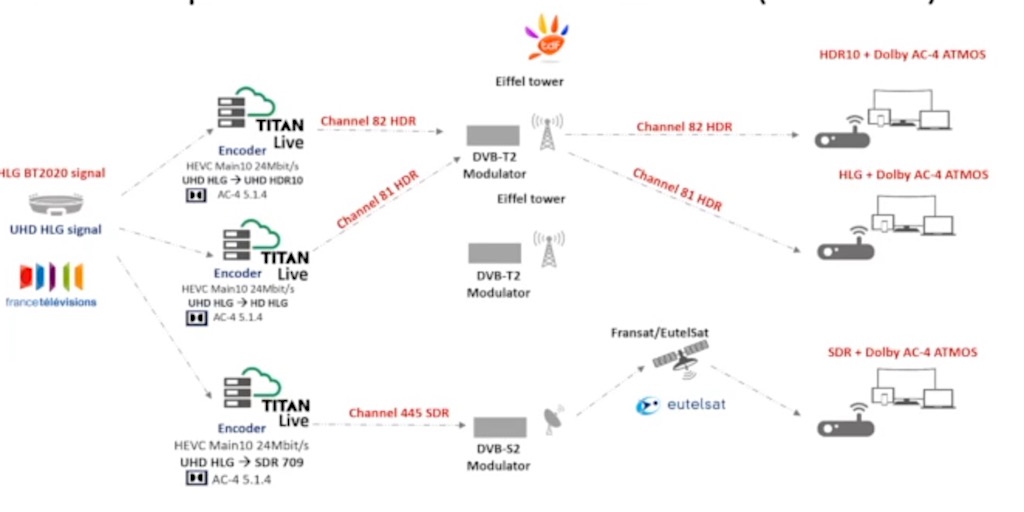
El pasado año, Ateme participó también activamente en la emisión del Roland Garros con una producción de France Télévisions UHD HLG BT2020 que se convirtió a HDR10 para distribuirla posteriormente por satélite (DVB-S2) y TDT (DVB-T2) a dispositivos compatibles con HDR, SL HDR y MPEG-H. Al mismo tiempo, la plataforma Titan Live permitió la codificación en HEVC Main10 24 Mbit/s en UHD y 8 Mbit/s en HD, SL HDR, MPEG-H y Estéreo HE-AAC (High-Efficiency Advanced Audio Coding).
Versatile Video Coding (VVC)
Mickaël Raulet ha introducido en su ponencia un elemento a destacar, las primeras pruebas con el nuevo estándar Versatile Video Coding (VVC). Esta compresión (ITU H.226) desarrollada por JVET (el equipo de expertos en video de MPEG y VCEG) pretender ser el sucesor del HEVC (ITU H.265). Desde su lanzamiento a finales de 2017, el nuevo estándar basado en la predicción intra-frame e inter-frame y una codificación entrópica, ha demostrado eficiencias por encima del 35% con respecto al HEVC.
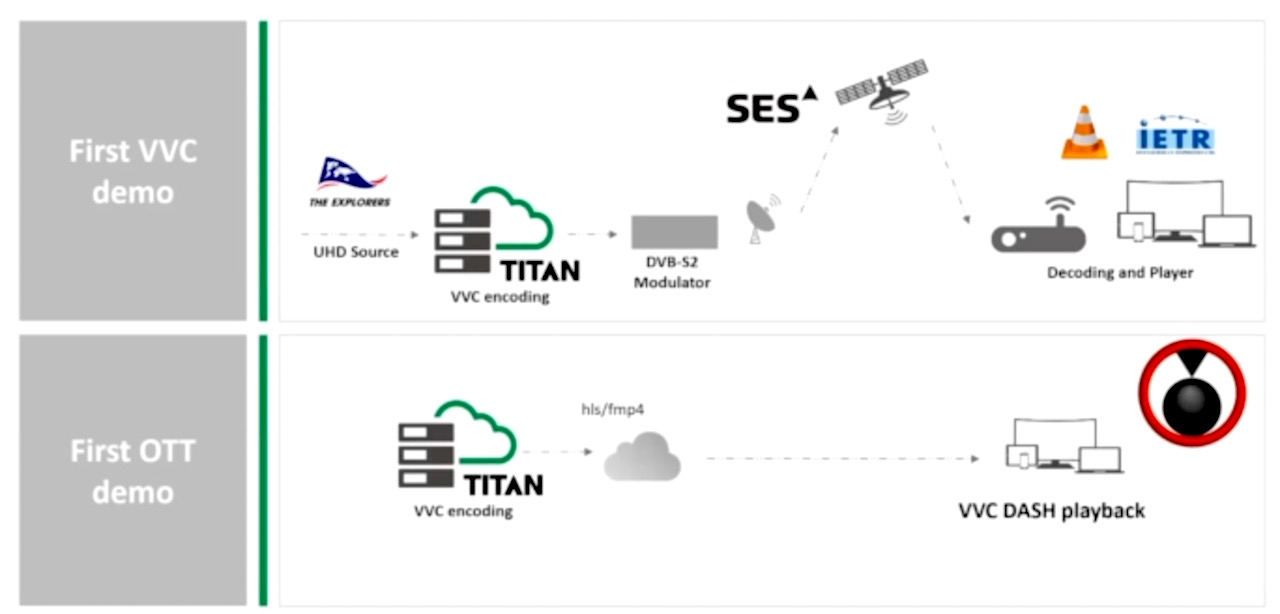
La primera demostración real con VVC se ha llevado con una señal de The Explorers, a productora francesa, especializada en la emisión en Ultra Alta Definición de documentales sobre las maravillas naturales y culturales de la Tierra. Con la codificación VVC de Titan de Ateme, la señal se ha distribuido a través de satélite (SES) bajo estándar DVB-S2 y OTT con un streaming en Fragmented MP4s (fMP4) sobre HLS.
Raulet ha concluido su intervención analizando la nueva generación de codecs que permitirán implementar los flujos de trabajo en 8K al tiempo que ha asegurado que el audio inmersivo permite personalizar lo que el espectador recibe con experiencias customizadas y multi-idioma, ofrecer servicios premium de audio con 3D Sound, y permitir la accesibilidad mediante audiodescripción y realce de diálogos.
Did you like this article?
Subscribe to our NEWSLETTER and you won't miss anything.
Related articles
 Apex: la nueva generación de limitadores adaptativos de CEDAR Audio
 UTECA denounces the damage of large platforms to society: “They will only change when they see their advertising income reduced”
 UHD Spain explores the possibilities of New Generation Audio (NGA)
 The RTVE Institute and the Fraunhofer Institute organize a conference on new generation audio in Madrid
 El 5º encuentro de UHD Spain aborda las claves del Audio de Nueva Generación (NGA)
 Lawo desvela la nueva generación de sus consolas de audio mc²
 Avid revela Pro Tools Carbon, el sistema de producción de audio híbrido de nueva generación
 Next-generation audio will be heard at the 4K HDR Summit 2020
 Ateme comparte en la 4K-HDR Summit las posibilidades de la UHD y el audio de nueva generación
 The EBU tested the immersive and customizable possibilities of Next Generation Audio at Eurovision
 Cuando el ladrillo se sustituye en arquitectura por imagen en movimiento…
 WorldCast presentará en NAB una nueva generación de códec audio IP
 When television is not only watched from the living room...
 Omnia A/XE, new generation of audio processing on Windows