





Let's not confuse resolution with definition in the UHD signal


José Manuel Menéndez, catedrático de la Polytechnic University of Madrid and director of the RTVE Chair – UPM, aporta las claves de dos conceptos especialmente discutidos en el mundo del UHD: la resolución y la definición.
Si preguntamos a cualquiera por la diferencia entre dos señales de TV, una SD y otra HD, seguro que una de las primeras respuestas que proporciona es que “la de HD, normalmente, se ve mejor”. Correcto. Si insistimos y preguntamos por qué se ve mejor, es muy probable que se argumente, entre otras cosas, que “HD tiene más puntos en la imagen que SD”. Cierto. Entonces, ¿definición es lo mismo que resolución? La respuesta es que no. Ambos conceptos están relacionados, pero no son lo mismo.
Tal como se comenta en el capítulo 1 of the Libro Blanco de UHD Spain, en su primera edición, los conceptos de SD y HD en televisión no son nuevos. Los primeros sistemas de TV se basaban en elementos mecánicos y presentaban apenas 30 líneas de imagen. En paralelo, se propusieron varios sistemas electrónicos que ya ofrecían más de 400 líneas de imagen. Dichos sistemas electrónicos se consideraban como High Definition (High Definition – HD), en comparación con la reducida calidad ofrecida por los sistemas mecánicos. Posteriormente, a partir de los años 50 se proponen los estándares que se mantuvieron en activo, en el mundo, durante décadas: NTSC, PAL y SECAM.
En el mundo de la televisión analógica, los conceptos de definition y resolution estaban vinculados. La resolución o definición vertical era el número de líneas activas o visibles en la escena, en tanto que se consideraba que la resolución o definición horizontal era la fineness of detail with which an image is reproduced, y estaba íntimamente relacionada con el ancho de banda de trabajo, ya que cuanto mayor era éste, mayor capacidad presentaba la señal analógica para representar las transiciones abruptas (bordes) en la escena, es decir, las altas frecuencias espaciales. La resolución o definición horizontal era, por tanto, un concepto subjetivo, ya que dependía de la agudeza visual del ojo.
 Los primeros “sistemas de HD”

Con todos estos precedentes, es normal que los sistemas de TV analógicos propusieran mecanismos para mejorar la percepción subjetiva de la calidad de las imágenes, y a estos sistemas se los denominara sistemas de HD, ya que mejoraban el “nivel de detalle con que apreciaban los elementos que componían la escena”. Con el paso del tiempo, a la señal audiovisual que ofrecían los estándares NTSC, PAL y SECAM se los consideró como sistemas de definición estándar (Standard Definition – SD), caracterizados por:
- Una señal de vídeo de entre 484 y 576 líneas activas, con relación de aspecto (cociente entre el ancho de la pantalla y su altura) de 4/3, barrido entrelazado y frecuencia de refresco de cuadro entre 50 y 60 campos/seg.
- Una señal de audio monoaural hasta finales de los años 80, en que se despliega el sistema NICAM 728 y se permite disponer de audio estéreo y digital.
A mediados de los años 80, varias empresas y consorcios se lanzan a una carrera de desarrollo de un sistema analógico que ofrezca mayor calidad y grado de detalle en la escena, y vuelve a surgir el nombre de HD. En Europa, la propuesta se denomina HD-MAC (High-Definition – Multiplexed Analogue Component). Dicho sistema presenta:
- Una señal de vídeo analógico con 1152 líneas visibles, manejando alta frecuencia para poder representar mejor las altas frecuencias espaciales en la imagen, relación de aspecto 16/9, barrido entrelazado y frecuencia de refresco de cuadro de 50 campos/seg.
- Una señal de audio digital estereofónico de alta calidad.
Se hicieron pruebas de emisión de dicho sistema HD-MAC en las olimpiadas de Barcelona 92 y en la EXPO de Sevilla del mismo año.
La digitalización de la señal, tanto SD como HD, supone la separación completa entre los conceptos de resolución y definición:
- El concepto de resolution, en señal digital, se asocia al número de columnas y filas de píxeles que presenta la imagen. La resolución horizontal, por tanto, es el número de columnas, y la vertical el de filas.
- El concepto de definition queda vinculado a la idea de finura de detalle con la que se es capaz de reproducir los elementos de la escena, y va a depender de la capacidad del sistema de captación, de cómo se procese la señal en producción, de cómo se codifique, comprima y transmita la misma, de cómo se represente en la pantalla, y de la capacidad visual del observador, es decir, de todos los elementos de la cadena.
 Definición para lograr un impacto
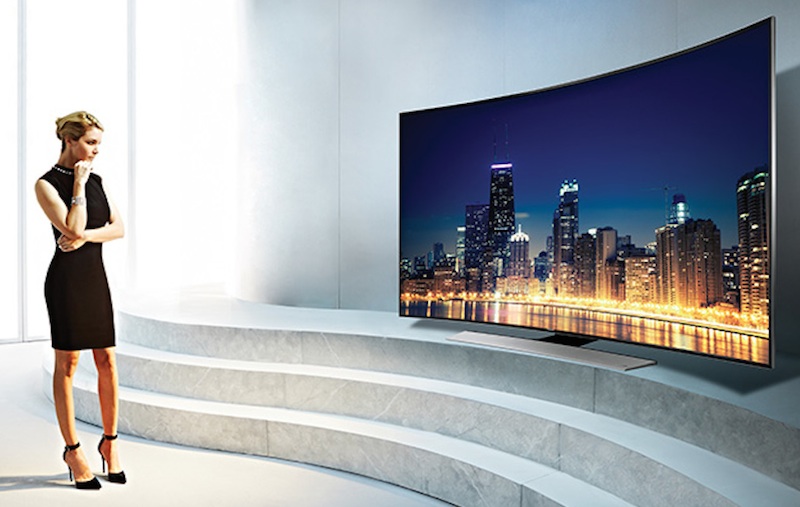
Si se analiza el conjunto de elementos con los que se incrementó la definición en el salto de SD a HD, se observa que es reducido, aunque suficiente para lograr un impacto muy importante en la percepción subjetiva. No se debe olvidar la importancia de la señal de audio en la calidad subjetiva final del observador (como demostró la BBC), por lo que se deben considerar aspectos tanto de la señal de vídeo como de audio.
Con todo lo anterior, los elementos introducidos por la TV con la señal HD en relación con la señal SD anterior para mejorar la definición son:
- Se incrementa la resolución de las imágenes de manera muy importante (222,2 % en el caso de 1280 columnas × 720 líneas, y 500 % en el caso de 1920 columnas × 1080 filas, este último conocido en el sector como alta definición completa (Full High Definition – FHD), aportando mucha más información de imagen.
- Se cambia la relación de aspecto de 4/3 a 16/9, ofreciendo una visión más panorámica y próxima a la relación de aspecto de la señal cinematográfica.
- Se admite tanto el uso de señal entrelazada como de señal progresiva, lo que facilita que se arranquen las primeras emisiones de señal progresiva que puede permitir ofrecer mayor capacidad en la representación del movimiento de los objetos en la escena.
- En relación a la señal de audio, se admite el uso de sistemas multicanal 5.1, ofreciendo con ello una mayor capacidad de ubicar lateralmente fuentes sonoras, y de generar efectos de baja frecuencia sonora y alto nivel, de manera similar a como se ofrecen en salas cinematográficas.
En cuanto a la codificación de vídeo, se mantiene el uso de 8 o 10 bits/píxel en ambos casos, el espacio colorimétrico es prácticamente el mismo, y ambos sistemas hacen uso de una pre-corrección gamma similar y basada en la respuesta de los TRC. La evolución tecnológica y la disposición de receptores en los hogares ha hecho que la señal de vídeo SD se comprima y transmita, habitualmente, con MPEG-2, y la señal HD con H.264. Con ambos compresores, se puede lograr alta calidad de señal en función del grado de compresión (con mayor o menor velocidad binaria), con lo cual, la compresión efectuada no debería considerarse a efectos de definición.
 Lo que aporta la UHD
Sin embargo, el salto de HD a Ultra alta definición (Ultra High Definition – UHD) supone un conjunto más amplio de elementos que facilitan una mayor definition en la imagen:
- Se incrementa la resolución de las imágenes en múltiplos de la resolución FHD: se propone trabajar con señal 4K (que implica el doble de filas y de columnas que la señal FHD, es decir, 3840 columnas × 2160 líneas), formato también conocido como UHD-1; o con señal 8K (cuatro veces más filas y columnas que FHD, es decir, 7680 columnas × 4320 líneas), formato conocido como UHD-2, manteniendo siempre la relación de aspecto de 16/9. Con ello, se aporta mayor nivel de detalle en los objetos capturados en la escena.
- Se abandona, por completo, el uso de barrido entrelazado, usándose, exclusivamente, formato progresivo que permite una mejor descripción del movimiento de los objetos en la escena.
- Se contempla el uso de frecuencias de refresco de cuadro de imagen más altas HFR, lo cual, unido al formato progresivo, facilita que, con presentación en grandes pantallas y a distancias cortas de las misma, la percepción subjetiva de movimiento de los objetos se mejore.
- Se codifica con un mínimo de 10 bits, admitiéndose trabajar también a 12. Esta mayor profundidad de bits/píxel (denominada alta profundidad de bits/píxel – High Bit Depth – HBD) supone una mejor capacidad para describir las texturas y superficies de suave variación en los objetos de la escena.
- Se contempla el use of high dynamic range (High Dynamic Range – HDR), intentando ofrecer imágenes con contrastes de claro a oscuro más similares a lo que percibe el ojo humano en la realidad, y evitando los problemas conocidos como banding cuando no se trabaja según el modelo de Barten. Este aspecto se facilita por la posibilidad de las pantallas actuales de ofrecer mayores contrastes
(con negros más puros) y picos de brillo más altos (por encima de los tradicionales 150 nits de los TRC), llegando incluso a varios miles de nits. - He espacio colorimétrico definido por la recomendación para UHD incrementa un 111,1% el utilizado por la señal HD tradicional, lo cual implica una mayor capacidad para representar los colores originales de los elementos de la escena WCG.
- En relación a la señal de audio, UHD trae consigo múltiples mejoras, con un conjunto de elementos que han dado lugar al concepto de audio de nueva generación (Next Generation Audio – NGA) en la señal UHD, y que incluye:
- Facilitar la ubicación de fuentes
- sonoras tridimensionales, es decir, no sólo con control panorámico lateral, sino también vertical, provocando una mayor sensación de inmersión en la escena.
- Permitir la reproducción óptima de los campos sonoros tridimensionales con la infraestructura de altavoces de la que disponga el usuario.
- Proporcionar mecanismos para personalizar la experiencia sonora, permitiendo seleccionar idiomas, controlar niveles entre fuentes sonoras (diálogo frente a ruido ambiente, por ejemplo) para facilitar la inteligibilidad, selección de canales opcionales (como, por ejemplo, de audio-descripción), etc., todo ello bajo el control que se facilite en la producción del material audiovisual.
Mejoras en pro de la subjetividad
UHD nos ha traído, de momento, el descubrimiento de un problema del que no éramos muy conscientes hasta la fecha: hacer que los sensores mantengan su tamaño aún incluyendo una muy alta densidad de píxeles nos produce un problema de difracción en los bordes del diafragma de la cámara de captación, tal como también se refleja en el capítulo 3 del Libro Blanco de UHD Spain, lo cual plantea problemas a la hora de usar números-f altos (iris cerrado) en los bloques ópticos.
Con todo lo anterior, queda patente que las evoluciones de SD a HD, y especialmente de HD a UHD, siempre han tratado de incorporar varias herramientas para generarnos una mejor sensación subjetiva “de visión natural” y, con ello, una “mayor finura de detalle en la observación de las escenas” en la pantalla. Incrementar la resolución es una de ellas, muy importante, pero el salto a UHD ofrece otros elementos muy importantes también, con fuerte impacto en la percepción subjetiva al consumir contenido audiovisual.
Cuando mis familiares y amigos, que saben que me muevo en este mundillo, me piden consejo para comprar una pantalla UHD nueva, la verdad es que siempre se me plantea el mismo dilema: ¿cómo narices les explico, en dos palabras, que NO compren una pantalla que solo tenga más píxeles?
Jose Manuel Menendez
Professor of the Polytechnic University of Madrid y director of the RTVE Chair – UPM

Did you like this article?
Subscribe to our NEWSLETTER and you won't miss anything.
Related articles
 Compression: the variable added to definition and resolution that we must not forget in the transition to UHD
 UHD Spain and the UPM convene the II edition of the UHD Signal Production and Emission Course
 UHD Spain and UPM promote the second edition of the UHD signal production and emission course
 UHD Spain promotes a UHD signal production and emission course with the UPM
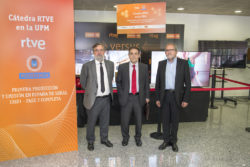 The RTVE Chair at the UPM presents the first production and broadcast in Spain of the UHD1 signal – Complete Phase 2
 BRC-X1000: Sony BRC series PTZs incorporate 4K resolution
 Barco launches a 35,000 lumens projector with native 4K resolution
 'The High Definition video signal': a book to learn all the secrets of HD
 Bethel TV inaugurates its high definition signal
 Playstation 4 will be compatible with 4K resolution
 PowerWall de Orad mejora la resolución a 4K en videowalls
 Gol TV cuts the signal to 7,438 public premises due to improper use of the signal
 JVC Ultra High Resolution at IBC'09
 JVC KY-F4000: captación a ultra-alta resolución