





Radio 3 broadcasts a concert by Niño de Elche live from the Thyssen using 5G and cloud technologies
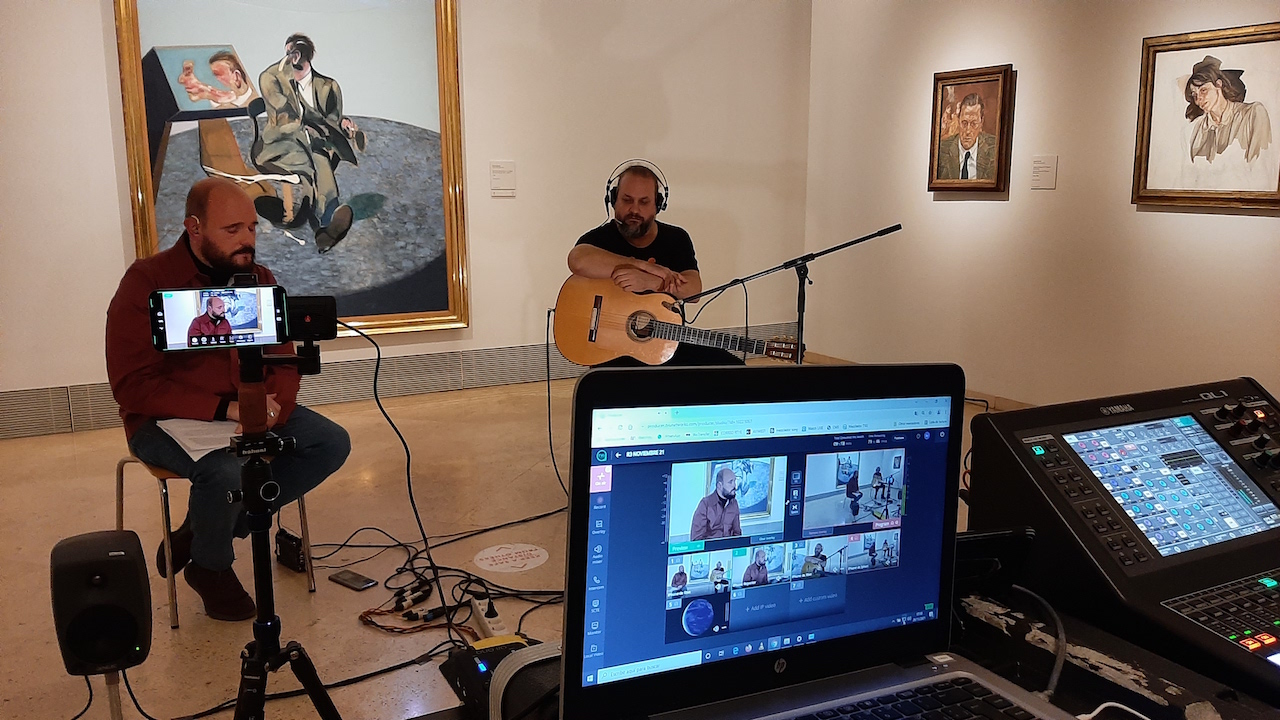
El Niño de Elche junto al guitarrista Raúl Cantizano han protagonizado este sábado un peculiar concierto en el Museo Nacional Thyssen Bornemisza en el que Radio 3 y el equipo de Innovación Tecnológica de RTVE se han unido, nuevamente, para dar otro paso innovador retransmitiéndolo gracias al uso del 5G y la nube.
En la emisión se ha aprovechado para simular un despliegue “de emergencia” con pocos equipos y personal, pero con la mayor calidad y canales de difusión posibles.
El programa eXtrañasheterodoxias, sobre las complejas disciplinas que conforman el difícil y amplio campo artístico, ha podido ser escuchado y visto en directo, con el emblemático cuadro de Francis Bacon Retrato de George Dyer en un espejo como testigo, gracias a las posibilidades que permiten el 5G, la realización en la nube o los sistemas virtualizados para la emisión de señales a distintas plataformas de emisión.
José María Goicoechea, director de comunicación del Museo Nacional Thyssen-Bornemisza, destaca que “por el palacio de Villahermosa han pasado programas de Radio 3 de los más variado, como Hoy empieza todo, Fallo de sistema, La hora del bocadillo… o música en directo con nombres tan conocidos como Izal o Silvia Pérez Cruz, que han tenido las salas del museo como escenario. Llevamos ya muchos años recibiendo, encantados, en el Museo Nacional Thyssen-Bornemisza a Radio 3 en una colaboración cultural siempre fructífera, siempre enriquecedora y siempre estimulante.
En un espacio reducido y complejo por las obras pictóricas o la presencia del público visitante, los equipos de Radio 3 y de Innovación han tenido que adaptarse, bajo la atenta mirada de George Dyer, para lograr un reto, hacer posible la emisión convencional radiofónica y darle imagen y más presencia en otras plataformas con un equipamiento mínimo y maximizando las posibilidades que ofrecen los recursos innovadores.
Tomás Fernando Flores, director de Radio 3, destaca que “es importante poner en valor con nuestra audiencia joven la importancia de las grandes instituciones culturales españolas, llevando el público joven a estos espacios con propuestas nuevas. También nuestra apuesta por la innovación en formatos, lenguajes y tecnologías a través de Radio 3 y Radio 3 Extra”.
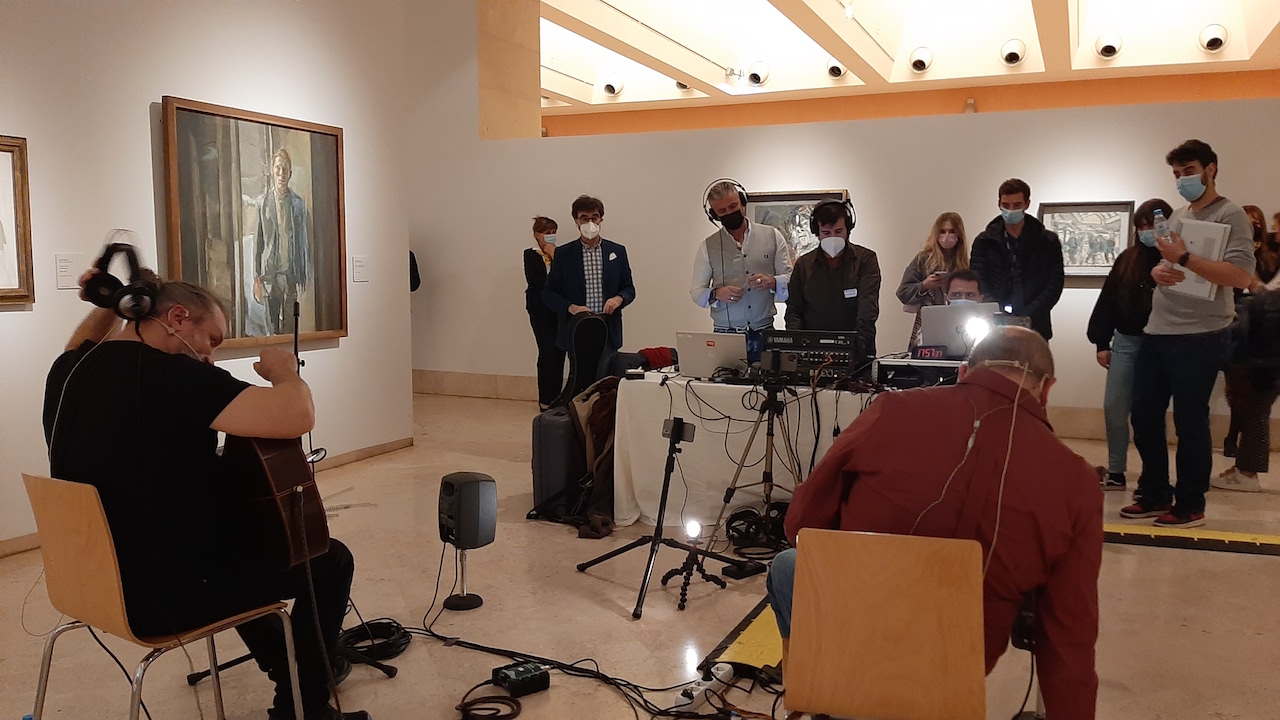
Flujo de trabajo
La cobertura se logró con 4 móviles 5G, uno en “movimiento” y otros tres en posiciones fijas. El audio de la retransmisión ha sido el de la mesa de mezcla de Radio 3, el mismo que en la FM convencional, capturado en uno de los móviles a través de cable. Todas las señales, recibidas a través de la aplicación para móvil TVU Anywhere of TVU Networks instalada y configurada en los móviles para el tipo de retransmisión que se iba a efectuar, fueron sincronizadas, gestionadas y mezcladas en remoto, por un realizador de RTVE situado en Toledo, con el sistema de realización virtual en la nube Producer de TVU.
La emisión resultante fue distribuida, simultáneamente y en directo, en RTMP para la web y redes sociales de Radio 3, para la APP de Radio 3, RTVE Play, Youtube y para un decodificador SDI de televisión instalado en Torrespaña para su emisión en TV lineal y su ingesta para archivo y usos posteriores.
Carmen Pérez Cernuda, Subdirectora de Innovación y Estrategia Tecnológica de RTVE, ha recalcado que “para nosotros es un placer participar en estas actividades que unen Tecnología y Cultura, aunque en esta ocasión ha supuesto un reto importante el hecho de que la sala del evento sea de reducidas dimensiones, lo que nos ha imposibilitado utilizar una cámara profesional para enviar el audio al mezclador TVU levantado en la cloud y nos ha obligado a plantear un flujo de trabajo basado únicamente en móviles”.
Las limitaciones fueron también una ventaja, permitieron que esta retransmisión pudiera simular una emisión de “emergencia”. “Nos planteamos que había que cubrir una noticia imprevista que estaba sucediendo en un lugar alejado de nuestros equipos o centros de trabajo habituales y que podíamos aprovechar algo tan frecuente en cualquier lugar como un teléfono móvil, el de cualquier persona presente, para disponer de imágenes y sonido en directo”, comenta David Corral, responsable de Innovación de Contenidos de RTVE.
“Con los sistemas que estamos probando es fácil enlazar estos móviles a través de un sencillo código QR y poder generar una señal, mezclada como hemos comprobado en remoto desde cualquier sitio, con escasa latencia y calidad suficiente, para tener contenido en una emisión lineal o digital en espera de que lleguen medios convencionales, como equipos de cámaras, mochilas o terrenas, a las que, además, pueden complementar dotando de más recursos a las emisiones”, añade Corral.
La implicación de distintos departamentos de RTVE en un mismo proyecto, como Radio 3, Innovación o Centros Territoriales, se ha convertido en una complicidad habitual que permite afrontar experiencias pioneras con garantías y mantener el compromiso de RTVE con la creatividad, la cultura y el acceso a ella.
El programa está disponible, here.
Did you like this article?
Subscribe to our NEWSLETTER and you won't miss anything.
Related articles
 Kayu FM broadcasts from Nairobi with Lawo RƎLAY virtual radio software
 Catalunya Ràdio emite por primera vez desde el metaverso
 Onda Cero broadcasts 'Más de uno' live using Orange's 5G network
 Live… from a boat with Chris Evans and an AEQ Forum IP console for Virgin Radio UK
 TV Tokyo (Japan) broadcasts live from Barcelona with a Blackmagic Design workflow
 CCTV broadcasts live from a high-speed train thanks to Aviwest links
 TVU Networks colabora con la AIMS Fundación para transmitir en directo su concierto anual desde Solsona (Lleida)
 Radio 5 celebrates its anniversary with eleven hours of live broadcast from the Complutense
 Millones de espectadores en 70 países siguen el concierto de Año Nuevo desde Viena
 Tgcom24 broadcasts interviews from all over the world with Teracue encoders
 Sky News emite la primera entrevista intercontinental desde un iPhone
 Flaix FM emite desde la montaña rusa más alta de Europa con AEQ Phoenix Lite
 La UER emitirá en directo desde el Parlamento Europeo con tecnología de radio híbrida
 Streambox allows live broadcasting using 3G/4G networks