





DJI develops a video transmitter with advanced SDR technology
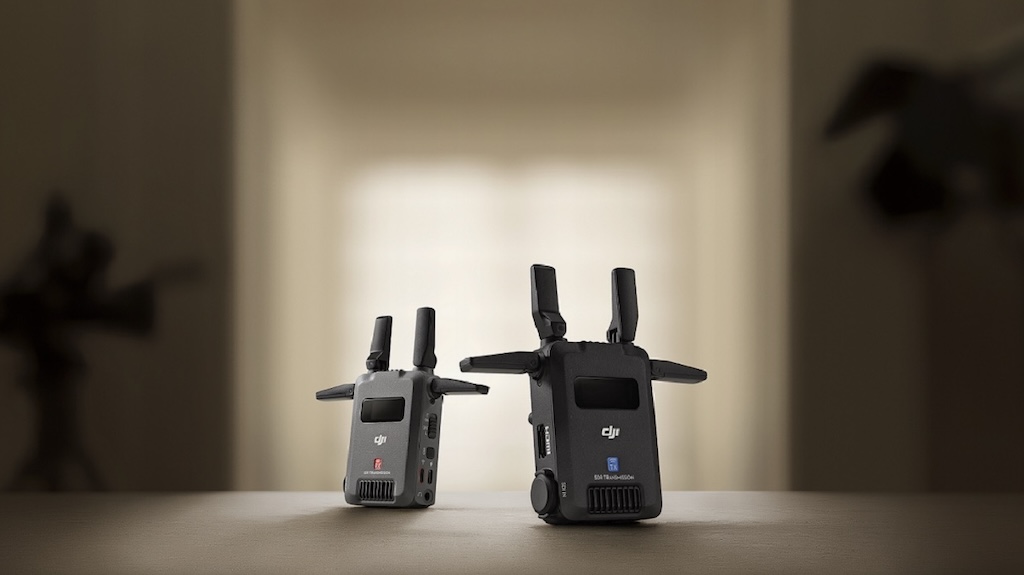
The new DJI SDR Transmission, con la tecnología avanzada de radio definida por software (Software Defined Radio, SDR), ofrece a los productores de cine y televisión una solución fiable, flexible y eficiente para la transmisión y la monitorización de vídeo en el set de rodaje.
Diseñada para equipos de rodaje pequeños y medianos, esta solución ofrece mayor estabilidad, fuerte resistencia a interferencias y robustas capacidades de penetración. Para situaciones que requieran monitorización temporal, puede permitir transmisiones por Wi-Fi simultáneamente, para dar a los cineastas la flexibilidad que necesitan en el set de rodaje.
Paul Pan, gerente de línea de producto de DJI, afirma que “desde el principio, tuvimos la intención de que nuestra línea DJI PRO fuera un completo y fiable ecosistema de drones, cámaras y herramientas creativas, tanto para los profesionales de la industria cinematográfica como para los creadores de contenidos que quieren contar historias”,
“Escuchando atentamente las valoraciones de los usuarios, seguimos ampliando nuestra oferta de tecnologías creativas para cámaras, con especial atención a lo que necesitan. Nuestra nueva DJI SDR Transmission ofrece una calidad de imagen del mismo nivel que el cine y la televisión, pero a un precio más accesible para más futuros cineastas”, añade.
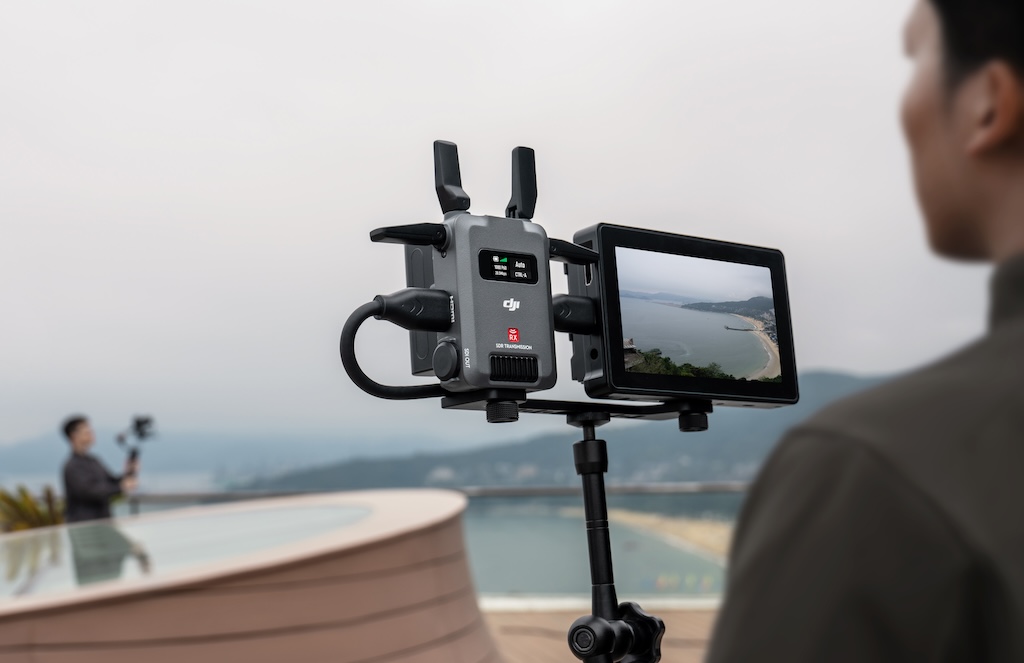
Alta calidad y máxima estabilidad
Con tecnología SDR, DJI SDR Transmission garantiza una transmisión de vídeo estable incluso en entornos de grabación complejos. Los cineastas verán en los monitores señales en directo en 1080p/60 fps con una tasa de bits de hasta Mb/s y una latencia mínima de 35 milisegundos. Los vídeos se pueden transmitir a una distancia de hasta 3 kilómetros. Combinadas con capacidades de penetración de un nivel superior, las señales de vídeo en directo se mantienen estables, incluso en entornos de grabación complejos. Cuando hay interferencias en un canal, salta automáticamente a las bandas de frecuencias de 2.4 GHz, 5.8 GHz y DFS para encontrar el canal óptimo.
DJI SDR Transmission hace que la colaboración sea más eficiente para todo el equipo creativo en el set de rodaje. Puede generar tres señales SDR y dos señales Wi-Fi simultáneamente. En el modo Emisión, puede conectarse a un número ilimitado de receptores, lo que hace posible una experiencia de monitorización de alta calidad para múltiples colaboradores. El receptor puede conectarse a monitores por SDI/HDMI y a smartphones y tabletas por USB-C o Wi-Fi. La opción de Wi-Fi permite una experiencia de monitorización económica por doble canal, sin necesidad de otro receptor.
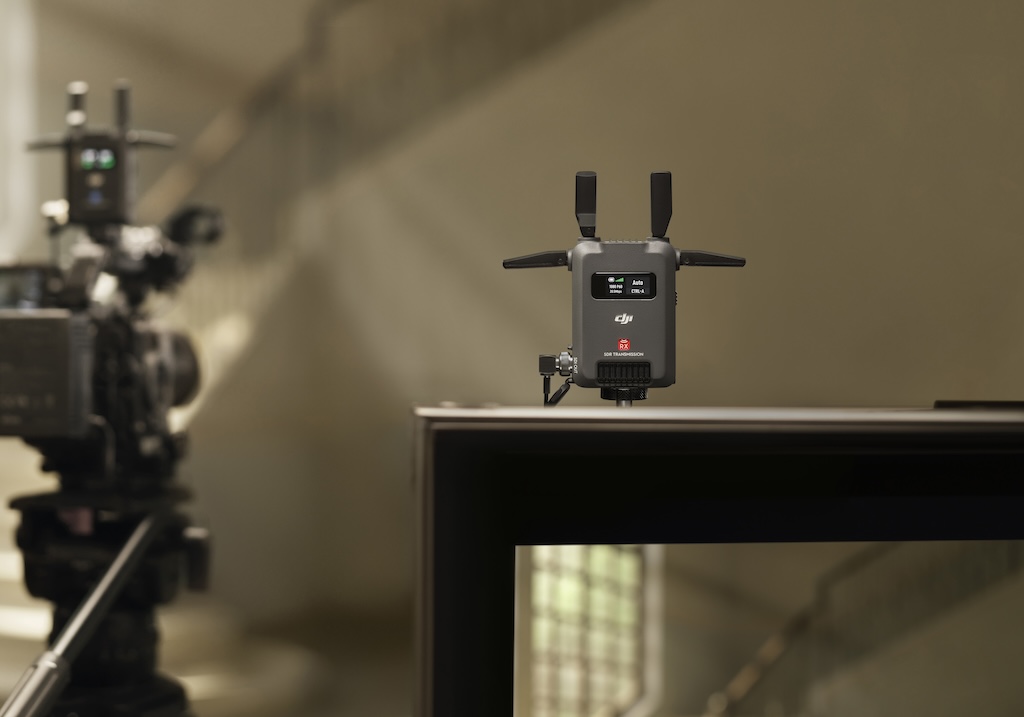
Control de cámara a distancia
Al usarla con los estabilizadores de serie DJI RS, la DJI SDR Transmission permite usar Force Mobile and the funciones de joystick virtual y recentrado del estabilizador. Al combinarla con una cámara, permite el control PTP, mostrar y ajustar la apertura, el obturador, el ISO e incluso activar las funciones de hacer fotos y grabar vídeos de la cámara a través de la aplicación. También permite el control CEC de cámaras de Sony, para poder usar el modo de control reflejado.
DJI SDR Transmission puede transmitir metadatos, lo que facilita la colaboración durante toda la grabación. Cuando DJI SDR Transmission se conecta a la aplicación DJI Ronin en el modo Emisión, los usuarios pueden cambiar fácilmente los índices de cámara en la aplicación. Las principales cámaras cinematográficas del mercado, como ARRI y RED, pueden adaptarse por SDI para dar a directores, técnicos de imagen digital y directores de fotografía acceso en tiempo real a información detallada de la grabación.
Por último, destacar que DJI SDR Transmission utiliza un cargador de protocolo PD estándar con entrada de energía por USB-C. También se puede alimentar directamente por DJI RS 4 Pro, DJI RS 4 o DJI RS 3 Pro cuando se instala y se usan juntos, lo que suprime la necesidad de una batería independiente. Por sí mismos, tanto el transmisor como el receptor son compatibles con baterías NP-F, estándares en la industria.
Con un diseño ligero, cada transmisor o receptor solo pesa 145 gramos. Además, la antena se pliega hacia abajo, para poder llevarla y guardarla fácilmente.
Did you like this article?
Subscribe to our NEWSLETTER and you won't miss anything.
Related articles
 Aret and Lawo will exhibit a mobile unit with the most advanced audiovisual technology at IBC
 Grass Valley equips Fujairah TV (UAE) with advanced live production technology
 Brainstorm will show the most advanced virtual production technology at InfoComm
 Vislink Develops Mobile Viewpoint Stellar Cam for Advanced AI Live Sports Production
 ATEM Mini Extreme: Blackmagic develops an advanced version of its popular ATEM Mini mixer
 For-A will present its advanced 12G technology at IBC and show new systems for live production
 Maxon acquires advanced rendering technology from Redshift
 Avid will include Nexidia's advanced technology in its MediaCentral platform
 VSN will debut at IBC the advanced Quality Check VSNQC technology for content quality control
 BTESA facilitates the arrival of digital TV to Lima with a transmitter with Doherty technology
 Harman International acquires the Dutch Duran Audio and its advanced electroacoustic technology
 RNE inaugurates its new studios with an avant-garde design and the most advanced technology
 Avid brings the most advanced technology in AV post-production to Broadcast IT 2011
 Utah incorporates advanced Mindspeed technology