





DaVinci Resolve Studio makes it possible to recreate D-Day with three-dimensional images
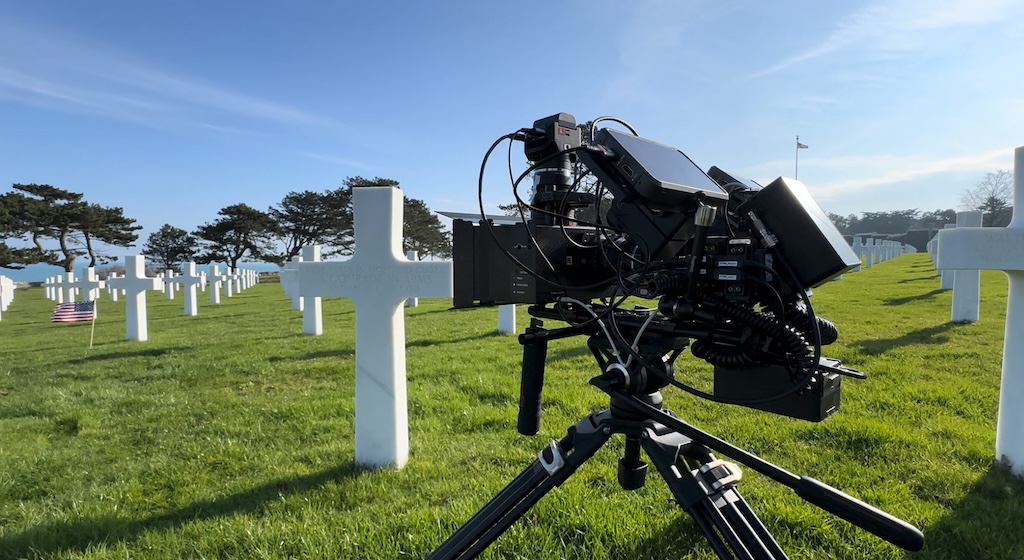
Targo, un estudio especializado en documentales tridimensionales, emplea DaVinci Resolve de Blackmagic Design para abordar ‘D-Day: The Camera Soldier’ (‘El Día D: el soldado de la cámara’), una película como una narrativa que alterna con fluidez entre distintos formatos, utilizando el inmersivo como parte de un conjunto de herramientas narrativas en constante evolución.
Ochenta años después de la Segunda Guerra Mundial, una hija descubre la historia nunca contada de su padre como camarógrafo de guerra durante el Día D. Esta es la trama del nuevo documental producido por Targo en colaboración con Time Studios para dispositivos Apple Vision Pro. Al combinar material de archivo 2D, imágenes inmersivas y la interactividad 3D, los cineastas buscaron acercar al público a la verdad emocional e histórica del documental.
Chloé Rochereuil, cofundadora y directora de Targo , señala que “ahora podemos preguntarnos: ‘¿Cuál es el medio más adecuado para contar esta parte específica de la historia?’ Antes, trabajábamos en bloques —imágenes en 360 grados, secuencias estereoscópicas, escenas interactivas—, y cada formato funcionaba de forma independiente. Este proyecto los vincula y nos permite elegir el que mejor se adapta a la narrativa”.
Esa mentalidad influyó en cada aspecto de la producción, desde el desarrollo de una plataforma para cámaras compacta y personalizada hasta el diseño de un proceso de posproducción unificado. “Uno de los primeros retos que enfrentamos fue encontrar el equipo adecuado: debía ser ligero, de alta resolución y lo suficientemente robusto como para poder registrar el día a día tal con naturalidad sin ocasionar molestias”, destaca Victor Agulhon, productor y cofundador de Targo.
Desarrollo de una plataforma 3D compacta
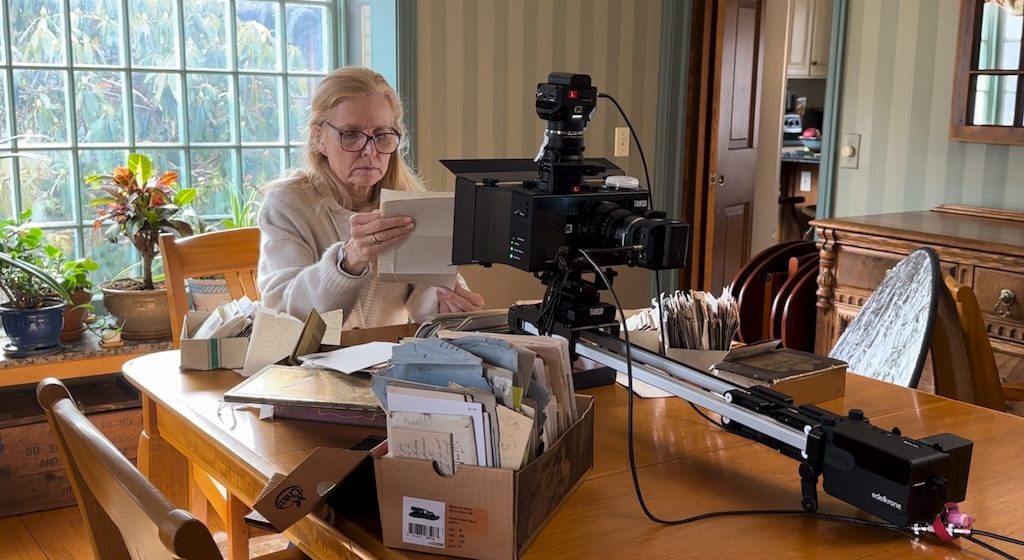
Las plataformas 3D de alta resolución tradicionales son grandes e incómodas, lo cual dificulta el trabajo en documentales. Para este proyecto, Targo desarrolló una versión miniaturizada con dos unidades Blackmagic Micro Studio Camera 4K G2, a fin de captar las imágenes en formato espacial.
“Estas cámaras nos brindaron el equilibrio perfecto: calidad cinematográfica con un diseño compacto y ligero“, afirma Agulhon. “Eran lo suficientemente pequeñas como para montarlas en un divisor de haz, lo que nos permitió mover el sistema fácilmente y desplazarnos en interiores y exteriores, o incluso en la playa”.
Al final, todo se redujo a la calidad de imagen, el formato y la sincronización de los sensores. “Las Micro Studio 4K fueron las únicas cámaras que lograron integrar los tres elementos de la forma que necesitábamos”, revela Mael Joanas, director de fotografía inmersiva. «Asimismo, las cámaras de Blackmagic nos brindaron un generador de sincronismos confiable en un formato compacto, sin necesidad de disponer de una fuente de corriente alterna, lo cual fue un factor crucial para nosotros”.
La plataforma compacta abrió las puertas a un mundo de opciones creativas. “Pudimos filmar en espacios reducidos, entre muebles, en sótanos y cerca de los sujetos”, comenta Rochereuil. “Un ejemplo de ello es una toma muy bonita que imita el efecto de un acercamiento con travelling, para la cual utilizamos las cámaras montadas en deslizadores. Logramos tomar estas decisiones gracias a la ligereza y el tamaño compacto de la plataforma”.
Por otro lado, Agulhon reconoce que “queríamos aprovechar al máximo las capacidades del Vision Pro y alcanzar la fidelidad del mundo real. Esa prioridad influyó en la decisión de utilizar equipos Blackmagic, que proporcionan la nitidez y la profundidad cinematográficas necesarias para dar vida a la experiencia inmersiva“.
Con una única herramienta
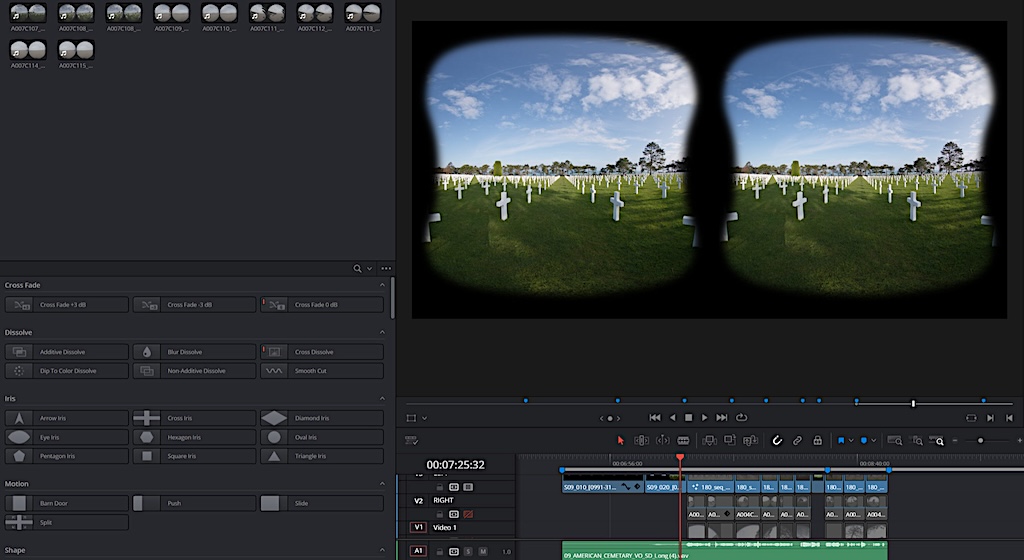
D-Day: The Camera Soldier fue el primer proyecto de Targo en el que se pudo integrar toda la dinámica de trabajo en DaVinci Resolve Studio. “Unificar nuestra dinámica audiovisual para editar, conformar, etalonar y entregar la versión final utilizando una sola herramienta redujo las variables y centralizó nuestro proceso en torno a un conjunto de habilidades conocidas», explica Joanas.
Una ventaja fundamental fue la compatibilidad de DaVinci Resolve Studio con dinámicas de trabajo tridimensionales estereoscópicas. “Anteriormente, nuestro proceso de alineación estereoscópica se habría distribuido entre varias herramientas”, revela Joanas. “Gracias a Resolve, no solo redujimos la necesidad de importar y exportar archivos, sino que además mejoramos nuestra colaboración”.
Esa capacidad de editar el material estereoscópico mediante una dinámica de trabajo bidimensional clásica resultó ser decisiva. “Básicamente, trabajábamos en un entorno 2D usando imágenes apiladas para el ojo izquierdo y el derecho que se sincronizaban con unos pocos clics”, indica Joanas. “Esto nos permitió efectuar la edición estereoscópica con una pantalla común y, al mismo tiempo, exportar en formatos paralelos para la entrega”.
Targ considera el documental como un paso hacia una nueva forma de narración inmersiva. “Estamos muy orgullosos de la naturalidad con la que se concretó todo, tanto para la historia como para el espectador. Logramos unificar múltiples formatos sin perder la esencia de una narrativa profundamente humana”, concluye Rochereuil.
https://www.youtube.com/watch?v=g8NEqGBGnGI
Did you like this article?
Subscribe to our NEWSLETTER and you won't miss anything.
Related articles
 Blackmagic updates DaVinci Resolve Studio with Apple Immersive format in mind
 ‘Y2K’ (A24) travels from digital to celluloid with DaVinci Resolve Studio
 DaVinci Resolve Studio 19 brinda un centenar de actualizaciones
 Basis Berlin processed the reality-blending images and LED backgrounds of the '1899' series with DaVinci Resolve
 DaVinci Resolve Studio takes on the darkness of 'Barbarian'
 DaVinci Resolve Studio finishes ‘Ms. Marvel' with a very particular aesthetic
 DaVinci Resolve Studio, axis of the completion of 'Writing With Fire'
 ‘Red Alert’ (Netflix), graded with DaVinci Resolve Studio
 DaVinci Resolve Studio Collaborative Tools Make 'Soul Seeing Machine' Possible
 ‘The Green Knight’, etalonada con DaVinci Resolve Studio
 'Gaey Wa'r', graded with Blackmagic Design's DaVinci Resolve Studio
 Paramount graded 'Rocketman' with DaVinci Resolve Studio
 Oscar winner Claudio Miranda trusts DaVinci Resolve Studio and DaVinci Resolve Mini Panel from Blackmagic
 La serie ‘Please Tell Me I’m Adopted!’, editada y etalonada con DaVinci Resolve Studio