





The CAC 2024 report analyzes the disruptive role of AI in audiovisuals
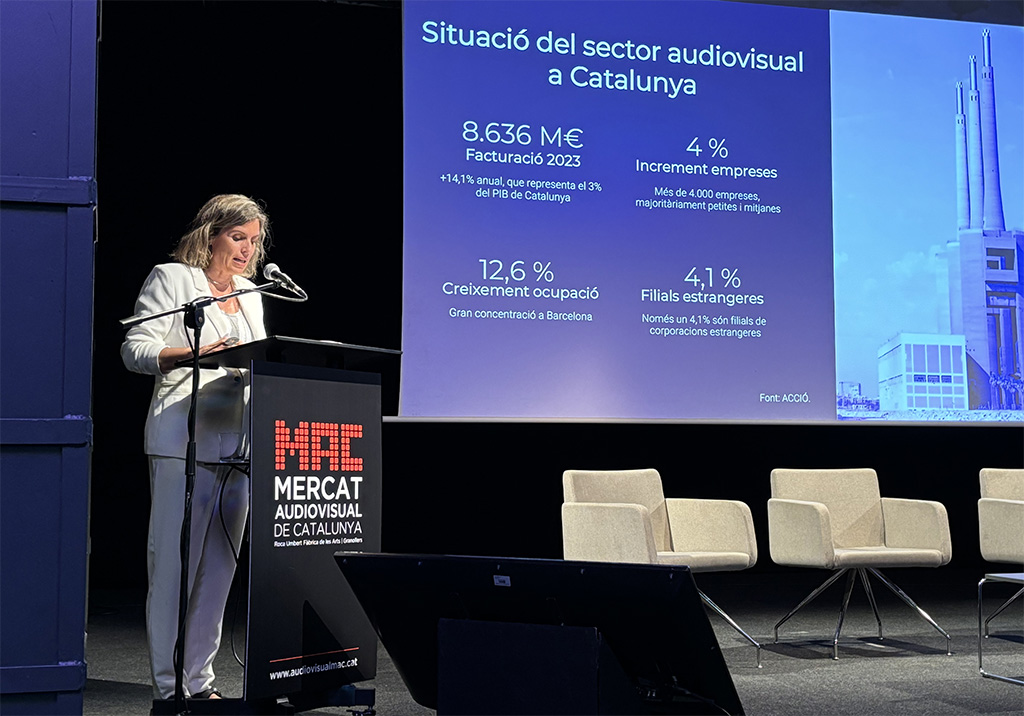
La última edición del Mercat Audiovisual de Catalunya ha sido el marco en el que el CAC (Consell de l’Audiovisual de Catalunya) ha presentado su informe 2024, en el que la IA tiene un papel central al impactar directamente en áreas como los derechos de autor, la desinformación o la educación.
El informe sobre el audiovisual en Cataluña 2024, presentado por Laura Pinyol, responsable del área de investigación del CAC, analiza el papel disruptor de la inteligencia artificial (IA) generativa en aspectos tales como los derechos de autor, la desinformación, la educación audiovisual, el género y el periodismo. También presenta, como cada año, una radiografía del sector, y pone el énfasis en cómo el consumo está aumentando en los nuevos sistemas audiovisuales, como las plataformas de vídeo bajo demanda y las redes sociales.
Por lo que respecta a los derechos de autor, el informe destaca el debate abierto entre las empresas impulsoras de la inteligencia artificial y los sectores que defienden una regulación del copyright. El estudio señala que el pasado 25 de febrero, la Administración Trump lanzó el AI Action Plan, un proyecto que tiene como objetivo consolidar el liderazgo de Estados Unidos de América en esta tecnología. En este marco, la empresa OpenAI, propietaria de ChatGPT, defiende la libertad de acceso a los contenidos y se protege “tanto de las autocracias, como de las leyes y la burocracia”.
En relación al tema de la desinformación, la vicepresidenta ha explicado que estamos asistiendo a un círculo destructivo que se inicia con las fake news, se multiplica con la viralización y produce una polarización, que supone una erosión de la democracia. Además, Pinyol ha señalado que la educación es un ámbito esencial que pide una intervención pública ante el reto de la inteligencia artificial para evitar riesgos y disfunciones. La vicepresidenta del Consell ha aludido a la necesidad de abordar la educación tanto si se trata de defender a las personas de la IA como de aprovechar las nuevas herramientas”.
Radiografía del sector audiovisual catalán
He Informe sobre el audiovisual en Catalunya 2024 muestra que el sector audiovisual catalán facturó 8.636 millones de euros en 2023, una cifra que supone un incremento del 14,1% respecto al año anterior y que representa el 3% del PIB de Catalunya. El sector tenía un total de 4.161 empresas en 2024, que suponían, con datos de 2023, 41.866 puestos de trabajo. Las empresas crecieron un 4% y el empleo aumentó un 12,6% respecto a los ejercicios anteriores.
De forma segmentada, el principal motor del sector audiovisual en Cataluña fue el entretenimiento audiovisual (4.434 millones de euros), seguido de la publicidad y comunicación (3.087 millones de euros) y de los medios de comunicación (1.115 millones de euros). A nivel global, la facturación del sector audiovisual fue de 2,8 billones de dólares (datos de 2023), un 5% más que el año anterior y superior al 3,2% del crecimiento de la economía mundial, lo que muestra la vitalidad del sector.
El sistema audiovisual propio de Cataluña, que reúne los servicios audiovisuales establecidos en el Principado, está formado por 494 servicios de comunicación audiovisual. Este casi medio millar de servicios audiovisuales se distribuye por tipología en 66 canales de televisión (la suma de 50 canales de televisión en TDT y 16 canales de televisión por internet) y 428 emisoras de radio (la suma de 410 emisoras en FM y 18 radios por internet).
Cambios en el consumo de los espectadores
En cuanto al consumo audiovisual en Cataluña, en 2024 consolidó las tendencias de los últimos años: descenso sostenido de la televisión lineal, estabilidad de la radio y crecimiento de las plataformas digitales, las redes sociales y los contenidos interactivos. En ese escenario, el televisor se mantiene como dispositivo central, gracias a la televisión híbrida con internet.
He consumo diario de televisión tradicional en Cataluña se situó en 2 horas y 36 minutos por persona, 7 minutos menos que en 2023 y más de una hora por debajo de la cifra de 2020. A nivel de España, por primera vez, el consumo bajó de las tres horas diarias (2 h 51 min), con una edad media de la persona telespectadora de 58. En Catalunya, TV3 fue la cadena más vista por decimoquinto año consecutivo, con un 13,7% de cuota de pantalla. A nivel estatal, Antena 3 TV obtuvo un 12,6% de cuota, seguida de La 1 (10,5%) y Telecinco (9,8%). El canal de Mediaset registró el peor resultado de su historia.
As for the radio, he consumo se mantuvo estable en torno a los 93 minutos diarios por persona. La penetración fue del 55% y casi 4 millones de personas escucharon radio en Catalunya, de los que un 70% lo hizo en catalán. La FM siguió siendo el principal sistema de emisión, pese a la caída de cuatro puntos porcentuales. Por el contrario, crecieron las escuchas por internet (+1,4%), el streaming (+0,9%) y los podcasts (+0,8%).
Los medios tradicionales, canales de televisión lineales, emisoras de radio y prensa, perdieron influencia un año más en favor del consumo a través de internet durante el 2024. En el caso del consumo televisivo, los servicios audiovisuales online bajo demanda, con las plataformas OTT e IPTV de pago, capitalizaron esta tendencia.
Did you like this article?
Subscribe to our NEWSLETTER and you won't miss anything.
Related articles
 A report denounces the non-compliance with the audiovisual regulations of the Basque streaming platforms
 Costa Rica Media Market outlines its role as an audiovisual 'hub' in the region
 Spain Audiovisual Hub publica el 2º Informe sobre el sector audiovisual
 Next-Gen Audiovisual Forum: innovation in the audiovisual industry debated at VDS Valencia 2024
 Shooting in Spain reforzará el papel de España como gran plató en el Marché du Film 2024
 DAMA señala la masiva brecha de género de la dirección audiovisual en su último informe
 Netflix crea un fondo para fomentar el papel de la mujer en la industria audiovisual
 Akamai analyzes cyberattacks on media outlets
 El sector audiovisual analiza la presencia de personas con discapacidad en la profesión
 Atresmedia y Fever, la start-up de planes de ocio participada por el grupo audiovisual, ponen en marcha un Escape Room de ‘La Casa de Papel’
 Un estudio analiza por qué vemos la televisión, el cambio de hábitos y su papel en nuestra sociedad
 Eiken reinforces the role of internationalization as a lever for the evolution of the Basque audiovisual sector
 'Audiovisual Panorama 2011' report: first data on the transition to digital
 Pormenorizado análisis del sector en el libro-informe ‘Panorama Audiovisual 2010’