





Less is more: AI and the content saturation dilemma


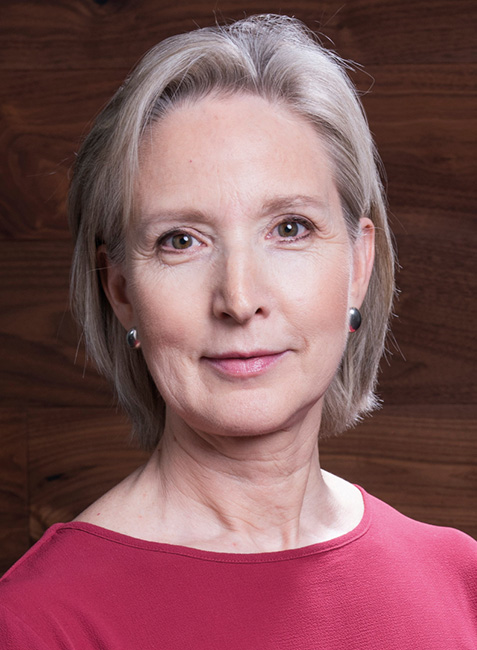
On this platform, Doris Seedorf, CEO of Softtech for Spain, addresses the role of artificial intelligence in different processes of audiovisual creation, highlighting the risks for creativity and how, if it is developed without the essential human criteria, it could lead to a saturation of homogeneous content of no interest to viewers.
In a world where the Content is produced at the speed of a click, artificial intelligence has ceased to be a distant promise and has become the new protagonist of the entertainment industry. AI is redefining every aspect of production, from automatic scripts until the hyper-realistic visual effects. However, this revolution is not exempt from a fundamental challenge: that of content saturation.
The audiovisual industry is in a crossroads. On the one hand, AI offers unprecedented potential to improve efficiency, reduce costs and speed up creation of new productions. Advanced algorithms allow screenwriters explore narratives and dialogues in a fraction of the time that a traditional process would require. Visual effects (VFX) are automatic, eliminating the need for tedious manual tasks such as rotoscopia.
The smart location It enables multilingual dubbing and subtitles in real time, opening up the global market at a speed previously unimaginable. Personalization, driven by predictive recommendation systems, can increase the audience retention even in a 50%, since streaming platforms can offer content that really adapts to the tastes and preferences of each viewer.
The risk of soulless entertainment
But what happens when the ease of creating content meets an already overwhelmed audience? The threat of saturation of homogeneous content looms over the industry. With AI facilitating production, there is a risk that the market will be flooded with productions lacking originality and spark that only human creativity can provide. In the search for efficiency and algorithmic personalization, we could fall into a trap where stories start to look alike and the narratives become predictable, created to satisfy metrics rather than excite.
Artificial intelligence is a powerful tool, a strategic partner, but not the conductor. The strategic and creative vision of film and television professionals is the true long-term competitive advantage.
This is a critical point that the sector must manage with great care. It is here where the human supervision continues to be indispensable. Artificial intelligence is a powerful tool, a strategic partner, but not the conductor. The strategic and creative vision of film and television professionals is the true long-term competitive advantage. It is the critical capacity of humans to guide, control and adapt these technologies which ensures that technological innovation don't sacrifice authenticity and artistic quality.
The IA offers a range of use cases which, if handled correctly, can enrich the industry. In pre-production, generative models can analyze audience trends to suggest script ideas with high potential. In production, AI is capable of optimize lighting and sound in time real, and even create smart sets. In post-production, in addition to VFX, it helps in the editing and selecting the best shots, adjusting the rhythm of a scene. Finally, in the distribution, predictive algorithms not only personalize recommendations, but also help production companies better understand their target audience, adapting your marketing strategies.
Virtue lies in balance
Artificial intelligence is here to stay. His influence on film and television is undeniable and, in many ways, positive. The key for companies that want to succeed in this new era will not be simply adopting AI, but finding the perfect balance between the power of algorithms and the creativity of humans.
In an infinite sea of content, only those stories that retain the pulse of the human, the echo of the true.
The fate of entertainment will be decided by our ability to turn technology into an ally of talent, not in its replacement. In an infinite sea of content, only those stories that retain the pulse of the human, the echo of the true.
If we manage to ensure that artificial intelligence does not eclipse, but enhance the creative spark that sets us apart, the industry will not only survive the avalanche: it will emerge more bold, conscious, and authentic. Because no machine can replicate the look of someone who dreams of a different world and tells it with soul, courage and their own voice.
Doris Seedorf
CEO of Softtech for Spain
Did you like this article?
Subscribe to our NEWSLETTER and you won't miss anything.
Related articles
 84% of broadcasters use at least one cloud-based technology
 Streaming, at low times: slowdown and fewer subscriptions
 The kmfm station avoids the saturation of the 4G/5G network with Starlink and Cleanfeed
 France.tv fights against network saturation with Starlink and TVU One
 More power, less chaos: the advantage of hyperconvergence
 Rushprompter: a simple prompter for less than a hundred dollars
 Vislink HCAM+ULRX provides a link with less than one frame latency in 4K content
 David Shing, at MABS2017: “you have to concentrate on the story and less on how to tell it: more story and less telling”
 Spanish cinema raises more but shoots less
 The audiovisual sector will grow with less employment and more working hours
 Pablo Rio launches its eighth update in less than a year
 CMT sector report: we are still in the red… but less
 Overview of DTT: Less than a year after analogue shutdown
 NAB’09: maintains pace, although with fewer visits