





Sennheiser microphones capture every detail in the heart of the Kenyan wilderness
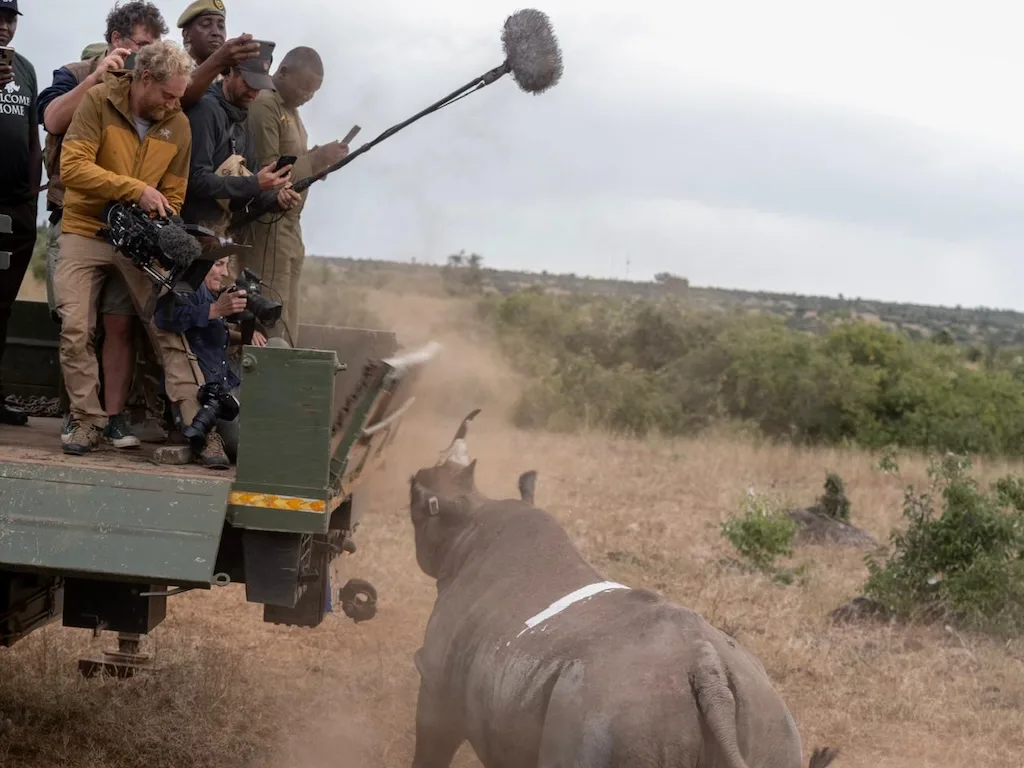
Tom Martienssen, de Dustoff Films, confía en los micrófonos de condensador RF MKH 8000 de Sennheiser para capturar cada detalle sonoro de la naturaleza en Kenia en el documental ‘Rhino’.
El documental, que sigue a un grupo de guardabosques de élite en Kenia que trabajan para proteger al rinoceronte negro, en peligro crítico de extinción, está atrayendo la atención tanto por su poderoso mensaje de conservación como por su excepcional calidad de audio. En el corazón del sonido de la película se encuentran los micrófonos de vanguardia de la serie MKH 8000 de Sennheiser, que ayudaron a dar vida al mundo inmersivo de la película.
Desde los profundos rugidos de los rinocerontes hasta el sutil susurro de la pradera, el paisaje sonoro de la película es tan crucial para la narrativa como sus imágenes. El uso de los micrófonos de condensador RF MKH 8000 de Sennheiser permitió a Martienssen y a su pequeño equipo de producción capturar con autenticidad los sonidos del entorno en el lugar. Los micrófonos proporcionaron claridad y detalle, incluso en las condiciones más adversas que la naturaleza salvaje de Kenia podía presentarles.
Martienssen fundó Dustoff Films hace aproximadamente una década. Inspirado por sus experiencias en el frente de guerra y la apremiante necesidad de una mayor conciencia ambiental, su trabajo evolucionó rápidamente para centrarse en la conservación de la vida silvestre. Dustoff Films ahora se compromete a producir documentales impactantes que abordan temas cruciales como el cambio climático, la conservación y los derechos humanos.
In Rhino, Martienssen y su equipo han decidido compartir una historia de esperanza en medio de la amenaza ambiental. La película narra la extraordinaria recuperación de la población de rinocerontes de Kenia, que, tras estar al borde de la extinción en la década de 1970, ahora prospera gracias a los exitosos esfuerzos de conservación. Sin embargo, este resurgimiento ha conllevado sus propios desafíos: la población de rinocerontes ha superado el tamaño de su hábitat, lo que ha provocado disputas territoriales y agresiones entre los animales. En una iniciativa pionera, los guardabosques tienen ahora la tarea de reubicar a los animales en nuevas zonas para garantizar su supervivencia y crecimiento. El documental destaca la incansable y peligrosa labor de los guardabosques, los resultados positivos de los esfuerzos de conservación y la importancia global de proteger a las especies en peligro de extinción.
“Queríamos que el sonido fuera real”, dice Martienssen. “No queríamos recrear los cantos de la fauna ni añadir nada que no existiera en el momento. Era importante que los sonidos que grabamos en el lugar fueran los que se oirían si realmente estuvieran allí con nosotros, en plena sabana africana”.
Capturar audio con total precisión
Este compromiso con el sonido auténtico llevó al equipo a utilizar los micrófonos de la serie MKH 8000 de Sennheiser para garantizar la captura precisa de cada detalle del audio en condiciones polvorientas, ventosas y, en ocasiones, peligrosas, contribuyendo así a preservar los sonidos crudos y sin filtros de la naturaleza keniana.
El MKH 8060, conocido por su alta direccionalidad y claridad, se utilizó durante toda la película para capturar sonido nítido y aislado de fuentes específicas, como cantos de animales y conversaciones de guardabosques. Su tamaño compacto, increíble sensibilidad y robustez a prueba de climas lo hicieron ideal para su uso en el campo, incluso en entornos difíciles como la sabana keniana.
Martienssen conoció primero a Tim Constable de Sennheiser durante una conferencia sobre el uso de cámaras RED Digital Cinema para narrar historias. “Nuestra conversación giró hacia el sonido de la película, y fue entonces cuando Sennheiser, a través de Tim, nos proporcionó un sistema estéreo doble MS, con dos MKH 8040 y un micrófono MKH 8030”, comenta. “Usamos esta configuración para capturar el sonido ambiental natural de cada locación de la película y crear un paisaje sonoro envolvente”.
“Los micrófonos de la serie 8000, ya sean el 8060, el 8030 o el 8040, suenan muy similares, así que se pueden combinar fácilmente sin problemas”, añade Constable. “El perfil de sonido se mantiene constante, lo que significa que no hubo necesidad de realizar grandes ajustes de posproducción. Tras nuestras conversaciones con Tom, encontramos una solución que funcionó a la perfección desde el principio”.
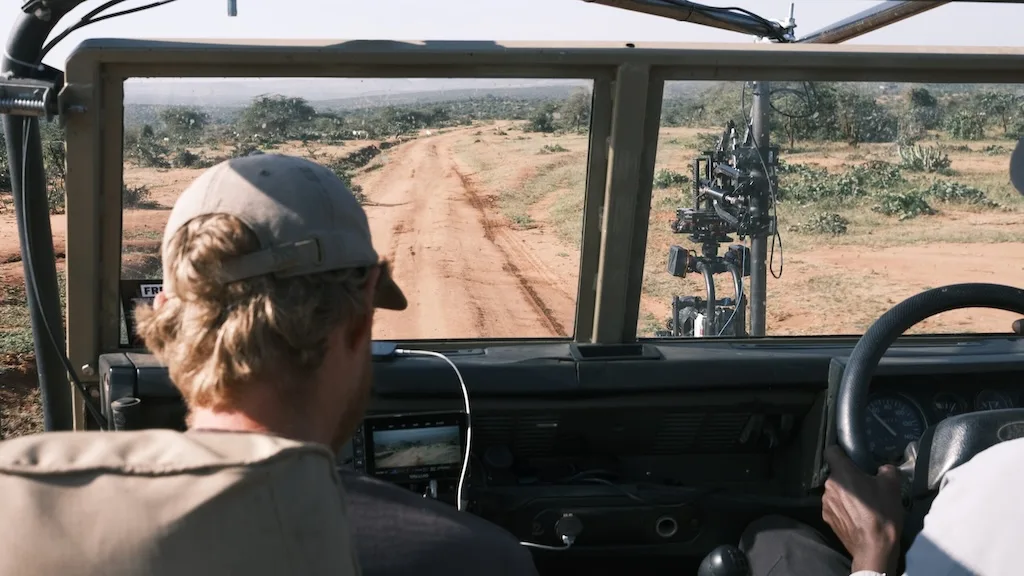
Además del MKH 8060, el sistema estéreo doble MS proporcionó una capa adicional de riqueza sonora y permitió a Martienssen y a su equipo grabar un sonido espacialmente inmersivo: “Usamos dos configuraciones principales de micrófonos”, explica Martienssen. “Uno era un MKH 8060 montado en la cámara, que capturaba el audio dondequiera que la cámara apuntara. El segundo sistema consistía en un micrófono de cañón, donde alternábamos entre el sistema estéreo doble MS con dos MKH 8040 y un MKH 8030, o solo el MKH 8060. Hicimos una prueba comparativa con el 8060 que teníamos desde el principio y otro que adquirimos hace unos seis meses. Después de dos años y medio de uso, sonaban idénticos, igual que el nuevo, desde el primer momento”.
Antes de cada rodaje, decidían qué configuración funcionaría mejor para cada escena. Descubrieron que el MKH 8060 era excelente por su enfoque direccional y tamaño compacto, mientras que el sistema estéreo doble MS destacaba al capturar el sonido envolvente completo de una escena al colocarlo en medio de la acción.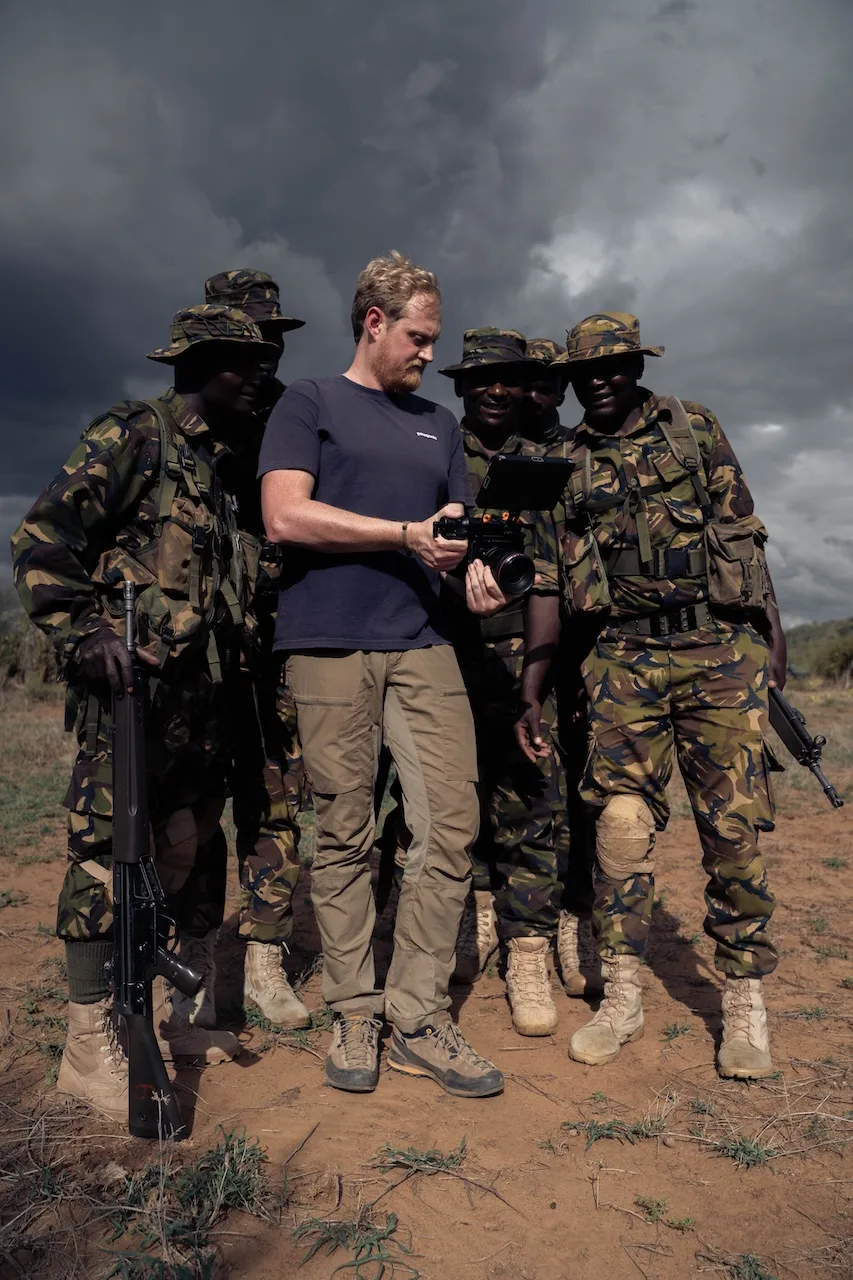
Simplificar las cosas
“No teníamos tiempo para cambiar los micrófonos entre las configuraciones, así que optamos por un sistema por rodaje”, continúa Martienssen. “Queríamos simplificar las cosas. En lugar de la configuración habitual con dos cámaras y un micrófono de cañón, la invertimos: teníamos dos micrófonos MKH 8060: uno en la cámara y otro en una pértiga siguiendo a la persona que yo no estaba filmando. Esta configuración nos permitió capturar un sonido excelente con un equipo más reducido, reduciendo los costos y facilitando la colaboración con los guardabosques sin interferir”.
Filmar en la remota naturaleza de Kenia requirió que Martienssen y su equipo minimizaran su impacto ambiental y fueran ingeniosos con su equipo.
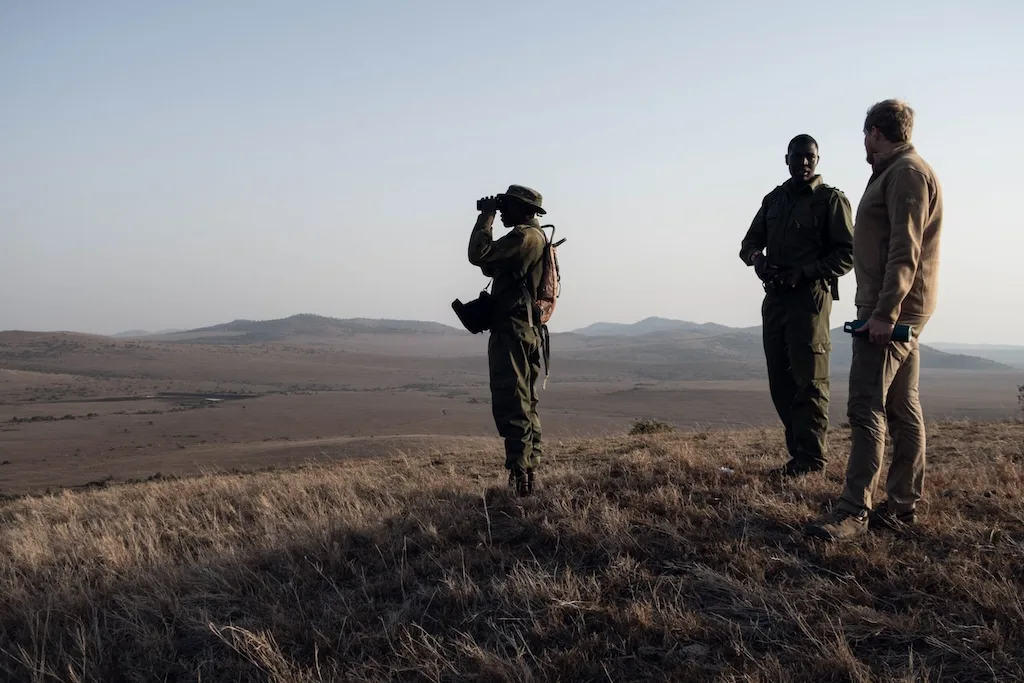
“Rhino fue filmado por solo dos personas; yo manejaba la cámara y James May se encargó del audio”, añade. “Contamos con apoyo a través de un programa de prácticas con estudiantes de cine kenianos, que formaba parte de nuestro esfuerzo por fortalecer la resiliencia de la industria cinematográfica keniana. Sin embargo, solo estuvieron presentes en los momentos planificados, como la translocación del rinoceronte y algunos otros eventos clave. El resto del tiempo, estuvimos solo James y yo.
“Usamos auriculares Sennheiser HD 25 durante todo el rodaje, especialmente para James durante la grabación. Muchas de las situaciones en las que nos encontramos eran peligrosas, con mucho movimiento a nuestro alrededor. Siempre grabamos en 32 bits flotantes para obtener un mayor rango dinámico, así que incluso si James no podía reaccionar rápidamente, como si estuviera huyendo de un rinoceronte, seguíamos teniendo un audio limpio sin preocuparnos por la sobremodulación. Los HD 25 fueron clave, ya que ofrecieron un audio claro y al mismo tiempo nos permitieron escuchar lo que sucedía a nuestro alrededor, lo cual es crucial cuando se trata de rinocerontes”.
También se utilizaron grabadoras Sound Devices MixPre-3 II y MixPre-6 II, que proporcionaron suficientes canales para el equipo estéreo MS doble. Con el objetivo de mantener una configuración compacta pero eficiente en el aspecto visual, Martienssen utilizó cámaras RED Komodo-X and V-Raptor para la grabación, cuyos preamplificadores, según él, fueron sorprendentemente efectivos.
“La cantidad de polvo que la cámara logró absorber fue increíble”, recuerda. Filmamos durante la peor sequía de Kenia, con guardabosques conduciendo vehículos pesados que levantaban polvo, el cual se colaba en las cámaras, el equipo de audio y los micrófonos. Usamos un sistema Rycote Softie y Super-Blimp para el equipo estéreo doble MS, e hicieron un trabajo increíble protegiéndolo todo. Luego, cuando terminó la sequía, tuvimos lluvias torrenciales y barro. A pesar de todo, el equipo resistió. He llevado estos micrófonos a lugares como Resolute Bay en Canadá y al Monte Everest a -35 °C, y nunca me han fallado. No hemos tenido ningún problema porque todos los micrófonos que usamos son de condensador de radiofrecuencia, así que están diseñados para condiciones extremas.
Una de las características más destacadas del documental Rhino es su mezcla de sonido Dolby Atmos, que se mezcló con 70 altavoces para crear una experiencia rica e inmersiva.
“Queríamos trascender los límites del cine documental”, afirma Martienssen. “Con Dolby Atmos, el público ya no solo ve la película, sino que la experimenta. Puedes oír a los rinocerontes moviéndose detrás de ti, sentir el viento azotando los árboles y sumergirte en el entorno. Lleva el documental a un nivel completamente nuevo”.
“Si bien este nivel de diseño de sonido es poco común en los documentales, normalmente reservado para producciones de alta gama, nos comprometimos con él porque queríamos que la calidad de la grabación estuviera a la altura de la experiencia final. Nuestro mezclador de sonido, Nas, que trabaja en Molinare, es un genio. Es el mejor profesional de sonido con el que he trabajado. Le di las directrices y realmente elevó la mezcla. Escuché la mezcla final en el cine Dolby Atmos de Molinare y fue increíble”.
Immersive experience
La trayectoria de Martienssen como periodista y director de fotografía de la BBC le ha demostrado el poder de las imágenes para que el público se sienta parte de la historia. Pero cree que el audio puede lograr aún más: “Con la mejora de la tecnología de los auriculares, es posible crear una experiencia altamente inmersiva, incluso para quienes ven la película en un portátil. Pueden vivir el momento de verdad, lo que resulta más práctico que las configuraciones a gran escala. Aunque solo unos pocos cientos de personas pueden experimentar ese tipo de inmersión en persona, millones pueden disfrutarla en casa con unos buenos auriculares”.
“Cassandra Roberts, la editora, estuvo absolutamente increíble”, añade Martienssen. “Hacia el final de la película, la llevé a Kenia para que experimentara el entorno y se familiarizara con los personajes y la realidad de la historia. Pasó tres meses allí, editando en exteriores. Creo que esto tuvo el mayor impacto en el sonido de la película. Los sonidos de la Reserva Borana, en particular, la impactaron profundamente, a veces más que las imágenes. Esto la ayudó a crear una atmósfera auténtica al trabajar con Nas en el sonido para asegurarse de que capturara la verdadera esencia del lugar. También hemos recibido mucho apoyo de varias empresas, como Fujifilm, RED Digital Cinema y P+S Technik, sobre todo porque no contábamos con el respaldo de un estudio.
De cara al futuro, Martienssen espera seguir combinando técnicas cinematográficas de vanguardia con historias ambientales del mundo real. “Queremos crear eco-thrillers”, afirma. “Películas que cuenten historias reales, sin guion, pero con el mismo nivel de emoción e impulso narrativo que las superproducciones de gran presupuesto. El próximo proyecto irá más allá, con un presupuesto aún mayor y técnicas de sonido y producción más avanzadas”.
“Fue una oportunidad fantástica usar la serie MKH en diversas configuraciones de la película y trascender sus límites”, afirma. “Uno de los mayores desafíos en los documentales es lograr que la gente conecte con los personajes y el entorno, para que se preocupen y se sumerjan por completo. Los documentales a menudo tienen dificultades para presentar a los personajes o integrarlos en la historia de una manera que atraiga a la audiencia. Cualquier cosa que ayude a la audiencia a sentirse más involucrada en la historia es invaluable”.
“Colaborar con Dustoff Films en el documental sobre el rinoceronte fue una experiencia increíblemente gratificante”, concluye Constable. “En Sennheiser, siempre nos esforzamos por trascender los límites del sonido, y fue inspirador ver cómo nuestros micrófonos ayudaron a dar vida a una historia tan impactante. La oportunidad de equipar a Tom y a su equipo con nuestra serie MKH de alta gama les permitió capturar los matices de este importante documental con un detalle excepcional. Fue una verdadera colaboración, y estamos orgullosos de haber participado en la narración de esta historia crucial de conservación y del majestuoso rinoceronte”.
Did you like this article?
Subscribe to our NEWSLETTER and you won't miss anything.
Related articles
 SMG shoots its latest reality show outdoors with the Sennheiser Wireless system
 Filming nature cinema: the technology of 'Iberia, infinite nature'
 Pocket Cinema Camera 4K and 6K capture the last MisterWives concert
 Sennheiser microphones capture audio from the MOSAiC expedition to the Arctic ice cap
 Sennheiser's 6000 series digital wireless microphones take center stage at the Eurovision Song Contest
 Genelec monitors and Audio-Technica microphones allow Mediapro to capture every last sonic detail in your 4K production
 A total of 41 cameras, 9 of them in 4K, capture every last detail of the Barça-Madrid 'Clásico'
 Sennheiser and Apogee launch digital lavalier microphones for iPhone and iPad
 Camera Corps' mini-robotic systems will capture every detail at Wimbledon
 A road show showcases the latest from Roland, FBT, Sennheiser, Neumann and Rycote
 New Sennheiser EarSet microphones for broadcast applications
 Vizrt Viz Courious Maps 9.1: detail up to 15 meters per pixel
 Pure sound with the Sennheiser filter for MKH 8000 microphones
 Sennheiser's chrome microphones shine on American Idol