





Filming nature cinema: the technology of 'Iberia, infinite nature'
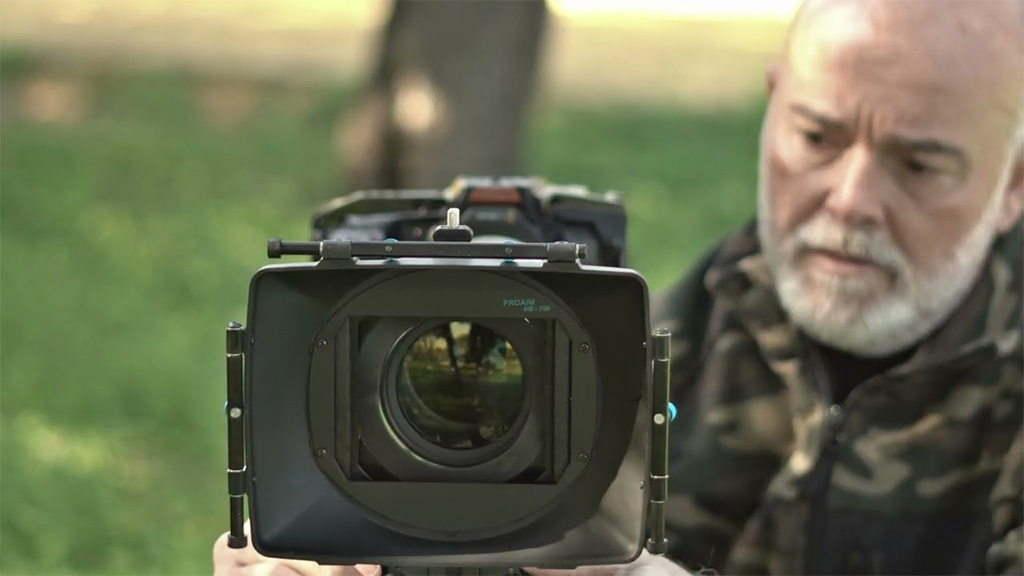

Arturo Menor, director, screenwriter and person responsible for the photography of the Goya candidate for Best Documentary Film 'Iberia, Naturaleza Infinite', details the technological axes of his latest work.
53 weeks has dedicated the team Acajú Environmental Communication to shape his latest film, Iberia, infinite nature, which takes the extensive catalog of nature pieces from Arthur Minor and his two previous feature films: WildMed, the last Mediterranean forest (2014) y Barbican, the footprint of the wolf (2018). In 75 minutes full of overwhelming images, Menor tells the story of a golden eagle that, expelled from its habitat, embarks on a survival adventure throughout the Iberian Peninsula.
The film was created with the objective of treating a problem related to nature preservation, chosen by Menor himself, also a naturalist and biologist: the electrocution of large birds on power lines, the main cause of unnatural mortality of birds in Spain. To do this, the team Iberia, infinite nature, composed of regulars in fiction productions and collaborators such as naturalists, is part of a script that will turn into images collecting the spontaneity of species such as wild eagles, minks or bears.
 This mixture of intentions and realities makes Menor decide to escape from the documentary label, to frame his latest work in the category of “nature movie”: “The eagle, the protagonist of our film, is actually 14 different golden eagles, of which ten are wild and four are falconry, trained.”
The ambition, beyond residing in the decision to connect with both the general public and those who love nature, is exemplified in a technical team with a notable resume: José M. G. Moyano (Goya for The Minimum Island, The Plague, Model 77…) y Manuel Terceño to assembly (A country to listen to, Pioneers, The State against Pablo Ibar); Carlos de Hita (Maixabel, Dehesa: The forest of the Iberian lynx, Guadalquivir) y Jorge Marin to sound (Goya by 3 days, Honor, Sevillanas de Brooklyn), o Pepe Domínguez del Olmo, double winner of the Goya for Model 77 y The Minimum Island, who was in charge of recreating a golden eagle nest in a studio.
Minor, from his privileged vantage point as director, screenwriter, pre-editor and also director of photography, details how the production and post-production of Iberia, infinite nature without skimping on details. Capture, sound, editing or color are addressed in this conversation, conveying the complexity, but also the magic, of nature cinema.
Controlled unpredictability
60 locations in 19 provinces from all over Spain have allowed Arturo Menor and his team to convey their vision of Iberia. Long days of filming, in which they made the most of the sunrises and sunsets (moments of activation of its unpredictable acting cast), were distributed over more than a year, always fleeing from the most extreme heat and cold.
“Thanks to the naturalists, photographers and biologists that we hire, we know the places where what we want to film is going to happen, such as the heat of minks or bustards.”
The planning of Iberia, infinite nature It did not deviate from the initial outline, something that may occur to readers when imagining the long hours of waiting (and even days) referenced by opulent narrators in the most traditional documentaries. To achieve this, Menor and his team relied on three key figures: naturalists, photographers and biologists: “Thanks to these profiles, we know the places where what we want to film is going to happen, such as the rut of minks or bustards.”
The team of Iberia He is in constant contact with these profiles, until the desired call arrives around the date stipulated in the provisional calendar: "There comes a time when they tell us: look, Tuesday of next week is going to be an optimal day to do this. And normally, when we go to the places, what we had planned to happen happens. Otherwise, it would be impossible to make the film, because there are so many things and so different... More than eighty different species appear in this film!"
Capture: maximum versatility
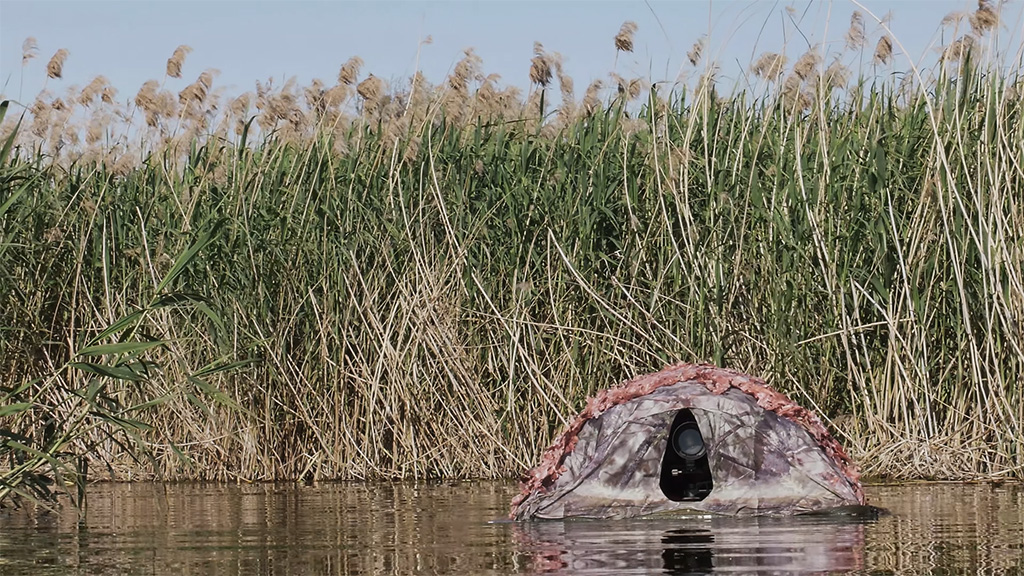
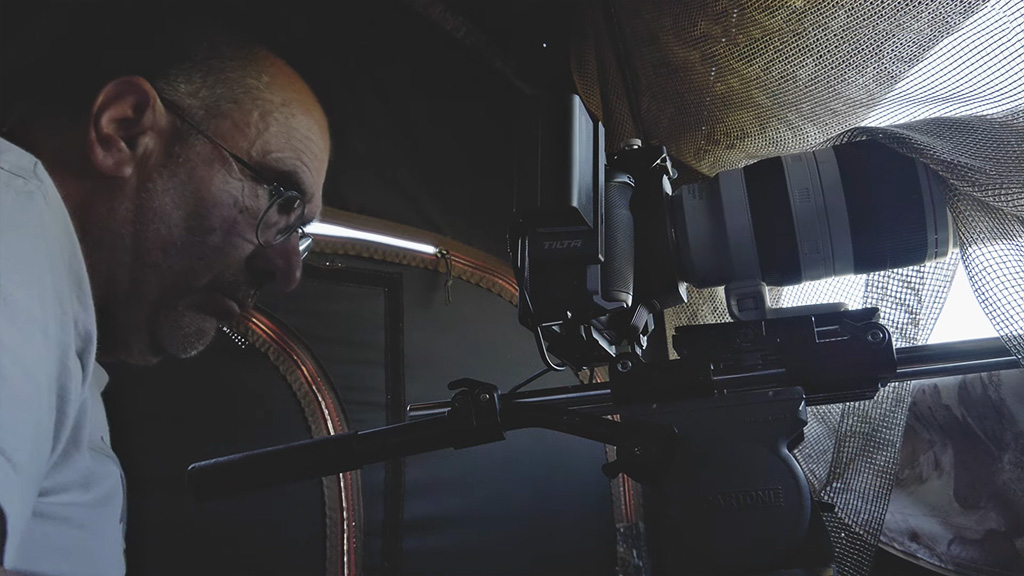
Except on rare occasions, the filming of the video capture team Iberia, infinite nature, with Menor together with José Antonio Vallejo as cameramen, they have involved long trips that, on occasions, involved several hours of "walking": "Logically, many of the sequences are in remote locations: where the eagles or capercaillies are. We had to walk to the hiding place carrying cameras, optics, batteries, tripods and even sleeping bags, mats, water or food if we had to spend the night."
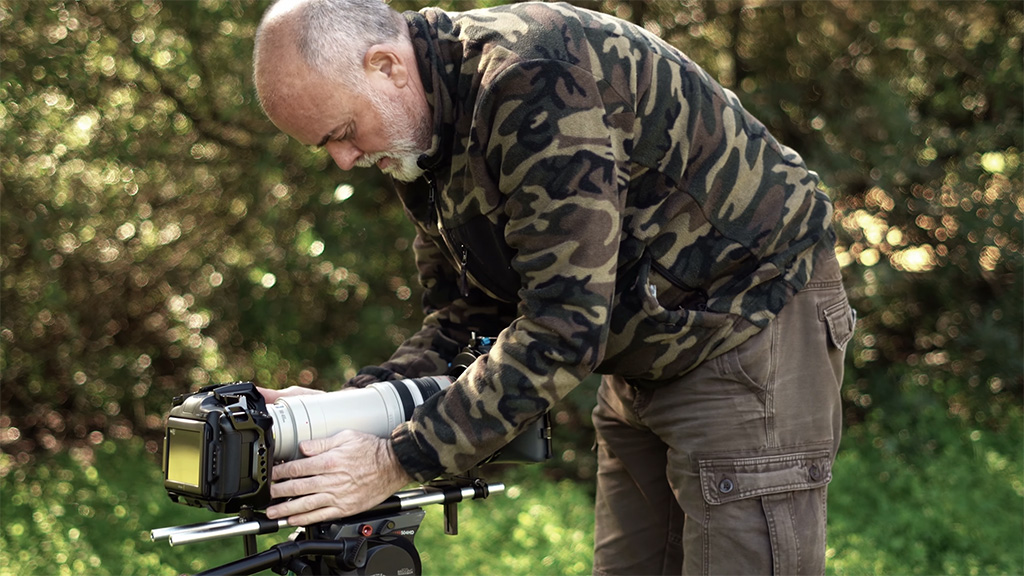
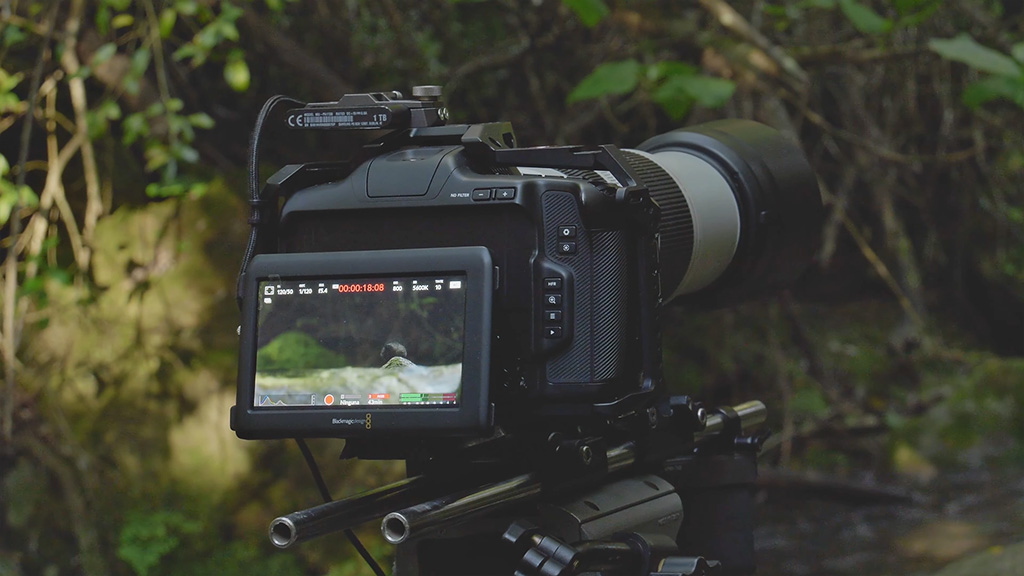
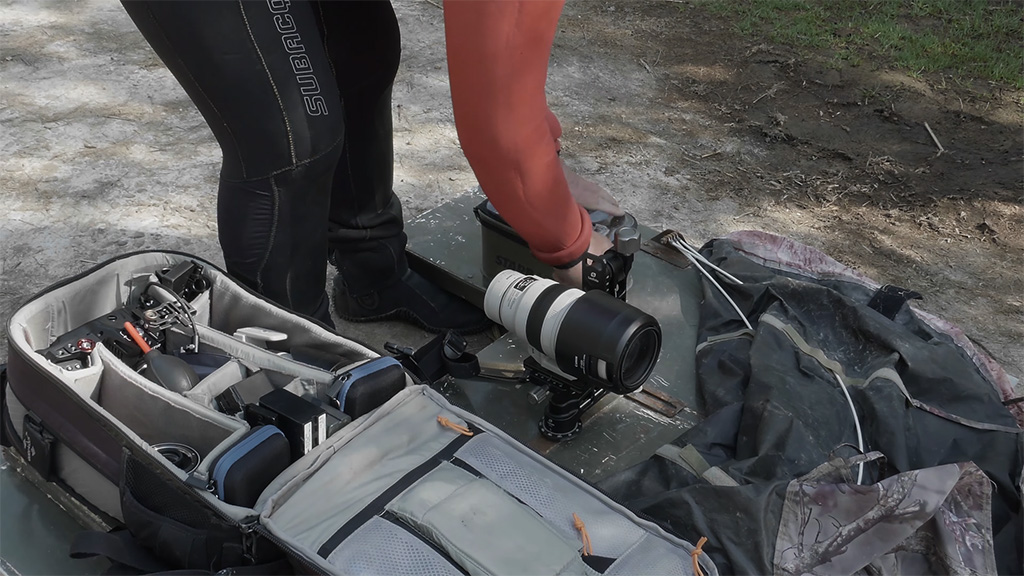 The logistical difficulty of filming led Menor to opt for a equipment as light as possible, which is why, moving away from more common cinematographic options in filming for the big screen, he chose the Pocket Cinema Camera 6K Pro of Blackmagic Design: “It is a camera that records in RAW and 6K, and that gives us magnificent quality for cinema.” With respect to the optics, the director of photography opted for light optics of Canon. Specifically, a goal 24-70mm and a 100-400mm: "Animals are not as far away as we usually think. We hire naturalists to help us get as close as possible to the action. Optics, logically, are very limited by physics itself, and we know that if we were at a greater distance we could face aberrations or the reverberation of the air itself."
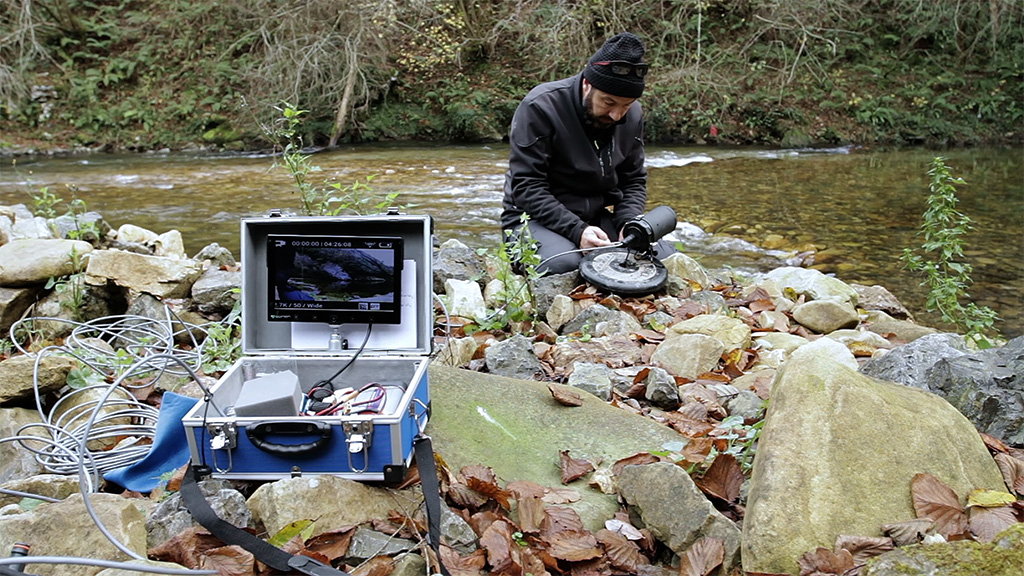
This desire to get closer to the animals has led Menor and Vallejo to entrust the focus and operation of the camera to their own skill, regardless of extenders or intermediate tools: "There are hours and hours waiting for the animal to come. The only shots we have taken with an extension cable are the underwater ones, with the salmon. We placed the camera underwater and with an external monitor we monitored what was happening underwater."
Looking for unique shots with drones, FPV, cablecam…
Menor acknowledges finding his inspiration for technical solutions in other nature documentaries, which he tries to see in their development phases. pre-production to inspire you for your next work. The golden eagle, on this occasion, was the ideal pretext to test various solutions aerial capture technologies not so frequent in his previous production.
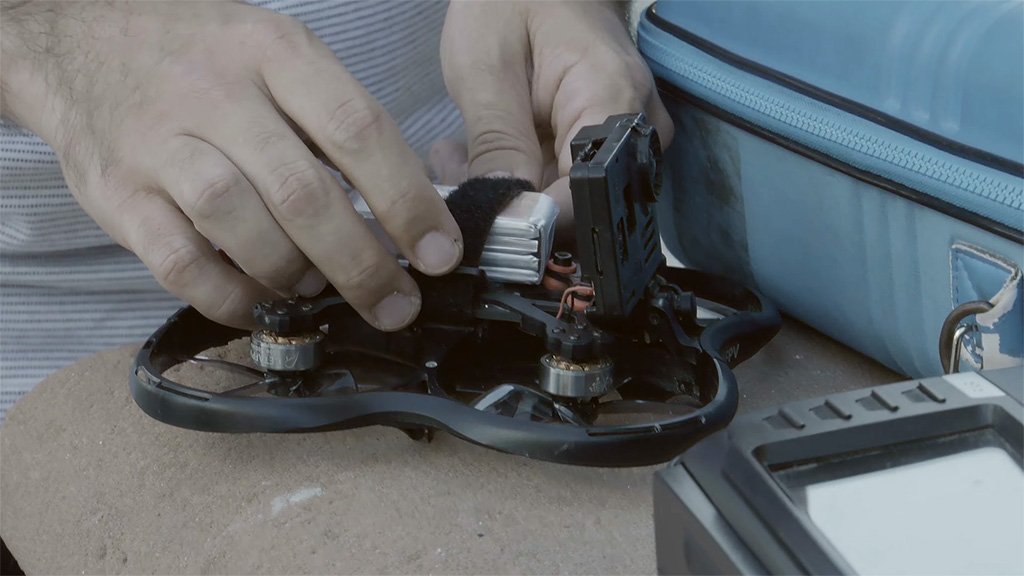 An old acquaintance is the drone, specifically the Mavic 3 of DJI, which was used to capture spectacular images of some of the most outstanding landscapes of the Iberian Peninsula. In this production, he had a little brother who allowed him to contribute unpublished takes in the Acajú production: “We used a mosquito drone built and operated by Iván Merino, champion of the Iberian Drone League. It is the minimum expression of the drone: it is very small and had a camera GoPro Hero10 completely disassembled, with just enough for the lens, the processor to record the images and the battery.” The set of aerial solutions was completed by a small camera attached to some of the golden eagles which allowed us to generate first-person shots of great spectacularity.
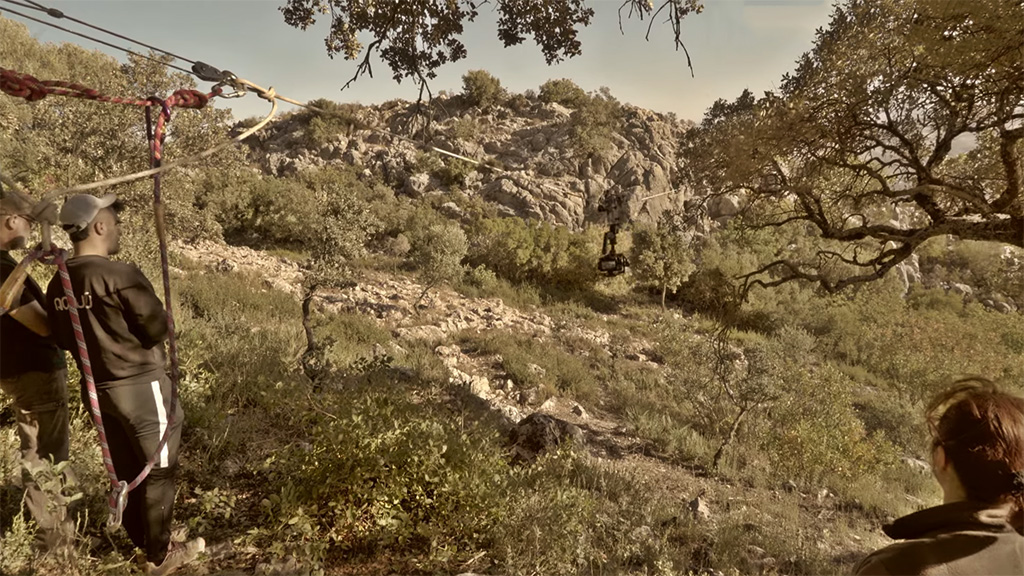
Another innovative solution was the use of a cablecam of large dimensions that was set up in Algámitas, a town in the Sierra Sur of Seville, and that was used to capture the flight of several eagles between two falconers: “We contacted Noxon, a company from Navarra that has a cablecam system with very good features, and who have been charming and have dedicated themselves to the project. With this system, by tracing very specific eagle flights, we were able to film shots very close to the birds.” The Acajú team completed the Noxon system with a stabilizer from the Asian brand Zhiyun.
Filming in inhospitable territories
Iberia, infinite nature is a production shot in 6K, although it has subsequently been transcoded to 2K for its distribution in cinema and its future arrival on digital platforms: "Our distributor tells us that the film in 4K is neither demanded nor paid for, so we have decided to opt for this format."
"Our distributor tells us that neither demanded nor paid the movie in 4K, so we have decided to go for 2K.”
6K shot in RAW formats implies some high transfer speeds, as well as important storage requirements. Dispensing with larger equipment, common in large productions in controlled filming environments, Menor opted for three SSD hard drives of Samsung of 1 TB each.
Another problem was the question of batteries, essential to not miss the stellar performance of the film's protagonists: "We carry eight numbered and organized batteries in the backpack. If the battery runs out and you have a lynx in front of you, for example, you have to quickly change the battery and not worry about whether you put back one that is discharged."
When actors surprise for better... and for worse
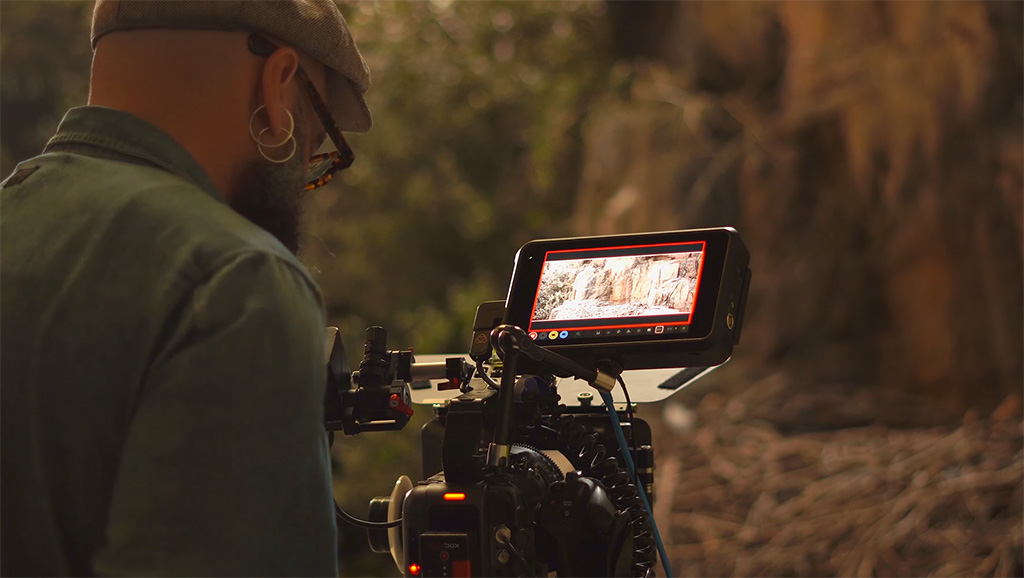
The filming of a nature film throws up anecdotes and unexpected situations that translate into cinematographic opportunities, unfortunate experiences or surprising moments for the entire production team. Menor, after spending weeks and weeks behind the camera trying to make his script a reality, keeps in his memory two moments from the filming of Iberia, infinite nature.
The first is starring the alzacola, a charming bird native to North Africa and already common in the south of Spain: "We filmed the Alzacola in Montilla, a town in Córdoba, and curiously, to our surprise, it is a very docile bird that let us get very close and do what we wanted during filming. We have had the possibility of using backlighting, or changing position to cause the bird to land on a specific vine or branch. It is not common at all, but it has given us many possibilities."
The second anecdote not so lucky: "Normally, the golden eagles are collected in January at the latest, since the mating season begins. Like everyone else, at that time they become more surly and aggressive. As we were shooting the film and we had objectives, we had to extend the eagle collection period a little longer," says the director of photography, providing context to the anecdote: "We were filming, and I was so comfortable watching the eagle come towards me making a magnificent dive. I was mine, trying to make everything square, in focus, and at that moment the falconer came running towards me because he was aware of what was happening: the eagle was coming for me with a bad attitude. Fortunately, the falconer dissuaded it from hitting me, although I was already prepared to protect myself behind the tripod and the camera.
Creating soundscapes in post-production
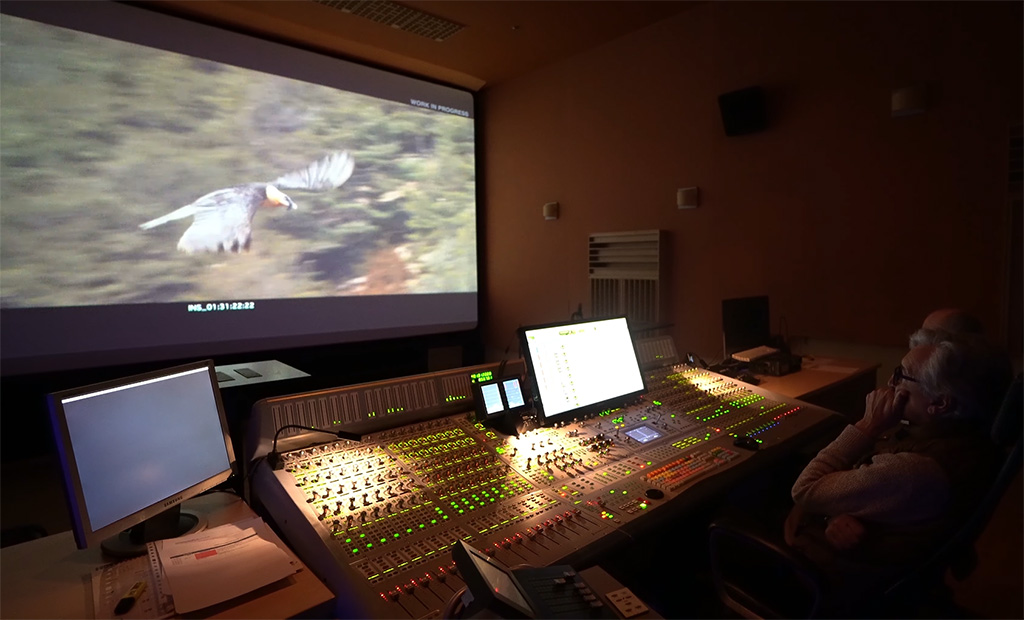
As is usual in many pieces of nature cinema, the team of Iberia, infinite nature practically dispensed with sound capture in the shots, given the logistical difficulties which it implied. In the pre-cutting of the film, Menor introduced reference sound captured directly by the cameras based on which Carlos de Hita built the sound design of the film: “As he says, practically what we gave him is a silent film.”
Based on these environmental sound references and the visual elements of the film, De Hita is in charge of constructing soundscapes that help the viewer get closer to the filming scenarios: "Normally he puts a base of wind, taking into account that it sounds different in an open field than in a beech forest. Then he adds resources that give depth to the shot, such as hearing a crow in the background, and adds elements in the foreground with their respective panning: for example, in the cinema you hear the bird flying on your right and then it enters the shot there."
The sound elements of Iberia, infinite nature are completed with an important work of foley, with which De Hita recreated elements such as the footsteps of animals, the sound of an eagle perching on a log or the birds' own wingbeats, created using gloves or leather material.
Editing, VFX and color
Minor undertook the pre-assembly of Iberia, infinite nature relying on software Final Cut Pro X. The first version of the tape lasted two hours, which were reduced, condensed and improved for the work of José M. G. Moyano: "Every time I went to see it, I really enjoyed how everything evolved and how it gave its personal touch. I always like to say that the editors are specialists in audiovisual editing and correct any spelling mistakes that I may make."
“There is a episode in which one of the electrocuted eagles. We filmed the eagle in a studio with quaver, we integrate it into the landscape and we digitally draw a arco voltaico, which is the element that causes the eagle to be electrocuted and what triggers electrocution”.
Iberia It also has up to 60 plans that were carried out under the coordination of Juan Ventura Pecellin of Antipodes Film Lab, a studio defined by Menor as “one of the most modern that can now be found in Andalusia for these jobs.” Some of the work carried out was the integration of the golden eagle's nest in natural landscapes, the elimination of elements that could distort (such as "a telephone tower"), the integration of an eagle flying in a landscape of the Pyrenees that was shot in front of a green screen or the generation of one of the most shocking moments of the film: "There is an episode in which one of the eagles dies from electrocution. We filmed the eagle in a studio with chroma key, we integrated it into the landscape and drew it digitally. an electric arc, which is the element that causes the eagle to be electrocuted and what triggers the electrocution.”
For color correction, Menor once again trusted Juan Ventura, who carried out this task with the software DaVinci Resolve of Blackmagic: "In fiction, sometimes you can give a peculiar color or a personal point so that the film stands out and catches your attention as a viewer. In the case of Iberia, infinite nature, I asked that the natural colors be respected as much as possible, because in the end that is what it is about: that nature looks realistic and is not distorted with strange elements that disturb it.”
The road to the next documentary
About to complete the cycle Iberia, infinite nature, with the promising Goya Award nomination on the horizon, Arthur Minor He is already thinking about his next production: "For the next film, I have the task of going back to see more films and works from production companies worldwide. Fundamentally, I will look at the BBC, which is the one that innovates and is at the forefront of this type of filming. When I see it, I will think: let's see how I can do this with a tenth of the budget."
“Finally, the nature cinema is having the recognition you deserve at a cinematographic level (…) Let us hope that this effort, with great professionals and very long shoots, materializes in a such an important award as is the Goya.”
2024 will mark the beginning of this particular pre-production, with the horizon set within three, four or five years. Lesser shown optimistic in being able to move the project forward again: "At an international level, there is important recognition of nature cinema, with works winning at the Oscars, at the Césars, at Sundance or in the documentary category at Cannes. Finally, nature cinema is having the recognition it deserves at the cinematographic level (...) We hope that this effort, with great professionals and very long shoots, materializes in an award as important as the Goya."
A report by Sergio Julián Gómez
Did you like this article?
Subscribe to our NEWSLETTER and you won't miss anything.
Related articles
 DFI launches rooftop movie theater with Leyard technology
 Blackmagic brings warmth to nature in the 'Oyaji Camp Meshi' series
 'La Memoria Infinita' continues its awards tour with the Goya 2024 for Best Ibero-American Film
 Juan Felipe Obreo will lead Canon's professional video and photography technology area in Iberia
 Rolling Pages reveals the 12 works that could be adapted for film or television
 Christie brings its projection technology to the BFI London Film Festival (LFF)
 Sonosphere captures the sound of nature in immersive audio
 ‘The Infinite Trench’ by La Claqueta PC triumphs at the Andalusian Film Awards organized by ASECAN
 ‘Intemperie’, ‘Adiós’ and ‘La trinchera infinite’ will compete with a greater number of nominations at the 2020 Andalusian Film Awards
 'Guadalquivir' brings the nature of Spain to the cinema for the first time
 Shooting with the Canon EOS 6D in Iceland
 Enrico Ferrari joins Sony Europe to lead digital cinema solutions for Iberia and Italy
 Camera Corps in BBC's most ambitious nature series
 HP and Sgo: a cinema technology