





The Oscar-winning 'Two People Exchanging Saliva', edited and graded with DaVinci Resolve
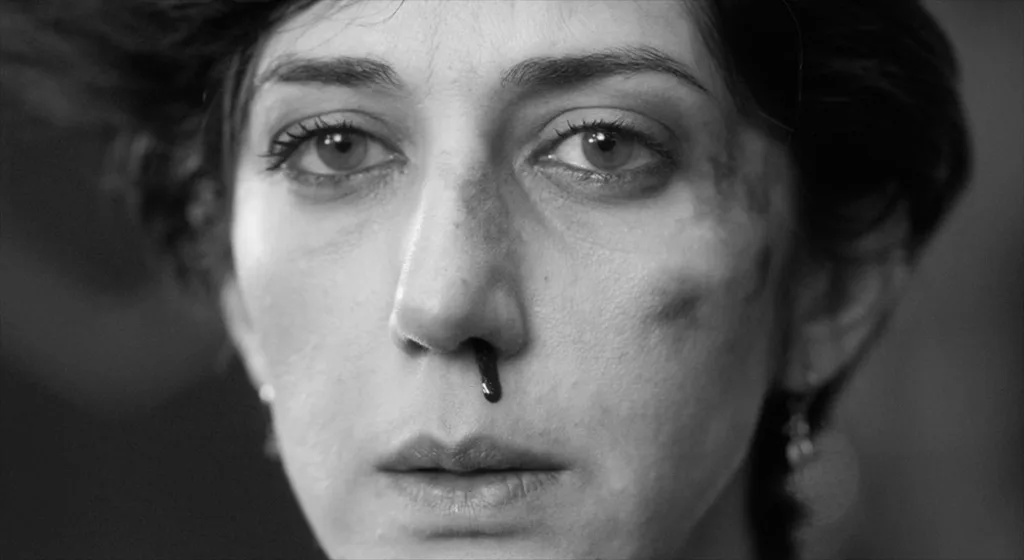
DaVinci Resolve software Blackmagic Design plays a fundamental role in the editing, grading and VFX of 'Two people exchanging saliva', co-winner of the Best Fiction Short Film category at the Oscars 2026 junto a ‘The Singers’ .
Two people exchanging saliva was shot by the filmmakers Natalie Musteata and a Alexandre Singh who was also in charge of montage and visual effects of this production. The work is defined as a “absurd fable"set in a version of Paris where kissing is prohibited and purchases are made through slaps. The short film tells the story of two women They meet in a department store and begin to fall in love, despite the danger that this relationship entails.
Almost the entire movie was filmed over the course of one night, in the department store Galeries Lafayette in Paris. The production team shot the work in black and white, which made it necessary to constantly adjust the lighting and composition based on the LUTs that the director of photography Alexandra de Saint Blanquat had prepared in DaVinci Resolve Studio. And the Blackmagic Design tool was key to the production design, explains Singh: "From the beginning of the project, we already knew that grading would be done in DaVinci Resolve Studio. As filmmakers, we like to maintain control over the work dynamics of the project, and we knew that Resolve had evolved and become an editing system robust enough for a fiction film."
A collaborative process
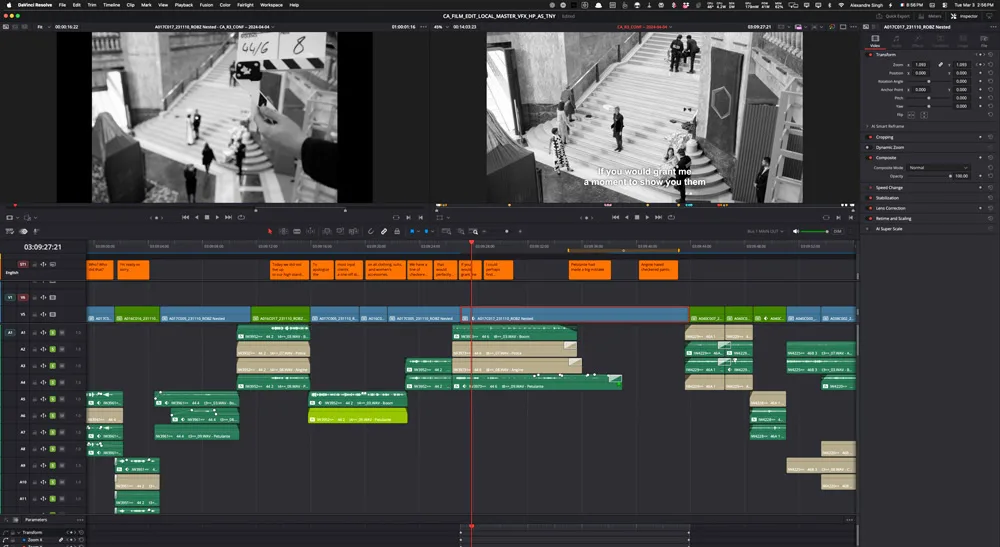
Having decided from the beginning that they would resort to DaVinci Resolve Studio In order to manage the entire project, Singh and Musteata They began to edit the clips on the platform for a kind of preview, working on different timelines and using Blackmagic Cloud when it comes to sharing them easily among collaborators. “Our Parisian studio, Ike No Koi, was responsible for generating the copies, and we ended up working in an unconventional way, placing each shot in a nested timeline, with the Blackmagic RAW material on a layer below the LUT-applied proxies.”
This process allowed Singh to save a lot of time, since he did not have to expend further efforts in carrying out the speed conversions, resyncs or trims which would involve transferring the files to Resolve from another platform. The effort, however, invested in VFX processes: from removing shadows from microphone booms, to repairing the side of a crashed truck, to including a second sign in the store lobby to create a more symmetrical composition. These processes were carried out using the module DaVinci Merger.
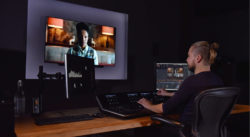
Finally, grading was carried out in DaVinci Resolve Studio and was in charge of the colorist Nat Jencks (PostWorks, New York). Singh explains that in order to address the visual effects that were applied after the primary chromatic adjustments and check that they were integrated correctly, it was easy to switch between the clips Blackmagic RAW and the graded material. “That flexibility is priceless,” concludes the Oscar winner.
Did you like this article?
Subscribe to our NEWSLETTER and you won't miss anything.
Related articles
 'Anora', the great winner of the 2025 Oscars, graded with DaVinci Resolve
 The competitor in Tribeca 'Sealed Off', graded with DaVinci Resolve
 The unusual film 'Something in the Dirt', graded with DaVinci Resolve
 'Drive My Car', Oscar for Best Foreign Film, graded with DaVinci Resolve Studio
 ‘Leonor will never die’, released with DaVinci Resolve (Blackmagic)
 'Don't look up' (Netflix), graded with DaVinci Resolve Studio
 ‘The Green Knight’, etalonada con DaVinci Resolve Studio
 The third season of 'Brassic' (Sky), graded with DaVinci Resolve Studio
 The winner of the Cannes Grand Jury Prize ‘Compartment no. 6', graded with DaVinci Resolve
 Oscar-winning “Another Round,” graded with DaVinci Resolve
 La series 'Atlantic Crossing', de NRK, etalonada en DaVinci Resolve
 The second season of 'The End of the F***ing World', graded with Davinci Resolve
 The ‘Please Tell Me I’m Adopted!’ series, edited and graded with DaVinci Resolve Studio
 'Jack Ryan: Shadow Operation', graded with DaVinci Resolve