





The Hispasat H36W-1 enters operational service
The satellite is now in its final orbital position at 36º West and will begin to offer its first services after passing the tests in space.
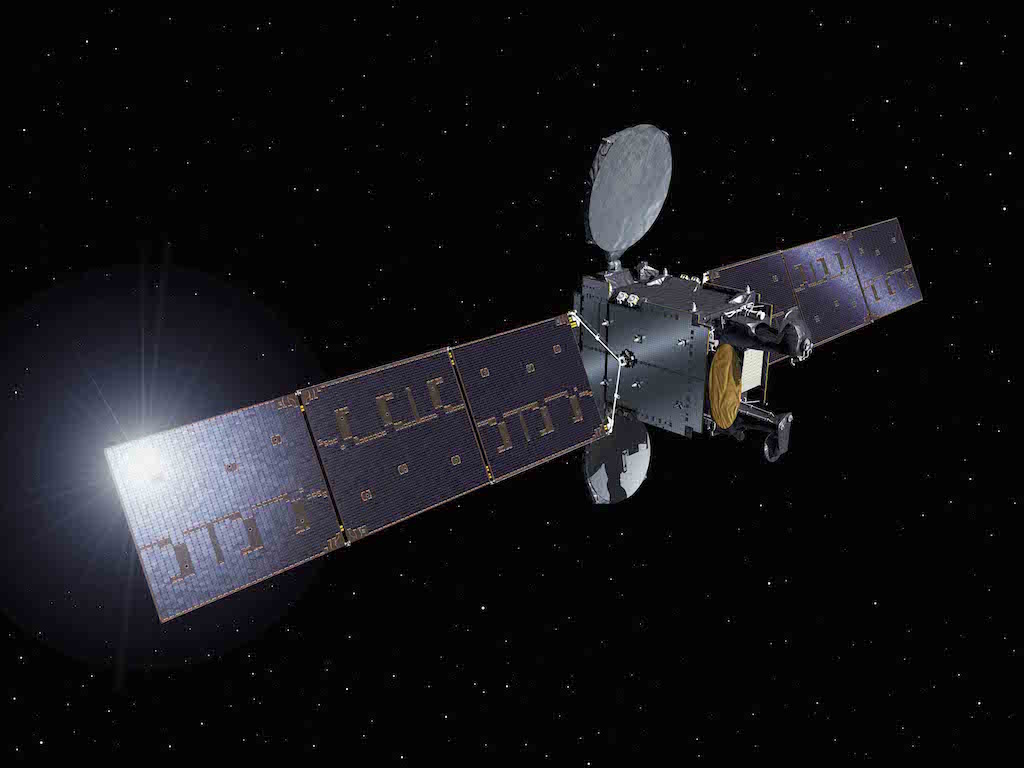
The Hispasat 36W-1 (H36W-1) satellite is now in its final orbital position at 36º West and will begin to offer the telecommunications services for which it was designed in the coming days, after having successfully passed the exhaustive tests carried out in space. This new satellite has coverage over South America and Europe, including the Canary Islands, and has twenty transponders in Ku band and additional capacity in Ka band.
With a useful life of 15 years, it will offer video contribution and cellular backhaul services, as well as business and broadband solutions, among others. The satellite has been built by the German company OHB System AG and is the first mission of the new SmallGEO platform, developed by the German manufacturer together with the European Space Agency and Hispasat. This platform allows a substantial reduction in mass of the satellite thanks to the use of electric propulsion throughout its useful life.
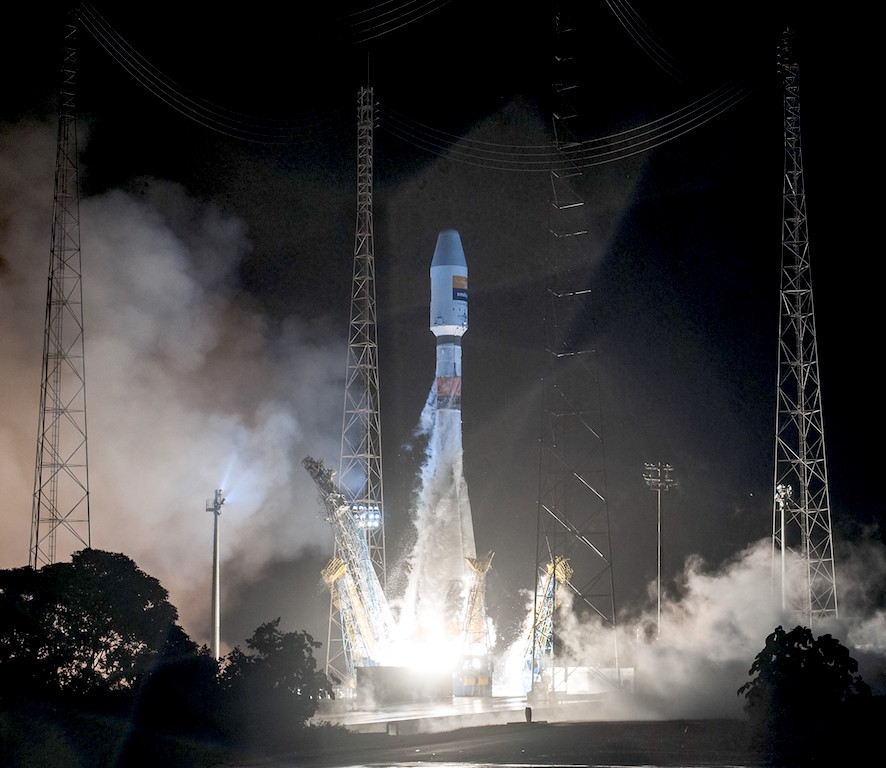
H36W-1 took off from the European Space Port of Kourou (French Guiana) on January 27 aboard a Soyuz rocket from the Arianespace company. Since then, the subsystems, transponders and antennas have been rigorously tested to ensure proper operation in orbit.
 RedSAT Advanced Payload
The H36W-1 carries an advanced regenerative payload, RedSAT, composed of a novel active antenna with reconfigurable beams that, together with the onboard processor, improves the efficiency and performance of the satellite. The antenna can be electronically controlled from Earth and reoriented at any time during the life of the satellite, giving it the flexibility to adapt its coverage in orbit to changes that may occur in the mission after launch.
The onboard processor is another step in the evolution of satellites, which can considerably simplify the network architecture by carrying out part of the processing that is usually carried out on Earth in space. It will be able to process up to four 36 MHz transponders simultaneously, correcting possible signal degradation and transmitting it without errors, which translates into a more robust and higher quality communications system that allows reception with small diameter antennas.
Did you like this article?
Subscribe to our NEWSLETTER and you won't miss anything.
Related articles
 Netlife launches a VOD service based on Hispasat's Wave OTT Plus platform
 Amazon enters the FAST channels business on its Fire TV service
 OneWeb satellite service will allow Telefónica to offer its service in remote regions of Europe and Latin America
 Hispasat announces at NAB the advantages of its new wholesale service Over The Top
 Hispasat and Nagra will jointly launch a wholesale OTT service in Latin America
 Saúl Marrero (Hispasat): “we attend this IBC with an innovative Push VoD satellite video-on-demand service for maritime environments”
 Málaga 4K Fest enters its final stretch with the jury meeting after receiving more than 500 short films from 50 nationalities
 Hispasat and Dish launch a new satellite Internet service in Mexico
 Hispasat enters satellite-based VOD with Quadrille
 Amazonas 5 reaches its orbital position and enters service
 Hispasat 1C, after seventeen years in service, now “rests” in a cemetery orbit
 Hispasat announces at the 'Washington Satellite 2017' convention the possibilities of its new H36W-1 satellite
 Hispasat will launch its new H36W-1 satellite on January 27
 Egatel enters Turkey