





'Captain Phillips', a filming on the high seas in the purest documentary style
El 75% de ‘Capitán Phillips’ se rodó en 60 días en mar abierto. La decisión de rodar en alta mar, utilizando la misma clase de buques en los que transcurrió el drama real, conllevó una producción repleta de retos logísticos, técnicos, físicos y psicológicos a los que el director Paul Greengrass y su equipo no habían tenido que hacer frente antes.
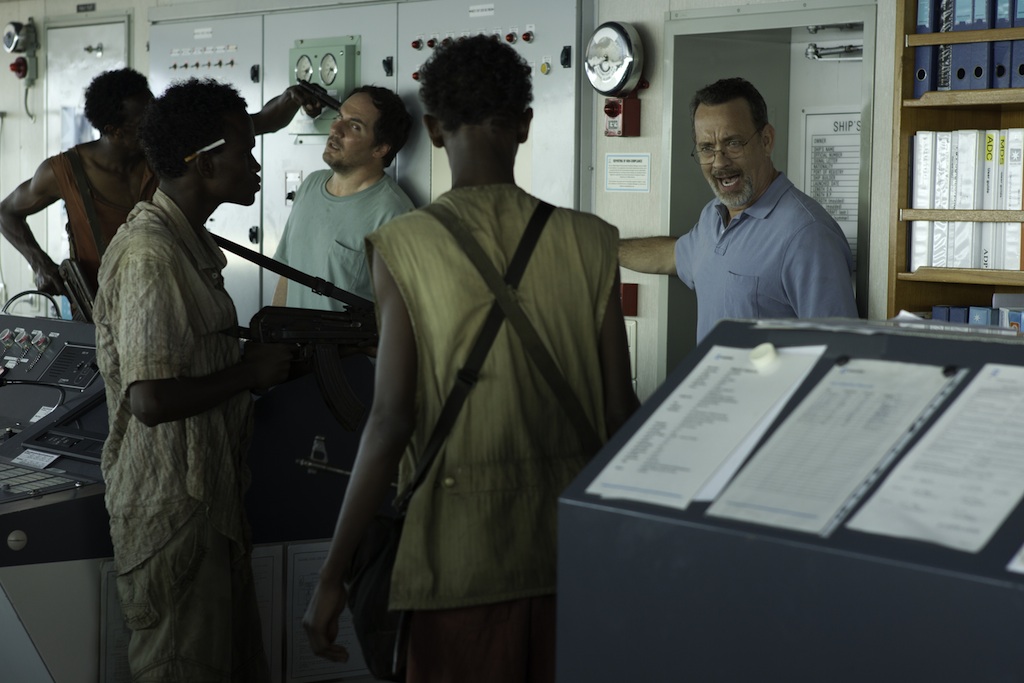
Capitán Phillips es un análisis desde varios puntos de vista que el director Paul Greengrass hace sobre el secuestro del carguero norteamericano Maersk Alabama, llevado a cabo por un grupo de piratas somalíes en el año 2009.La película se centra en la relación que se establece entre el oficial al mando del Alabama, el Capitán Richard Phillips, interpretado por Tom Hanks y el jefe de la banda somalí, Muse (Barkhad Abdi). Enfrentados entre ellos en un choque de fuerzas irreversible frente a las costas de Somalia, ambos hombres se hallarán a merced de fuerzas que escapan de su control.
Dirigida por Paul Greengrass, la película ha sido producida por Scott Rudin, Dana Brunetti, y Michael De Luca para Columbia Pictures. El guión es de Billy Ray, basado en el libro A Captain’s Duty: Somali Pirates, Navy SEALs, and Dangerous Days at Sea, por Richard Phillips con Stephan Talty. Los productores ejecutivos son Gregory Goodman, Eli Bush, y Kevin Spacey. También colaboraron con Greengrass el director de fotografía Barry Ackroyd, el editor Christopher Rouse, el director de producción Paul Kirby, el diseñador de vestuario Mark Bridges, y el compositor Henry Jackman.
En el centro de la confrontación entre Phillips y unos desesperados piratas somalíes, Greengrass revela el abismo que existe entre aquellos que forman parte del lucrativo ciclo de comercio internacional, y aquellos atrapados fuera del mismo.
“En los últimos diez años hemos visto muchas películas, y muy buenas, sobre temas de seguridad nacional y terrorismo, pero yo quería que esta película tratara el conflicto más amplio que se da en nuestro mundo entre los que tienen riqueza y los que no” explica Greengrass. “La confrontación entre Phillips, quien forma parte del flujo de la economía global, y los piratas, que no, me resultó novedosa y de alguna manera, avanza lo que será nuestro futuro. El enfrentamiento entre Phillips y Muse es un emocionante asedio en alta mar pero nos habla de fuerzas mayores que operan en el mundo actualmente.” Prosigue Greengrass, “siempre he sentido que una historia debe contarse con emoción y fuerza, pero también debe hacerte pensar.”
Como documentalista que ha sido, Greengrass siempre se ha sentido atraído por historias que profundizan en eventos contemporáneos, desde Bloody Sunday, que trata sobre una masacre por parte del ejército británico en Irlanda del Norte, hasta United 93, sobre el vuelo secuestrado durante el 11-S en el que los pasajeros impidieron que los secuestradores se salieran con la suya, pasando por Green Zone: distrito protegido, sobre la guerra de Irak. Pero Greengrasss también es conocido por ser el innovador realizador de thrillers de refrescante realismo tales como El ultimátum de Bourne y El mito de Bourne.
Rodaje en alta mar
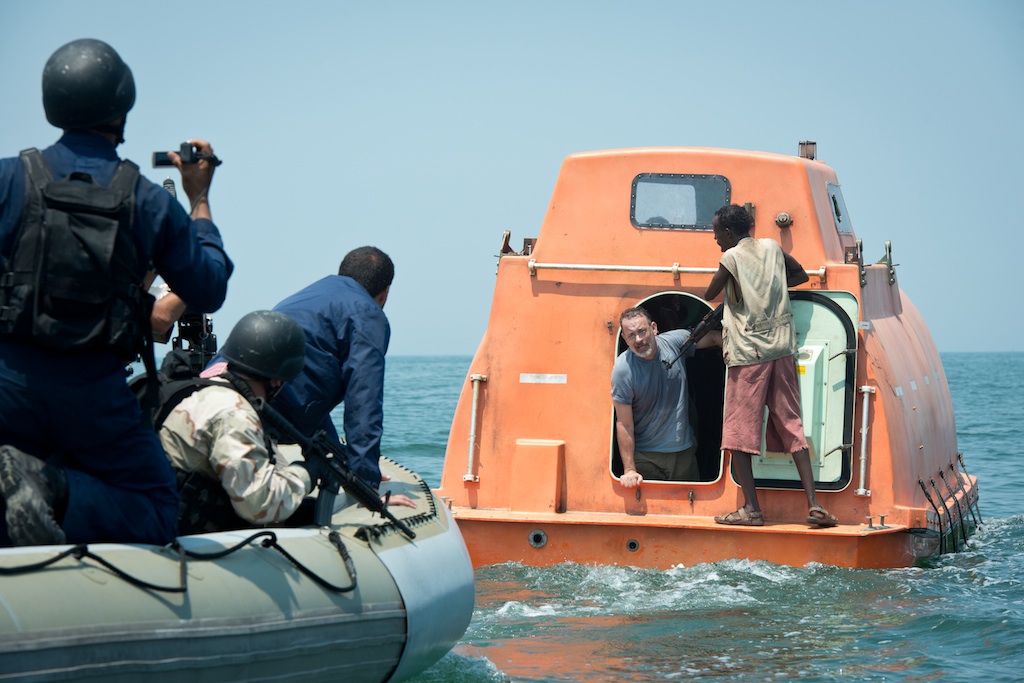
El 75% de Capitán Phillips se rodó en 60 días en mar abierto. “Para mí ha sido muy importante rodar esta película en el mar, en un navío en funcionamiento” asegura Greengrass. “Comencé la película con la convicción de que teníamos que recrear el suceso en condiciones tan próximas como fuera posible a aquellas en que realmente sucedieron los hechos. Todos me dijeron: ‘¡Estás loco! Los directores no deben rodar en alta mar’ Pero eso le aporta una veracidad a la película que no se puede cuantificar.”
La decisión de rodar en alta mar, utilizando la misma clase de buques en los que transcurrió el drama real, conllevó una producción repleta de retos logísticos, técnicos, físicos y psicológicos a los que Greengrass y su equipo no habían tenido que hacer frente antes. “La búsqueda de la veracidad plantea riesgos a la hora de realizar la película que afectan a todos: director, reparto y equipo técnico” explica Greengrass. “Como producción cinematográfica debo confesar que ésta ha sido la experiencia más ardua de mi carrera. Estar en el mar todo el día, día tras día, rodando en espacios confinados o en mar abierto, azotado por la marea, fue tortuoso. Pero lo hicimos y cumplimos la programación. En un día bueno tanto el equipo técnico como el artístico se llegó a sentir parte de una tripulación a borde de un barco, todos trabajando juntos” recuerda Greengrass. “Y además, cada responsabilidad en particular fue ejecutada maravillosamente. La interpretación es increíble, la iluminación es increíble, el diseño es increíble, el montaje es increíble. Y todo ello suma y culmina en un momento final en el que considero que Tom Hanks ofrece una interpretación de asombrosa humanidad. El recuerdo que siempre llevaré conmigo de esta película es ese momento final de Tom. Es, sencillamente humano.”
El primer reto que afrontó la producción fue encontrar los múltiples navíos que forman parte de la historia: un buque carguero en funcionamiento, dos buques destructores de la armada estadounidense, y un portaviones. Dar con buques parecidos a los que participaron en el incidente real, un mandato directo de Greengrass, representó un gran problema, a pesar de la disposición de Maersk Line y la armada estadounidense a colaborar con la producción. “Estos barcos están hechos para trabajar, y un buque en activo o bien está transportando mercancía las 24 horas del día, o bien, en el caso de la armada, está a la espera en caso de intervención militar y no puedes dejarles fuera de servicio así como así,” explica el productor Dana Brunetti. Cuando Maersk Line identificó un carguero al que se le daba relativamente poco uso, la producción se puso en acción y se trasladó hasta Malta para aprovechar la disponibilidad del mismo. “Afortunadamente este barco, el Maersk Alexander, era un ejemplar exacto al barco secuestrado, el Alabama. ¡Un gran golpe de suerte para nosotros!” sonríe Brunetti.
Además, la producción pudo arreglárselas con la tripulación de 22 marinos mercantes del Alexander para que éstos siguieran operando el barco durante los dos meses y medio de rodaje. El capitán del Alexander se convirtió en un recurso vital para Greengrass y Hanks, mostrando la realidad tanto de la operación como los temas humanos que suponen el día a día del barco. “El hecho de estar en un barco de verdad y tener acceso a una tripulación de verdad supuso una parte esencial de nuestro proceso” asegura Greengrass. “Podíamos hacerles preguntas: qué harías tú, que dirías tú, a dónde irías, con qué equipo si se diera la situación A, B, o C.”
El compromiso de Greengrass con la verosimilitud supuso grandes retos para el reparto y el equipo técnico. Muchas veces el tiempo no acompañó, haciendo casi imposible la tarea de rodar en alta mar. De Luca recuerda aquellos días de rodaje a bordo del Alexander: “Enormes olas azotaban el barco. El mar cambia por momentos: desde la calma más absoluta a un oleaje impresionante, por lo que nunca sabes qué te tocará. ¿Cómo planificas tus secuencias o armonizas tomas con un paisaje tan cambiante?” Cada mañana el equipo de producción tenía que tener la agilidad de decidir si podían rodar en el mar o si tendrían que quedarse en el puerto y rodar dentro del barco.
Recuerda Daniel Franey Malone, el coordinador naval de la película, que no fue nada fácil para la producción maniobrar en un carguero de 150 metros. “No es como estar en un buque turístico. Este barco sólo puede navegar en ciertas áreas, y necesitábamos un piloto marítimo y un remolcador cada vez que teníamos que moverlo. Y claro, el barco está hecho para contenedores, por lo que fue extremadamente complicado meter al equipo realizador,” dice Malone. “Es increíblemente claustrofóbico. Los pasillos y las escaleras son muy angostos y el equipo tuvo que ser muy conservador a la hora de elegir lo que traían a bordo. El constante movimiento de una parte a otra del buque, desde los niveles inferiores hasta el puente, créeme, no fue sencillo mover el equipo por esas escaleras”.
Además de la claustrofobia y las limitaciones propias de trabajar en un barco, se sumó el reto de la producción de coordinar y rodar en múltiples barcos en mar abierto. “El equipo de producción incluye cientos de personas y equipos: actores, vestuario, maquillaje, cámaras y decorados” explica Greengrass. “Ubicar todo eso en alta mar es una aventura logística. Conlleva docenas y docenas de barcos, y además necesitas los de seguridad. La producción era como una flotilla, y yo, me sentía el comandante de la tripulación.”
Una de las escenas más dramáticas del filme es el abordaje del Alabama. Esta escena se rodó sin el uso de animación por ordenador. “Uno de los hitos más importantes de todo el rodaje fue el aspecto técnico y de seguridad de acercar un esquife a un carguero. A bordo del esquife hay cuatro actores y la resaca del buque es considerable,” asegura Greengrass. “Acercarse lo suficiente como para apoyar una escalera y ejecutar la maniobra de abordaje supuso un proceso arduo y lento. La seguridad era la máxima prioridad. Pero en la película da la sensación de que realmente están allí, que están junto al barco y van a subir, porque realmente sucedió así.”
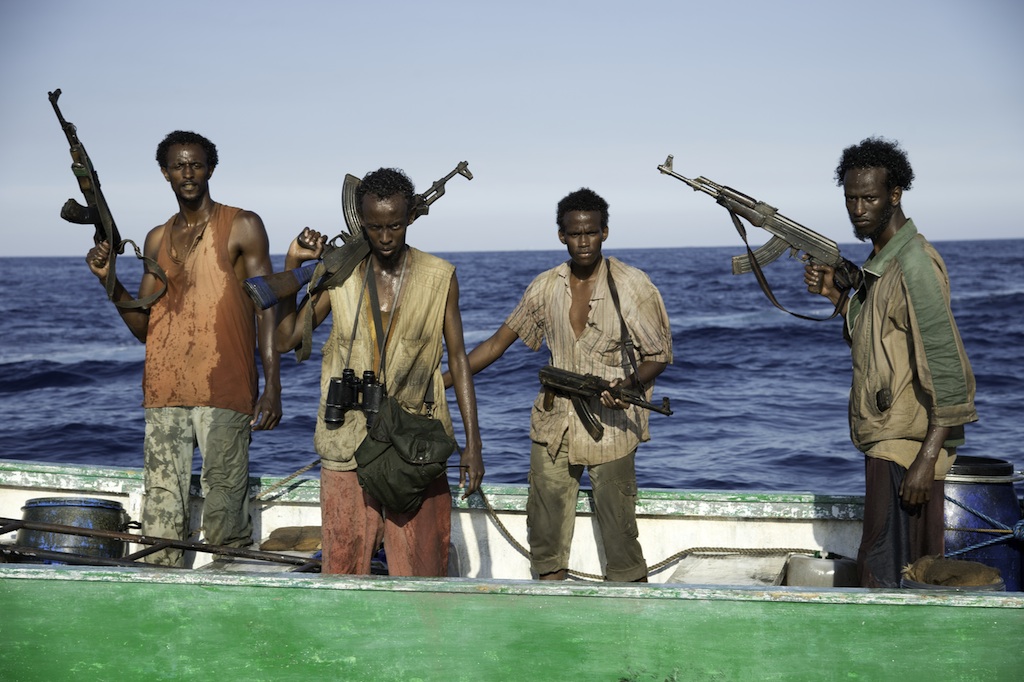
Para preparar la secuencia, los cuatro hombres que encarnan a los piratas somalíes: Barkhad Abdi, Barkhad Abdirahman, Faysal Ahmed, y Mahat M. Ali, iniciaron un riguroso régimen de entrenamiento. “Paul nos dijo que no buscaba actores – quería que nos convirtiéramos en piratas” dice Abdi. “No sabía nadar y aprendí a escalar. El miedo no era una opción. Cuando me subí a esa escalera a 30 metros del agua, pensé: ¡tengo que llegar hasta arriba!”
Abdi, Abdirahman, Ahmed y Ali también tenían que aprender a tripular los esquifes pirata como si lo hubieran hecho desde críos. “Nos pasamos semanas sacando a los chicos en los esquifes para que aprendieran a tripularlos y, créeme, no es nada fácil. Esos botes son complicados” afirma Greengrass. “A continuación nos trasladamos a alta mar para enseñarles a estar de pie en un barco en movimiento. Y te puedes imaginar cómo se mueven esos barquitos cuando el mar embravece. El reto era hacerlo todo con seguridad. Y después, averiguar cómo rodarlo, claro.”
Esa responsabilidad la asumió el director de fotografía Barry Ackroyed, BSC, quien explica: “Para las escenas de los esquifes tuvimos que construir una pequeña grúa con andamio para atar la cámara, porque cuando se levantaban las olas esos esquifes saltaban con violencia y no podíamos correr el riesgo de que la cámara saltara por la borda.”
Pero sin duda la escena más complicada de organizar fue la decisiva escena en la que la armada efectúa el rescate de Phillips. Greengrass la denomina: “la secuencia más compleja y difícil” de su carrera: “Habían múltiples barcos de la armada pululando por allí, varios helicópteros, y muchos riesgos para la seguridad. ¿Cómo dirigir un set de estas dimensiones y representar la acción que se abarca: un portaaviones pequeño, varios buques destructores, y múltiples helicópteros bombardeando un pequeño bote salvavidas en la oscuridad, a alta velocidad, y sobre el agua? Cualquier director te diría que cuando tienes un helicóptero en el aire se multiplica tu nivel de estrés. Y encima íbamos a contrarreloj porque sólo pudimos disponer de los recursos de la armada durante un tiempo limitado.”
La armada estadounidense estuvo tan dispuesta como Maersk a participar en la película. Pero, al igual que en los buques mercantes de Maersk, para encontrar los barcos que necesitaban tuvieron que iniciar una larga y delicada negociación. Apunta Brunetti: “La armada quiso participar desde el primer momento porque la película les refleja como profesionales serios, y creo que ellos consideran que es una fiel representación de su forma de trabajo. Pero, al igual que el Maersk, sus barcos comisionados tienen funciones que cumplir. Los barcos de la armada tienen que estar en reserva para poder dar respuesta a situaciones que puedan producirse en el mundo, y esa es una responsabilidad más prioritaria que apoyar a una película. No querían que hiciéramos la película sin ellos, sin su apoyo; nuestra representación del cuerpo no sería tan robusta. La cuestión era adaptarnos a sus comprensibles limitaciones y a su vez, conseguir lo que nosotros necesitábamos.”
La solución fue posible una vez más, gracias a la flexibilidad y adaptabilidad del equipo de producción. “Un almirante de alto rango se reunió con nosotros en Los Ángeles y me hizo una promesa: ‘Si trasladáis la producción a Norfolk, Virginia, conseguiré todo lo que necesitáis.’ Esas fueron sus palabras,” dice el productor ejecutivo Gregory Goodman, quien coordinó muchos de los retos logísticos del rodaje. “No se nos había ocurrido ir a Norfolk porque no es un centro de producción cinematográfica… todo lo necesario para rodar tendríamos que traerlo desde fuera y, debido a la distancia, no puedes contar con proveedores de la zona. Pero, tras analizar nuestras opciones, lo vimos claro: ¡nos íbamos a Norfolk! Les llamé y le dije: ‘¡Os voy a tomar la palabra! Y no defraudaron. Sí que diré que, una vez establecidos en Norfolk, que fue una tarea de enormes proporciones, resultó ser un lugar maravilloso para rodar.”
Para representar al USS Bainbridge, los realizadores recibieron acceso al USS Truxtun, un destructor de 155 metros de largo clase Arleigh Burke equipado con misiles. Relata Brunetti: “El Truxtun había sido reformado recientemente y le correspondía superar varias pruebas náuticas, entre ellas maniobras menores, durante un periodo de dos meses. A nosotros nos asignaron a esa misión.” Durante todo el rodaje el destructor se mantuvo en activo, preparado para responder en misiones de emergencia. Los dos barcos adicionales que prestaron su apoyo al Bainbridge durante la misión de la vida real – el USS Boxer, un barco de asalto de operaciones anfibias que forma parte del grupo operativo anti-piratería de la armada, y el USS Halyburton, fueron representados, respectivamente, por el USS Wasp, un barco de asalto anfibio multiuso, y el propio Halyburton. Ambos buques estaban destinados a la Estación Naval de Norfolk.
Mover estos buques de la armada es una tarea complicada, peligrosa y difícil. Y para un equipo de producción los destructores suponen un hogar aún más inhóspito que el buque de carga. Explica Brunetti: “Los navíos de la armada tienen que operar a 11 kilómetros del puerto y la maniobra de entrada y salida del puerto es muy difícil y lleva horas. Por eso optamos por trasladar a nuestro equipo en pequeños botes: unas quince a veinte personas en siete u ocho embarcaciones. Embarcamos en un puerto de Norfolk y salimos al encuentro de los buques de la armada, que nos esperaban a kilómetros de la costa. Tuvimos que embarcar uno a uno. El proceso fue arduo: nos mecían las olas y uno a uno subíamos las escaleras con todo el equipo necesario para el día a cuestas. Ese trayecto tuvimos que hacerlo diariamente. Tras finalizar la jornada de trabajo embarcábamos nuestros pequeños botes rumbo a Norfolk en la oscuridad de la noche.”
Greengrass agradece que la armada “se implicara en cuerpo y alma en la película. Desde el capitán del Halyburton y el segundo de éste, pasando por toda la tripulación, pusieron su barco y recursos a nuestra disposición. Ellos comprendían lo que queríamos hacer y algún miembro de la tripulación estuvo siempre presente para decirnos: ‘tienes que saber que… en esta situación nosotros haríamos…’ son esas las miles de decisiones que hacen que la película funcione y que mantenga la realidad. Esos decorados son reales: el centro de información de combate, las secciones interiores- todas forman parte de un destructor de verdad.”
Conseguir el apoyo de la armada supuso tan sólo el primer paso del rodaje de la secuencia del rescate. Añade el productor Dana Brunetti: “En esa escena contamos con mucho movimiento: dos destructores, un portaaviones, y un helicóptero que arroja luz sobre el barco salvavidas. Tuvimos que colocar tanto a los barcos como a nuestras cámaras en sus respectivas posiciones, el helicóptero debía impactar el barco salvavidas en el momento preciso y los actores dentro del barco salvavidas tenían que lidiar con el hecho de que los barcos estaban creando una estela internacional para hacer olas en el barco. Estuvieron metidos ahí por horas mientras nosotros hacemos con ellos lo que hizo la armada con los secuestradores reales.”
Profundiza Goodman en los retos logísticos asociados a esa decisiva escena: “El bote salvavidas avanza muy lentamente, a unos dos o tres nudos. Esa velocidad está por debajo del límite operacional seguro para los barcos de la armada. Si van a esa velocidad el motor se puede calar, por lo que tuvimos que jugar al gato y al ratón para dar con la sincronización necesaria para que todos los barcos coincidieran. Eso fue realmente complicado – fue un problema matemático.” Lo que no sabían los realizadores es que en este caso el arte imitó la realidad ya que el USS Bainbridge experimentó el mismo problema durante el rescato en la vida real del Capitán Phillips: el destructor adelantaba al bote salvavidas.
El momento culminante del filme (ambientado en el mar, en noche cerrada) también supuso un enorme reto para Ackroyd, el director de fotografía. Conseguir estas secuencias requirió una planificación previa, coordinación, sincronización y profesionalidad extraordinarias, y también un poco de suerte. En palabras de Ackroyed: “Rodamos estas secuencias nocturnas en noche americana, al anochecer y por la noche. Cada escena es una combinación de estas tres técnicas unidas en una. Teníamos una cámara en el bote salvavidas, yo estaba en un bote inflable con otra, la tercera estaba en el destructor, y la cuarta cámara en el segundo helicóptero, ubicada para captar al primer helicóptero. El destructor de la armada se aproxima al bote salvavidas y tiene que girar y frenar bruscamente frente al salvavidas, y tenemos que rodar eso simultáneamente desde mi cámara, desde el destructor, desde el aire, y desde el interior del bote salvavidas, donde la cámara mira hacia afuera desde un espacio que mide medio metro de ancho por metro de largo. Todo esto se hizo al anochecer- que dura veinte minutos. Teníamos veinte minutos para captar la máxima cantidad de material. Y no puedes detenerte porque el crepúsculo cambia y de repente estás rodando de noche. Esos planos no llevan gráficos por ordenador – todo eso ocurrió en vivo y en directo. La gente siempre me preguntaba: ‘¿Cómo vamos a hacerlo?’ Pues lo vamos a hacer. Vivo para esto.”
Aunque la producción tuvo que afrontar grandes retos y superar dificultades técnicas, todos lo hicieron de la mano, alentados por un espíritu de grupo inspirado por Paul Greengrass y Tom Hanks. El productor De Luca apunta: “Tom estaba dispuesto a todo. Nunca dudó de nada de lo que le pedimos. Por ejemplo, estuvo en ese bote salvavidas en mar abierto durante horas, durante días. Fue agotador y requirió grandes dosis de perseverancia de todas las partes implicadas. Y Tom no se quejó ni una vez, a pesar del inevitable y constante mareo que padecieron tanto él como otros miembros del reparto abordo de ese buque tan difícil de manejar. Creo que esa actitud, ese espíritu contagió a todos y nos acompañó durante la producción.”
“Esto es hacer cine en su estado más puro. He tenido mucha, muchísima suerte de participar. Siempre llevaré este recuerdo conmigo” relata Goodman. “Todos estábamos centrados en la misma meta.” Ackroyd manifiesta su acuerdo: “Como director de fotografía cuando ves un guión que dice. ‘Noche – noche cerrada – en alta mar’ te lo piensas dos veces antes de decir que sí al proyecto – a no ser que sea Paul Greengrass el que te lo pide. Cuando firmas para una película Greengrass es porque sabes que el esfuerzo merecerá la pena, que el argumento será impactante y el trabajo, reconocido. Con esto quiero decir que los espectadores se llevan algo que no les ha aportado ninguna otra película. Y espero que ese sea el caso de Capitán Phillips”.
Fotografía y diseño
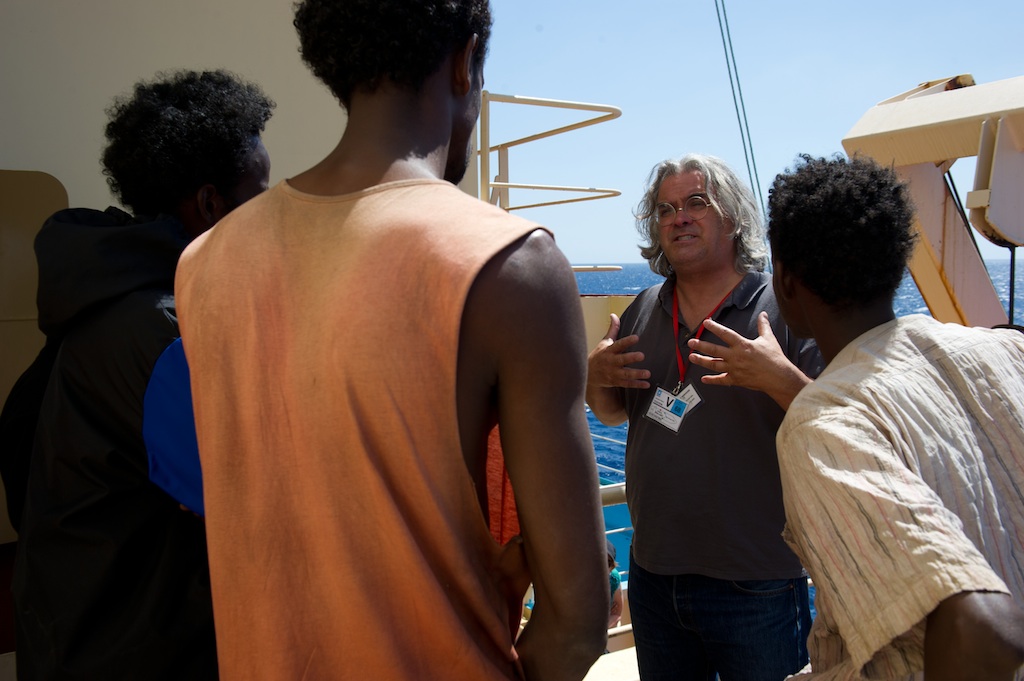
Para dotar a Capitán Phillips de la intensidad y el realismo que caracterizan las películas de Paul Greengrass, el director incorporó un equipo de fotografía encabezado por el director de fotografía Barry Ackroyd, BSC. Ackroyd es un colaborador de Greengrass y fue su director de fotografía en United 93 and in Green Zone: Distrito protegido, así como en En tierra hostil de Kathryn Bigelow, por la que fue nominado a un Oscar.
Greengrass y Ackroyd provienen de la tradición documental y ambos coinciden en que existen ciertos hábitos del cine de no ficción que aún no han sido capaces de abandonar– y eso ha demostrado su utilidad en la producción de sus largometrajes. Ackroyd dice que “En un largometraje tienes muchas más tomas y muchas más oportunidades de captar una escena que en los documentales”, “así que siempre te recuerdas a ti mismo la urgencia e importancia de cada fotograma. Si te repites a ti mismo que cada fotograma es la única oportunidad en que esto sucederá, y que será el fotograma más importante del largometraje – y si logras mantener esa concentración en hasta más de 300 kilómetros de película – entonces le darás al editor el mejor material que esté en tu mano para que edite la mejor película”.
Greengrass está de acuerdo, destacando que este estilo de rodaje va de la mano con el tipo de interacción que él desea que los actores tengan con el material. “El instinto de lo que es urgente, lo que es real, nunca se pierde. Trabajamos arduamente con los actores para lograr que no sólo interpreten el guión; el guión es importante pero también queremos que los actores estén en armonía con – y que examinen por sí mismos – cada situación y las motivaciones inherentes de los personajes en cada escena. Y al conducir a los actores hasta ese lugar, donde están interpretando y habitando la inmediatez de la escena, tenemos que captar esa intensidad, las miradas, los momentos”.
El productor Dana Brunetti dice que el estilo de rodaje de Ackroyd no sólo se presta a la perfección a la dirección de Greengrass, sino que además, se presta a esta película en particular debido a sus exteriores. “Paul y Barry rodaron en un estilo en el que prima el momento presente, lo urgente y real – mucha cámara en mano, sin plataformas móviles- todo ello resulta extremadamente apropiado para contar la historia de una crisis con rehenes y especialmente adaptado para rodar en un buque portacontenedores” destaca Brunetti. “Los espacios del buque son muy reducidos y limitados y los pasillos y escaleras son increíblemente estrechos. Barry colocó esa cámara sobre sus hombros y corrió de punta a punta siguiendo a los actores, empuñando la cámara en todas direcciones, de arriba abajo y de izquierda a derecha. En el caso del bote salvavidas, de dimensiones aún más reducidas, lo importante era encontrar los detalles y la intensidad de aquel espacio”.
Greengrass agrega que rodar en estos espacios supuso un enorme reto tanto visual como físico – lo que exigió que Ackroyd fuera sumamente flexible. “Antes de comenzar la producción Barry y yo discutimos largo y tendido sobre la creación de una estética para Capitán Phillips que fuera muy sobria y estuviera centrada en los personajes”, dice el director. “Según avanza la película habitas un espacio cada vez más reducido – así que el reto visual es mantener la vitalidad y el interés de esos pequeños espacios. Eso a veces significa que Barry debe adoptar posturas incómodas y absurdas para maniobrar con poquísimo espacio. No creo que habría podido hacer esta película si no practicara yoga”.
Para Ackroyd era frecuente tener dos o tres cámaras funcionando en cada escena. En el buque portacontenedores Ackroyd se colocaba la cámara sobre los hombros mientras otro operador de cámara, Cosmo Campbell, manipulaba una cámara fija especial de brazo corto que le permitía pasar entre mamparas y espacios pequeños. Greengrass y Ackroyd no limitan el espacio donde transcurren las escenas, con lo que los actores tienen la libertad de moverse por donde quieran y les siguen las cámaras de mano. Por eso es muy normal que los actores suban y bajen escaleras y entren y salgan de salas con el equipo de cámara en sus talones.
Ackroyd ha observado que esta forma de trabajar libera a los actores. “Una vez que dejas de pedir a los actores que interpreten para la cámara, les das una especie de libertad. Incluso en un espacio reducido como el bote salvavidas les dijimos, ‘Id a donde queráis y nosotros os seguiremos’. Es un reto, pero tiene un efecto poderoso en sus interpretaciones. Como resultado, los actores acaban dando más de sí y lo que captas contribuye a la capacidad de la película de conmover a las personas. Si sucede algo emocionante en una escena, la cámara se alegra. Y cuando el ambiente es triste, la cámara se entristece. En esta película de manera especial, el trabajo de cámara se vincula con momentos emotivos inesperados y no contemplados en el guión”.
En su colaboración en United 93, Greengrass y Ackroyd experimentaron con diversas técnicas orientadas a que tanto los actores trabajando en el set, como los espectadores en el cine, se olvidaran de la presencia de la cámara. Llevaron esos métodos un paso más allá en Capitán Phillips. “Tanto Paul como yo sentimos que si hacíamos nuestro trabajo bien, nuestra presencia apenas sería notada por los actores”, apunta Ackroyd. “Nuestro objetivo en esta película era que la cámara fuese simplemente una observadora y tan fiel como fuese posible. Al mismo tiempo, no estábamos realizando un documental. Más bien, el estilo es una especie de extremo realismo que permite a la audiencia ver muchas perspectivas en cada momento y en las decisiones que los personajes están tomando. Buscamos la humanidad en el plano.”
Hanks dice que le inspiró la autenticidad y la inmediatez del estilo de rodaje de Greengrass y Ackroyd y que el resultado ha sido una de las experiencias más enriquecedoras de su carrera. “Una de las preguntas que le hice a Paul en este plató fue ‘¿dónde está la cámara?’, porque nunca la vi”, dice Hanks. “Están comprometidos con captar el comportamiento de personas reales en momentos concretos y creo que la disposición de Paul de descubrir la película a medida que rodábamos le permitió captar la realidad plena de la historia”.
La fotografía de Ackroyd en la película también hace una utilización óptima de la luz natural. Explica: “siempre que puedo ruedo con luz natural porque puedes rodar en 360 grados. Tener que iluminar plano a plano es como poner una camisa de fuerza a la cámara y al operador de cámara. En cambio nosotros planificamos nuestras escenas como un reloj solar, siguiendo el movimiento del sol. Disponíamos de una vía de carga angosta por la que movernos, así que, a diferencia de rodar en un lugar fijo, podíamos alterar el rumbo, girar y conseguir la luz solar en la misma dirección en el buque, independientemente del rumbo que tomáramos. Era como virar en la navegación. Chris Carreras, que es el primer ayudante de dirección de Paul, se convirtió en el representante del capitán, estableciendo el rumbo del buque – ‘Vayamos ahora cinco grados a babor’- para mantener la luz tan constante como fuera posible. Es el mismo principio que usas en tierra, pero debido a que podíamos mover el buque aprovechamos la ocasión y Chris se convirtió en un auténtico experto”.
En las primeras fases de preproducción Ackroyd decidió emplear cámaras de 35 milímetros, principalmente usando la Aaton Penelope, deseada por aquellos que quieren trabajar cámara en mano y empleada en muchos documentales. La Aaton le permitió a Ackroyd moverse ágilmente a través de las angostas escalerillas y pasadizos del buque. “Cuando ruedas en formato digital en la mayoría de los casos únicamente intentas reproducir la estética de la película. Además, cuando vimos las condiciones en las que tendríamos que rodar: te subes a un esquife piratas con cuerdas elásticas, te salpican las olas del buque mercante, las cámaras digitales no tenían mucho sentido en este contexto”, dice Ackroyd. “Las cámaras de película fotográfica tienen más de cien años. Es una tecnología simple y clásica. Por eso los coches aún usan motores de combustión – porque funcionan”.
Ackroyd también utilizó cámaras de película fotográfica de 16 milímetros para las escenas centradas en los piratas somalíes. “Pensé que el granulado y la textura de 16mm funcionaría bien y así es, pero la verdadera razón por la que la escogí fue porque en un formato de 16mm podía elegir un zoom de 12:1”, explica entusiasmado. “Con el zoom de 12:1 podía obtener un plano amplio dentro del esquife con los cuatro somalíes, o los podía enmarcar a cada uno individualmente o en grupos y podía usar la misma lente para acercarme con el zoom al puente del buque portacontenedores y hallar al capitán Phillips con binoculares sobre el puente o a alguien corriendo a lo largo de la cubierta y sería capaz de vincular los dos planos, con un movimiento fluido de uno a la otro”.
Pero no debemos olvidarnos del pequeño bote salvavidas, en el que Richard Phillips desciende solo con sus cuatro captores. La producción utilizó varias réplicas del bote salvavidas de 8 metros y medio de largo del Alabama, todos igual de incómodos. “Ese tipo de bote salvavidas navega como un cuenco de espagueti”, explica el coordinador naval Daniel Franey Malone. “Se mueve mucho. Es inestable y fácilmente se balancea. Es increíblemente difícil rodar ahí dentro”.
Greengrass y Ackroyd dicen que el bote salvavidas fue uno de los espacios de rodaje más implacables que han experimentado jamás. “El bote salvavidas es increíblemente estrecho”, dice el director. “El calor es intenso. Los mareos son intensos. La cosa se inclina en cada eje. Teníamos que sacar a los que estaban dentro con cierta frecuencia”.
Ackroyd manejó él mismo la cámara en el bote salvavidas, como hizo en la mayoría de las escenas, poniendo su cuerpo en primera línea para la película. Pero no le importa la lucha, de hecho le gusta. “Así es como sé que estoy vivo”, dice. “Todos los aspectos físicos, las molestias y los dolores…me gusta luchar o el sentimiento de lucha. Si las cosas fueran más fáciles, pienso que quizás no estemos logrando lo que podríamos lograr. Si no hay lucha, no me siento satisfecho”.
“Barry es valiente como pocos”, dice Greengrass. “Al forzar la vista a través de esa lente se mareaba constantemente, pero viendo la película ni te enterarías. No tengo ni idea de cómo mantuvo la estabilidad y coherencia de la imagen.”
El trabajo del director de producción Paul Kirby, quien trabajó con Greengrass y Ackroyd en Green Zone: Distrito protegido, le dio una vuelta de tuerca más a la estética y al sentir de Capitán Phillips. “Se suponía que la producción de Paul Kirby en este largometraje sería ‘invisible’. Proporcionó un entorno lo más parecido posible al mundo real en el que los actores pudieran actuar y Barry, rodar”, dice Gregory Goodman. “Pero el estilo ‘invisible’ es extremadamente difícil. El público sabe cuándo ve algo falso, aunque no pueda señalarlo. Además, Paul se enfrentó con inmensos problemas logísticos, de los que no fue el menor encontrar, producir y construir una aldea somalí en la que arranca la película. Hizo eso y más, hizo que encajara perfectamente con el resto del largometraje.”
Greengrass le encargó a Kirby la tarea de producir cuatro mundos distintos para la película: el pueblo somalí, el buque portacontenedores, el bote salvavidas y el buque de la armada. “Intenté producir escenarios que juntaran perfectamente el mundo real y el mundo imaginario”, explica Kirby. Agrega, “en este largometraje vamos desde lo más amplio – el enorme buque portacontenedores desde visto desde lo más alto, tan alto que parece un punto en medio del mar – pasando por espacios cada vez más claustrofóbicos, hasta centrarnos en la mirada de Tom Hanks mientras piensa que su vida está a punto de acabar en un bote salvavidas de poco más de 8 metros de largo en la mira de la armada estadounidense”, dice Kirby.
“Queríamos que el público sintiese ese recorrido que nos conduce al alma del capitán Phillips. Aunque no sean conscientes de ello, lo sentirán y lo recordarán al día siguiente. Y espero que permanezca con ellos”.
Otro reto para Kirby fue diseñar los esquifes que los piratas somalíes usan para atacar al Alabama. “Los esquifes tenían que parecer botes de una aldea somalí, pero tenían que ser completamente aptos para navegar y seguros para los actores en todos los sentidos, inclusive bajo condiciones muy adversas”, dice Kirby. Dentro del bote, Kirby y el equipo de especialistas prepararon el esquife con correas y puntos de apoyo diseñados para ayudar a los actores a maniobrar en un bote azotado por el oleaje. También exageró la proa de los botes, una manera sutil de realzar la tensión. “Queríamos que el esquife pirata luciera y se sintiera como un arma al cortar el agua”.
El diseñador de vestuario Mark Bridges, ganador de un Oscar® por The Artist, comenzó su trabajo realizando una cantidad formidable de investigación, no solamente repasando profundamente las noticias originales del secuestro, sino además explorando las tradiciones marítimas tanto somalíes como americanas. Quería vestuario que lograse reflejar la verosimilitud que Greengrass perseguía.
Eyl, la aldea somalí que vemos al comienzo de la película es tradicionalmente un puerto de pesca; los hombres allí suelen llevar pantalones cortos o pantalones enrollados que dejan sus tobillos al aire y un tipo específico de sandalias. Bridges y su equipo crearon doce copias de los vestuarios para cada pirata. “Llevó un mes para que todas las sandalias, pantalones cortos, camisetas y chaquetas de cada vestuario estuvieran lo suficientemente desgastados por el uso”, explica. Durante la producción, Bridges y su equipo tuvieron que permanecer en un estado de vigilancia constante, o su mes de trabajo se lo llevaría literalmente la corriente. “Subestimamos la fuerza del agua de mar, eliminaba gran parte de la suciedad y el desgaste que ya creíamos permanentes en las prendas. Podía verlo. Observaba una prenda y me detenía: ‘Eso ha cambiado de color. Vamos a devolverlo al taller’. Habíamos conservado cuatro vestuarios perfectos, sin desgaste alguno para cada uno de los piratas, los íbamos a usar después de Malta para rodar la primera escena de la película (en la aldea somalí) y fueron útiles como punto de referencia al renovar el vestuario que había perdido su apariencia desgastada”.
“En cuanto al vestuario de la tripulación del Maersk entrevistamos a Richard Phillips y a oficiales del Maersk para determinar lo que Phillips llevaría a su llegada a puerto versus lo que vestiría tras embarcar”, recuerda Bridges. Cuando vemos por primera vez a Phillips al tomar el mando del Alabama luce su uniforme de capitán (el mismo uniforme de marina mercante, indicando su rango, que Phillips habría llevado puesto). La investigación sobre la ropa que proporcionaba Maersk en el periodo de 2009 reveló un detalle técnico pero importante: los monos de Maersk que la tripulación del Alabama vestía en 2009 eran de algodón cien por cien pero recientemente los empezaron a fabricar en una mezcla de algodón con poliéster – una diferencia significativa porque el algodón con poliéster no envejece bien, dificultando la tarea de darles a los uniformes la apariencia desgastada que el periodo requería. “Tuvimos la suerte de encontrar un contacto en Maersk con stock de algodón. Los monos de aquel entonces eran de algodón y esos envejecen bien, permitiéndonos dar al vestuario una sensación real de uso que fuera auténtica para la ropa de trabajo en el buque en esa época”.
Para el rodaje, el equipo de la película utilizó cámaras Eve (Penelope y XTR Prod), ARRI Alexa, ARRIFlex (235 y 435), y Canon EOS C300.
Mounting
El trabajo de Paul Greengrass con su editor, coproductor y colaborador de muchos años Christopher Rouse, comenzó mucho antes de que se rodara una sola toma, mientras el director estaba trabajando con el guionista Billy Ray para darle forma al guión. Ganador de un premio Oscar por su trabajo en El ultimátum de Bourne, Rouse asegura: “Paul y yo pasamos más tiempo juntos durante el desarrollo del guión y en procesos de preproducción en Capitán Phillips que nunca antes. Manteníamos sesiones habituales para comentar la historia mientras el guión evolucionaba; pasamos meses hablando de cada aspecto de cada escena en la película. Para las escenas de acción creamos guiones gráficos y animatics, para que Paul tuviera escenas pre-visualizadas antes de la producción. Pero aparte de eso nuestro proceso es el mismo: distinguimos entre secuencias de acción y secuencias de diálogo”, dice Rouse. “No solo se trata de la cinética de una escena de acción, también analizamos cómo la acción apoya la historia y el personaje. Nos metemos en los detalles integrales: quiénes son los personajes, cómo son, cuáles son sus objetivos, y cuáles sus obstáculos. Antes de salir a rodar, Paul había examinado el guión a fondo durante varios meses. Fue capaz de analizarlo a todo nivel –examinarlo y reexaminarlo- y muchos problemas que podrían haber surgido durante el rodaje fueron resueltos incluso antes de que las cámaras comenzaran a rodar”.
A modo de ejemplo, Rouse cita la estructura de la primera parte de la película, que equilibra las perspectivas de Phillips y Muse. Era importante para Greengrass entrelazar las historias de ambos. Rouse explica: “La película representa a cada hombre como víctima de las circunstancias. Era indispensable lograr un equilibrio apropiado entre las perspectivas de los dos personajes y tuvimos que discutir largo y tendido Paul, Billy y yo para hallar el equilibrio correcto”. El guionista Billy Ray agrega: “Era importante para todos nosotros no permitir que Muse acabara como caricatura de un villano; pese a la agresión de Muse y el potencial de ser violento, Paul no cesó de buscar momentos de auténtica vulnerabilidad”.
En referencia al proceso del guionista – desde el guión, al set, a la sala de edición: añade Greengrass: “Billy ideó las marcadors fundamentales de la película: los personajes, la narrativa, el sentido de las piezas del escenario – él transmitió la esencia de todo ello. Pero en un punto determinado nosotros tuvimos que hacernos a la mar para rodar e involucrar a los actores. Al rodar en el mar, en embarcaciones reales, representando el suceso de la forma más fidedigna que pudimos, aportamos al largometraje una sensación de inmediatez que no podíamos haber preparado. Me gusta rodar gran cantidad de material porque entonces obtienes los momentos no planificados y haces que las personas vivan la historia como una realidad”, agrega Greengrass. “No es sólo una película, es algo que realmente está sucediendo frente a ellos, y es entonces cuando tienes esa sensación de urgencia, esa sensación de emoción. Y entonces, Chris puede coger el material que yo grabo y crear el tempo correcto, equilibrar los puntos de vista, asegurarse de que Phillips permanece en el centro de la historia…él crea la plantilla que lo une todo. La relación entre guión, rodaje, y edición es la magia del cine”.
Habiendo trabajado con Greengrass en United 93, Green Zone: Distrito protegido y las películas Bourne, Rouse se ha acostumbrado a intuir los movimientos constantes de la cámara de Greengrass y a crear, a partir de esos movimientos, un ritmo de edición que te atrapa; eso juega un gran papel en la arquitectura de Capitán Phillips.
“El estilo de Paul y de Barry de mover la cámara proporciona instantáneamente una escena con emoción y crudeza”, dice Rouse. “La cámara en movimiento crea tensión, da gran dinamismo a las secuencias de acción y también apoya la forma en que Paul trabaja con los actores infundiendo con inmediatez visual escenas a veces improvisadas. En la edición, yo considero el movimiento de la cámara como otro elemento más que marca el ritmo de la escena, intentando sentirlo y darle forma en cada corte como lo haría con los ritmos del diálogo. En términos de ritmo, Paul y yo no solemos hablamos muy en detalle. Si yo me he anclado apropiadamente en la historia, los personajes y el tema, todo fluye naturalmente”.
En la sala de edición, Rouse y Greengrass fueron capaces de incrementar incesantemente la tensión de la película, pese al hecho de que la acción sigue comprimiéndose en espacios cada vez más angostos. “Es intrínsecamente tensa, el poder de la armada estadounidense está cercando paso a paso este diminuto bote salvavidas en medio del océano”, dice Rouse. “Estuvimos mucho tiempo con estas escenas, tanto sobre el papel como en la sala de edición. Particularmente la secuencia decisiva al final de la película, que finaliza con los francotiradores del grupo SEAL. La elaboración de esa escena demoró meses”.
Rouse explica con más detalles: “En el carrete final la acción alcanza un punto culminante: el bote salvavidas acaba de ser golpeado por las olas de los enormes buques de guerra, colocando a Phillips y a los piratas sobre el filo de una navaja, mientras que el comandante del grupo SEAL está intentando valorar la línea de mira para sus tiradores y manipular a Najee para que permita que el Bainbridge acerque el bote. En medio de todo esto la escena alcanza un tono emotivo al creer Phillips que el enfrentamiento está llegando a su fin y que él va a morir – y en consecuencia decide escribirle una carta a su familia.
“Construir esto fue complicado porque había que unir varios hilos. Habíamos trabajado toda la película para llegar a este punto y entonces nos preguntamos ¿cómo unimos todos los elementos convergentes para crear un punto culminante poderoso y emocionante que a su vez retenga los temas con más carácter y los más profundos y matizados del filme?
“Paul quería que Phillips estuviera desesperado y activo en esta secuencia para construir la emoción de la manera más fuerte posible en la escritura de la carta de Phillips. Mi objetivo era mantener a Phillips en el centro de los sucesos, exprimiendo cada momento de la actuación de Tom (percatándose de que el bote salvavidas estaba cerca del alcance de los francotiradores, viendo el bolígrafo, decidiendo escribir la carta, golpeando a Najee, cogiendo el bolígrafo luego buscando papel). Al mismo tiempo, pensando en el público, quise equilibré esos momentos con todo lo demás que estaba ocurriendo, manteniendo presentes a todos los personajes a lo largo de la secuencia: el comandante del grupo SEAL supervisando las líneas de mira cambiantes de los francotiradores desde la cubierta del Bainbridge, Najee discutiendo con Elmi y con el comandante del grupo SEAL, Bilal comenzando a percatarse de que la escritura de la carta de Phillips presagiaba algo significativo.
“Durante todo esto, era crucial mostrar la enorme escala y alcance de las maniobras del buque de guerra e, igual de importante, sus efectos sobre los personajes, especialmente Phillips, quien se percata de que la armada está llevando la situación a un desenlace y en consecuencia decide escribir la carta. También teníamos que transmitir que el comandante del grupo SEAL ha engañado a Najee (esto es, permitiendo a la armada que le remolcase hasta el alcance de los francotiradores), con una promesa falsa que, una vez aceptada, conduce a la secuencia a su final. Finalmente, intenté construir un pequeño crescendo que culmina en varias acciones seguidas: Najee accediendo al comandante del grupo SEAL, Phillips teniendo éxito en encontrar bolígrafo y papel y el cable de remolque comenzando a ser arrastrado.
“Estábamos intentando hallar el equilibrio correcto. No era una propuesta sencilla, pero creo que fuimos capaces de hacerlo, aumentar la tensión mientras permanecíamos fieles a los elementos dramáticos más profundos que apoyan la secuencia”.
A medida que la película se intensificaba, capa a capa, hacia su catarsis final, Grenngrass sintió que Rouse y él estaban en perfecta sincronía. “Chris hizo un trabajo increíble. El sentido de emoción que cultivó y la forma en que ha hecho relucir a los personajes hacen que su trabajo de edición sea realmente hermoso”, asegura Greengrass.
[youtube]http://www.youtube.com/watch?v=Kg-z22xuMRM[/youtube]
Did you like this article?
Subscribe to our NEWSLETTER and you won't miss anything.
Related articles
 Filming begins on 'A Son', the latest feature film by Captain Spider and Guion Alto
 Hurí finishes filming the long documentary 'Feudo'
 Spanish cinema focuses on 'Berlanga!!', a comedy documentary that has already begun filming
 Filming of the documentary 'Sigena, the magic of a dream' begins
 Filming begins on 'Regresa El Cepa', a documentary about 'The crime of Cuenca'
 Transmissions: musical documentary in its purest form
 Ovide shows all the creative possibilities of Amira, ARRI's new documentary-style camera
 Queen Sofía presides over the presentation of the ultra high definition TVE documentary 'The Passion of the Prado'
 Rotolight rings illuminate the claustrophobic scenes of 'Captain Phillips'
 Fujinon closes the gap between cinema-style and news-style operators
 Explora Films begins filming the documentary 'The Tattooed Lady' in Peru
 Antena 3 advances its programming with a blockbuster in the purest North American style
 IEC trusts Ventuz for its 3D multimedia presentations in the purest “Minority Report” style
 LG PS8000: Connectivity and pure design in high definition