





Blackmagic demonstrates IP video streaming with just two Teranex Mini converters connected over a 10G Ethernet network
Una montura que permite utilizar objetivos B4 con la cámara Ursa Mini, nuevos modelos Teranex Mini con tecnología 12G, una innovadora tarjeta que ofrece 8 canales independientes para capturar y reproducir contenidos, la actualización del programa para el dispositivo MultiView y una nueva versión del software interno para el conversor Teranex Express son algunas de sus novedades en IBC.
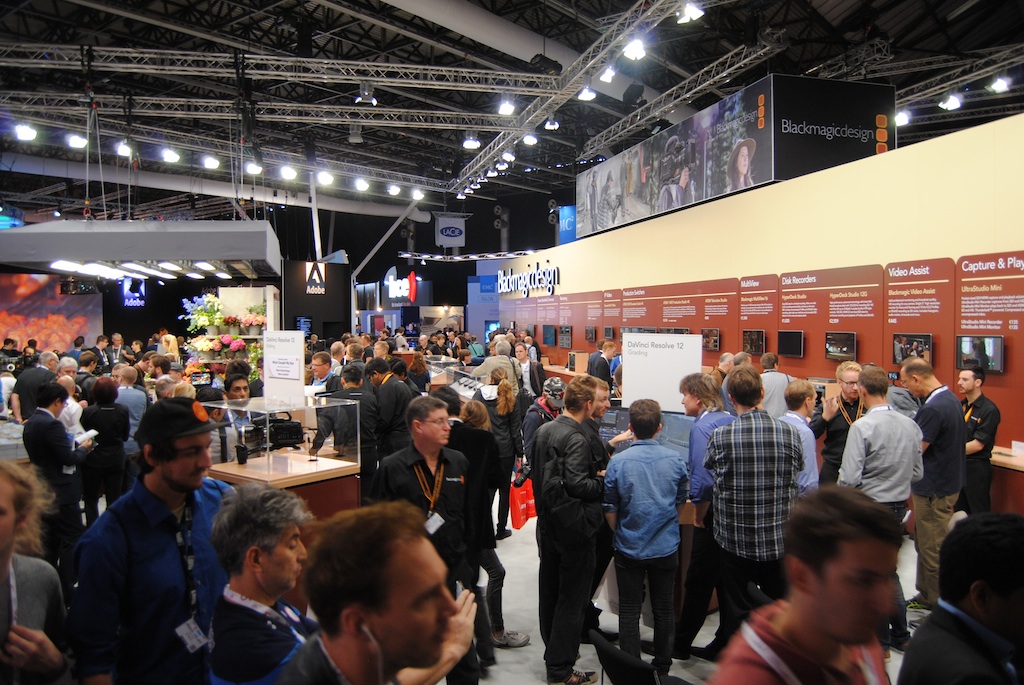
En el año donde todo el mundo por los pasillos del RAI Centre de Ámsterdam habla de vídeo IP, Blackmagic no podía quedarse fuera de esta nueva ola sorprendiendo a todos con una demostración de transmisión de video mediante el protocolo de Internet.
La mayoría de los productos de Blackmagic SDI 12G brindan la posibilidad de instalar un módulo de fibra óptica para procesar señales mediante esta conexión en caso de ser necesario. Con este diseño el fabricante se está preparando para lanzar diversos modelos que permitirán utilizar un módulo de datos 10G a fin de ofrecer la posibilidad de transferir imágenes por Internet.
Desde Blackmagic, sostienen que se trata de una solución mucho más práctica, ya que no se requiere el uso de distintos conversores y es posible conectar el mismo equipo a sistemas basados en SDI o IP.
Durante la feria Blackmagic está llevando a cabo una demostración sobre cómo transmitir señales UHD mediante IP entre dos prototipos Teranex Mini a través de una conexión para fibra óptica 10G.
Además presenta nuevos modelos en la línea Teranex Mini con tecnología 12G que permiten recibir o transmitir señales SDI a través de cuatro canales. Con el objetivo de poder conectar equipos UHD de última generación a otros dispositivos más antiguos, el fabricante australiana ha desarrollado los nuevos modelos Teranex Mini 12G-SDI to Quad Link SDI y Quad Link SDI to 12G-SDI.
Este último puede utilizarse por ejemplo para conectar dispositivos con cuatro canales SDI al nuevo HyperDeck Studio 12G. De esta forma, es posible grabar la señal proveniente de equipos UHD más antiguos en la unidad SSD insertada en el grabador.
Esta opción permite utilizar solo un cable en lugar de cuatro y el dispositivo se ajusta automáticamente al formato de la señal recibida.
Es mucho mejor emplear solo dos cables BNC para conectar la entrada y la salida del dispositivo en lugar de ocho. Además, al intentar distribuir la señal sería necesario contar con una matriz de gran capacidad. Por lo tanto, los nuevos conversores Teranex Mini ofrecen una solución a tener muy en cuenta para salvar la brecha entre ambas tecnologías.
El modelo Teranex Mini 12G-SDI to Quad Link SDI también puede utilizarse para crear superficies audiovisuales dividiendo una señal UHD y transmitiéndola a cuatro pantallas HD distintas.
También se estrena en IBC el nuevo Teranex Mini SDI Distribution 12G. Cuenta con tecnología SDI 12G y permite recibir una señal SD, HD o UHD para distribuirla mediante ocho salidas distintas a varios dispositivos. Al igual que los demás productos de la línea Teranex Mini, reconoce automáticamente el formato de la señal SDI entrante y es capaz de procesar distintas velocidades de transferencia.
En todos los modelos se puede instalar un panel inteligente fabricado por Blackmagic para ver las imágenes procesadas en el panel frontal.
Ursa Mini
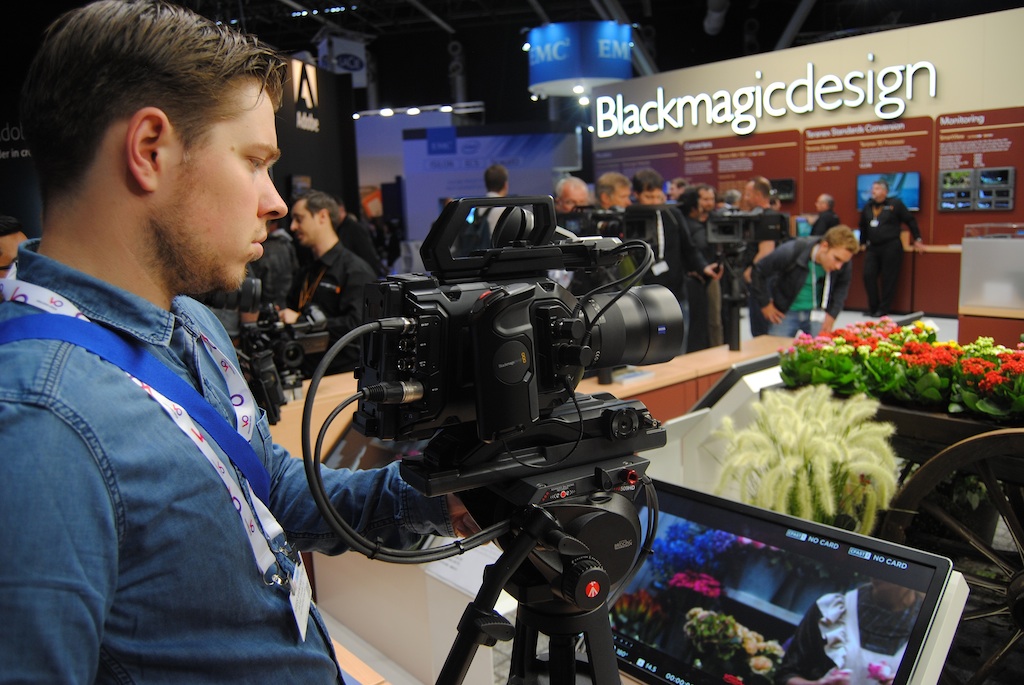
Blackmagic ha incluido algunas novedades en su cámara Ursa Mini como entrada para señales de referencia y código de tiempo en el mismo conector, de modo que ahora hay una conexión libre para añadir una entrada SDI 12G. Esta modificación mejora la calidad de las imágenes al conectar la cámara a un grabador externo y permite utilizarla como un modelo para estudio o producciones en directo.
Además, con solo presionar un botón, la cámara permite ver la señal SDI 12G entrante en el visor o la pantalla plegable. Al contar con esta tecnología, pensamos que los modelos PL y EF serán ideales para proyectos en estudios.
Del mismo modo, han incluido un conector para controlar objetivos B4 en los modelos Ursa Mini PL. De esta forma, la cámara proporciona corriente eléctrica al objetivo y puede controlar la apertura del diafragma, mientras que el botón REC del objetivo brinda la posibilidad de comenzar o detener la grabación.
Para quienes quieran emplear sus objetivos HD de mayor antigüedad y, además de ahorrar, aprovechar la función parfocal que permite mantener el enfoque al modificar el zoom, Blackmagic ha estrenado una nueva montura B4 para el modelo Ursa Mini PL que permite remplazar la original. La instalación es muy sencilla. Basta con quitar dicha pieza siguiendo los mismos pasos que se requieren para colocar los anillos adaptadores y luego fijar la nueva montura para objetivos B4.
A continuación, se conecta el objetivo al puerto correspondiente para habilitar la función de control remoto y poder suministrarle corriente eléctrica. Cabe destacar que esta conexión es compatible con modelos analógicos y digitales. De este modo, los usuarios cuentan con la posibilidad de utilizar incluso versiones más antiguas.
Esta nueva montura incluye un sistema óptico de gran precisión que se adapta al estándar de los objetivos B4 y ajusta el área aprovechable del sensor al tamaño de imagen de la definición HD. A su vez, instalar la montura B4 resulta mucho mejor que colocar un adaptador, ya que esta elimina el peso de la pieza original y es un accesorio más pequeño y resistente.
Al utilizar objetivos HD en el modelo Ursa Mini, se obtiene una frecuencia de imagen de 80 fotogramas por segundo. Dado que estos permiten captar imágenes en alta definición, brindan la posibilidad de emplear formatos modernos tales como RAW, ProRes o DNX, y acceder a los metadatos del archivo u otro tipo de información adicional.
Como la apertura del diafragma de estas versiones es menor, el rango de la distancia focal es fantástico. Además, se pueden adquirir modelos de segunda mano por Internet a un precio económico. Asimismo, la instalación es tan sencilla que resulta muy fácil alternar entre distintas monturas según sea necesario.
Estos cambios en el modelo Ursa Mini y la nueva montura B4 ofrecen a los usuarios una cámara de avanzada para realizar producciones en directo o proyectos en el estudio.
Actualización de MultiView
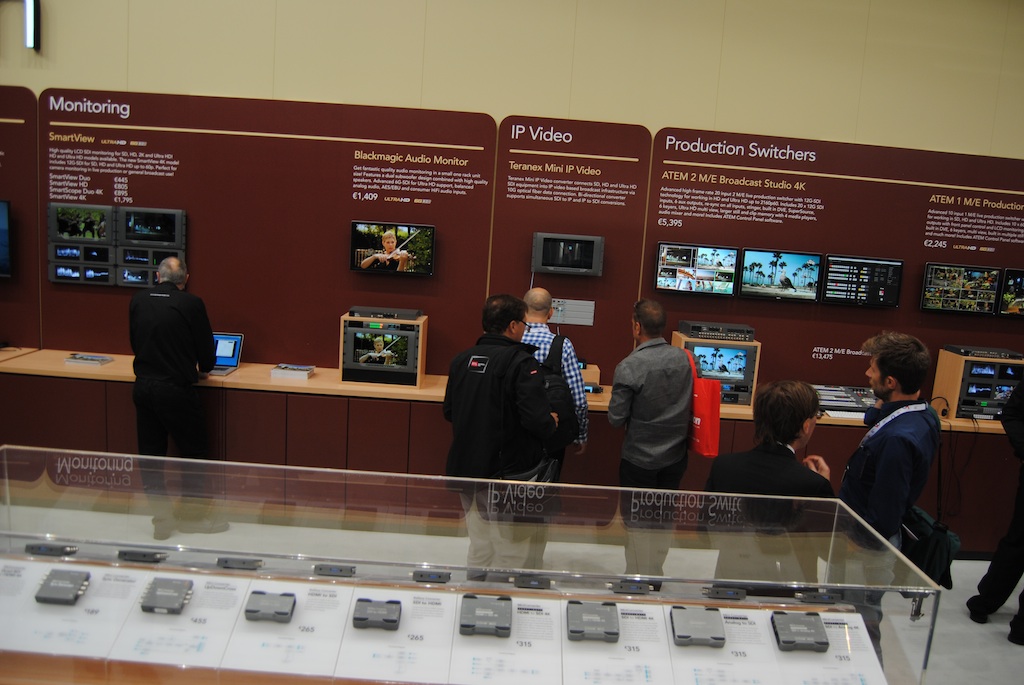
En IBC, Blackmagic ha anunciado la actualización de su MultiView que incluye nuevos vúmetros digitales y rótulos mejorados en la pantalla del equipo.
El vúmetro mide la intensidad del audio en cada entrada de video y cuenta con una balística optimizada según los estándares empleados para medir unidades de volumen. Sin importar la cantidad de fuentes seleccionadas para la monitorización, los indicadores se muestran en forma nítida y clara.
Además, el diseño de los rótulos que aparecen en la pantalla ahora es más elegante y discreto. Tanto los vúmetros como los rótulos y los bordes en la pantalla se pueden activar o desactivar independientemente desde los menús correspondientes.
Teranex Express
También ha actualizado el software Teranex Express con más prestaciones incluyendo una herramienta avanzada que permite reducir el ruido de las imágenes en forma recursiva y corregir imperfecciones en el material proveniente de equipos tales como videograbadores antiguos.
Además, Blackagic ha diseñado una nueva pantalla principal desde donde se pueden ver las imágenes, el vúmetro digital, el formato de la señal e información sobre el código de tiempo. De esta forma es muy útil poder monitorizar la intensidad del audio y acceder fácilmente a la información sobre el código de tiempo para confirmar que los ajustes seleccionados sean los correctos.
Con esta nueva versión, Teranex Express no solo brinda la posibilidad de realizar conversiones entre formatos SD, HD y UHD, sino que también ofrece la opción de reducir el ruido en las imágenes.

Decklink Quad 2
Otro de los productos que Blckmagic lanza este este año es la nueva tarjeta DeckLink Quad. Este nuevo modelo ha sido diseñado para programadores, integradores de sistemas y fabricantes de equipos originales que requieren una sola tarjeta con múltiples canales de video.
Ofrece 8 canales SDI 3G, de modo que permite procesar contenidos en SD o HD con una alta frecuencia de imagen a una resolución máxima de 1080p60. La característica más relevante de este modelo es que todos los canales son totalmente configurables, lo que supone un avance significativo en comparación con la versión anterior.
Por ejemplo, es posible asignar 8 canales para captura o reproducción en una misma tarjeta mediante el software incluido. De manera predeterminada, este componente dispone de cuatro canales de entrada y cuatro de salida para señales SDI. Sin embargo, el conjunto de herramientas de desarrollo (SDK) permite subdividir los canales y definir la configuración deseada.
Es decir, se pueden capturar o reproducir contenidos en cada uno de los canales independientemente o configurarlos todos para el mismo fin. Los usuarios podrán definir la combinación que deseen, por ejemplo, 8 entradas u 8 salidas, o 1 entrada con 7 salidas, o simplemente 4 entradas y 4 salidas.
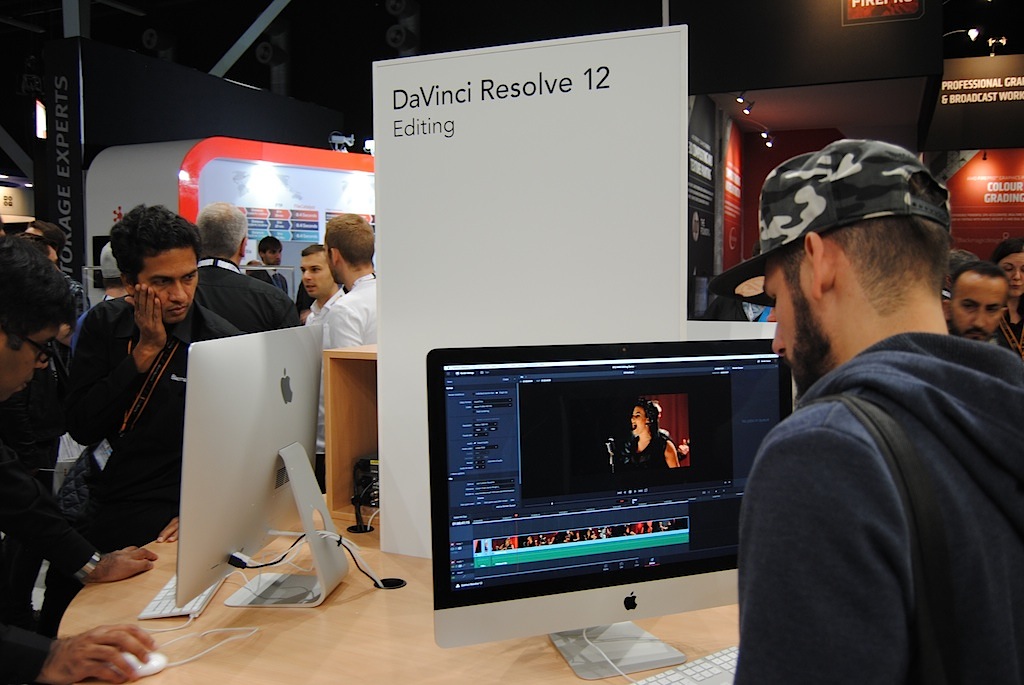
DaVinci Resolve 12 y Fusion 8
La versión beta de DaVinci Resolve ha tenido una gran acogida en este IBC. Tras comprobar su estabilidad, la versión final de DaVinci Resolve 12 ya está disponible en la web.
Dado que el nuevo Fusion 8 también ha captado gran atención, ha lanzado una nueva versión beta para equipos Mac y Windows. Esta incluye una gran cantidad de mejoras solicitadas por los usuarios para esta herramienta avanzada para la creación de animaciones gráficas y efectos especiales cuya disponibilidad en equipos Mac y Windows ha gozado de gran popularidad.
Access to the IBC 2015 SPECIAL in Panorama Audiovisual
Did you like this article?
Subscribe to our NEWSLETTER and you won't miss anything.
Related articles
 ‘On a Wing and a Prayer’ de Prime Video, rodada con la URSA Mini Pro 12K de Blackmagic
 'The Marvelous Mrs. Maisel' (Prime Video) comes to life with Blackmagic's URSA Mini Pro 12K
 Blackmagic Design's new Teranex Mini SDI to DisplayPort 8K HDR is now available
 Advanced 8K monitoring with the new Teranex Mini SDI to DisplayPort 8K HDR
 AJA's Ki Pro Racks, FS2 and mini-converters fill the iHeartRadio Jingle Ball Tour with video
 Hispasat demonstrates the possibilities of 4K HDR and IP transmission via satellite
 Rohde & Schwarz demuestra todo el potencial de sus soluciones para almacenamiento, cabecera y transmisión en 4K
 Blackmagic's new line of Teranex Mini converters
 i2CAT demonstrates data transmission through light at MWC
 TVE is committed to the transmission and reception of signals through MediorNet fiber optics for its mobile phones in news
 Only one in five broadcasters are connected to the cloud
 Todos los mini-conversores de AJA incluyen ahora una fuente de alimentación universal
 Content consumption through connected devices in the US now reaches 38% of homes
 AJA mini converters in 'Conan', O'Brian's show on the North American TBS