





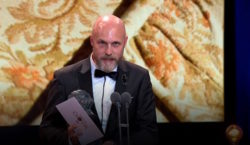
Juan Pedro de Gaspar, Goya for best artistic direction, takes the viewer to Barcelona in the 1920s in 'The Shadow of the Law'
“The pull of the film has a lot to do on an artistic level with the direction of photography because it is what makes us believe that we have moved to that dark time of the 1920s in Barcelona,” recognizes Juan Pedro de Gaspar with a Goya in his hands.
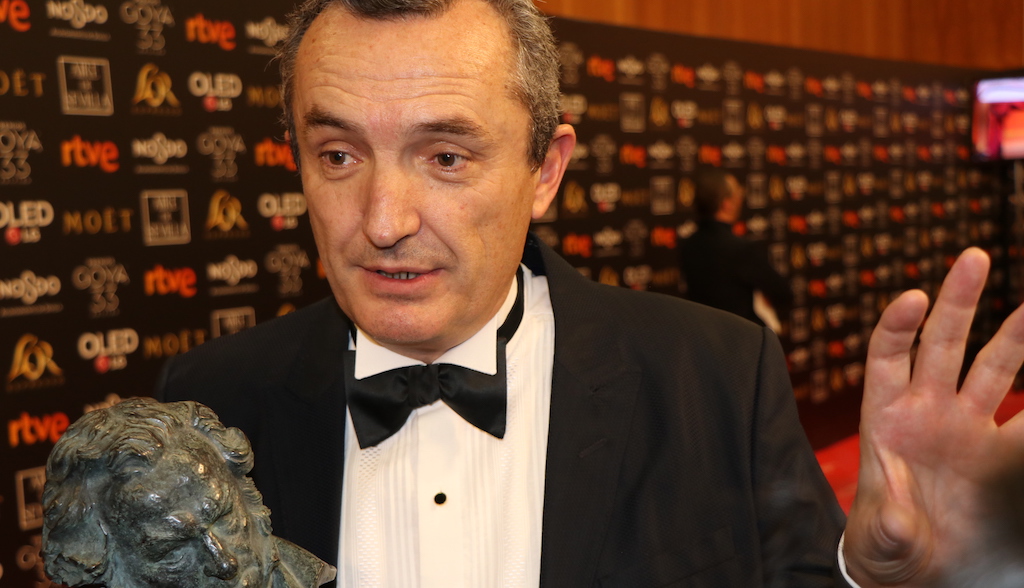
To Juan Pedro de Gaspar, awarded with the Goya for Best Artistic Direction by The shadow of the law, “really the pull of the film has a lot to do on an artistic level with the direction of photography because it is what makes us believe that we have moved to that dark time of the 1920s in Barcelona.”
Gaspar, who has splendid works behind him such as Green Zone o Blackthorn makes an exercise of modesty by declaring that “increasingly in films it is about teamwork, which is what has happened with The shadow of the law, where we have agreed to compensate some things with others in favor of a final result in which everything counts.”
For Gaspar to work with Dani de la Torre has been to commit to "rigorous work in which we have documented ourselves not only with photographs from the time but with other objects of posters, signage or typography that had to be taken into account to make a portrait that was as accurate as possible of the time. Dani de la Torre and I have talked a lot throughout filming about specific things or to understand how the director saw the production."
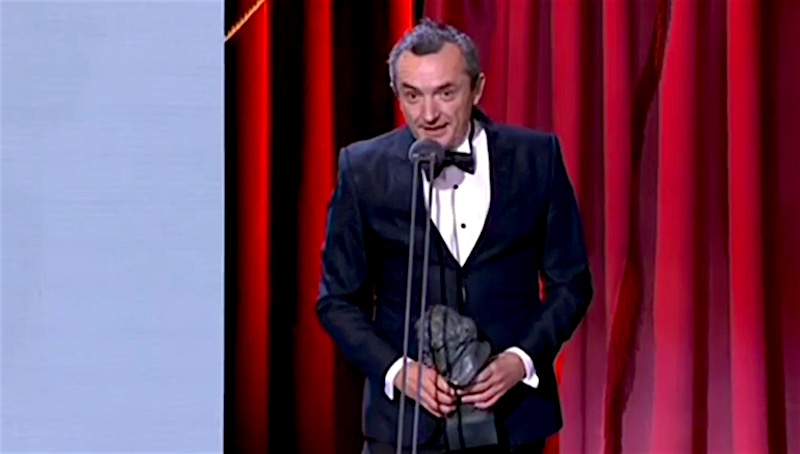 Regarding budgetary issues, he acknowledges to Panorama Audiovisual that "a bar must be established because otherwise it is always insufficient, given the perfectionist desire that all of us who work in the cinema have. There are always visual themes that escape us but the viewer has to be very observant to be aware of it, and furthermore visually they are irrelevant. Myself, watching Dunkirk I have observed that there are buildings from ten years ago.”
Asked about references from other films when making The shadow of the law, the filmmaker talks about Road to perdition as well as many others that Dani de la Torre had in mind and to which a small tribute is made at the end.
Regarding the narrative of the production, Gaspar asserts that "when you know that a director is going to use 360 degrees of field, you have to control everything and, if the camera starts to bite, then controlling everything means everything. It seems silly, but it is very difficult for you to consider a translation to the 20s and there not be something that the camera detects and takes you out of that feeling. That is the difficulty and that is why the digital effects work is important."
Access to the GOYAS 2019 SPECIAL in Panorama
Did you like this article?
Subscribe to our NEWSLETTER and you won't miss anything.
Related articles
 The challenge of reviving an extinct Barcelona allows Carlos Apolinario to win the Goya for Best Production Direction for 'El 47'
 Pedro Ruiz reappears on RTVE after almost twenty years of absence
 Rodrigo Sorogoyen achieves the dream double at the Goya 2023: best film and best direction for 'As Bestas'
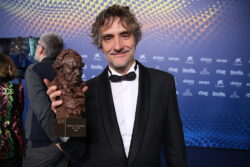 Pepe Domínguez del Olmo, second Goya for best artistic direction for 'Modelo 77'
 The Goya 2022 crowns Fernando León de Aranoa: Best Direction and Best Original Screenplay for 'The Good Patron'
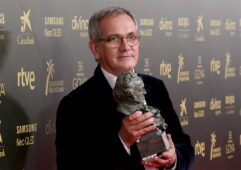 The journey to the 70s of 'The Laws of the Border', recognized with the Goya for Best Artistic Direction
 Juan Pedro de Gaspar wins the Goya for artistic direction for the second consecutive year
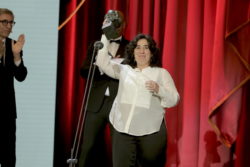 Arantxa Echevarría wins the Goya for Best New Director for 'Carmen y Lola', a story that breaks taboos
 Josu Incháustegui, Goya for best photography, overcomes the challenge of light in very critical shots in 'The Shadow of the Law'
 Mikel Navarro wins the Goya for Best Artistic Direction and, without leaving Euskadi, recreates a mysterious Europe
 The four stories nominated for the Goya for Best New Director, at the Film Academy
 Alain Bainée, a self-taught artist in the art of cinema, Goya for best artistic direction
 Dolby Atmos puts the viewer at the center of the action
 The Goya for Best Artistic Direction goes to Juan Pedro de Gaspar for 'Blackthorn. Without destiny'