





Four IBC 2022 trends that will mark the path of the sector
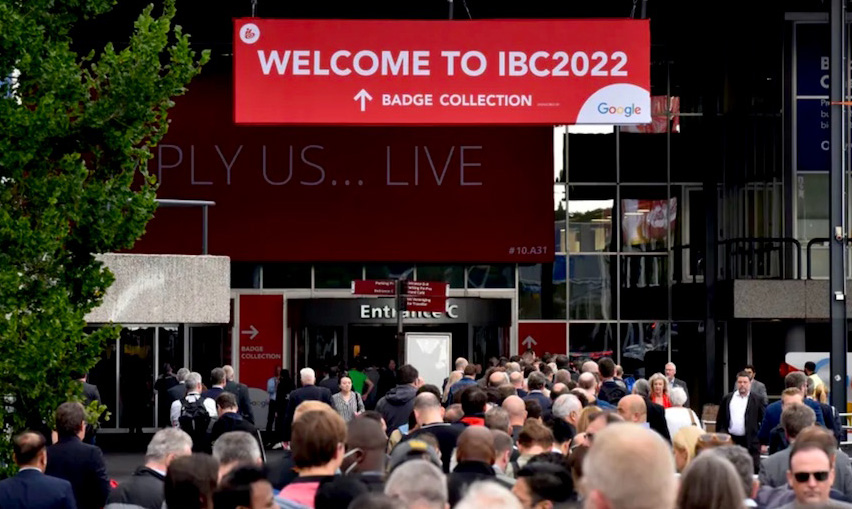

Adolfo Rodero, managing director of the communications, media and platforms sector Accenture in Spain, Portugal and Israel, identifies in this forum four keys present at IBC 2022 that could mark the most immediate future of the broadcast field.

1. The power of the platform – How to make good audiovisual content
The competitive media ecosystem has been altered on multiple occasions in the last decade. In today's digital economy there are financial, operational and technological pressures for traditional communication companies, which seek a direct connection with the client. A business model based on digital platforms can assist in this strategy by extending customer lifetime value (CLV), reducing operating costs and fostering innovation.
But developing and operating a digital video platform requires new skills and capabilities for many media outlets. It also entails carrying out a thorough examination to find the proper strategy. For example, should a media outlet outsource its video business to a provider to reduce costs while investing more in innovation, or should it control its entire content delivery to compete for market leadership?
At IBC, media management companies have examined how a platform business model can help them grow by extending customer lifetime value.
An example of this change to digital is Formula 1, the most prestigious motorsports championship in the world, which until recently only offered fans in-person and television experiences. The organization decided to launch a digital platform allowing them to tailor their viewing experiences, allowing fans the ability to get closer to the action while gaining insight into their behavior and creating a new source of income.
Another example is the project for content management and monetization (VCMM) that we have developed at Accenture together with a leading Spanish communication group, and that we have shown in this IBC 2022. This is a new service that, supported by the Artificial intelligence, will allow generating additional income through the reuse of audiovisual content generated in companies.
VCMM generates, in a highly efficient way, a highly qualified, described and indexed archive, which allows multiplying the possibilities of recovery, reuse and marketing to third parties. To achieve this, thanks to Artificial Intelligence and the experience of more than 30 years in the management of audiovisual and sound archives of the communication group, we offer a flexible and scalable service in multiple languages. VCMM is also a good example of how communication groups can take an active role in the development of the technology and services that enable their present and future business models and ensure that this development is perfectly adapted to the real needs of the sector.
At IBC, media management companies have examined how a platform business model can help them grow by extending customer lifetime value, reducing operating costs, and fostering innovation.
2. Advertising – It's time for a digital transformation
Factors such as privacy regulations, los cookieless environments and the general consumer fatigue with advertising interruptions, are helping to pave the way towards a contextual and more interactive advertising, less invasive and more attractive to consumers.
Today's advertising leaders need to remain relevant while becoming more efficient. This requires a transformation to focus on high-value activities, such as pricing, planning and inventory management, and, at the same time, improve the quality and precision of its processes with technology such as analytics, artificial intelligence (AI) and augmented reality.
The potential of allowing a customer to virtually try on products in an ad or see how an appliance or sofa would look in their home is powerful and can not only increase sales, but also attract more customers potentials. The need for a technological transformation in advertising is essential, which will allow companies to move from being media-oriented to being results and data-oriented.
Whatever the technology, Digital transformation is going to be key to the future success of the healthcare sector. digital advertising.
Some of Accenture's work in this area resulted in a media company increasing its cost per impression (CPM) by more than 25%; that a telecommunications company could establish a self-service ad portal in less than eight weeks; and that cable operators in Europe could establish a marketplace where multiple television audiences could be added and sold through the automated platform.
Whatever the technology, the digital transformation It is going to be key to the future success of the digital advertising sector. Beyond consolidation, advertisers must discover what their strengths and reinvent yourself with the objective of achieving resistance, relevance and agility in a uncertain environment.

3. Metaverse – Preparing for a direct relationship with consumers
The metaverse is a great chance for the media and entertainment, which can establish a direct and unlimited relationship with consumers. At the same time, the metaverse will influence the current way of doing business in the communication industry.
Content strategy and production must change towards immersive experiences and the development of new digital assets for consumers to participate, while establishing new channels and virtual markets to provide this content. In addition, it must be guaranteed that all processes are safe and transparent so that all content and advertising are trackable in this new environment.
Currently, advertisers and publishers they are not focused on the metaverse in the short term. Those brands and advertising organizations that plan ahead advertising campaigns and operations in the metaverse will benefit the most in the future, since they will have more possibilities of set standards and lead the way for broader expansion.
The content strategy and production must change towards immersive experiences and the development of new digital assets for consumers to participate.
The video game sector has an advantage in the metaverso and is a good example for others to learn from. Video games have learned to gamify the experience through virtual reality, have made the experience social so that users interact with each other on their platforms, and have turned a previously static experience into a immersive experience, in which users can freely play, build and interact with virtual environments, leading to greater engagement. For example, this year Roblox players spent 3.8 billion hours on the platform, which is a 21% increase over the previous year.
The industry is in full swing to gain a foothold in the metaverse. To do it right, media and entertainment companies must keep the following in mind:
- The complex ecosystem dynamics and the next generation capabilities They are vital.
- Companies must determine where to play in a space in which competitive positioning intensifies.
- It is necessary to understand the challenges well, such as the need to create personalized content, the protection of brand integrity and intellectual property, decentralization of creators contents and the possible alteration of physical spaces.
In this edition of the IBC, many companies have seen the metaverse as more than just a fad. They have shown their approach and how to establish a clear vision in which they focus on experiment and develop a clear mission in the metaverse in the short, medium and long term.

4. The future of streaming – Opportunities and weaknesses
The time has come for next phase of innovation in streaming. It is an opportunity for actors in the sector to eliminate trouble spots that cause disruption to consumers and could threaten to erode enthusiasm for these services and their growing adoption.
The user experience It is an area in which innovation is necessary. Our recent study has revealed that he 60% of consumers around the world feel frustrated when browsing the content of the streaming video services. This highlights the need for content aggregators on platforms that can give consumers a greater control over your experience.
At the fair, many service and content providers have considered their role in this aggregated world. They will have to determine if they want to be an integrator or the integrated, which will dictate whether they shape the distribution agreements to attract participation from subscription video-on-demand services (SVOD) and advertising-based video on demand (AVOD) or if they partner with entities competing to be the preferred integrator.
These reflections will not be limited to distributors but, as the various platforms and actors focused on distribution consolidate, we will see how content providers and producers will have to redefine your space in the ecosystem and marketing strategies, a trend that is behind many of the corporate operations that are taking place in the market.
The monetization of streaming services
Another area of interest is monetization of streaming services. Our study revealed that 63% of consumers think it is too expensive to pay for all the entertainment subscriptions they want. As consumers rationalize their spending, we can expect ad-supported video to become more prevalent and attractive to consumers and suppliers.
In fact, we expect the ad-supported video market to reach $21 billion in 2025, up from 1 billion in 2017. And while it is unlikely to eclipse the subscription video on demand (SVOD) market in the short term, it is projected to grow at a faster pace over the next five years.
Consumer fatigue with subscriptions means that advertising-supported models They are a way to counteract the slow growth of SVOD subscribers. Examples of these AVOD services that could see an increase in subscribers include Pipes, of Fox, y Hulu, of Disney, in the United States, and All4 e ITV Hub in Europe, as well as television services in free streaming with advertising (FAST), like Pluto TV y Bad, of Viacom, in the United States, and Joy's y Discovery in Europe.
One of the challenges that have been discussed at the fair is how to ensure that AVOD y FAST work correctly and this it's not easy. It requires a high level of commitment to ensure the monetization of advertising and to achieve this, a range of approaches and capabilities which are different from those necessary for the success of subscription-based services.
Adoptar y acelerar estas innovaciones en el ámbito del streaming puede proporcionar a los medios de comunicación y a las empresas de entretenimiento una economía ampliada y potencialmente mejorada.
Más allá del AVOD, ¿cómo pueden las empresas de streaming iniciar una evolución de la conexión con el consumidor que vaya más allá del simple vídeo? El vídeo es la puerta de entrada a un mundo de nuevas e innovadoras experiencias para el consumidor. Por ejemplo, los proveedores pueden ofrecer otros servicios multimedia de suscripción y financiación de anuncios, como música, libros y podcasts, junto con la venta de producto relacionados con el contenido, como apuestas deportivas y otros comercios complementarios, o una aplicación de comida para acompañar una noche de cine en familia. Otros ejemplos son las oportunidades de interacción social para impulsar la participación de la audiencia y mejorar el poder de la plataforma para los anunciantes, así como las experiencias mejoradas e inmersivas del metaverso para los deportes en vivo, los conciertos de música o los espectáculos de viajes.
Adoptar y acelerar estas innovaciones en el ámbito del streaming puede proporcionar a los medios de comunicación y a las empresas de entretenimiento una economía ampliada y potencialmente mejorada, as well as nuevas formas de deleitar a los consumidores con historias y experiencias atractivas.
Adolfo Rodero
Managing director del sector de las comunicaciones, medios y plataformas de Accenture en España, Portugal e Israel.

Did you like this article?
Subscribe to our NEWSLETTER and you won't miss anything.
Related articles
 Sony identifies six trends that will mark broadcasting in 2023
 Cisco identifies the 5 technological trends that will mark 2023
 Calrec joins the latest trends with the Argo IP consoles, presented at IBC 2022
 These are the fiction television trends that will mark the 2021-2022 season
 Future Zone and the IABM Future Trends Theater will set future trends at IBC 2018
 Cloud computing, big data, Internet of Things, artificial intelligence and cybersecurity, trends in the ICT sector
 IAB Spain advances the digital trends that will mark 2017
 Four pillars that will set trends in video advertising in the coming years
 Trends in 2017 for the digital media sector
 Object Matrix anticipates some of the trends that will mark 2016 in storage
 Four future trends in online video
 AGAPI organizes a conference on new trends in the audiovisual sector
 CLAG will attend Rio Content Market 2012, in Brazil, with a delegation of four companies from the Galician audiovisual sector
 Ten keys that will set trends in the ICT sector