





Los grupos de trabajo de UHD Spain comparten en la 4K HDR Summit sus últimos avances
En el marco de la 4K HDR Summit, los diferentes grupos de trabajo de la asociación UHD Spain han compartido las últimas experiencias que han llevado a cabo con señales en Ultra Alta Definición en cuanto a producción, postproducción, codificación, emisión, recepción y audio.
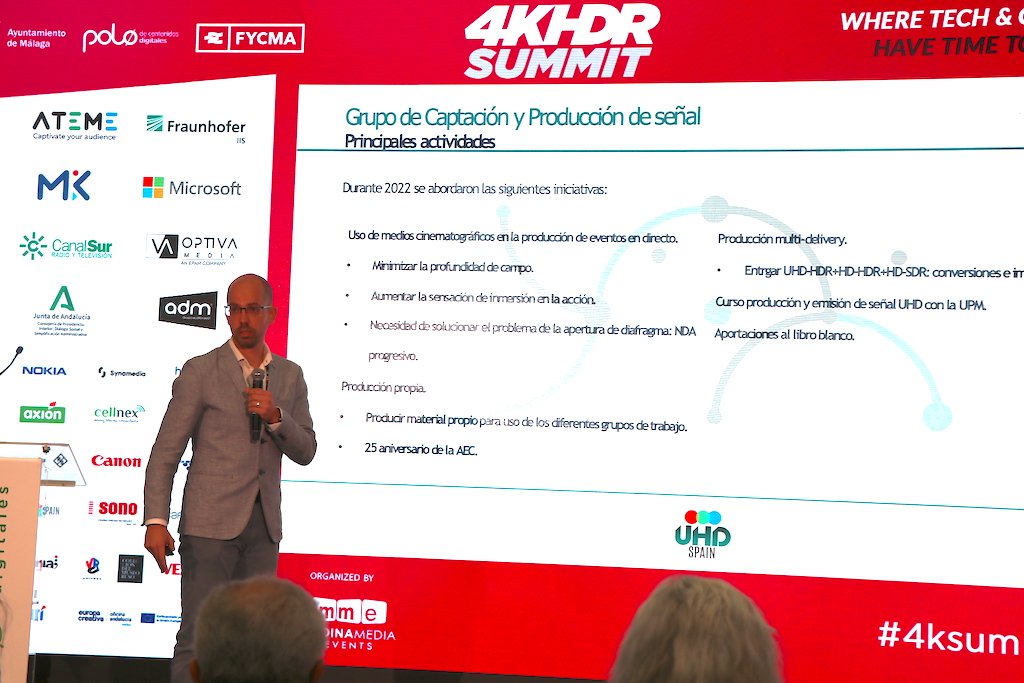 Yeray Alfageme, al frente del grupo de captación y producción de señal, ha expuesto el análisis que han llevado a cabo las empresas integrantes en cuanto al uso de medios cinematográficos en la producción de eventos en directo, estudiando la profundidad de campo y el incremento en la sensación de inmersión en la acción. Durante este año, el grupo también ha llevado a cabo la producción de material propio para uso de los diferentes grupos y ha analizado los retos de la producción multi-delivery (UHD-HDR+HD-HDR+HD-SDR con sus respectivas conversiones) para que el espectador disfrute de la mejor calidad según su dispositivo de visualización.
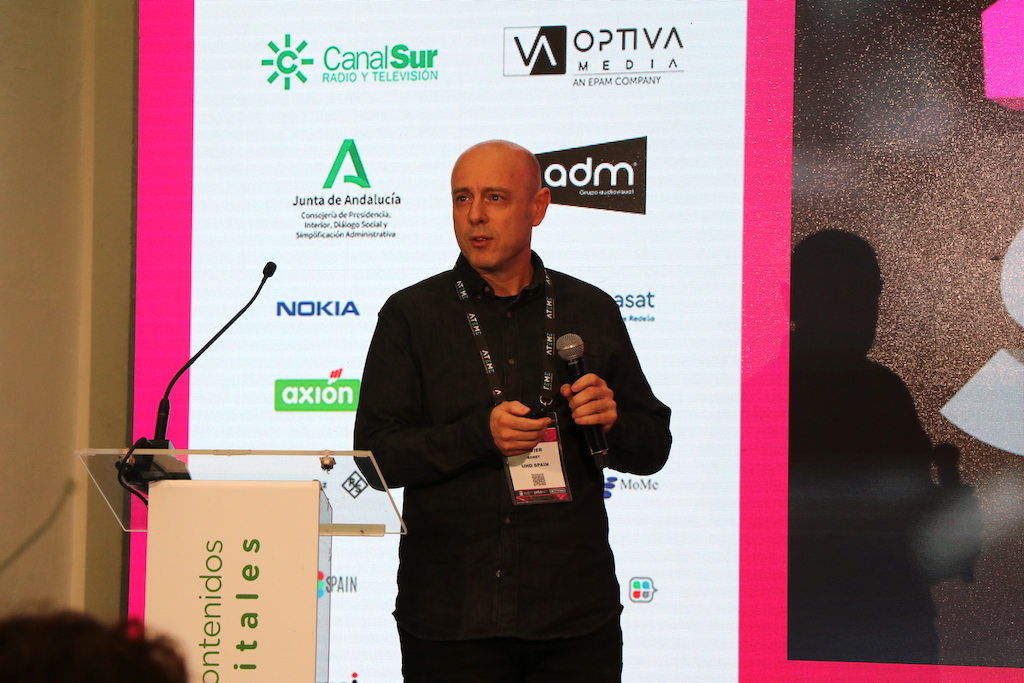 El grupo de postproducción, coordinado por Xavier Bonet, ha analizado la implicación del uso de diferentes materiales UHD en el flujo de trabajo. El grupo ha organizado este año varias charlas y ha producido un clip con audio de nueva generación (en UHD con sonorización en audio inmersivo con tres idiomas, FX y música) y ha analizado las estrategias de conversión en tiempo real mediante las LUTS realizando al mismo tiempo pruebas con conversiones entre frame rate.
Para el grupo, el IMF (Interoperable Master Format) se perfila como una propuesta de gran flexibilidad aunque no es un formato de producción sino que está pensado para productos finalizados. Soporta múltiples resoluciones, todos los espacios color y todos los formatos de audio.
Como retos para el nuevo año, el grupo de plantea estudiar soluciones de Inteligencia Artificial para upmapping conversión SDR-HDR y upscaling SD-HD-4K. También analizarán la pérdida real en LUTS técnicas y hacer comparativas respecto a la gestión de color siguiendo las Guidelines del UHD Forum.
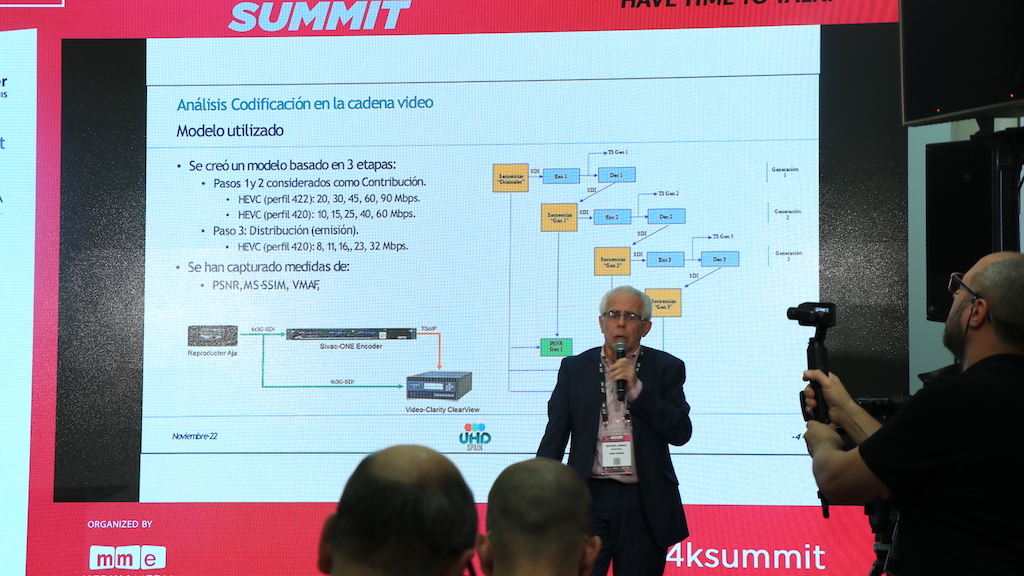
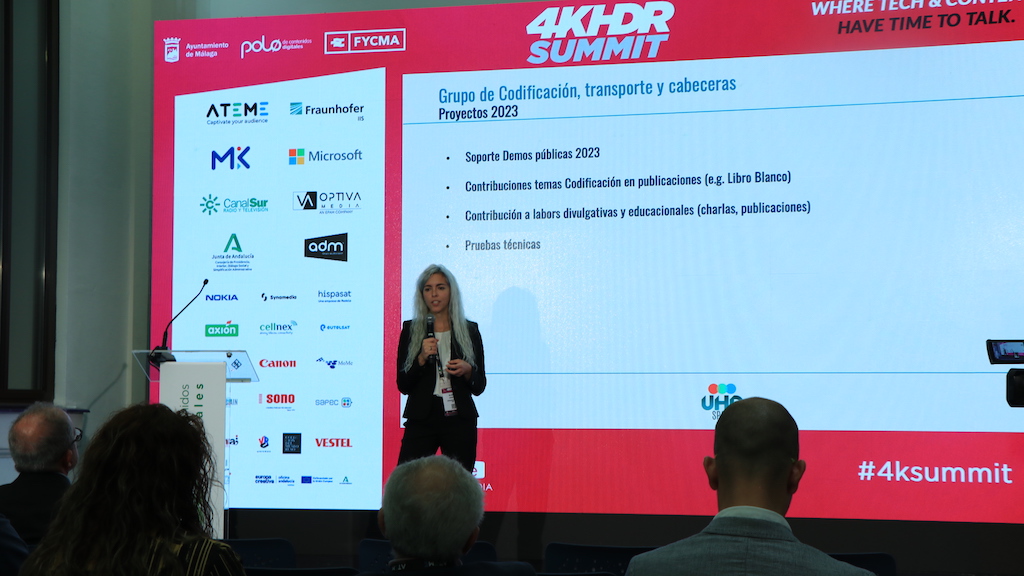 Elena Burdiel, coordinadora del grupo de codificación, transporte y cabeceras, ha desgranado algunas de las pruebas técnicas que han llevado a cabo en cuanto multigeneración.
En estas pruebas se ha analizado la codificación en la cadena tanto en contribución como en emisión deteniéndose en las etapas de codificación y decodificación de la señal encadenadas así como en la comparativa de la tasa binaria frente a las medidas de calidad.
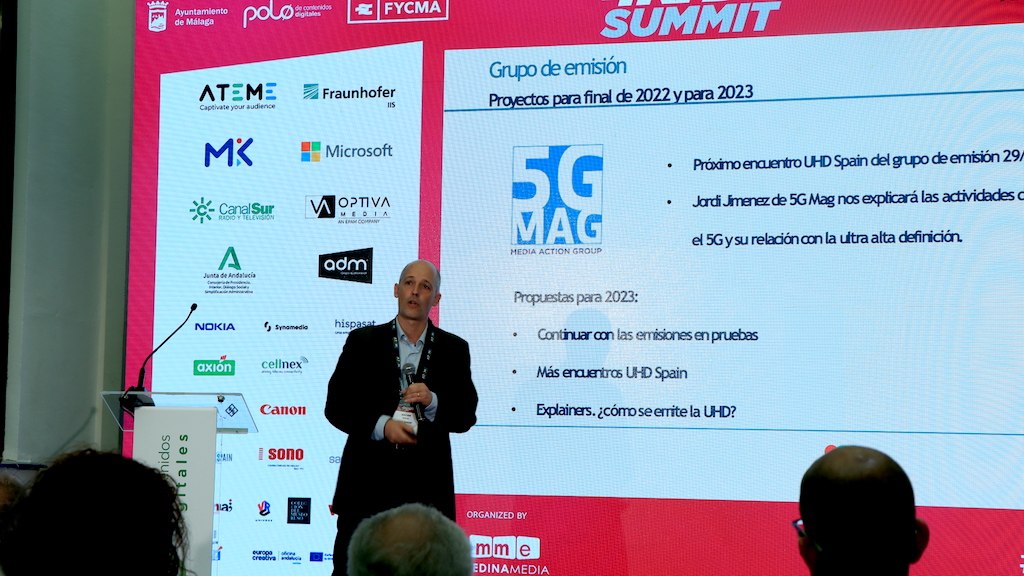 Xavier Redón, quien se encarga de la coordinación del grupo de emisión en UHD Spain, ha repasado algunos de los hitos conseguidos a lo largo de este 2022. Las empresas que participan en este grupo han desarrollado una serie de pruebas con emisión experimental de contenidos UHD sobre TDT desde una red terrestre de 53 centros que cubren un 60% de la población.
Redón ha subrayado que para el desarrollo de la UHD sobre TDT es necesario garantizar acceso al espectro más allá del 2030. UHD Spain apoya la posición de “No cambio” ante la Conferencia Mundial de Radiocomunicaciones que tendrá lugar el próximo año.
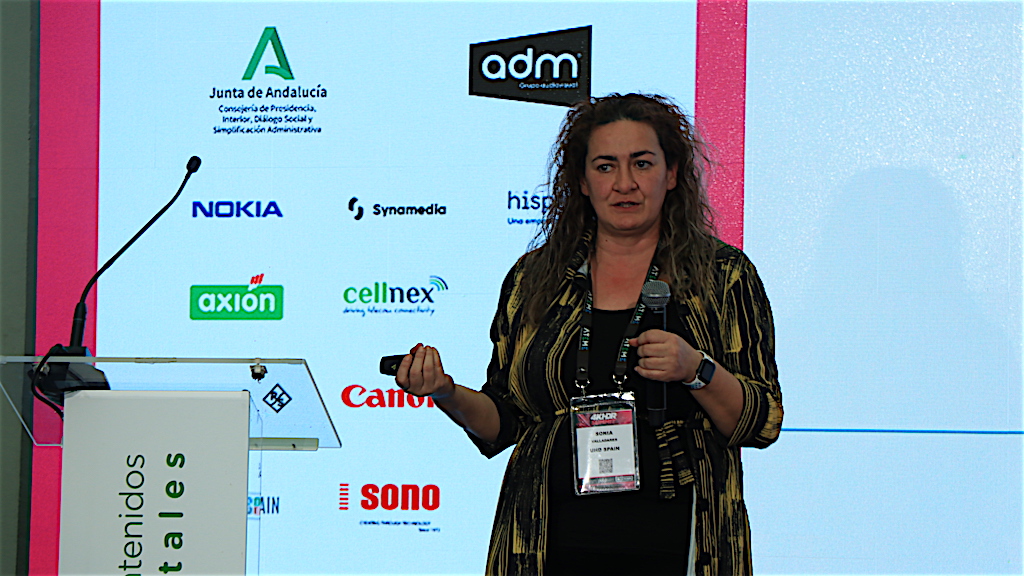 Sonia Valladares, coordinadora del grupo de receptores en UHD Spain, se ha detenido en analizar los trabajos desarrollados este año como el análisis del Filmmaker Mode UHD Alliance, el procesado de sonido en los productos AV de consumo.
Elena Burdiel junto a Sonia Valladares son las encargadas de coordinar un nuevo grupo transversal nacido este año con el objetivo de dar más importancia al audio y explorar el Audio de Nueva Generación. El grupo ha organizado varios encuentros en los que se ha profundizado sobre las propuestas actuales de distribución de sonido espacial, el uso de objetos, el audio interactivo y los fundamentos y estándares del Audio NGA.
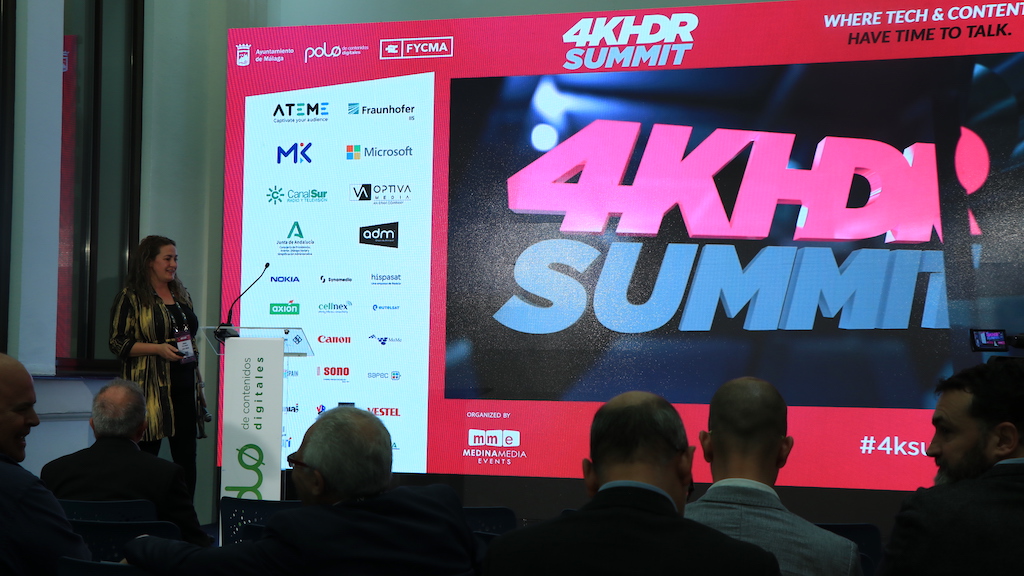
Pruebas técnicas
Por último, Miguel Ángel Cristóbal, director general de Sapec, ha detallado las conclusiones de algunas de las pruebas técnicas que los diferentes grupos de trabajo están llevando a cabo.
Cristóbal ha destacado que durante año y medio se ha mantenido de forma continuada un playout de señal UHD por 2 canales, llevando este año dos pruebas principales: por un lado, el análisis de la codificación en la cadena del vídeo; y pruebas de intercambio de formatos en los receptores de televisión.
Tras estas primeras pruebas, la conclusión es que los algoritmos MPEG son de “codificación con pérdidas” aunque no son apreciadas por el ojo humano. En el “cambio del vídeo” desde el origen hasta el usuario final suelen existir varios pasos de “codificación-decodificación” con la consiguiente multigeneración.
Para estas pruebas llevadas a cabo por UHD Spain en vivo se creó un modelo basado en 3 etapas: dos de contribución (HEVC con perfil 4:2:2 y 4:2:0) y una de distribución.
La prueba tomó diferentes contenidos de los diferentes participantes de UHD Spain creando una única secuencia. Posteriormente se calculó el índice espacial y temporal de cada secuencia.
Para las comparativas se empleó el método Bjontengard-Delta (BD) que permite comparar dos señales aportando BD-Rate y BD-PSNR.
Did you like this article?
Subscribe to our NEWSLETTER and you won't miss anything.
Related articles
 MRMC llevará a Las Vegas sus últimos avances en cámaras robóticas
 VSN mostrará sus últimos avances en gestión de derechos y monetización en IBC 2022
 VSN mostrará sus últimos avances en soluciones de media en SET Expo 2022
 Avid y Datos Media comparten los últimos proyectos del broadcast español en un evento en Madrid
 Los grupos de trabajo de UHD Spain comparten en la 4K-UHD Summit sus primeras experiencias
 Los líderes tecnológicos a nivel mundial ofrecen en la 4K HDR Summit demostraciones de sus últimos avances
 Sngular mostrará sus últimos avances en realidad aumentada en Málaga
 TSL exhibirá los últimos avances en soluciones de monitorización de audio PAM-IP en NAB 2019
 Axon presents the latest advances in IP processing and control at NAB 2019
 Últimos avances en codificación con Perseus de V-Nova
 Brainstorm at BIT Broadcast 2016 captivates with the latest advances of the Infinity Set
 RTVE presenta en FICOD sus últimos avances tecnológicos
 El CTO de Sony desvela los últimos avances en 4K y transmisión IP
 Tedial presenta en NAB sus últimos avances en gestión de contenidos