





CCMA, dentro del laberinto: la llegada del IP al canal 3/24
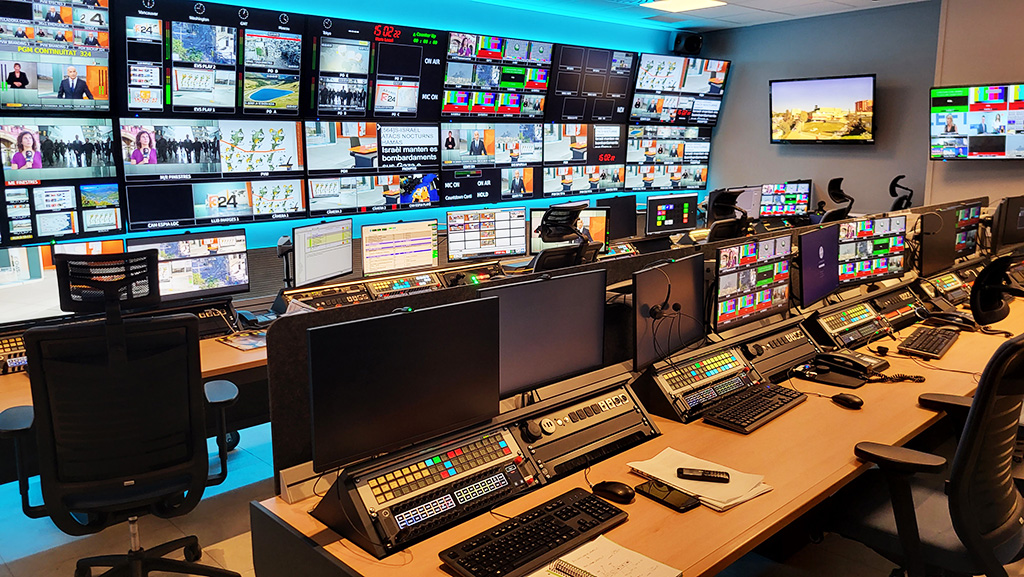

El equipo de ingeniería CCMA (Corporació Catalana de Mitjans Audiovisuals) – 3Cat explica en profundidad cómo ha sido la llegada de la infraestructura IP a su canal de noticias 3/24, una opción que abre numerosas puertas, pero que no está exenta de retos a superar.
Tras realizar sus primeras pruebas en un entorno controlado en su Estudio A, la transición a la alta definición del 3/24 fue la excusa perfecta para poner a prueba el IP en todo un canal dentro de CCMA. La llegada a otras televisiones europeas de la tecnología, así como promesas y expectativas de fabricantes, integradores y toda la cadena audiovisual, hizo a la televisión decantarse por esta fórmula. Los beneficios operacionales están fuera de toda duda: el abandono del SDI y la integración del mundo IT en un mundo televisivo cada vez más digital permiten deslocalizar recursos dentro de la misma organización, abrir la puerta al mundo de la virtualización u optimizar procesos en pro de la rapidez que demanda el contexto mediático actual.
El equipo de CCMA ha trabajado en este proyecto desde marzo de 2021. En aquel entonces, se comenzó a trazar cómo sería la forma de introducir el IP de una manera inteligente, favoreciendo la explotación del canal y la comodidad de los operadores en un entorno 24 horas dedicado a la actualidad. Ofertas públicas y adjudicaciones vía concurso acabaron por determinar que Unitecnic sería la compañía encargada de llevar a cabo esta integración, completada hace unas semanas.
3/24, isla en un mar SDI, comienza a aprovechar las ventajas del IP sin renunciar a los puentes con las infraestructuras tradicionales. Pero al tiempo que se beneficia de la agilización de funciones, la simplificación del cableado o la automatización de procesos, comienza a descubrir la complejidad del entramado IP: unas configuraciones mucho más largas, problemas latentes de intercompatibilidad, una serie de equipos fiables que se alternan con otros no tan probados…
Josep Ardanuy Bel, responsable de continuidad en los estudios de TV3 en Sant Joan Despí; Anna Ochoa López, ingeniera especialista; Natàlia Prats Buendía, directora de infraestructuras digitales y tecnológicas; Antoni Roig Figueras, jefe de emisión técnica, y Marc Sanclimens Solervicens, ingeniero especialista, comparten luces y sombras del IP en el 3/24. El balance es positivo, pero las notas a pie de página son de lectura imprescindible para tomar la decisión sobre adentrarse en este mundo siempre cambiante…
La tecnología IP en 3/24
 Una aproximación transversal al IP: 2110, NDI, AES67…
Los 20 años de antigüedad del 3/24 hacían necesarios que el canal acometiera un salto tecnológico para prepararse a sus próximas dos décadas de existencia. El proyecto debía ser estudiado con detenimiento: la naturaleza 24 horas del canal añadía desafíos adicionales que debían ser tomados en cuenta. Tras diferentes reuniones y debates en el seno de CCMA, se decidió acompañar la transición al HD con una infraestructura IP. En palabras de Josep Ardanuy: “Nos pareció que la tecnología IP estaba bastante madura y, además, nos convenía hacerlo para entrar en este mundo”.
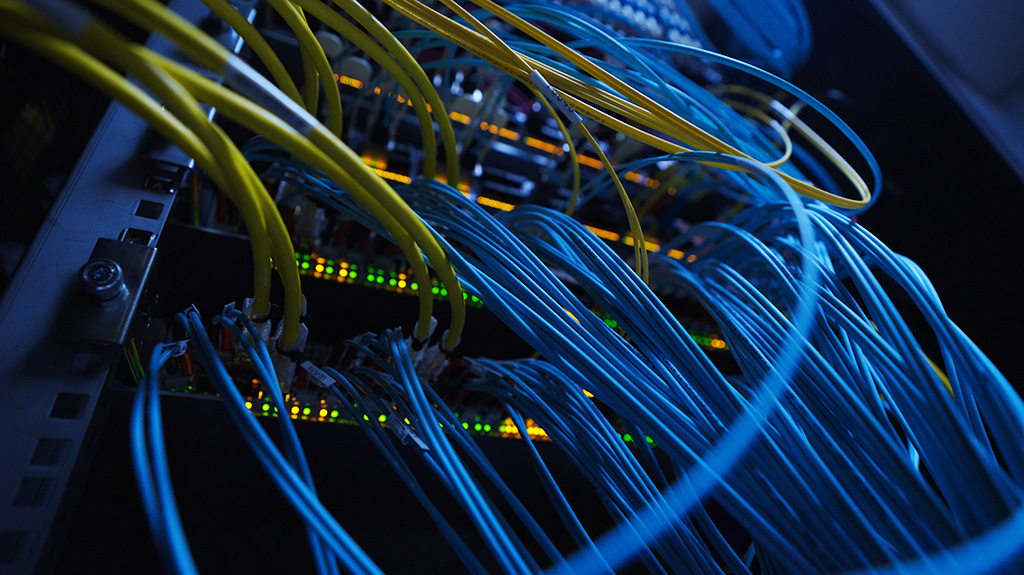
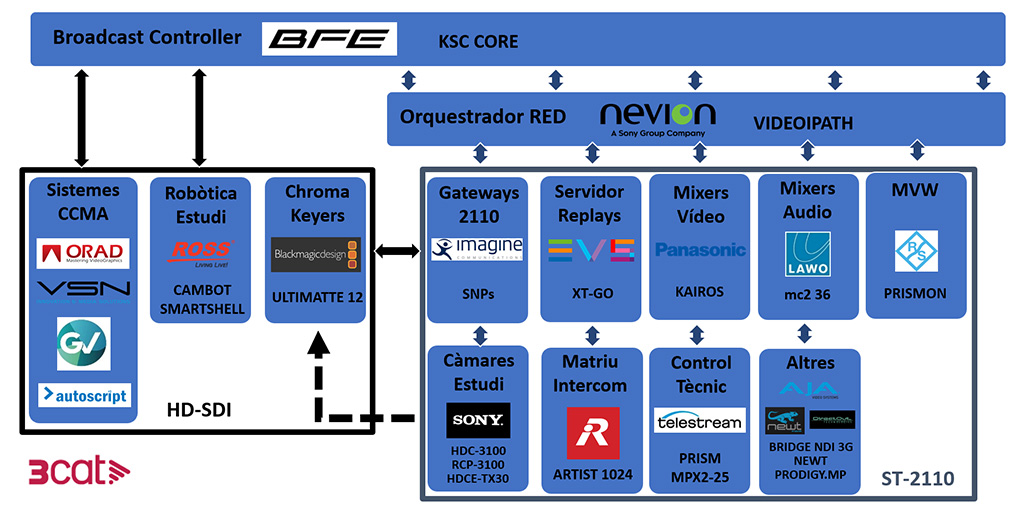
El canal apostó por el conjunto de estándares SMPTE ST 2110 como core de la instalación, conducido por una electrónica de red de Arista, el orquestador de red Nevion VideoIPath (uno de los sistemas que ha sido virtualizado en el 3/24), la plataforma de procesamiento de medios IP Selenio SNP de Imagine y el sistema BFE KSC Core como broadcast controller: una aproximación diferente al de otros proyectos extendidos en territorio español, pero con casos de éxito repartidos en diferentes partes del mundo.
El sistema convive en la televisión catalana con equipos NDI, profundamente integrados en los sistemas de la cadena; audio AES67, extendido por todas las sedes de la radiotelevisión, e incluso fuentes SRT, construyendo así una arquitectura IP transversal que permite explorar todas las posibilidades de este universo: “Nuestra infraestructura principal es 2110, pero tenemos puertas abiertas al mundo NDI, ya que en la casa contamos con señales NDI nativas que nos sirven para mandar un tweet al aire a través de NDI Screen Capture o como base para la realización con un vMix. Son herramientas que nos facilitan procesos por su rapidez y tenemos la puerta abierta a otros protocolos”, explica Marc Sanclimens.
La elección de los nuevos equipos
La actualización del 3/24 va más allá de la infraestructura IP, puesto que abarca una renovación transversal de su equipamiento de producción y control. En un mercado broadcast en transición, el equipo de la CCMA tuvo que tomar la decisión de priorizar la compatibilidad 100% nativa en IP u optar por activos híbridos o tradicionales con la opción de recurrir a adaptadores para integrarlos en la red. El coste sería una variable fundamental a la hora de tomar la decisión, pero no deben ser obviadas la resiliencia de los equipos o su versatilidad para adaptarse a todo tipo de producciones.
Anna Ochoa: “Toda la transición de SDI a IP supone un paso híbrido. Esta isla irá creciendo en base a gateways para que se puedan disponer de las señales procedentes de todos los estudios o localizaciones”.
Anna Ochoa explica por qué se decantaron por la primera de las opciones: “En la medida que pudimos, fuimos a mirar que los equipos fueran nativamente IP. En algunos equipos, como el chroma keyer, tuvimos que decantarnos con una solución SDI como es Ultimatte 12 de Blackmagic, puesto que el resto no nos daban las posibilidades que buscábamos. En estos casos, hemos recurrido a conversores o gateways”.
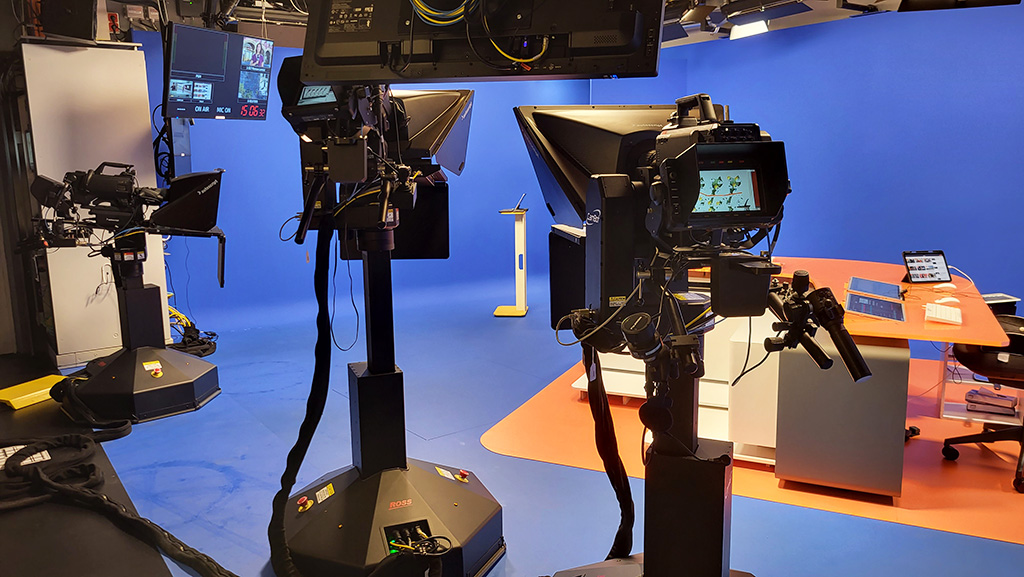
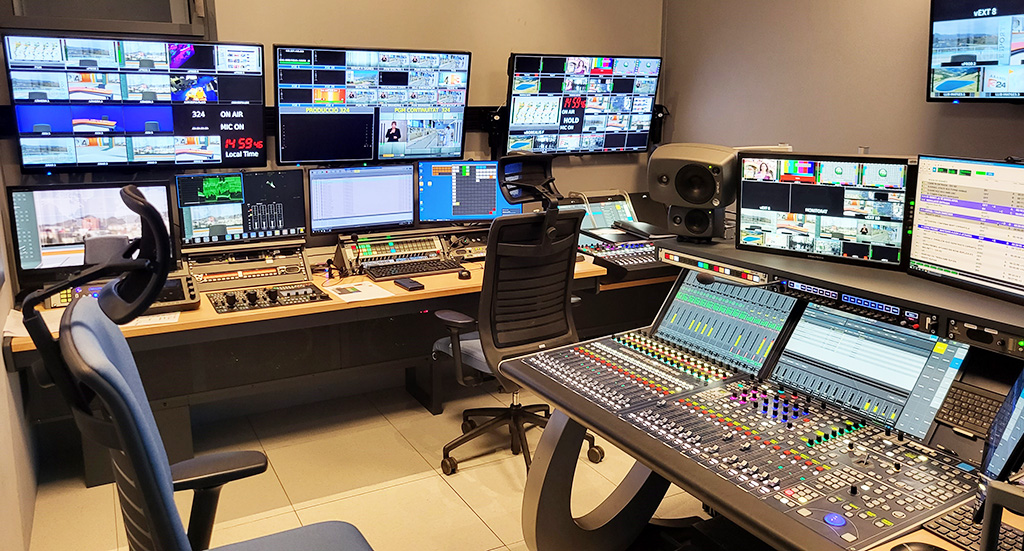
Entre los nuevos equipos que dan forma al salto IP y HD del 3/24 figuran la mesa Kairos de Panasonic como mezclador principal; sistemas de Theirs mc² 36 para la gestión del audio; las cámaras HDC-3100 y la CCU HDCE TX30 de Sony; los sistemas de robótica de Ross Video; el sistema de multiviewers Prismon de Rohde & Schwarz; el servidor de repeticiones XT-Go de EVS, o la matriz de intercom Artist 1024 de Riedel.
Conversores: piezas claves en el mundo híbrido
El diseño de la infraestructura IP del 3/24 no se podría contemplar sin la utilización de conversores y gateways; comodines para aquellas soluciones en los que el mundo IP todavía no ha llegado. Su mayor y principal función es la interconexión con el resto de la infraestructura de CCMA, que continúa trabajando en un entorno SDI. Ochoa aporta más detalles: “Contamos con decenas de puertas de entradas y salidas con nuestro MCR a través de gateways, convirtiendo esas señales SDI a 2110 y viceversa. Toda la transición de SDI a IP supone un paso híbrido. Esta isla irá creciendo en base a gateways para que se puedan disponer de las señales procedentes de todos los estudios o localizaciones”.
Este recurso también se extiende a un punto clave de las coberturas informativas: la recepción de fuentes procedentes de mochilas de retransmisión. Como detalla Antoni Roig Figueras, estos feeds se dirigen a su control central: “Como no es IP, todas las señales llegan a través de gateways hasta el 3/24. Hemos hecho pruebas de recepción a través de 5G con varios sistemas de producción, pero por ahora todo se queda en control central”.
La experiencia con el IP en 3/24
 Puntos comunes en la filosofía del IP y el 3/24
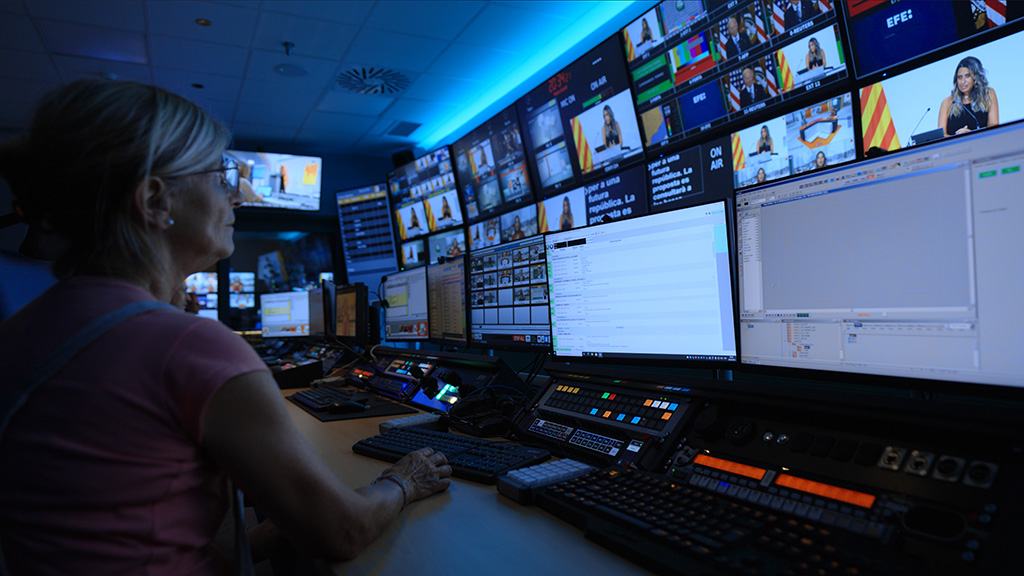
Los pilares tecnológicos del IP en el 3/24 no difieren de otras instalaciones similares en el mundo broadcast, lo que evidencia la estandarización de una tecnología preparada para aportar importantes beneficios en las televisiones. El diseño de la arquitectura variará fruto de necesidades concretas o de la experiencia del equipo de ingeniería y de integración, pero se mantendrán inamovibles sus pilares fundacionales. Por el contrario, es la experiencia humana, conceptual y filosófica lo que transforma la metodología de trabajo en este mundo.
Ardanuy considera que la tecnología IP es “conceptualmente muy diferente”, lo que ha llevado a la corporación a atravesar un “tiempo de madurez”. “Hemos ido descubriendo muchas cosas por el camino. El canal se montó en su día con mucha parte de electrónica de controles vía GPI y cableado, o conmutadores vía patch. Ahora, todos los cables pasan a ser botones y protocolos”, explica el responsable de continuidad.
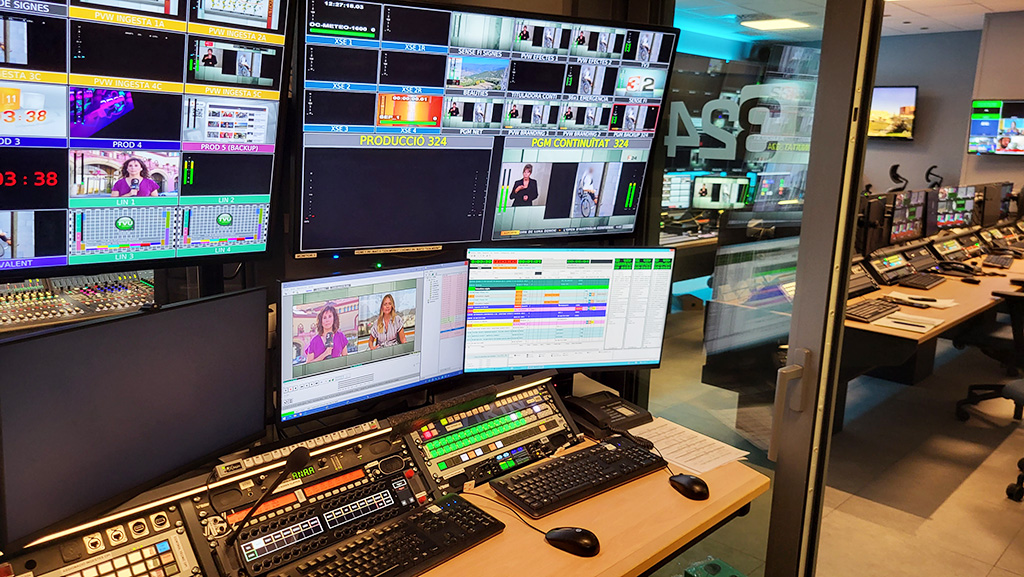
Esta transformación en el día a día de la televisión ofrece múltiples posibilidades en la gestión de señales, la posibilidad de apagar el puente de monitoreado durante la noche o en la organización de la sala de control. Este área clave para el día a día del 3/24 ha sido renovado con más puestos de trabajo, la posibilidad de que estos sean adaptables según las necesidades o la gestión de activos con un sistema de continuidad interconectado con el mundo IP, pero con base SDI.
Como explica Natàlia Prats, directora de infraestructuras digitales y tecnológicas, la filosofía multicanal y polivalente del IP dialoga directamente con los elementos que hacen al 3/24 un modelo único, que mezcla en su modelo de explotación la gestión de un control y un plató con la emisión: “Al igual que en el 3/24 se había fusionado la parte de explotación y de emisión, ahora sumamos toda la parte de sistemas de comunicaciones, que es más IP”.
Mejorando los equipos IP de fábrica
La naturaleza del 3/24 hace que sea complejo realizar cambios críticos en su infraestructura. Esto provocó que el equipo de CCMA emprendiera una transición gradual para ir poniendo en marcha y probando todos los equipos y soluciones IP. Ochoa traslada que este proceso ha llegado a buen puerto gracias a una comunicación constante con integrador y fabricantes para realizar una instalación segura, “resolver las dudas” e, incluso, “mejorar los productos”: “Algunos de los sistemas eran muy jóvenes”, traslada la ingeniera, evidenciando que, a pesar de estar ante una tecnología mucho más estable y consolidada que hace un lustro, todavía requiere de una puesta a prueba en entornos reales.
Marc Sanclimens: “Hemos tenido mucha guerra en configurar muchos equipos para que se hablen correctamente. Hay mucha letra pequeña tras todos los equipos y son cosas que no lo sabes hasta que tienes delante cada solución”.
Esta problemática no es nueva en el mundo broadcast. Son frecuentes los casos en que soluciones tecnológicas encuentran su verdadero potencial tras ser probados en entornos reales. Sin embargo, esta problemática no es la mejor carta de presentación para un mundo como el IP, que precisa de certezas para poder garantizar las tan deseadas estabilidad y resiliencia, probablemente dos de los mayores valores del mundo SDI: “Muchos equipos han tenido una evolución con los requerimientos que les hemos ido comentando. En casi todos los equipos importantes se han dado varios cambios de firmware. Los fabricantes han ayudado en este aspecto y han solucionado todas las necesidades, que de hecho son de explotación genéricas, no algo particular del 3/24”, explica Ardanuy.
Sanclimens amplía esta visión con datos concretos, como la “supuesta compatibilidad con protocolos NMOS” que, en muchas ocasiones, están lejos de funcionar tal y como se esperaba: “Hemos tenido mucha guerra en configurar muchos equipos para que se hablen correctamente. Hay mucha letra pequeña tras todos los equipos y son cosas que no lo sabes hasta que tienes delante cada solución. Habíamos leído que el tiempo de configuración en IP se alargaba y multiplicaba por tres y por cuatro. El tiempo de instalación es realmente rápido, pero la configuración es donde está la guerra”.
La necesidad de un entorno de test
Una vez completada la configuración de las soluciones de producción y comunicación en IP, CCMA está encontrando importantes beneficios operacionales en su día a día. Un ejemplo muy claro es la gestión de los equipos, que como deben estar encendidos constantemente para poder operar las 24 horas del día, están duplicados.
Antoni Roig: “Antes cogías un equipo, lo cambiabas y ya está. Ahora el ciclo de actualizaciones de software es mucho más frecuente que en las instalaciones tradicionales”.
Así lo explica Sanclimens: “Contamos con un checklist y cada cierto tiempo se intercambian los equipos. La conmutación de estos equipos antes se hacía casi a mano. Ibas al equipo, tenías que cambiar la tarjeta de GPI… Ahora hemos podido hacer que muchos de estos procesos sean semiautomatizados a través del broadcast controller. Vas al panel y seleccionas el equipo uno o el equipo dos”. Otra clave es la agilización de procesos dentro del estudio, como cuenta Ochoa: “Hemos puesto un gran esfuerzo en esa integración de GPI, tally y protocolos de comunicación con iluminación, robótica, nuestro sistema de control de playout… Eso nos ha permitido hacer un espacio muy limpio y eliminar los “no me puedo sentar aquí porque no dispongo de este botón”. Parece algo muy absurdo, pero da al entorno una gran potencia”.
Pero al igual que Sanclimens hacía referencia a la letra pequeña de los equipos, existe otra nota al pie que puede ser evidente, especialmente para aquellos profesionales del mundo IT que están dando su salto a las aplicaciones broadcast con el mundo IP: el proceso de configuración nunca finaliza, puesto que el ritmo de actualizaciones es muy alto y es imprescindible asegurar el funcionamiento de todo el engranaje IT al cambiar el firmware de cada una de las soluciones. Para Prats, este es un problema “muy bestia”: “Es como el Windows, que cuando le da la gana hace las actualizaciones. Esto en un entorno profesional 24 horas tiene su qué. Tú no marcas el ritmo: lo marcan ellos”. “Antes cogías un equipo, lo cambiabas y ya está. Ahora el ciclo de actualizaciones de software es mucho más frecuente que en las instalaciones tradicionales”, añade Roig.
Marc Sanclimens: “Tenemos que ser cautelosos con cada actualización, porque no sabemos exactamente a lo que podemos afectar”.
El mundo IP abarca un complejo entramado de sistemas que se hacen globales, lo que implica que la afectación de un cambio en un elemento puede tener repercusiones en otras partes. Esto ha llevado al 3/24 ha crear un “entorno de test” en el que se prueban todas las actualizaciones y, una vez validadas, se llevan a cabo. “Hay que ser muy cuidadoso, porque puedes perder mucha configuración del sistema, sobre todo de la parte IP o de la del orquestador”, remarca Ochoa.
La cautela ha pasado a ser una de las mayores aliadas de la CCMA, como expone Sanclimens con el siguiente ejemplo: “Ahora estamos configurando un tally de un equipo nuevo que ya está en producción. Hemos conectado el sistema a un PC que tenemos para hacer las pruebas, ha funcionado bien en este equipo y ahora ya vamos a pasar a configurar realmente el equipo. Tenemos que ser cautelosos con cada actualización, porque no sabemos exactamente a lo que podemos afectar”.
Un proyecto sin fecha de finalización
Una vez superado el desafío de la formación, proceso definido como Prats como “extenso” y complejo dada la naturaleza 24 horas de la formación y una implementación en periodo estival, “todo ha pasado a funcionar bien”. El sistema empieza a brillar en procesos inimaginables previamente y alcanzará su máxima expresión en el momento en el que el resto de los entornos y centros de producción de la CCMA apuesten por el IP.
Natàlia Prats: “El proyecto de actualización al IP en CCMA durará los próximos dos o tres años, y después evaluaremos para decidir hacia dónde vamos”.
La hoja de ruta está en marcha, cuenta Prats, y se completará entre el año 2025 y el 2026: “Hay una ruta de actualización de infraestructura para dotarla de IP y HD, que posiblemente es más grande respecto al 3/24 en cuanto a volumen, pero mucho más sencilla por la experiencia que hemos tenido. El proyecto durará los próximos dos o tres años, y después evaluaremos para decidir hacia dónde vamos. No solo responde a un cambio tecnológico, sino a nuestro propio análisis de los modelos de producción, que han ido cambiando. No es lo mismo hacer un contenido para TikTok que hacer un programa de altísima audiencia en prime time como Eufòria”.
Con la continuidad como último paso antes de la consolidación definitiva del IP, la CCMA seguirá actualizando controles, sistemas de producción y comunicaciones para acometer una transición que parece, a todas luces, inevitable. Mientras tanto, el IP seguirá admitiendo espacios de mejora para garantizar su idoneidad en entornos como los de la televisión catalana. La tecnología ya es una realidad, ¿pero es todo lo que se esperaba de ella?
Un reportaje de Sergio Julián Gómez
Did you like this article?
Subscribe to our NEWSLETTER and you won't miss anything.
Related articles
 RT Software prepara la llegada a NAB 2025 de la nueva Swift NxT
 El 3/24 de 3Cat (CCMA) monitoriza sus feeds IP con Prismon de Rohde & Schwarz
 La realización de la final de la Champions League 2024, desde dentro
 El canal de noticias catalán 3/24 da el paso hacia el IP con Networked Live de Sony
 CCMA: de la Antártida, al mundo con Blackmagic, móviles y Starlink
 Revolución en los estudios de Aragón TV: la historia contada desde dentro
 Sorpresas de Lawo en NAB 2023: Power Core Rev3 y llegada de SRT y NDI a Home Apps
 Kings League, desde dentro: así se realiza el torneo de fútbol de Ibai y Piqué
 Canal 33 (CCMA) renace con nueva imagen y programación renovada
 Primeros pasos en Twitch: el caso de CCMA (TV3, Catalunya Ràdio…)
 Canal Hollywood, AMC, Canal Cocina 4K y Canal Decasa 4K contará con carrusel propio en el servicio bajo demanda de Movistar+
 La CCMA propone un canal OTT común entre Valencia, Baleares y Cataluña
 El audiovisual celebra la llegada del dominio .video
 La llegada del Hombre a la Luna, restaurada con Nvidia