





Telemadrid begins the simultaneous broadcast of its signal with HDR (High Dynamic Range) quality
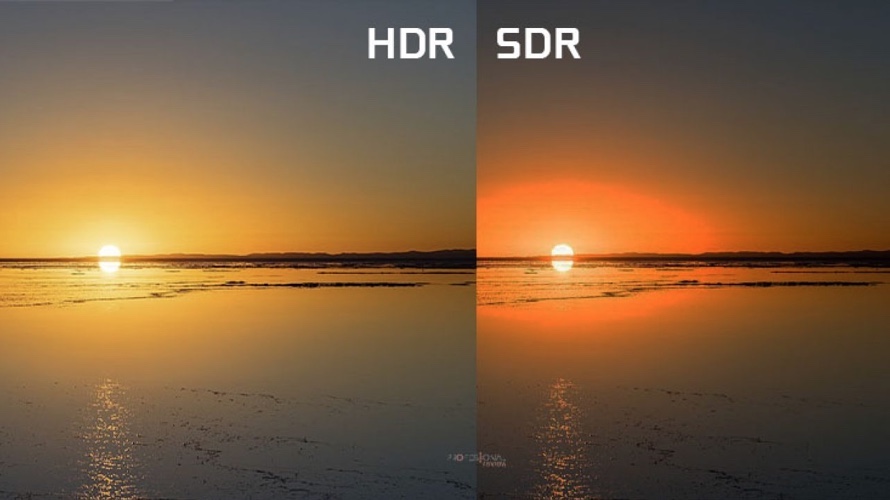
Telemadrid ha comenzado a emitir su señal con alto rango dinámico (HDR) destinada a los receptores de ultra alta definición y aquellos que tengan capacidad de reproducción de señales con alto rango dinámico. Esta señal se emitirá de forma simultánea con señal de calidad (HD) ahora existente y permitirá que los usuarios de televisores con capacidad HDR disfruten de una experiencia visual mejorada.
La emisión de una señal de televisión con calidad HDR (High Dynamic Range) implica la transmisión de contenido con un rango dinámico más amplio y mejorado en comparación con las señales de televisión estándar (SDR).
De las cuatro características técnicas que tienen las emisiones en Ultra alta definición (UHD), que se refieren al rango dinámico, la gama de colores, el número de imágenes por segundo y la resolución, estas nuevas emisiones mejoran los tres primeros aspectos, dejando la resolución, o número de puntos de cada imagen, igual que la alta definición, ya que codificar la emisión con resolución 3840×2160 píxeles, también conocida como 4K, no sería posible con el ancho de banda disponible del apagado de las señales en definición estándar.
Los aspectos clave que mejora la calidad HDR son:
- Rango Dinámico Ampliado HDR (High Dynamic Range). Se refiere al rango dinámico de la imagen, es decir, la diferencia entre las áreas más oscuras y las más brillantes de una imagen. El HDR amplía este rango, lo que significa que los detalles tanto en las áreas oscuras como en las brillantes son más visibles y realistas. El HDR mejora la calidad de la imagen al proporcionar una experiencia visual más rica y vibrante, independientemente de la resolución de la imagen. La emisión de Telemadrid HDR permite una gama más amplia de niveles de brillo y contraste en comparación con las señales estándar, lo que resulta en una imagen más detallada y realista. En pocas palabras, HDR permite que las pantallas de TV muestren colores más vivos, con negros más oscuros y blancos más brillantes, mostrando las imágenes como se perciben los objetos y escenas en la vida real
- Mejor representación del color. WCG (Wide Color Gamut). Este término se refiere a la capacidad de una pantalla o sistema de visualización para mostrar una gama más amplia de colores que el estándar de video tradicional (Rec. 709). El WCG permite una reproducción de color más rica y vibrante, lo que resulta en imágenes más realistas y visualmente impactantes. Con el WCG, el ampliar el rango de color, permite adecuarnos más a la capacidad de visualización del ojo humano, llegando a cubrir más del 75% del rango de colores visibles (frente al 36% que ofrecía la Rec.709), lo que resulta en imágenes más realistas
- Mayor número de imágenes por segundo. HFR (High Frame Rate). Este término se refiere a la tasa de cuadros por segundo (fps) del video. Un video a 50p significa que se muestran 50 imágenes enteras por segundo de manera progresiva, lo que proporciona una reproducción más suave y fluida de movimiento en comparación con tasas de cuadros más bajas o con una exploración entrelazada. La alta tasa de cuadros por segundo es beneficiosa para la visualización de contenido de acción rápida o deportes, ya que reduce el desenfoque de movimiento y mejora la experiencia general del espectador.
Al estar procesando señales de mayor ‘frame rate’, (de 25 a 50 imágenes por segundo), se hace necesario un sistema de codificación más eficientes que no implique aumentar las necesidades de ‘bit rate’, por el ancho de banda disponible en el multiplex. Para ello Telemadrid está utilizando el nuevo sistema de codificación HEVC que utilizan las transmisiones de UHD, y que está soportado por los nuevos modelos de televisor.
Como hemos comentado, la última característica de las señales UHD es la resolución 4K y se refiere a la resolución de la imagen. El 4K ofrece una mayor cantidad de píxeles en comparación con las resoluciones estándar de alta definición (HD).
La resolución 4K, generalmente se refiere a una resolución de 3840×2160 píxeles. Esto significa una mayor cantidad de píxeles, que para que signifiquen más detalles visibles perceptibles por el ojo humano en la imagen, se tienen que dar unas determinadas condiciones y distancias de visionado. Mientras que el HDR se enfoca en mejorar el rango dinámico y la calidad visual de la imagen, el 4K se enfoca en proporcionar una mayor cantidad de detalles visuales a través de una mayor resolución de imagen.
Es posible tener contenido que sea solo HDR, solo 4K, o ambos HDR y 4K simultáneamente para ofrecer la mejor calidad posible en términos de rango dinámico y resolución. Esta emisión no tendrá resolución 4K.
Para poder disfrutar del contenido HDR, es necesario que el televisor sea compatible con HDR. Esto significa que el equipo receptor debe ser capaz de procesar y mostrar correctamente la señal HDR. Los términos WCG y HFR se refieren a características específicas de la señal de video y pueden ser utilizadas en conjunto con HDR para proporcionar una experiencia visual más completa y de alta calidad. El WCG amplía la gama de colores para una representación más rica y vibrante, y el 50p mejora la suavidad y la calidad del movimiento.
Casi todos los televisores UHD que se venden actualmente tienen esta compatibilidad. Solamente algunos televisores 4K que se vendieron en el pasado no la tienen. Existen varios formatos de emisión en HDR y estas emisiones se realizan con la curva HLG compatible con la mayor parte de los televisores actuales. Dependiendo del fabricante será necesario o no, realizar algún tipo de ajuste en la configuración de cada televisor, para visualizar correctamente esta emisión y conseguir la mejor calidad que este formato suministra.
Esta mejora en la emisión es pionera en España y en el resto del mundo, y abre el camino, como en su momento lo abrió la simultaneidad de las emisiones SD/HD en España, para el largo proceso de migración hacia la Ultra alta definición (Ultra HD).
Did you like this article?
Subscribe to our NEWSLETTER and you won't miss anything.
Related articles
 Telemadrid begins recording 'El camping', a pioneering docu-reality about social integration produced by Mediapro
 Telemadrid outsources the generation of broadcast signals to Séptima Media
 UHD Spain and the UPM convene the II edition of the UHD Signal Production and Emission Course
 UHD Spain and UPM promote the second edition of the UHD signal production and emission course
 'The mathematics of the mirror': first broadcast in 4K on RTVE Play simultaneously with the linear broadcast
 UHD Spain promotes a UHD signal production and emission course with the UPM
 Telemadrid begins a new process of aid to finance audiovisual works
 UHD Spain presents the first simultaneous UHD broadcast through satellite, DTT and internet in Spain
 The RTVE Chair at the UPM presents the first production and broadcast in Spain of the UHD1 signal – Complete Phase 2
 The RTVE Chair at the UPM will present the first production and broadcast in Spain of a complete UHD1–Phase 2 signal
 Edius, ahora compatible con High Dynamic Range (HDR) y Hybrid Log Gamma (HLG)
 Hispasat inicia la transmisión de contenidos 4K en el formato High Dynamic Range (HDR)
 BBC to start HD simulcasting of main channel in autumn
 Abertis y Telemadrid denuncian las interferencias en la señal durante el Barcelona-Inter