





Pilar Benito (Morena Films): “The platforms are reducing their investments in production companies”
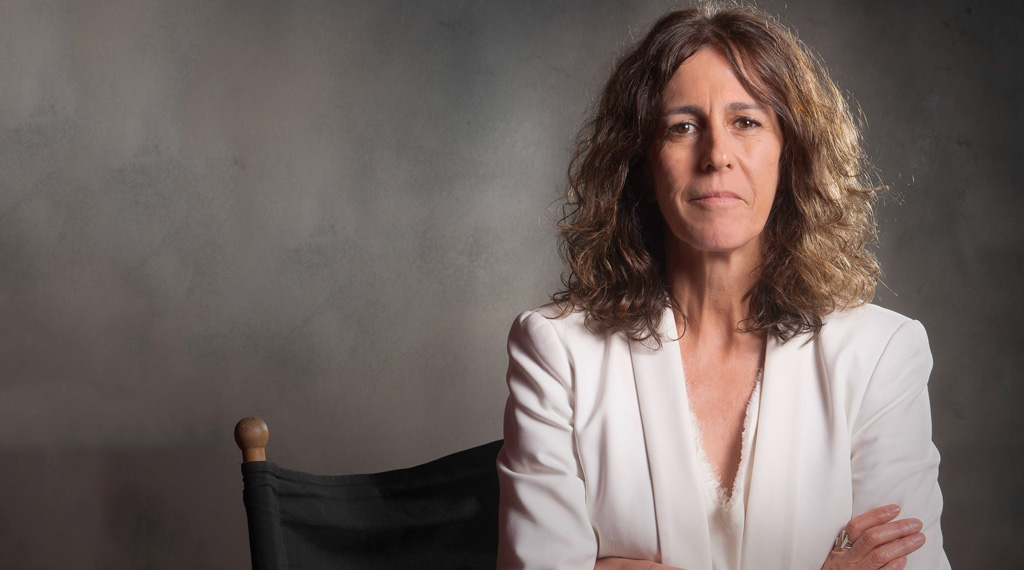

Pilar Benito, general director of Morena Films, addresses the current situation of the production company on its 25th anniversary and reflects on the main challenges of production: financing, box office, distribution windows...
Founded in 1999 by John Gordon y Alvaro Longoria and led since 2002 by Pilar Benito, Morena Films In its first 25 years of life, it has established itself as a key agent in the Spanish audiovisual ecosystem. Without disregarding auteur films and with a notable commitment to emerging talent, the production company does not shy away from its “commercial ambition” as a driving force for its production. In this way, the company has bequeathed films that are clearly iconic in the national audiovisual field, such as the endearing Champions, the always forceful Cell 211, global success Bajocero or milestones like everyone knows it, an event that opened the Cannes Film Festival in 2018.
For some time now, Morena Films has been part of the transformation of the Spanish audiovisual ecosystem given the commitment of international platforms to the production of Spanish-speaking content and the internationalization of Spanish fiction: that which has elevated Spain not only as a factory of great creators of international recognition, but as an industry capable of tackling ambitious projects with world projection. As an example, its transition from exclusive production for the television and film world, to opening to international VOD platforms such as Disney+ (The invisible girl), Netflix (La Liga, Alcaraz, Diablero), Amazon Prime Video (Stories with an end-to-two) a DREAM (The invisible ones).
Like so many other production companies, the company led by Pilar Benito faces coexistence with these new agents with the transformation of the board as a result of the pandemic. Production costs in this period of maximum demand have skyrocketed up to 20%, while the movie theaters They are still far from pre-pandemic figures. How does the production company face this panorama in its 25th anniversary? What is Benito's analysis of the context of the production in Spain? What steps should the industry take to ensure the viability of productions in a context of special importance (and volatile) of the international capital and a business exhibition that maybe will not be able to return to its golden age? All these keys, and many more, are addressed by the general director of Morena Films in this interview.
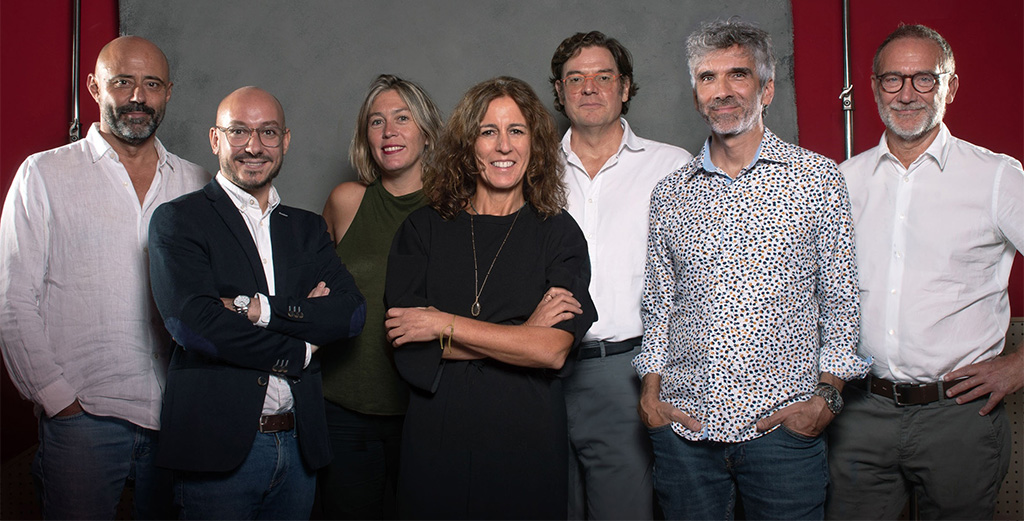
Morena Films, on its 25th anniversary
How would you define the current state of Morena Films?
I would say that Morena Films has a totally differentiating advantage with many production companies not only in Spain, but probably in the rest of Europe: it was born with the idea of being a kind of mini studio to provide support, services and back office to many producers who work exclusively for Morena. In this way, we help them with all the part of business, legal and financing, so that they can focus on the most creative part: attracting talent and identifying projects.
When the production company started in 1999 there were only John Gordon y Alvaro Longoria, two producers. Right now we have five, although in the production company we are a team of 22 people. Without the producers we would not have much to do: they have their assistants and they are always accordion teams, so that, if a producer has many projects at the same time, we can support them with assistants so that they can undertake those projects with as few errors as possible. Apart from them, we have a financial director who has a team of four people including accountants and controllers; a legal team of two lawyers; a team of three people in post-production who are in charge of editing, color and delivery, since we finish all the films here...
In short, Morena is in in full shape, although it is true that the industry is also; It was better last year and now we are watching it balance out. It could be that we come from a certain bubble.
Morena Films is on the verge of surpassing, or has already surpassed, 100 productions…
I think that, really, we are close to the 110, among all the productions that we have made throughout our 25 years: short films, documentaries, some entertainment programs that we made in our first years and, of course, films and television series, which are our core business. That is, that we are happy.
What productions would you rescue or highlight as having been a milestone in the company's history?
Of course, Champions (2018). Apart from having become one of the highest-grossing films in the history of Spanish cinema, which is super important for any production company, we keep all the social impact it has generated. In addition, we must take into account everything that the brand itself has provided through remakes. An American, Chinese and Arabic adaptation has been made; The Indian and German versions are being made, and we are now negotiating the French one. In all these places we have witnessed something very beautiful that represents how we see cinema: something that can help change the perception you have of something or make visible things that normally go unnoticed in our busy lives.
Another movie, mind you, would be Fish People (2001). It was the first film we released in theaters and it was a super success. It's a comedy that would be totally irrelevant right now. It's not from the 21st century! But it did represent a leap and gave us the opportunity to say “here we are.” There are many others: Also the rain (2010), with which for the first time we were representatives of the Spanish Academy for the Oscars, or Cell 211, again another of our highest-grossing films. I could tell you good things about all our productions.
The utopian search for blockbuster
What productions are you currently working on?
Right now, we have underway seven projects. We have a film being shot in Bilbao that is Miss Coal, which is based on the true story of Carlita, a person who made the transition from a boy to a girl and who always wanted to be a miner. This Argentine woman, when the trans laws in her country changed, had the opportunity to change her name and begin the transition process. However, the moment you change your name, the thrown out of the mine. With this film we face the idea of what it means to be a man or what it means to be a woman. We also started filming recently This too will pass, a film he directed Maria Ripoll and which is based on the book of the same title by Milena Busquets.
“I hope we let's meet again with the audience in the movie theaters”.
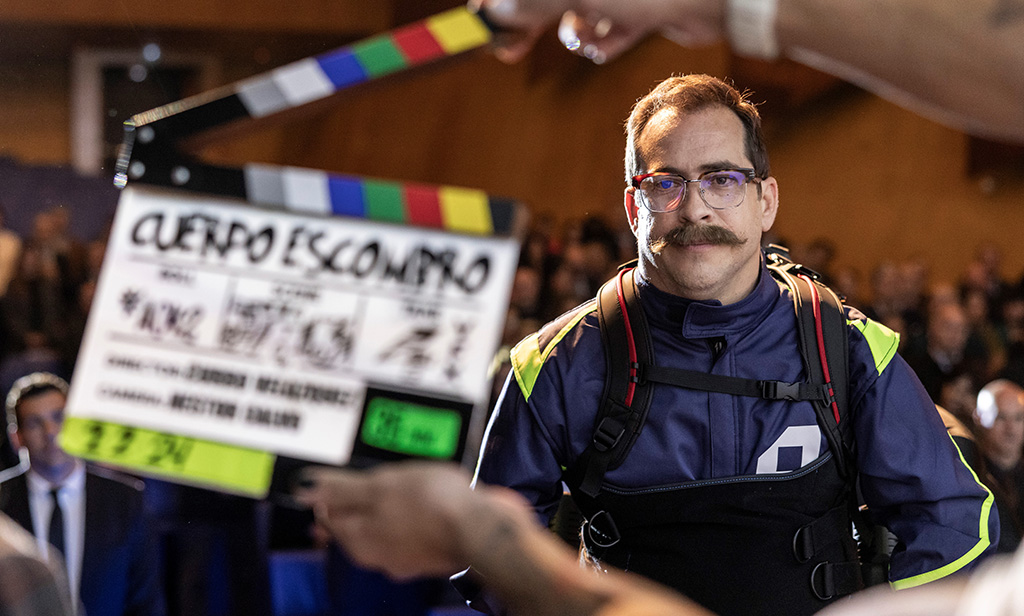
We just finished the movie 8 of Julio Medem, which stars Ana Rujas and Javier Rey, and will premiere on August 9 with Disney Debris Body, what is the next comedy Curro Velázquez with Dani Rovira. They finished filming weeks ago and are in the middle of the editing phase. It's turning out super fun! We also have two documentary series in the middle of the production process: The League y Alcaraz, that right now we are shooting with him at the Mutua Madrid Open, both of us for Netflix.
Additionally, we are putting together a documentary that we sold to RTVE and that we hope to premiere in the San Sebastián – Venice – Toronto season called The Sleeper and directed by one of our producers and co-founder of Morena, Álvaro Longoria. The documentary is about the sleeping painting that a family had in their house and which turned out to be a Caravaggio, which multiplied its initial value of €1,500 to €500,000 after discovering its nature. In this production we tell the story of this Caravaggio, whose sale is already closing and which has been declared an Asset of Cultural Interest, and of the great sleepers in the world of current and classical art.
Morena has recently billed important box office films such as ChampionX o Kings against Santa, but the figures of both productions are far from milestones such as Champions o Cell 211. Is designing a great box office success from production a utopia?
I think you have to chase him. They are products that have to be directed to the mass market and to the family audience, because the great difference we see between Champions y Campeonex It is the change of habit that we have had. In the pre-pandemic, Champions It reached 19 million euros at the box office, which is about three and a half million spectators.
If we analyze the box office data, right now what works are the great family comedies and the big american franchises. What has happened during the last weekends? That the box office is in its historic lows because no films within this typology have been released.
“Sometimes you do something heart, you trust him project, the public notices it and responds at the box office. At least, that is “what happened pre-pandemic”.
To achieve a box office success the first thing you have to do is seek to get it. The script and the concept have to be designed to reach as many people as possible, and it is not always easy to find the concept that is really going to work. That being said, when we did Champions We also didn't think it was going to surprise as much as it did. Sometimes you do something from the heart, you trust in the project, the public notices it and responds at the box office. At least, that's what happened in prepandemia.
We'll see what happens with rubble body, which we will release on August 8 as a family comedy precisely to generate the numbers we achieved with Campeonex. We have worked to make it a success. At the end of August we will talk and see if this is the case.
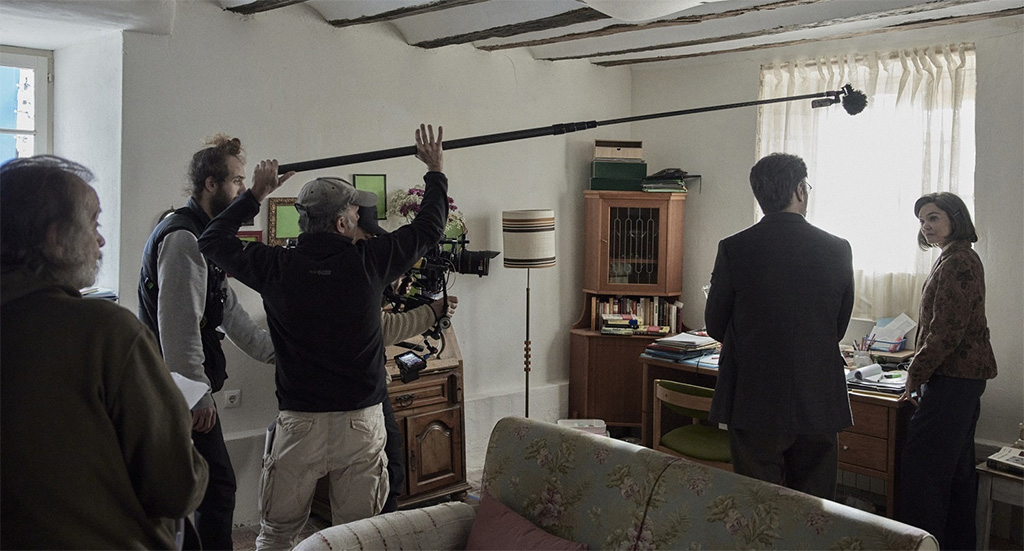
Spanish production and its dependence on platforms
In parallel to cinemas, Morena Films has opened up to the universe of platforms. Has production in Spain scaled so considerably that it currently could not survive without video-on-demand platforms?
The amount of productions that are currently being made occur because these platforms exist. These companies, both national and international, are requesting movies, series... I always say that before Netflix arrived, we had four clients: Telecinco, Antena 3, Spanish Television and Movistar, o Canal Plus then. With the arrival of platforms, the figure has doubled. We still have few clients, because in the end they can all add up. diez, but the truth is that all of them are demanding a lot of new content.
 I think that both in Spain and in the rest of the world, yes, we depend on the platforms, because they are helping us finance projects in which we maintain the intellectual property, or we produce original content for these platforms. And making a utopia, if they disappeared because of complex, production would drop a lot.
What has truly been the big change is the series. Before we made national series with very local content for the general public, the prime time of televisions. Now they are a more premium product that travels and opens to a much wider audience.
Is the production market in Spain elastic enough to adapt to a possible drop in the platforms' investment in Spanish-speaking content or content produced from Spain, whether due to strategic reformulation or a change in model?
Unfortunately, I'm sure there are producers that will fall; I don't know if in this year 2024 or maybe between the passage from one year to another. We, of course, are noticing that the number of orders is decreasing. All the reports we read about what the platforms' investment plans are going to be indicate that they are reducing your investments and changing the way you work. Before everyone wanted originals, but now they are opting for licenses. This will mean that it may take us a little longer to finance the series in order to fit all the pieces of the financing puzzle together.
Co-production is one of the hallmarks of Morena Films. How has this production methodology changed in recent years?
It is true that co-producing is in our DNA, especially outside of Spain. Since our beginnings we have given a lot of importance to international sales, and it seemed to us that having an international co-producer would allow us to increase the chances of a film being exploited throughout the world. Furthermore, with this formula you can access a type of financing that you do not have access to in Spain or if you were a 100% Spanish project, which is important to us.
“Los production prices have gone up a 20% (…) Get the last 15% of financing is being a hard straight”.
The difference between pre-pandemic and now, after the bubble that was generated during these years, is that the international co-production went down a bit. Since last year, and especially this year, co-production agreements with countries such as France, Italy or Latin America have been re-occurring. In the end, we have to find how to finance the films and series.
It is important to say that this bubble that we have experienced has led to a price increase of between 20% and 25%. We have had to solve this increase with new sources of financing, since these have not increased that percentage. So, these international co-productions help us complete the financing and, of course, improve international exploitation.
Financing, box office and other industry challenges
What is the biggest difficulty that Morena Films currently faces in carrying out its projects?
A very important part is the financing. Get the last 15% of the financing is being a hard straight. This is where you face possibilities such as changing the script to lower the budget, seeking international co-production agreements or being creative with other sources of financing. It is true that tax incentives are increasingly on everyone's lips: each region of our country wants to increase its tax incentives to attract filming, although we are also limited to the intensity of aid defined by Europe. A film cannot have more than 50 or 60 support depending on various points it meets.
The second challenge is ticket office. We make movies to be seen and right now they are not seeing each other. There are examples that yes: I consider that Morena is lucky because ChampionX It was the highest-grossing film of 2023 and reached two million viewers… but the differences with the figures from before the pandemic are very striking.
“We do movies so that see and right now they are not seeing each other”.
we have to wake up people so that the cinema goes to see the films, because otherwise the income of the production companies will suffer. Do originals It's very good because it gives us a cash flow recurrent, but it is necessary that we combine this way of producing with films that have their own national and international exploitation circuit. We have to get people like you and me to decide to go to the theaters and value the collective and social experience that is being lost.
We had already been seeing a change in habits and cycles prior to the pandemic, but the change accelerated greatly. Now, emphasis should be placed from the Ministry of Culture and from the Government to promote audiovisual education so that much younger boys and girls really consider going to the movies among their leisure plans.
Will the return of viewers to movie theaters be achieved through content? Will it be by reformulating the distribution windows, so that the cinema has the possibility of keeping the premieres in theaters for longer?
We have to reconsider the distribution windows. In the draft of the Cinema Law, that we don't know very well when it will come out, but that it will come out at some point this year, there has always been talk of making a exclusivity window in cinema. This period has to exist, but we have to agree to say what it should be like.
“It has to exist a exclusivity window in the cinemas”.
In the past, the regulations told you that four months had to pass before a film that was released in cinemas had a physical DVD-type support. Now there is no point in waiting four months for a film to release on a platform, but we have to find a middle ground. I think that distributors, exhibitors and producers agree that perhaps the figure could be between 45, 60 or 70 days, so that we can encourage the viewer to leave their home and go to the cinema, since they will not be able to see the film on any platform for x days.
Morena Films celebrates its 25th anniversary this year. What lines do you think will mark Morena Films' productions in the short and medium term?
We will continue to maintain our business model and the way we work with our clients. We will continue doing cinema, television and documentaries, both with the platforms and ourselves, maintaining the current property and producing, of course, with more people.
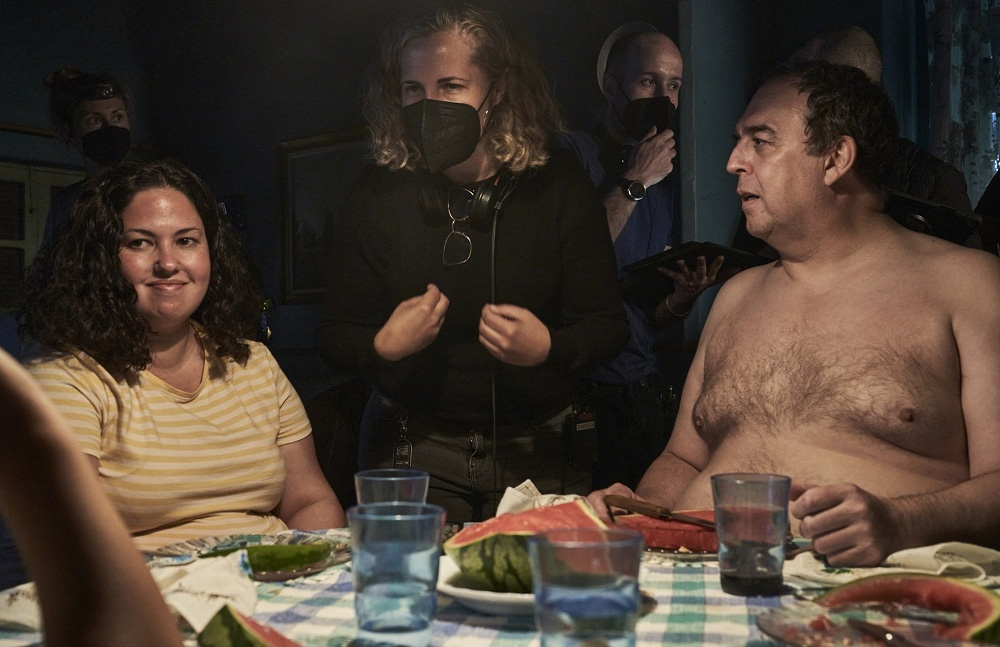 The challenge for the future is to continue finding interesting stories to tell, discover talent and maintain it, which is what we like. We want to continue giving opportunities to new directors and directors with budgets that are reasonable for them: that they not only make films of less than a million euros, but that they have the money they need to tell their story. I remember the case of little pig, that needed more money to be counted and in the end it has achieved success both in Spain and in the rest of the world, since we have had magnificent international sales. We will continue to discover this young talent; There are numerous women directors and screenwriters who can tell stories that the audience is attracted to.
Then, I hope we let's meet again with the audience in movie theaters. If not, we will see them in the platforms.
An interview by Sergio Julián Gómez
Did you like this article?
Subscribe to our NEWSLETTER and you won't miss anything.
Related articles
 Eduardo Casanova teams up with Morena Films for his next film: 'El gran cabrón'
 El Langui shoots his debut feature with Morena Films: 'Want to Live'
 Morena Films produces 'In the Circle of the Murderer', the new Netflix thriller
 Morena Films prepares a docuseries about Carlos Alcaraz for Netflix
 Morena Films produces the hooligan comedy 'Cuerpo Escombro', filming under the direction of Curro Velázquez
 Buendía Estudios and Morena Films develop 'Let love die', Carlota Pereda's first series
 The Goya-nominated short 'París 70' will become a feature film by Morena Films
 Filming begins on ‘Puntos suspensivos’, a Morena Films production with David Marqués directing
 Rioja wine will have its own film documentary by Morena Films
 Morena Films hires Álex Martínez Roig as non-executive president
 Created by Hector Lozano, VIS and Morena Films produce the series 'Las Invisibles' for Paramount+.
 Filming begins on 'Cerdita', a rural thriller promoted by Morena Films
 Morena Films will make a series based on the trilogy 'The Invisible Girl' by Blue Jeans
 Morena Films and Josep Amorós begin filming 'Bajocero'