





The first edition of the Master in Management and Uses of Audiovisual Heritage of RTVE begins
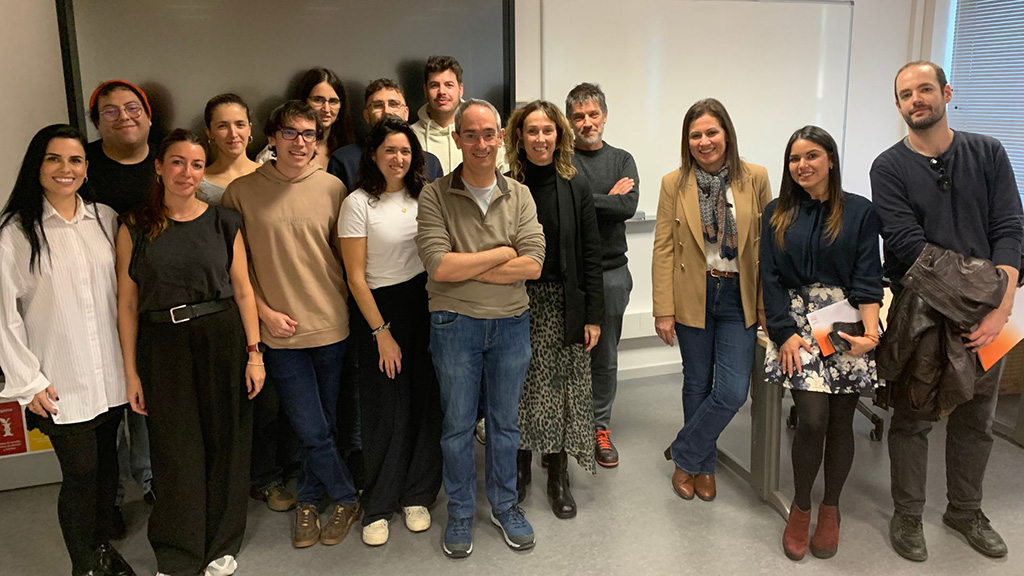
RTVE Instituto and the Universidad Carlos III de Madrid inauguran la primera edición del Máster en Gestión y Usos del Patrimonio Audiovisual, un programa formativo que combina teoría y práctica con acceso directo al fondo documental de RTVE, así como prácticas en instituciones de referencia.
Esta formación pionera de un año de duración busca responder a las necesidades del sector en materia de preservación, digitalización y explotación cultural de los archivos audiovisuales. La formación se imparte de forma presencial, con un importante foco práctico, en la sede de RTVE Instituto, el Archivo de RTVE en Prado del Rey y la Universidad Carlos III de Madrid. El programa incluye siete módulos dedicados a documentación, preservación, restauración, uso de inteligencia artificial y comisariado de proyectos culturales.
El alumnado tiene acceso directo al banco de datos de RTVE, a un periodo de prácticas de dos meses en la Corporación y al uso de herramientas innovadoras como la artificial intelligence aplicada a la gestión y conservación de materiales audiovisuales. Además, cuenta con prácticas curriculares en instituciones de referencia.
La inauguración ha contado con la participación de Virginia Bazán Gil, codirectora del máster y directora del Archivo RTVE, quien ha subrayado la apuesta de la Corporación por abrir su fondo documental a nuevas generaciones y ha señalado la falta de perfiles especializados en la profesión: “En el Archivo de RTVE necesitamos personas con perfiles sólidos y comprometidas, con una formación especializada. Este máster os da esa ventaja frente al resto”. En el acto, la directora de RTVE Instituto, Sara Martin Olmo, ha querido dar la bienvenida al alumnado destacando la “oportunidad única” que supone aprender de profesionales en activo de RTVE y profesorado especializado de la UC3M.
For its part, Josetxo Cerdán, codirector del máster por la UC3M, ha animado al alumnado a aprovechar la diversidad de contenidos y experiencias que ofrece el programa: “La idea es que tengáis mucho contacto con profesionales que compartan su cotidianidad y perspectiva de trabajo. Aunque vengáis con una idea previa, os recomiendo que os dejéis sorprender; hay muchos caminos posibles dentro del patrimonio audiovisual y este máster os puede ayudar a descubrir nuevas vocaciones e intereses”. La presentación ha contado también con la presencia de David Rodríguez Mateos, profesor de la UC3M e integrante del claustro docente, quien imparte la asignatura ‘Historia y tipología de los formatos audiovisuales’. Ha sido el encargado de iniciar el curso con el primer módulo, ‘Cultura y patrimonio audiovisual’.
Did you like this article?
Subscribe to our NEWSLETTER and you won't miss anything.
Related articles
 RTVE opens the doors of its archive on the occasion of World Audiovisual Heritage Day
 The Master in content production engineering from RTVE Instituto and the UPM returns
 Los usos de la IA, a debate por más de cien profesionales en el I Foro da Industria Galega do Audiovisual
 El instituto RTVE impulsa un máster de Periodismo 360º con tecnología de última generación
 Comienza el I Foro Hispanoárabe de Servicio Público Audiovisual, una iniciativa de RTVE
 RTVE begins the revolution of its A La Carta service with the RTVE Play app
 RTVE, Betevé and the Audiovisual Council of Andalusia update media management with Tedial Evolution MAM
 Telemadrid y la Universidad Complutense anuncian un nuevo máster de gestión de televisión
 Impulsa Visión RTVE will present the accelerated projects in the second call and the finalists of its third edition at BIT Audiovisual 2018
 RTVE and UNESCO will produce microspaces for the protection of cultural heritage
 The XVII edition of the Master in Audiovisual Production and Management (MPXA) begins
 The Media Business School (MBS) closes its European Master in Audiovisual Management in Ronda
 The twelfth edition of the European Master in Audiovisual Management inaugurated in Ronda
 Master in Creation and Management of Audiovisual Contents Telecinco-UEM