





DaVinci Resolve resurrects Guillermo del Toro's 'Frankenstein': between ice and fire
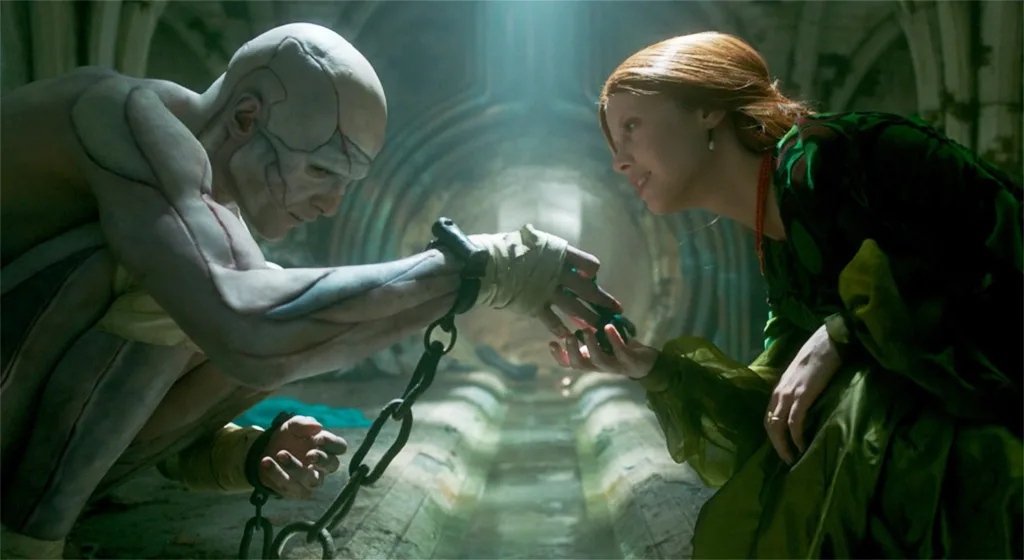
Colorist Stefan Sonnenfeld (Company 3) carries out the color grading of 'Frankenstein', a version of the iconic novel directed by Mexican director Guillermo del Toro whose color has been built with DaVinci Resolve software from Blackmagic Design.
This new and majestic interpretation of the classic Mary Shelley Frankenstein, nominada a nueve premios Óscar, narra la historia del científico homónimo (Oscar Isaac), quien hace uso de la energía de los relámpagos para dar vida a una criatura que ha creado suturando las partes del cuerpo con sus propias manos (Jacob Elordi). Del Toro y Dan Laustsen (ASC, DFF), estrechos colaboradores desde hace muchos años, tenían la visión de producir esta película como un clásico llevado a la práctica con herramientas modernas, haciendo uso de sets de filmación, efectos especiales, escenas en localizaciones reales y en representaciones en miniatura, con la intención de que el ambiente en que transcurre la historia pareciera realista y tangible.
El colorista sénior Stefan Sonnenfeld (Company 3) worked closely with del Toro and Laustsen using the software DaVinci Resolve: "I've worked on a huge number of films with Guillermo and Dan, and as always, Guillermo had a clear vision for the art direction and costume design from the beginning. Dan is fully aware of the aesthetic Guillermo is going for and knows exactly how to use lighting and framing to bring that vision to life."
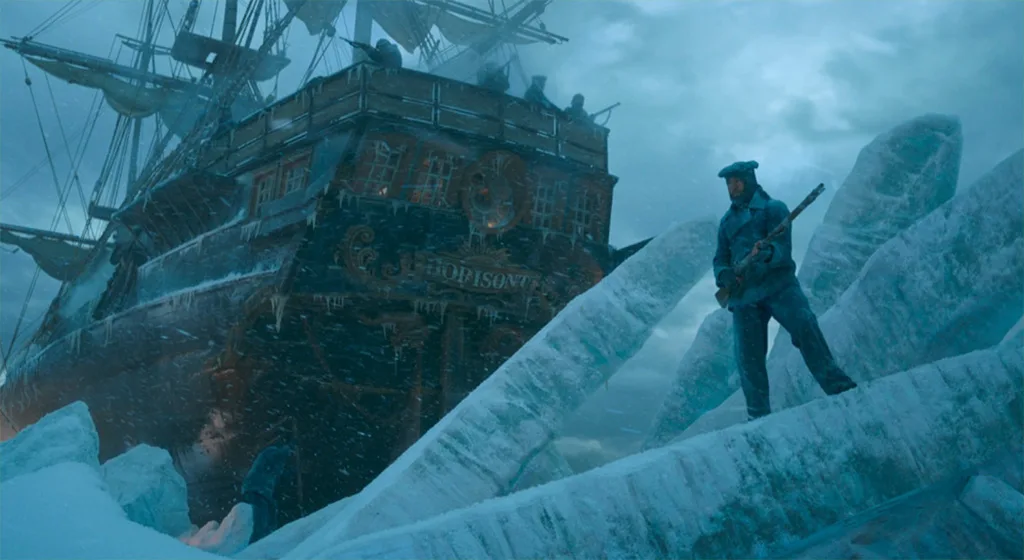
Refining a color worked on the set
Laustsen designed the production so that the daily shots and final color were closely aligned, so the color palette and contrast were primarily set in-camera. From the specificity of the costumes, to the warmth of the light coming through the windows, the intention was to make the creative decisions on set, rather than developing a completely different aesthetic later in post-production.
Therefore, instead of reinventing the captured images, Sonnenfeld He describes his work as “improvement.” Employing DaVinci Resolve Studio, focused on softening the inevitable variations that occur between each take when shooting on different days over such a long schedule, for which he compared the images with a split screen: “A lot of the work is smoothing out the subtle differences that occur when takes of the same scene are filmed days or weeks apart, with changes in weather and all the practical problems that we solve in the grading room.”
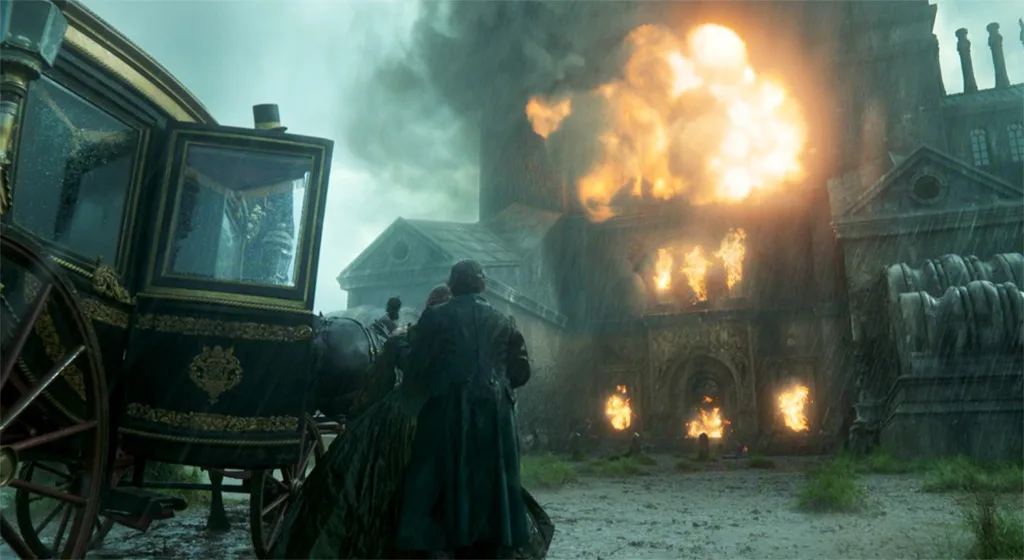
Between ice and fire
A vital part of the palette Frankenstein was the interaction between warm and cold tones. Sonnenfeld noted that the filmmakers wanted to get scenes with a golden hue, impulsado por las velas y las antorchas, con la ayuda de la luz de las llamas del fuego y lámparas de tungsteno y, a la vez, mantener una presencia controlada del azul acero en las tomas diurnas en interiores y bajo la sombra a cielo abierto. Sonnenfeld empleó DaVinci Resolve Studio para desarrollar y mantener este look, aplicando ajustes puntuales con el fin de mantener la uniformidad del tono sin llevar la imagen al punto en que parezca artificial.
In the words of the grader: "We defined some aesthetics for the amber undertones, this helped maintain consistency throughout the entire film. There is also a steel blue tone that the filmmakers really liked, particularly for the indoor shots and under the open sky shadow. That's something we enhanced slightly and made sure it was consistent with the rest, as the case may be."
In short, Sonnenfeld does not hesitate to affirm that his approach to Frankenstein has been “intentionally simple". The result is a “natural” aesthetic, always taking into account the brave universes that Guillermo del Toro usually constructs in his films: "I try to maintain simplicity in my grading process. There are appropriate moments to apply elaborate techniques in order to completely modify what was captured by the camera, but in a film like this, the final appearance had to retain an intact and organic quality."
https://youtu.be/8aulMPhE12g
Did you like this article?
Subscribe to our NEWSLETTER and you won't miss anything.
Related articles
 DaVinci Resolve: up to 16 grading in 2D, 3D and HDR for 'Avatar: Fire and Ash'
 The Cinema Audio Society recognizes the career of Guillermo del Toro
 Grader Siggy Ferstl Supports 'Avatar: The Last Airbender' VFX Teams with DaVinci Resolve
 Company 3 and SpinVFX use DaVinci Resolve Studio on the film 'Big George Foreman'
 The sadistic Santa Claus from 'Violent Night', graded with DaVinci Resolve Studio
 'Don't look up' (Netflix), graded with DaVinci Resolve Studio
 ‘Red Alert’ (Netflix), graded with DaVinci Resolve Studio
 Oscar winner Claudio Miranda trusts DaVinci Resolve Studio and DaVinci Resolve Mini Panel from Blackmagic
 DaVinci Resolve releases more than 70 improvements
 'Jack Ryan: Shadow Operation', graded with DaVinci Resolve
 DaVinci Resolve 10, now available in beta
 Company 3 uses DaVinci Resolve in big season premieres
 DaVinci Resolve enables a “very Ridley Scott” aesthetic in ‘Prometheus’
 Guillermo del Toro once again partners with Rodar y Rodar