





What has really happened to Rosco from 'Pasapalabra'?
In this forum, Alberto Aduriz, lawyer in Bardají & Honrado, analyzes the recent ruling that prevents Atresmedia from continuing to broadcast 'Pasapalabra' with the test known as El Rosco, a complex judicial episode that depends on a complex game of pan-European licenses.
Last week the news broke: the Supreme Court forced Atresmedia to stop broadcasting Pasapalabra with El Rosco. To anyone who had been disconnected from Spanish television in recent years, the news might sound strange: How is it possible that a program that has been broadcast for years, first on Mediaset and then on Atresmedia, now has to part with precisely its most recognizable piece of evidence?
Pasapalabra had already experienced a relevant judicial episode when it was broadcast on Mediaset. In that case, the conflict revolved around the general format of the program and the rights that ITV held over it. This led to Mediaset ending up stopping broadcasting. Pasapalabra in 2019 and Atresmedia once licensed it to ITV He once again made it one of the great pillars of his grill.
The problem on which the Supreme Court has now ruled was not whether Atresmedia could broadcast Pasapalabra as a general format, but if it could be issued with The Rosco.
Rosco's role in Pasapalabra
We have to take into account that El Rosco was not, according to the ruling, an undifferentiated part of Pasapalabra. Atresmedia broadcast the program with an ITV license, but that license came from the British format The Alphabet Game, where El Rosco did not exist in the terms in which we know it. The Rosco test was incorporated into the Italian program Word of mouth, del que MC&F era el titular de los derechos. Por eso, la cuestión no trataba simplemente de quién podía emitir Pasapalabra, but whether that license also included the test that had become his most recognizable moment.
The Supreme Court pronounces on the matter and does not protect the general idea of a letter quiz, nor the use of the alphabet, nor the pressure of a limited time. All of this is part of the common language of television contests. What is considered protectable is the concrete way in which these elements are articulated until forming a recognizable test, with rules, rhythm, image and the tension inherent to all these elements.
The Supreme It does not protect the general idea of a letter quiz, nor the use of the alphabet, nor the pressure of limited time: lo what is considered protectable is the concrete way in which these elements are articulated until it forms a recognizable piece of evidence.
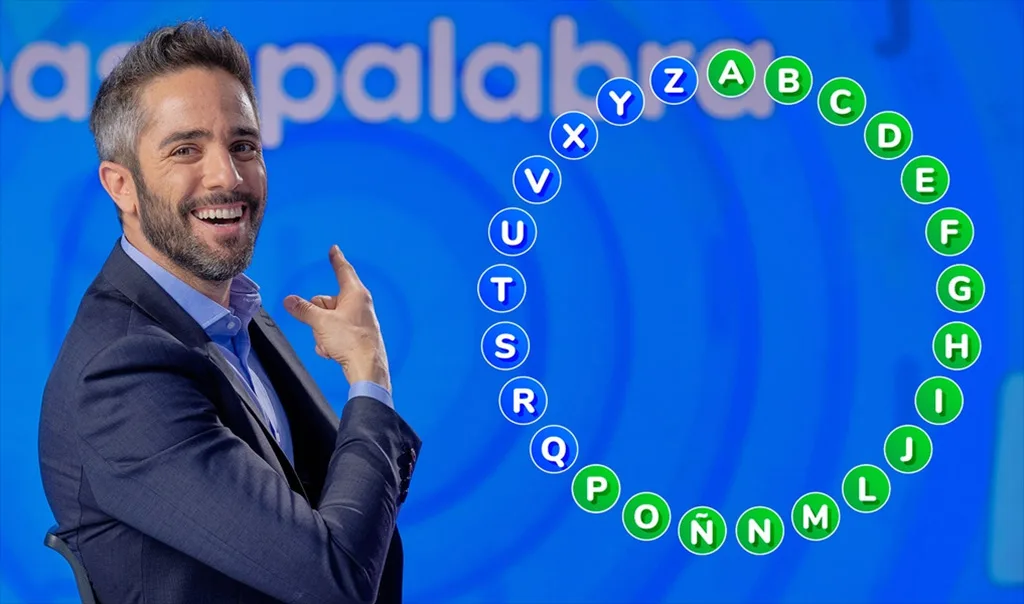
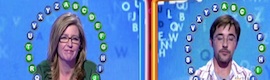
The Supreme Court analyzes The Rosco like a combination of elements which, together, give rise to a singular creation: two contestants, a sequence of questions linked to the letters of the alphabet, a certain time, a dynamic of turns, the use of the word “word pass” to postpone an answer, the circular graphic that surrounds the image of the contestant and the change of color of the letters depending on whether there is a right, wrong or pending question. All of this allows the viewer Immediately understand how the test is progressing and where the tension is.
Therefore, the sentence stops at the specific form that the screen test takes. The contestants do not simply answer a succession of questions, but rather advance through a recognizable structure marked by alphabet, time, turns and the possibility of postponing an answer. Added to this is the visual element of the circle of letters, which changes color depending on the success, error or pending question, and which allows the viewer to follow the tension of the test immediately.
The protection of television formats
This is probably the most interesting part of the ruling for the audiovisual sector. In the formats, the border between free idea and the protected work is never completely clear. Ideas are outside the protection provided by intellectual property, just like the abstract rules or common resources of a genre. But when these ideas are developed and acquire a concrete form capable of being repeated on the screen and become able to be protected by the copyright. And that is precisely what the Supreme Court appreciates in El Rosco.
One format It doesn't work like a novel, a movie, or a script., since its value lies in designing a mechanism capable of repeat, adapt and remain recognizable every time it appears on the screen.
The ruling is interesting because it does not show us how a “format” can be protected. And it is that a format It doesn't work like a novel, a movie, or a script., since its value lies in designing a mechanism capable of repeat, adapt and remain recognizable every time it appears on the screen. Therefore, originality and creativity will be protected through structure, rhythm, rules, staging or the way to hold the viewer's attention.
The Supreme Court also rejects that the previous ruling on Pasapalabra prevents now recognizing the rights of MC&F sobre El Rosco, dado que MC&F no fue parte en aquel procedimiento. Las consecuencias practicas a tener en cuenta serían que habría que tener en cuenta que, cuando se licencia un formato, no basta con saber quién tiene los derechos sobre el programa en general, sino quién tiene all rights to all elements thereof, and especially those who are the most recognizable.
Evidence as its own legal object on television
In summary, what has happened with Rosco is that Atresmedia had a license on Pasapalabra through ITV, but the Supreme Court considers that ITV could not validly grant rights sobre El Rosco porque esa prueba pertenecía a MC&F. Por tanto, Atresmedia puede seguir emitiendo Pasapalabra, but Do not exploit it with El Rosco without authorization from the owner of that test.
The resolution also confirms the cessation measures agreed by the Provincial Court of Barcelona, although it leaves pending the quantification of the material damages, which must be calculated in accordance with what MC&F hubiera cobrado si Atresmedia hubiese solicitado la debida autorización para utilizar El Rosco.
Therefore, Atresmedia can continue broadcasting Pasapalabra, but Do not exploit it with El Rosco without authorization from the owner of that test.
In short, the Supreme Court has recognized that a specific test within a program can have its own legal autonomy. And El Rosco was precisely this, a mechanic with an identity, capable of legally separating itself from Pasapalabra, although for millions of viewers was the most recognizable form of that program, and that, therefore, if you want to include or use it in said program, you must also have the corresponding license and/or authorization from its rights holders.
Alberto Aduriz Sarabia
Lawyer in Bardají&Honrado

Did you like this article?
Subscribe to our NEWSLETTER and you won't miss anything.
Related articles
 The Supreme Court confirms the sentence against Atresmedia for the broadcast of 'Pasapalabra' with 'El Rosco'
 ‘Pasapalabra’ returns to Antena 3
 Telecinco stops broadcasting 'Pasapalabra' after the Supreme Court ruling in favor of ITV
 Brainstorm, giving life to 'Pasapalabra' since 2007
 IP: who is really taking advantage of this technology in broadcast?
 How close are we really to UHD, 4K and 8K television?
 ITV Granada regulates the exposure to outside light in its studios with Rosco
 'Pasapalabra', on iPhone and iPad, offers participation in an environment recreated in 3D
 The new season of 'Pasapalabra' enriches its graphics with the help of Virtualia
 New LitePad Axiom from Rosco
 UV ray absorption with Rosco's UV 226 filter
 Grau and Rosco renew their alliance
 Rosco Skylights: efficiency in light diffusion
 Rosco DMX Iris