





2011: the profound transformation of the television model continues
El modelo de negocio televisivo continúa su readaptación profunda en un contexto de crisis económica y publicitaria. La1 de TVE vuelve a ser por tercer año consecutivo la cadena más vista en España con el 14,5% de cuota. La fragmentación televisiva vuelve a agudizarse a la par que desciende la inversión publicitaria entre un 8 y 10%.

Según el informe anual de audiencias elaborado por Windward Communication con datos de Kantar Media, el mercado televisivo y audiovisual continúa inmerso en una profunda transformación.
El encendido digital que tuvo lugar hace algo más de año y medio coincidió con un horizonte de crisis económica que ha tenido una extraordinaria repercusión en el sector. Los agentes del medio están inmersos en un reajuste de sus modelos de negocio del que ninguno ha sido excepción; la integración de Telecinco y Cuatro (efectiva en los últimos días de 2010), la fusión por absorción de Antena 3-La Sexta (que polarizará el escenario competitivo y publicitario), las mermas de negocio y desapariciones de cadenas (ahogadas por una situación financiera límite, como CNN+), las dificultades del sector televisivo (privado pero sobre todo público, con las autonómicas a la cabeza), y los nuevos nacimientos de canales (13TV, Divinity…) han marcado audiovisualmente el recién concluido año 2011.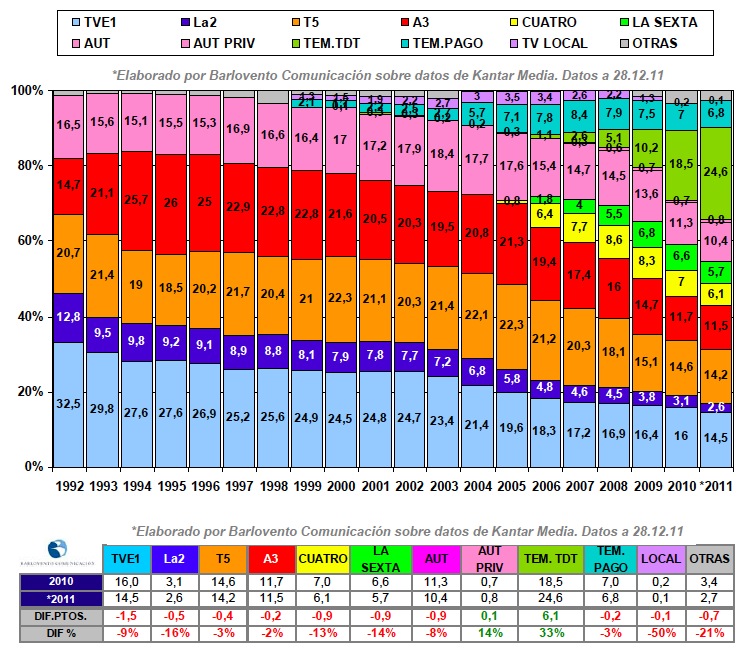
Hearings
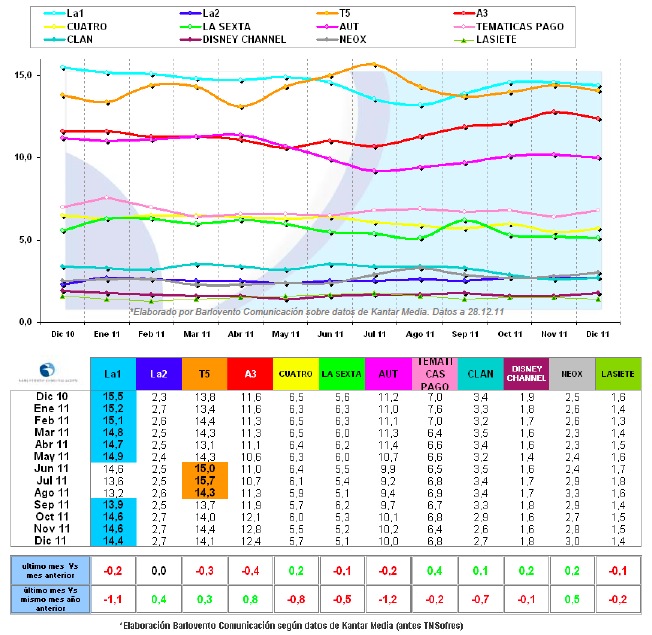
En cuanto a audiencias, a pesar del descenso de 1,5 puntos debido a la atomización del mercado, La 1 (14,5%) lidera la clasificación anual de cadenas más vistas por tercer año consecutivo, por delante de Tele 5 (14,2%) y Antena 3 (11,5%). La FORTA promedia el 10,4%, Cuatro suma el 6,1% y La Sexta el 5,7%.
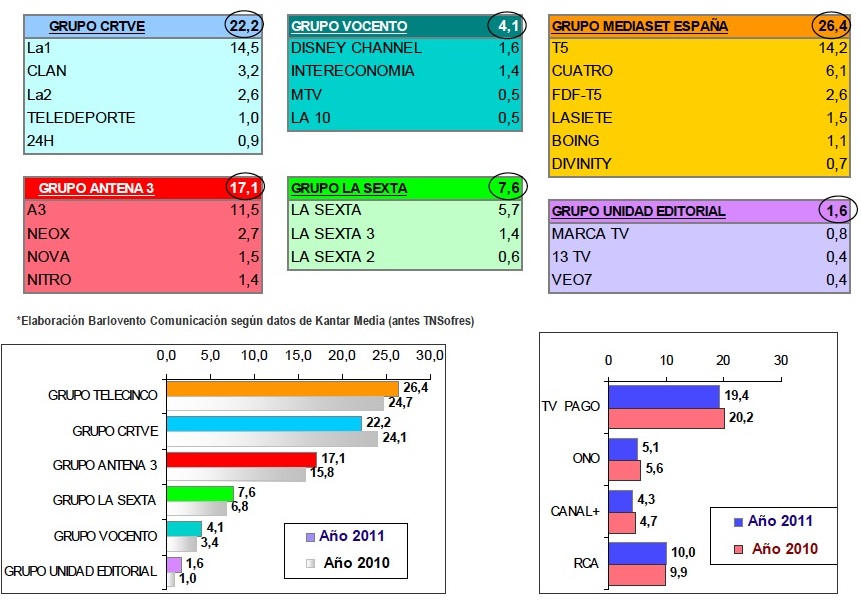
Por grupos empresariales, Mediaset España es líder destacado tras su integración con Cuatro, con el 26,4%. La CRTVE acumula el 22,2% mientras que el grupo Antena 3, el 17,1%.
El conjunto de ‘Temáticas con concesión TDT’ llegan en 2011 al 24,6% de cuota, casi la cuarta parte del mercado nacional. En diciembre, la cifra asciende al 24,7% de cuota. La fragmentación de audiencias no para de agudizarse; el 2011 ha sido el año en el que las tres grandes generalistas (La 1, Tele 5 y Antena 3) suman una menor cuota de pantalla: sólo el 40,2%.
La1 es líder en hombres, mayores de 45 años y en los ámbitos gallego, madrileño, valenciano, castellano manchego, castellano leonés, asturiano, aragonés, balear, murciano y “resto”. Tele 5, por su parte, gobierna en mujeres, adultos jóvenes (25 a 44 años), Andalucía, País Vasco y Canarias. Antena 3 es la cadena más vista por los jóvenes (13 a 24 años), Clan por los niños (4 a 12 años) y TV3 es líder en Cataluña.
La1 lidera las jornadas de lunes, martes, sábado y domingo, mientras que Telecinco hace lo propio en miércoles, jueves y viernes.
Por franjas horarias, La1 es líder en mañana, sobremesa y noche I, Telecinco en tarde y noche II y las Temáticas de Pago en madrugada.
Atendiendo a las variables que Kantar Media aporta y que recoge Barlovento, la cadena pública logra ser la primera opción televisiva para las ‘parejas con hijos mayores’ (junto con Tele 5), las ‘parejas adultas sin hijos’ y los ‘retirados’. Telecinco
obtiene el liderazgo en los segmentos ‘jóvenes independientes’, ‘parejas jóvenes sin hijos’, ‘hogares monoparentales’, ‘adultos independientes’, Antena 3 en ‘parejas con hijos medianos’ y Clan en ‘parejas con hijos pequeños’.
En lo referente al denominado estudio de “constelaciones” o “modos de ver la televisión”, se observa cómo la mayor parte del tiempo se ve televisión de forma individual. Esta circunstancia se extiende a casi todas las cadenas. De entre las generalistas más veteranas, Antena 3 es la cadena que tiene un mayor tipo de visionado “grupal” (tres o más personas) y las cadenas públicas “dual” (en pareja). En este sentido, Telecinco es la más “individual”.
Inversión publicitaria
Las cifras de inversión publicitaria en televisión recogidas por Infoadex correspondientes a los nueve primeros meses del año (1.635 millones de euros entre enero y septiembre de 2011) apuntan a un descenso porcentual respecto al 2010 del –7,5%, aunque las previsiones para el último trimestre del año indican un descenso mayor, entre el 8 y el 10%. La proyección estadística al cierre del presente ejercicio llegaría a una cifra cercana a los 2.250 / 2.300 millones de euros, alrededor de 200 menos que los 2.472 millones de euros del 2010.
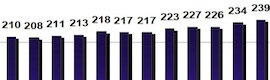
En cuanto a consumo televisivo, los 239 minutos consumidos por persona y día suponen un nuevo récord de consumo televisivo en España. Es el tercer año consecutivo de incrementos y la cifra supone 5 minutos más que el año anterior. Las nuevas tecnologías no parecen afectar al medio televisivo, sino más bien al contrario, retroalimentan al producto audiovisual.
Acceso al ANALISIS TELEVISIVO 2011 elaborado por Barlovento comunicación.
Did you like this article?
Subscribe to our NEWSLETTER and you won't miss anything.
Related articles
 TV Anhanguera bets on Pebble to achieve deep and transversal automation
 FIFA+ arrives, a deep platform with free content for football lovers
 Telestream and NPAW integrate their solutions to offer deeper video monitoring
 Confinement leads to the month of May with the highest television consumption in history
 Televisa chooses Lawo IP and Ravenna for a profound update of its facilities
 BIT Audiovisual 2018 will show the latest technology for a sector in continuous transformation
 Globecast undertakes a profound reorganization
 Audiovisual professionals apply for a profound regeneration at the College of Telecommunications Technical Engineers
 Portugal will carry out a profound remodeling of RTP but postpones its privatization
 The crisis accentuates television consumption
 Absolute record of television consumption in 2011
 50+4 Forum: “rethink” the television model
 Eiken proposes the transformation of the sector looking at a new business model
 Campo Vidal: “the transition to digital will be deeper than we thought”