





Álvarez-Pallete lays the foundations for the Telefónica of tomorrow
El nuevo plan de acción de Telefónica se asienta en cinco decisiones estratégicas: foco en España, Brasil, Reino Unido y Alemania como mercados clave; creación de Telefónica Tech; creación de Telefónica Infra; spin-off operativo de Hispanoamérica, y redefinición del centro corporativo.
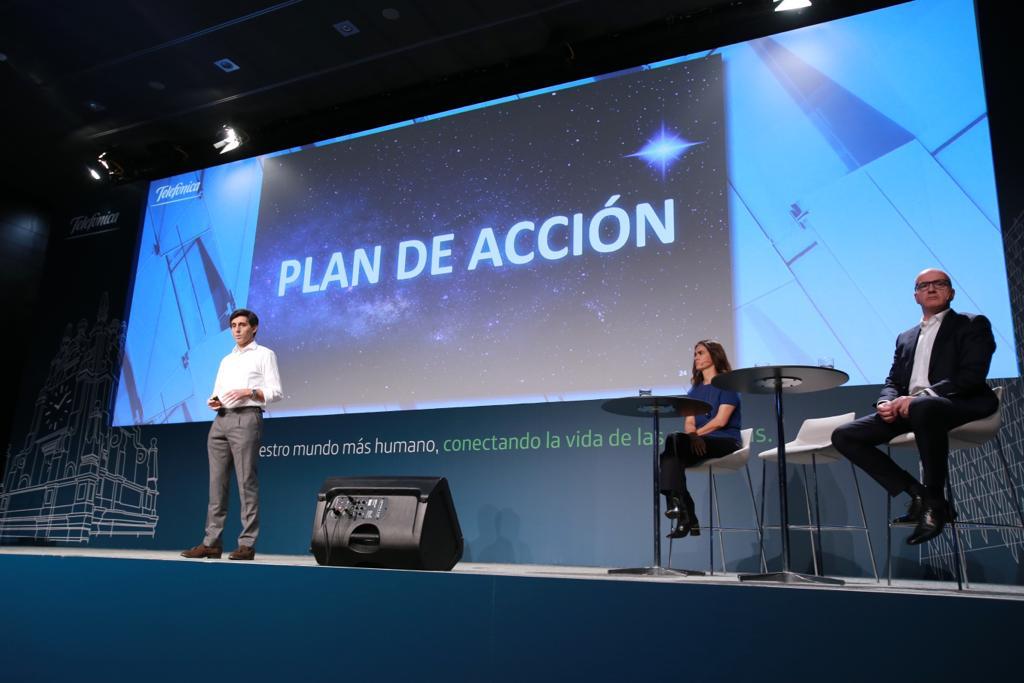
The Board of Directors of Telefónica ha aprobado este miércoles, a propuesta de su presidente ejecutivo, José María Álvarez-Pallete, un nuevo plan de acción que servirá como catalizador de la transformación de la compañía y que persigue: priorizar los mercados donde la compañía pueda ser relevante y crecer en un modelo sostenible a largo plazo, impulsar las oportunidades de mayor potencial de crecimiento apalancando a la vez el valor de sus infraestructuras, e incrementar la agilidad y mejorar la eficiencia.
El presidente ejecutivo de Telefónica ha trasladado al Consejo de Administración su convencimiento de que Telefónica tiene ante sí una oportunidad enorme de crecimiento. Asimismo, explica que se trata “de una revolución tecnológica, pero también de una revolución social que alterará nuestro futuro inmediato. Una revolución que va a generar billones de euros de valor y, probablemente, nos ayude a solucionar retos que hasta ahora el ser humano no había podido conquistar. Para que esta revolución sea buena para todos, debe ser justa e inclusiva. Debe ser humana”.
En una carta dirigida a los accionistas el propio Álvarez-Pallete afirma que es, “sin ningún género de duda, la más importante que os he escrito desde que fui nombrado presidente de Telefónica”.
“Las compañías que no asuman su responsabilidad en este nuevo mundo dejarán de ser relevantes en el corto plazo. Los directivos que no nos comprometamos con el largo plazo y la sostenibilidad no estaremos siendo responsables”, afirma el presidente ejecutivo de Telefónica.
“Nos corresponde imaginar, diseñar y construir la compañía que queremos ser en el futuro. Lo hemos hecho, la hemos imaginado, la hemos diseñado y queremos empezar a construir el camino hacia ella”, añade.
El presidente ejecutivo de Telefónica afirma que “las incertidumbres geopolíticas y macroeconómicas y regulatorias, y la elevada competencia en el sector requieren una asignación del capital cada vez más exigente. Si en el pasado la baja penetración de los servicios de voz y datos, especialmente en los países emergentes, aseguraba el crecimiento futuro, la madurez creciente de los mercados y la aparición de nuevos competidores sujetos a distintas reglas demanda aproximaciones estratégicas muy focalizadas”.
Las nuevas necesidades y crecientes demandas de los clientes, tanto particulares como empresas, ante la explosión de la conectividad y la Inteligencia Artificial, la generación de valor para los accionistas a corto, medio y largo plazo, y la visión de los empleados sobre la compañía también han sido, según indica el presidente en dicha carta, puntos relevantes para la configuración del nuevo modelo.
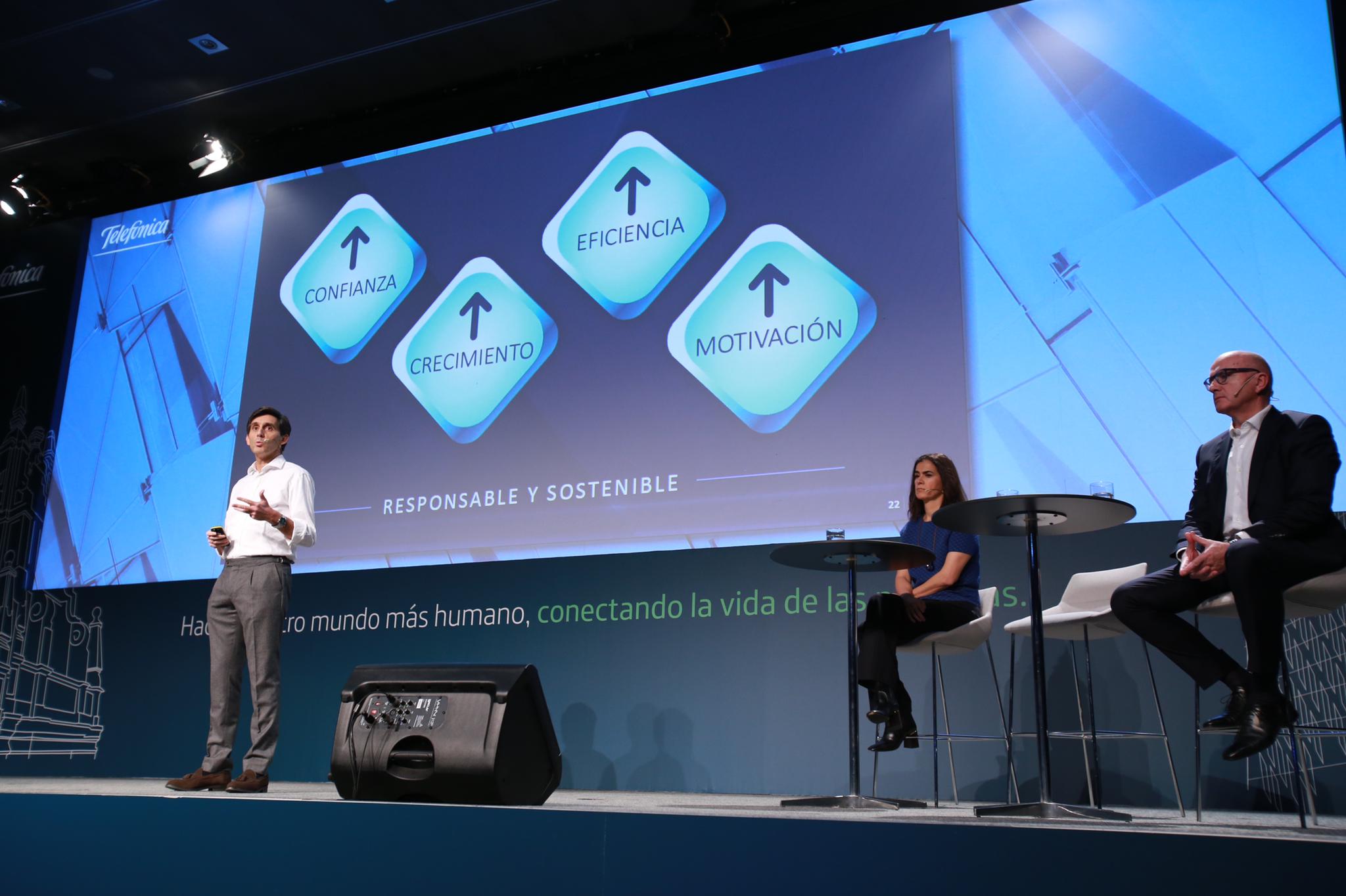
Cinco mercados clave
El nuevo plan de acción, que servirá de catalizador de la transformación de la compañía, se asienta en cinco decisiones estratégicas: focalizarse en España, Brasil, Reino Unido y Alemania como mercados clave; creación de Telefónica Tech; creación de Telefónica Infra; spin-off operativo de Hispanoamérica, y redefinición del centro corporativo.
La implementación de todas estas medidas se espera que permita generar, entre otros efectos, más de 2.000 millones de euros adicionales de ingresos y dos puntos porcentuales de mejora en el margen de flujo de caja operativo (OpCF) en 2022.
Cuatro países clave para priorizar la inversión, avanzar en digitalización e impulsar ingresos En la actualidad, España, Brasil, Alemania y Reino Unido constituyen los cuatro mercados principales para Telefónica. Aunque a cierre del tercer trimestre de 2019 el Grupo estaba presente en 14 países, estos cuatro concentraban 218,1 millones de accesos (el 63% del total) y el 80% de ingresos, Oibda y flujo de caja operativo (OpCF).
El plan de la compañía pasa por priorizar el grueso de sus inversiones en estos cuatro mercados, mejorando la oferta y los servicios que se ofrecen a los clientes, con la palanca que ofrece la relación existente con millones de usuarios en mercados relevantes y con potencial de crecimiento en esta nueva fase. En definitiva, concentrar los recursos en los mercados de más valor.
Se priorizará también la inversión para la modernización y despliegue de la red, así como para la digitalización de la compañía, que permita mejorar el servicio y la atención a los clientes y capturar eficiencias.
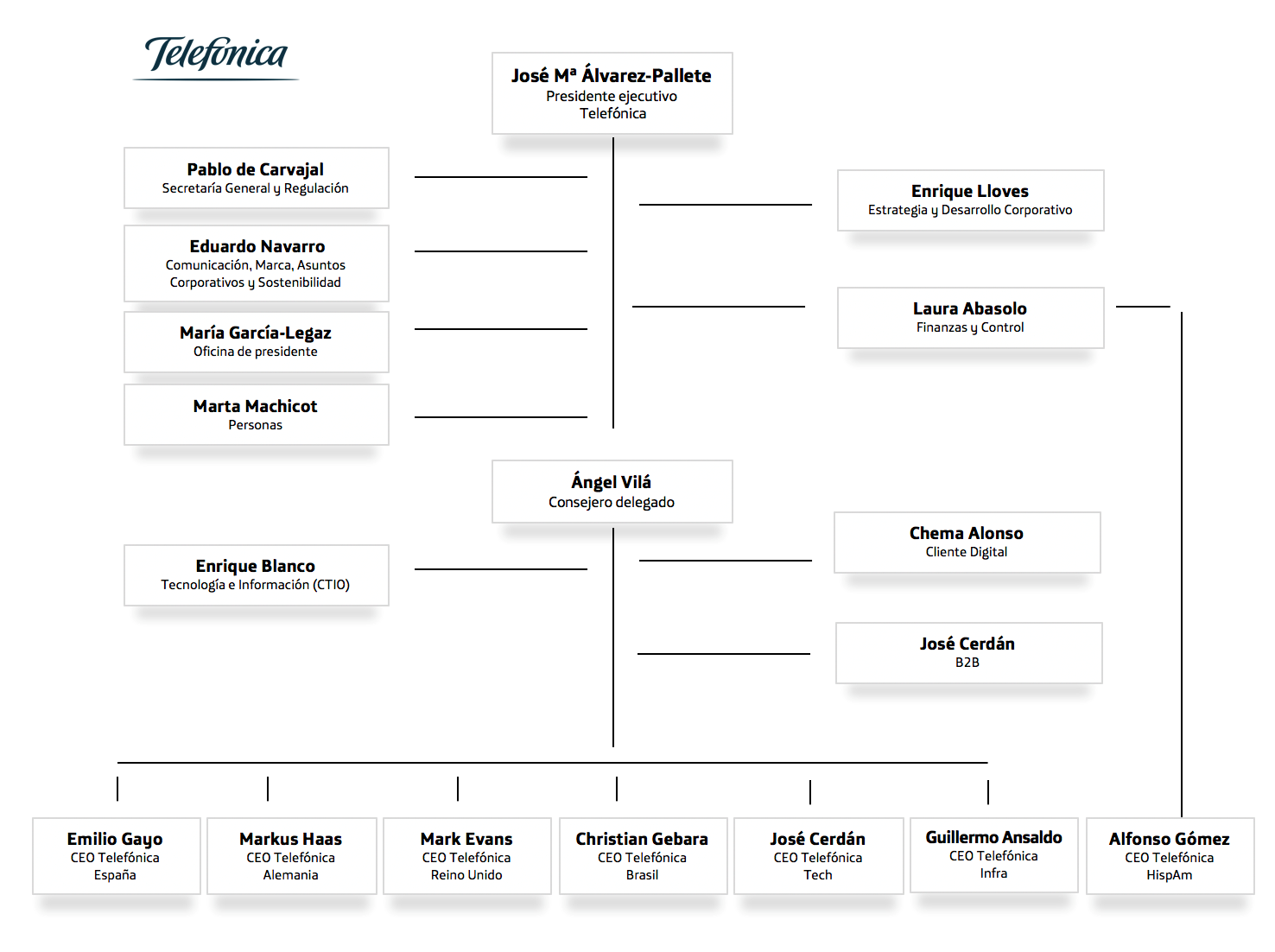
Bajo la dependencia del consejero delegado de Telefónica, Ángel Vilá, se mantiene a los actuales cuatro responsables de estos mercados: Emilio Gayo (España), Christian Gebara (Brasil), Mark Evans (Reino Unido) y Markus Haas (Alemania).
Telefónica Tech e Infra
El Consejo de Administración de Telefónica ha acordado también la creación de Telefónica Tech, unidad que aglutinará los negocios digitales con alto potencial de crecimiento y que pretende ser el socio que acompañe a otras compañías en su transformación digital.
Inicialmente en esta unidad se desarrollarán tres negocios: ciberseguridad, IoT/Big Data y cloud. Telefónica pretende impulsar el crecimiento de estas actividades que, de forma agregada, ya están logrando subidas de facturación por encima del 30%. Esta unidad se podrá expandir en el futuro si aparecen nuevas oportunidades de negocio con dicho potencial. Del mismo modo, está abierta a adquisiciones que complementen el portafolio tal y como se ha venido haciendo en los últimos años.
En Telefónica Tech se integrarán las unidades dedicadas actualmente a la prestación de los citados servicios, con el fin de focalizar aún más la gestión y conseguir la escala que permita atraer el talento tecnológico adecuado. Con procesos más ágiles, eficientes y la palanca que puede dar la incorporación de nuevos socios se quiere acelerar de forma exponencial el crecimiento de estos negocios.
Esta unidad será la que entregue la oferta de valor que los equipos comerciales de cada país ofrecerán a los clientes. Además, se pretende exportar la propuesta a otros países en los que Telefónica no está presente mediante acuerdos con otras compañías. Se espera que esta unidad genere más de 2.000 millones de euros de ingresos adicionales en el año 2022.
El CEO de esta nueva sociedad será José Cerdán, hasta ahora responsable Global del segmento B2B en Telefónica, reportando al consejero delegado. Cerdán posee un gran espíritu empresarial, cuenta con una sólida experiencia en crear empresas, multiplicar sus ingresos y capturar todo su potencial tecnológico. Es un gran impulsor de la agenda digital, asesorando a importantes empresas en el mercado español e internacional, así como a organismos e instituciones privadas, públicas y universidades. Su relación con Telefónica se inició en 2011, cuando Telefónica adquirió Acens. En los últimos años, como responsable Global del segmento B2B, ha liderado junto a las operaciones el crecimiento de los ingresos en servicios a empresas.
Telefónica crea también Infra para aflorar el valor de activos y acelerar el crecimiento. Con el 50,01% de Telxius como primer activo, Telefónica Infra nace para aglutinar las participaciones accionariales de Telefónica en vehículos de infraestructuras de comunicaciones, dando servicio a terceros operadores e incorporando socios.
Por medio de Telefónica Infra, Telefónica persigue poner en valor un portafolio único de activos, enfocándose en el desarrollo y monetización de torres, sistemas de antenas distribuidas, data centers – incluido EDGE -, proyectos greenfield de fibra o cables submarinos, entre otros.
Con una filosofía amplia de acuerdos, Telefónica Infra está abierta a distintos esquemas de participación accionarial (mayoritaria o minoritaria), y a los mejores socios para cada uno de los tipos de activo.
También bajo dependencia de Ángel Vilá, el CEO de Telefónica Infra será Guillermo Ansaldo, quien ha liderado hasta la fecha la unidad Global de Recursos Globales del Grupo Telefónica. Ansaldo tiene una sólida trayectoria ejecutiva a nivel internacional, liderando estrategias de transformación de grandes equipos y construyendo alianzas con otros grandes socios tecnológicos. Posee un profundo conocimiento de la compañía tanto desde el punto de vista operativo (CEO de España y Argentina) como técnico, siendo hasta el momento el responsable global de tecnología del grupo.
 América Latina
Por último, señalar que la multinacional pretende crear una unidad que aglutine los negocios de Telefónica en los países de América Latina (todos salvo Brasil) donde hoy opera.
“La historia de nuestra compañía no se entiende sin la apuesta desde hace 30 años por Latinoamérica, que ha hecho de Telefónica una compañía mejor. “Siempre hemos mostrado un fuerte compromiso por la región, incluso en sus momentos más difíciles”, recuerda Álvarez-Pallete.
“Nuestras operaciones en Latinoamérica eran hasta hace unos años el motor de crecimiento de la compañía. Sin embargo, las condiciones particulares en estos mercados han impactado en la evolución de los negocios, mermando su contribución en los últimos años por distintos motivos y a pesar de los enormes esfuerzos de los equipos locales, que siempre han mostrado un fuerte compromiso”, argumenta.
Ante esta realidad, se crea una unidad que contará con un equipo de gestión específico y diferencial al del resto del grupo, que tendrá como objetivo fundamental la atracción de inversores y la obtención de potenciales sinergias con otros agentes de los mercados, con una filosofía de garantizar y maximizar el servicio que le ofrece a sus clientes.
Con este spin-off operativo, Telefónica inicia una revisión estratégica de su portafolio en América Latina con el doble objetivo de modular la exposición a la región, al tiempo que se crean las condiciones para maximizar su valor vía crecimiento, consolidación y posibles operaciones corporativas.
Esta unidad estará liderada por Alfonso Gómez, actual responsable de Hispam Norte, que cuenta con una gran experiencia en el sector telco en el mercado latinoamericano. Ha sido responsable de la reciente operación de red en México, de la venta de las unidades de Centroamérica o de la exitosa reestructuración de Colombia Telecom, compañía de la que fue CEO. Alineado con la nueva estrategia, esta unidad dependerá de la Dirección General de Finanzas y Control de Gestión, liderada por Laura Abasolo.
Nuevo modelo organizativo
La quinta de las iniciativas persigue responder a la necesidad de ganar agilidad en la implementación de los cambios necesarios para dar un mejor servicio a los clientes y aprovechar las escalas y sinergias del grupo.
“En los últimos años hemos lanzado distintas iniciativas para capturar los beneficios de la digitalización, consiguiendo importantes avances hasta la fecha. Ahora, para ganar agilidad y acelerar la ejecución de nuestra estrategia, es el momento de evolucionar nuestro modelo operativo”, explica el presidente ejecutivo de Telefónica.
Por ello, continúa, se adaptará el rol y funcionamiento del centro corporativo a la nueva realidad, “poniendo el foco en aquellas actividades que aportan un valor diferencial al resto de unidades y que nos permiten capturar el valor de la escala, eliminando algunas duplicidades existentes con las estructuras de los países” y con “un mayor nivel de ambición en los planes de simplificación y digitalización de las operaciones”.
La compañía ha agradecido de forma expresa el trabajo realizado por los directivos que salen del Comité Ejecutivo: Mariano de Beer, quien durante estos tres años como Chief Commercial Digital Officer, ha realizado con éxito la misión de reestructuración de la unidad, ha contribuido significativamente a mejorar el portafolio de productos digitales y a la aceleración del crecimiento de los ingresos digitales; y Bernardo Quinn, por una exitosa carrera de casi 30 años en Telefónica, asumiendo distintas posiciones de responsabilidad en el área de B2B, Recursos Humanos y, más recientemente, por su trabajo y dedicación al frente de Hispam Sur, en un entorno muy complejo. Ambos seguirán vinculados a Telefónica en posiciones no ejecutivas.
Telefónica Spain
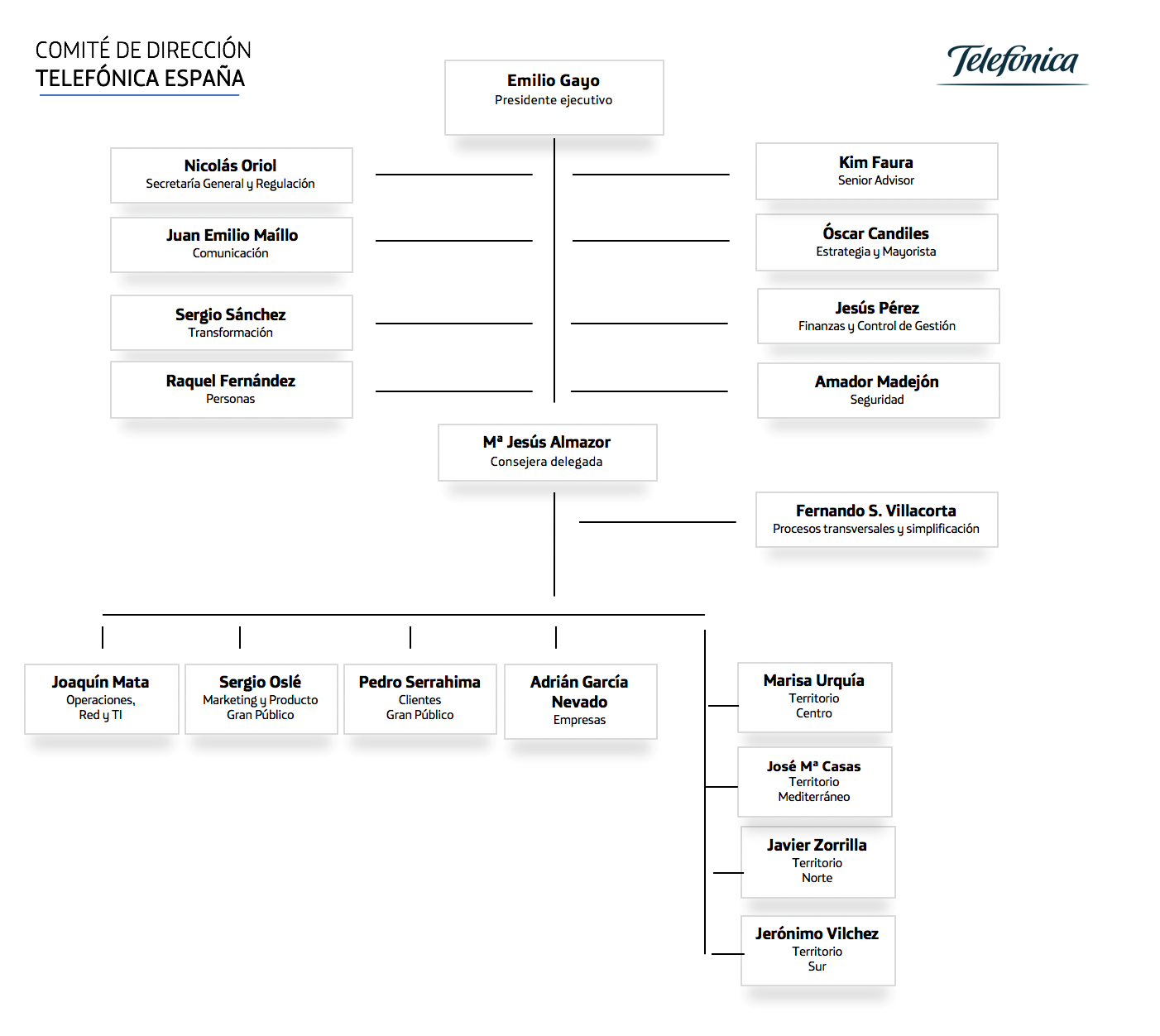
Telefónica Spain adoptará a partir de ahora nueva estructura, impulsada por el presidente ejecutivo de Telefónica España, Emilio Gayo, que refuerza las funciones de María Jesús Almazor, consejera delegada de Telefónica España, aumentando su responsabilidad sobre los ingresos y recursos de la compañía.
Óscar Candiles, actual director de Estrategia, BI y Nuevos Negocios, incorpora la responsabilidad de los ingresos mayoristas, así como la Oficina de Gabinete del presidente y consejera delegada.
Raquel Fernández León asume la dirección de Personas en sustitución de Javier Delgado, quien después de una exitosa carrera en Telefónica, asumiendo diferentes posiciones de responsabilidad, ha impulsado durante los últimos tres años la transformación de la política de personas en Telefónica España, culminada con la firma del nuevo convenio colectivo, que proporciona un marco de estabilidad laboral para los próximos años.
Se crea la figura del director de Transformación, que será responsable del seguimiento y la ejecución de los proyectos de transformación de Telefónica España, y a cuyo frente se sitúa a Sergio Sánchez Gallego.
Continúan en sus funciones y dependiendo del presidente las direcciones de Secretaría General y Regulación (Nicolás Oriol), Finanzas y Control de Gestión (Jesús Pérez de Urigüen), Seguridad (Amador Madejón) y Comunicación (Juan Emilio Maíllo), aglutinando la responsabilidad integral de la comunicación de la compañía, tanto externa como interna.
En cuanto a las áreas bajo responsabilidad de la consejera delegada, se crea la nueva dirección de Cliente de Gran Público, a la que llega Pedro Serrahima, hasta ahora responsable de desarrollo multimarca. Además de sus responsabilidades actuales, se hará también cargo de profundizar en las políticas y procesos de relación con el cliente que se están impulsando en el conjunto de marcas del grupo.
Con el objetivo de evolucionar la oferta al cliente con una visión integral se crea la nueva dirección de Marketing y Producto de Gran Público con Sergio Oslé al frente, quien suma estas nuevas responsabilidades a su condición de presidente de Movistar+.
También bajo dependencia directa de la consejera delegada se sitúa la nueva dirección de Empresas. Adrián García Nevado, hasta ahora director Territorial Centro y de Grandes Clientes, pasa a responsabilizarse de todo el negocio de empresas, tanto grandes clientes, como medianas y pequeñas empresas. Con esta nueva organización, la apuesta de Telefónica España por el negocio de empresas, uno de los principales motores de crecimiento de Telefónica España, se verá reforzada.
Fernando Sánchez Villacorta, asume la dirección de Procesos Transversales y Simplificación, que integra, además de sus responsabilidades actuales, las áreas de facturación, terminales y logística, reportando directamente a la consejera delegada.
Asimismo, la dirección de Red, Sistemas y TI, liderada por Joaquín Mata, pasa a depender de la consejera delegada, incorporando la responsabilidad sobre TGT, unidad de negocio responsable de la integración y desarrollo de aplicaciones de ámbito corporativo.
También de la consejera delegada dependerán las cuatro direcciones territoriales, que tendrán responsabilidades ejecutivas en las relaciones institucionales y en toda la actividad relacionada con el sector público. Adicionalmente, asegurarán la coherencia territorial en la relación con el cliente, tanto de gran público como de empresas, preservando el valor de la cercanía.
Javier Zorrilla continúa como director territorial Norte; Jerónimo Vílchez se mantiene como director territorial Sur, mientras que Marisa Urquía, que aglutina una extensa experiencia en el ámbito de empresas, será la nueva directora territorial Centro. Al frente de la dirección Territorial Mediterráneo se sitúa José Manuel Casas, actual CEO de Telefónica Ecuador. Kim Faura, hasta ahora director Territorial Mediterráneo asumirá un nuevo rol como Senior Advisor de Presidencia, desde el que podrá aportar su visión y experiencia.
https://www.youtube.com/watch?v=e3iZi8t-jfs
Did you like this article?
Subscribe to our NEWSLETTER and you won't miss anything.
Related articles
 Marc Murtra replaces Álvarez-Pallete as head of Telefónica
 Telefónica renews its sound identity with the “Telefónica Suite”
 Tenacity bases its work dynamics on Blackmagic solutions
 Álvarez-Pallete (Telefónica) will preside over the GSMA until the end of 2024
 José María Álvarez-Pallete assumes the presidency of the GSMA
 Álvarez-Pallete reclama un nuevo marco regulador en el MWC 2021
 Sony trae el mañana al hoy en IBC
 Reed Hastings y Álvarez-Pallete escenifican la paz entre Netflix y Telefónica con un simpático vídeo
 La televisión del mañana, ya hoy, a debate en Sevilla
 José María Álvarez-Pallete, new president of Telefónica
 Nace Telefónica Studios, la productora global de contenidos audiovisuales de Telefónica
 TVE adjudica a Telefónica el servicio que realizaba Overon en ‘La mañana de La 1’
 The EBU lays the foundations for the development of hybrid TV
 EVS: soluciones para hoy y mañana, en IBC’09