





Fujifilm develops the first wide-angle zoom lens in the Duvo series
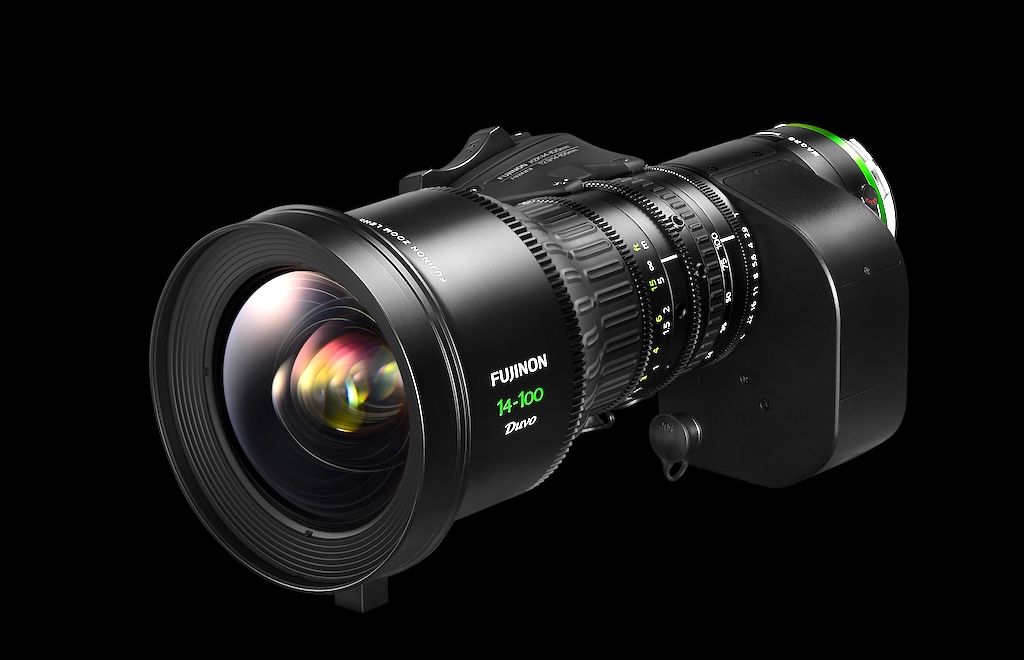
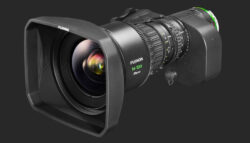
The new Fujinon Duvo 14-100mm. produce looks cinematográficos con un interesante bokeh al tiempo que funciona como un objetivo broadcast, cubriendo desde un gran angular de 14 mm. hasta un teleobjetivo medio de 100 con un diseño compacto y ligero de 266,9 mm. de longitud y 2,54 kg de peso.
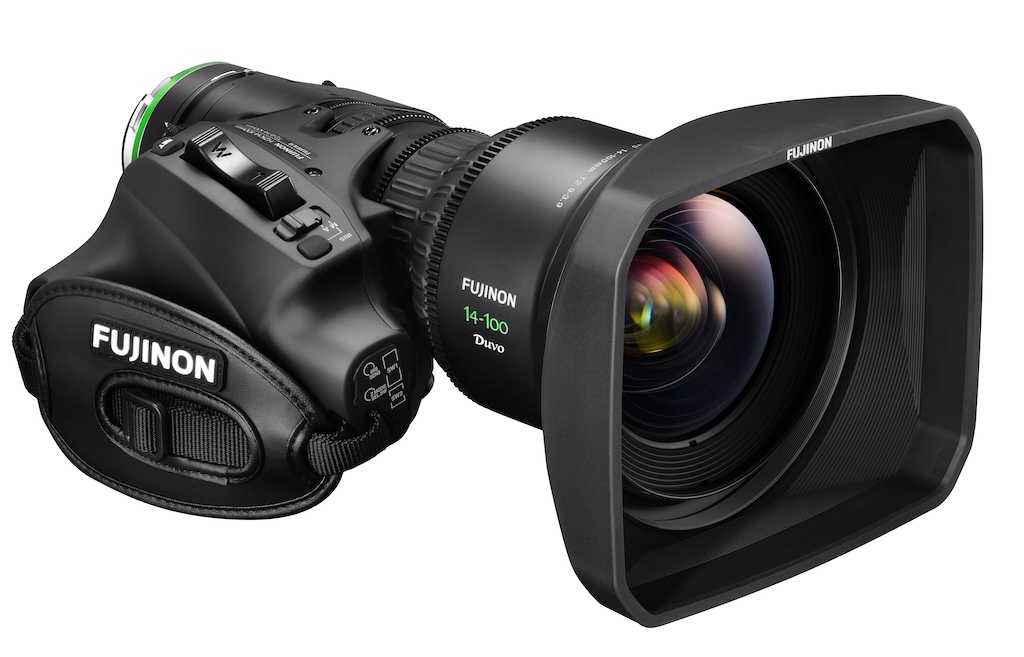
Fujinon Duvo 14-100 mm. es un objetivo de doble formato, compatible con dos tipos de sensores de imagen de gran tamaño. A la vez que cubre desde un gran angular de 14 mm. hasta un teleobjetivo medio de 100 mm. en Super 35, es el más pequeño y ligero de la serie Duvo, con 266,9 mm. de longitud y 2,54 kilos de peso, lo que lo convierte en un objetivo cómodo de llevar en la mano. Con el Expansor 1,5 incorporado, el objetivo se convierte en un 21-150 mm. que cubre el formato 16:9 en cámaras de Gran Formato.
Hoy en día, en la industria de la difusión, se utilizan cada vez más cámaras equipadas con un sensor de imagen de gran tamaño, en medio de la creciente necesidad de expresiones cinematográficas envolventes que incluyan el uso de poca profundidad de campo, bokeh cinematográfico y alto rango dinámico. En la actualidad se suelen utilizar objetivos de cine para esas aplicaciones, sin embargo, están optimizados para rodar producciones con guion, y por lo tanto tienen una relación de aumento del zoom menor que la de los objetivos de emisión. También suelen requerir un especialista en el manejo del enfoque, lo que no es habitual en la industria de la difusión.
En respuesta, Fujifilm ha ampliado su gama de productos con la introducción de la Serie Duvo, que produce imágenes cinematográficas con un bonito efecto bokeh and the facilidad de uso de los objetivos para televisión. El objetivo zoom para televisión Fujinon Duvo 25-1000 mm., de tipo caja, salió a la venta en marzo de 2023, y el Fujinon Duvo 24-300 mm., de tipo portátil, en marzo de 2024. La nueva incorporación a la gama del objetivo zoom gran angular portátil Fujinon Duvo 14-100mm. cubre el gran angular y amplía la gama de distancias focales disponibles para esta serie de 14 a 1000 mm.
Los objetivos zoom gran angular se utilizan a menudo en combinación con la Steadicam o la grúa, y el Fujinon Duvo 14-100 mm., por su tamaño y peso, puede utilizarse en diversos géneros, como fotografiar un escenario entero en un concierto de música, o acercarse a un atleta en un recinto deportivo para captar una escena envolvente.
Distancias focales
El nuevo objetivo consigue tanto un zoom de 7,1 aumentos, que cubre un rango focal de 14-100 mm., como un diseño compacto y ligero. El uso del expansor incorporado desplaza la distancia focal 1,5 veces hasta 21 mm-150 mm., lo que permite a los usuarios capturar un sujeto lejano en un campo de visión deseable. Además, la distancia mínima al objeto de 0,6 m (0,28 m desde el objetivo frontal) permite realizar primeros planos impresionantes.
El objetivo funciona de forma nativa con el sensor Super 35 mm. y admite un sensor equivalente al de fotograma completo activando el expansor incorporado para ampliar el círculo de imagen 1,5 veces.
Cuando se monta en una cámara equipada con un sensor equivalente al de fotograma completo, el objetivo ofrece su máximo rendimiento óptico manteniendo el mismo ángulo de visión que cuando se utiliza en una cámara con un sensor Super 35 mm.
Look cinematográfico
El Fujinon Duvo Duvo 14-100 mm. ofrece un bokeh cinematográfico muy interesante. Con el uso de elementos asféricos de gran diámetro y lentes Super-ED, pulidas con una precisión avanzada, se controlan a fondo diversas formas de aberración para conseguir un gran rendimiento óptico. También se suprimen las imágenes fantasmas, los destellos del objetivo y la pérdida de color, para obtener un metraje cinematográfico natural y controlable.
El objetivo tiene una abertura máxima de T2,9 en el extremo gran angular de 14 mm. y se mantiene hasta 75 mm. a pesar de ser un objetivo de gran aumento que admite un sensor de gran tamaño. Esto permite filmar en condiciones de poca luz, como conciertos en interiores y eventos deportivos nocturnos.
Las zonas desenfocadas caen de forma natural desde el plano focal hacia el fondo. Esto produce el tan buscado aspecto cinematográfico con bellas texturas y bokeh. Permite al narrador atraer de forma natural la atención del espectador hacia el sujeto enfocado.
Por otro lado, cabe destacar que incorpora la Tecnología de Compensación de la Respiración (BCT), which corrige automáticamente la respiración del enfoque (fluctuaciones del ángulo de visión) para producir secuencias naturales, manteniendo el sujeto filmado en el campo de visión establecido durante los cambios de enfoque.
Dispone de Enfoque Posterior Remoto (RBF), que permite controlar la Distancia Focal de la Brida desde el panel de control de la cámara o del sistema robotizado que admita la función RBF. Permite un ajuste más preciso con el gran monitor de alta resolución y la iluminación controlada en la sala de control del estudio o en una unidad móvil, en comparación con el visor de a bordo.
Por último, es compatible con el sistema ZEISS eXtended Data desarrollado por ZEISS basado en el estándar abierto /i® Technology. Permite registrar los metadatos del objetivo (enfoque, zoom y posición del iris), así como las correcciones de distorsión y sombreado del objetivo.
Did you like this article?
Subscribe to our NEWSLETTER and you won't miss anything.
Related articles
 Fujifilm designs the Fujinon UA22x4.8BERD broadcast zoom lens
 Fujinon develops the 4K broadcast LA30x7.8 lens equipped with a 30x zoom
 3Cat chooses Fujifilm Duvo optics to shoot the musical 'Mar i Cel' with a “cinema look”
 Fujifilm will attend MicroSalón 2024 with its latest optics such as the Duvo14-100 wide-angle zoom
 Fujinon's new Duvo 14-100mm lens, Fujifilm world premiere at NAB 2024
 The new Duvo 24-300mm lens and Kangaroo storage, Fujifilm's protagonists at IBC 2023
 The Fujinon Duvo 24-300mm lens reinforces Fujifilm's commitment to the cinematic look in broadcast
 Fujifilm previews the evolution of Fujinon's Duvo series of broadcast zoom lenses at NAB 2023
 DJI adds flexibility to the Ronin 4D with Flex and introduces its first cine zoom lens
 Fujifilm presents the Fujinon HZK25-1000mm, the broadcast lens with the “largest zoom in the world”
 Fujifilm debuts the new Fujinon Premista19-45mmT2.9 wide-angle zoom
 Osmo+: DJI integrates a zoom lens into its stabilized portable camera
 First 35mm full-frame lens with motorized zoom
 Fujinon presents its new Premier PL 14-35mm Cabrio ZK2.5×14 wide-angle lens