





Brompton brings professional virtual production environments to LAMDA students
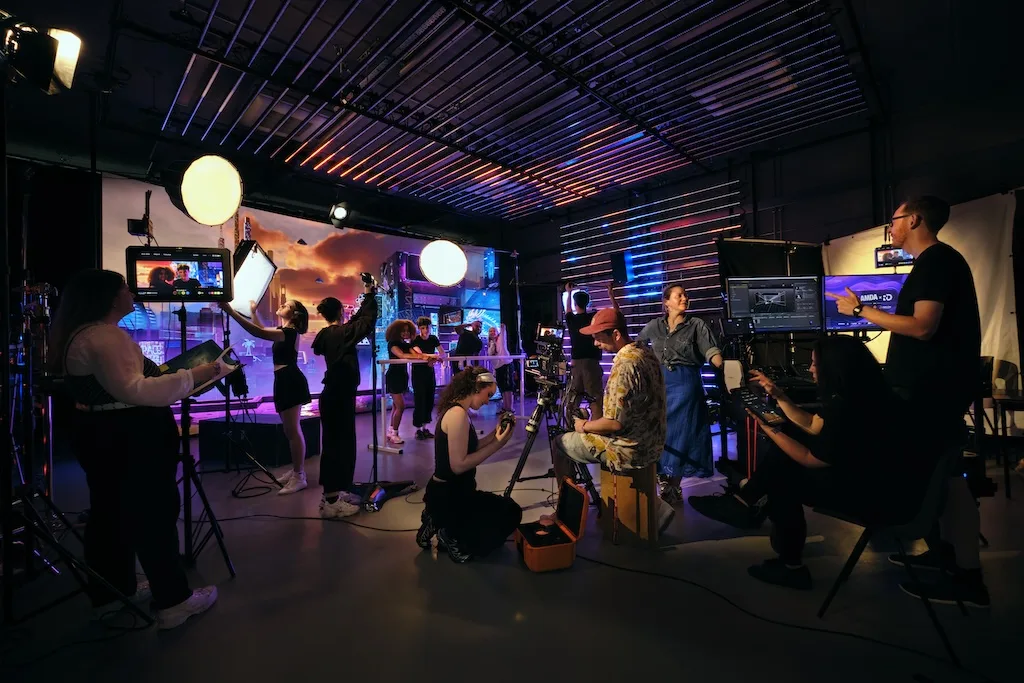
The Tessera LED processing platform Brompton Technology forms the core of a state-of-the-art virtual production studio at the London Academy of Music and Dramatic Arts (LAMDA), one of the most prestigious theater training institutions in the world.
Supplied and integrated by Universal Pixels, the facility is part of LAMDA's significant strategic investment in emerging audiovisual technologies and is already transforming the way the school trains the next generation of creative professionals.
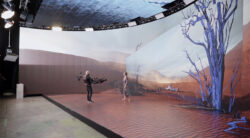
The study revolves around a LED volume of 7×3.4 meters, composed of paneles AOTO RM 2.3 mounted on a slightly curved structure with 2.5° increments between panels, and controlled by a procesador LED Brompton 4K Tessera SX40 along with two units of Tessera XD 10G data distribution.
In combination with Unreal Engine, the volume reproduces real-time environments ranging from photorealistic exteriors to completely abstract sci-fi worlds. It is located next to a dedicated volume of motion capture Row with 30 chambers and cushioned floor, a combination that places LAMDA's facilities among the most technically advanced of any drama school in the UK.
Rather than viewing the technology as a mere add-on, LAMDA has made LED volume a genuine academic priority. It is used across the full range of the school's programmes, from the Foundation Course in Theater and Film (CertHE) and the BA in Professional Performance to the Masters (MA/MFA) in Classical Performance, Musical Theater and Professional Performance. The new studio serves as a shared space where acting, directing, and technical and production arts students work together, mirroring real-world virtual production practice.
The Director of Innovation, Bethany McShepherd, is clear that LAMDA students deserve nothing less than the tools they will encounter in the industry. “LAMDA graduates are the future of the creative industries,” he says. “Investing in their careers with the best technology and the best training is what matters most to our institution.”
Since LED volumes are already a standard in high-end film and television productions, from prestigious streaming series to commercials, students working on the LAMDA volume become familiar with the same workflows, the same technical language and the same environmental demands that they will face on professional sets, long before they graduate.
Charles Douglas, associate professor of Acting and Directing with Emerging Technologies and director of Screen and Audio Training, sees the potential as transformative. “This technology opens the door to extended reality (XR) or mixed reality, to new ways of making films and to expand the physical setting and the spaces in which we work,” he says. "Using it in practice is one thing, but it's also an invitation to rethink the framework of what we do. That's an important mandate for our department: catalyzing a new chapter in acting and storytelling."
The Brompton API has also become an integral part of the way students are taught to work on a set. Through an integration with BitFocus Companion, test patterns can be activated through a Steam Deck, allowing students to quickly identify hardware or wiring issues and efficiently progress through the troubleshooting process. For its part, the reliability and chromatic consistency of the Tessera platform give LAMDA the confidence to use the volume not only for student projects, but also for professional level productions- The system equally supports capstone films, commercial digital assets, and collaborative research productions.
First productions
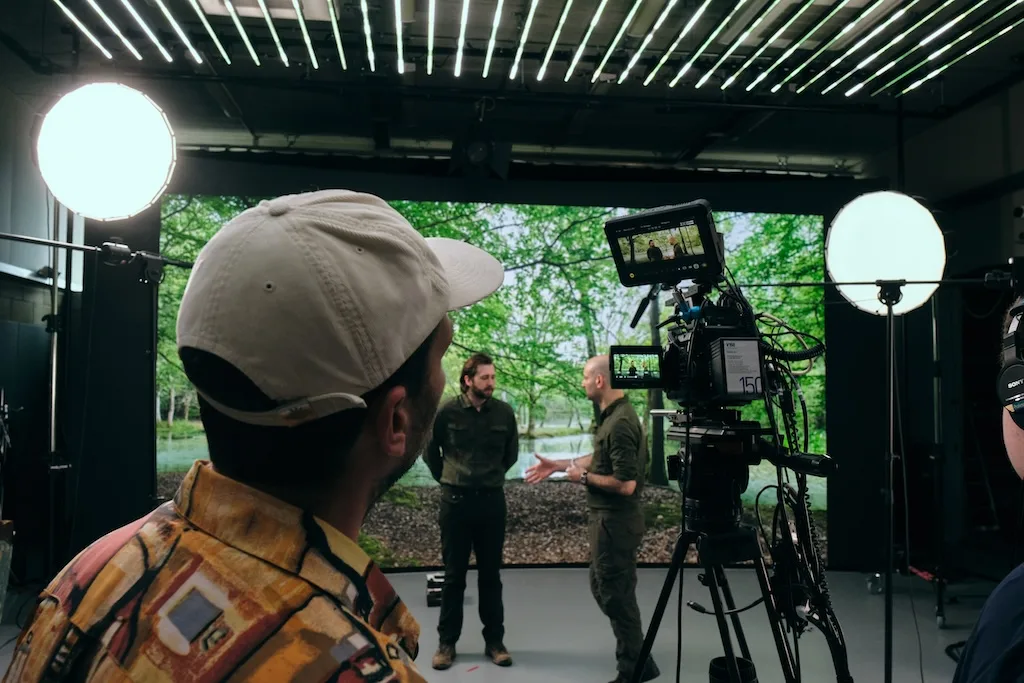
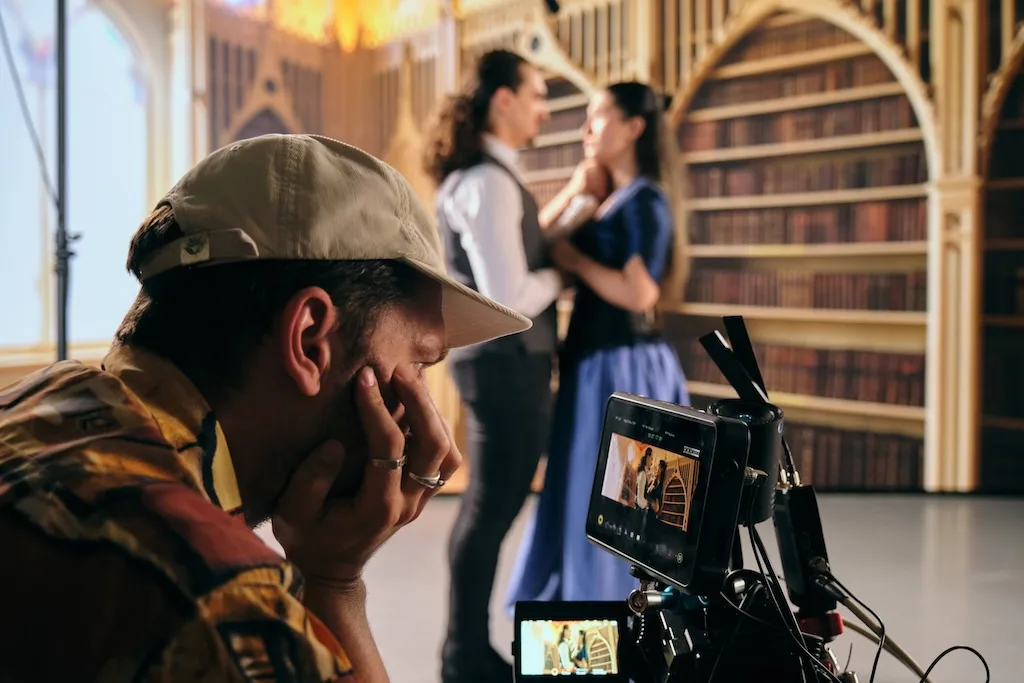
That professional scope is already evident in the work produced. A short film made in collaboration with the Media Trust, funded by The Crucible Foundation and based on stories from prison reading groups, was shot entirely within the volume and features actor Ralph Ineson. Space has also played a central role in the program LAMDA x Lyric Future Technicians, a widening participation initiative run in conjunction with the Lyric Hammersmith Theatre, through which a group of young people from west London have recently gained hands-on experience with professional film infrastructure. For many, this was their first contact with this level of technology. For the associate professor of film acting, Gary Pillai, the goal of it all is clear: “Our mission now is to understand that and make sure that our graduates are truly able to enter the profession, and the film acting arena of the industry, immediately.”
“We are proud to have collaborated with LAMDA on this project, providing the technology that allows students practical access to professional production workflows used throughout the film and television industry,” he adds. Dan Edmonds, head of Film and Television at Universal Pixels. “Facilities like this play an important role in bridging the gap between education and industry, helping students gain hands-on experience with the tools they will use throughout their careers.”
Beyond the technical specifications, LAMDA's relationship with Brompton reflects something deeper. The school's strategy is based on the principle of "collaboration first", and the director of Marketing and Communications, Stephen Court, describes Brompton as a direct expression of that approach. “Brompton Technology is a paradigmatic example of a partner that shares our values of curiosity, innovation and inspiration,” he says.
The scalability and the future compatibility of the Brompton platform ensure that the investment is designed to evolve with both the curriculum and the wider sector. “It's not just about providing the sector with qualified personnel,” concludes Douglas. “It is about actively collaborating with innovative productions at LAMDA to advance both training and practice.”
Did you like this article?
Subscribe to our NEWSLETTER and you won't miss anything.
Related articles
 Nightsky Studios: Scotland positions itself as a virtual production hub with ROE Visual and Brompton
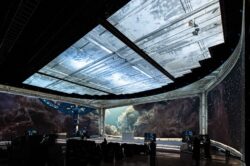 StudioCube Daejeon deploys a studio for virtual production with technology from LG and Brompton
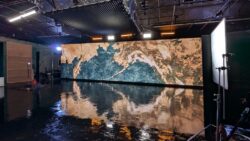 S4 Studios offers virtual production to Discovery Channel with Brompton Technology
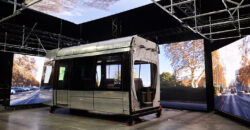 V Studios (France Télévisions) transitions to virtual production with Brompton and Absen
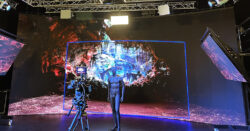 NTU inaugurates a virtual production studio with the latest ROE and Brompton solutions
 The FINAS ICVFX studio makes the leap to virtual production with Brompton solutions
 Adam Callaway, new global director of virtual production and broadcast at Brompton
 Tencent joins virtual production and video games with Brompton
 HdM University brings its students closer to the IP and HDR world with AJA solutions
 Brompton demonstrates its proposal for virtual production at SIGGRAPH 2023
 Absen, together with Brompton, ARRI and Stype, is committed to virtual production with LED backgrounds
 Absen joins forces with Brompton to promote virtual production studios
 Brompton Technology makes Turkey's first virtual production studio possible
 Tessera from Brompton Technology, axis of the new virtual production Studio-xR from PRG and Mado XR