





Europe in the face of disinformation: artificial intelligence and alliances

Montserrat Rigall, journalist from RTVE, shares in this forum the main milestones extracted from the first international meeting of CEDMO (Central European Digital Media Observatory), in which good practices and the need for alliances and technologies to fight against fake news and the misinformation that these cause.
When the billionaire Marc Zuckerberg, founder of Facebook, published a letter in November 2016[1] of intentions, a concern was unleashed that persists today. Disinformation is causing irreparable damage to global democracy and the authorities are already acting. We have been able to verify the most recent proof at an International Conference on CEDMO in Prague this past September in which we have participated hand in hand with the IVERES Project[2] of RTVE Artificial Intelligence.
The meeting, organized by CEDMO A year after its creation under the auspices of the Czech Presidency of the Council of the EU, it brought to the table the impact of disinformation and advances in regulation within the framework of the European Union. All of this in a scenario like the current one, of lower citizen trust and growing fragmentation of society.
 Disinformation, a threat
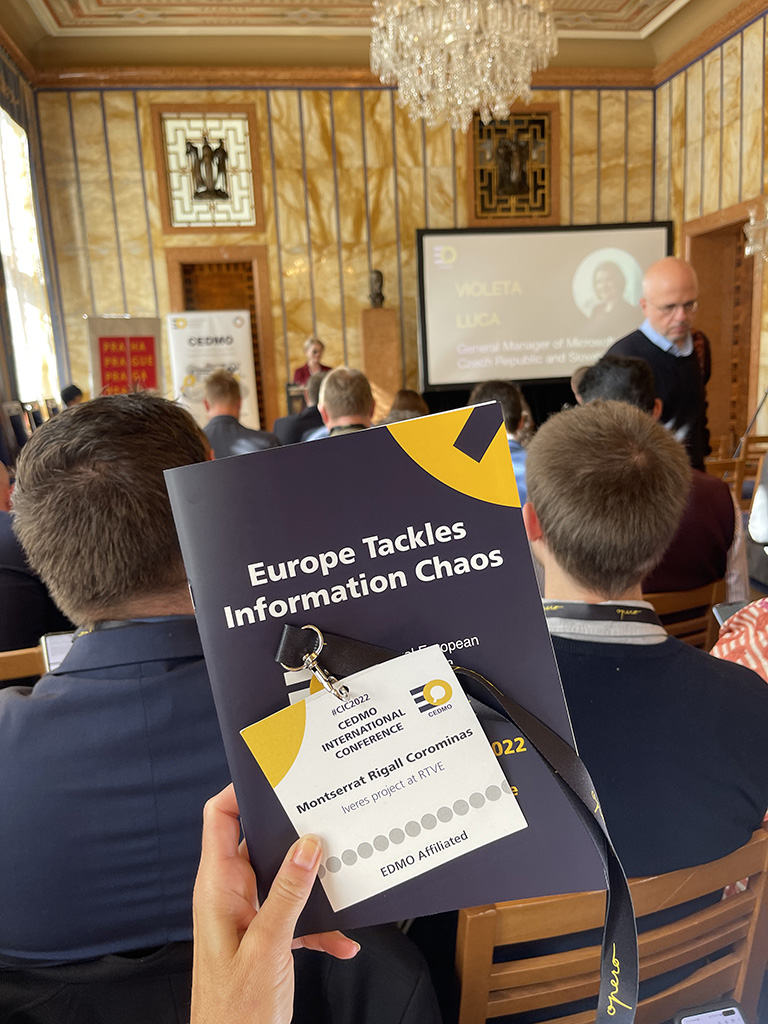
Over two days, multidisciplinary experts, academics, EU officials, journalists, technological and legislative actors from across Europe presented the current role of the media, the relationship between technology and disinformation, journalism and the growing importance of media literacy. The focus was on how artificial intelligence can and should be incorporated into the automation of certain processes to be more effective, save time and avoid losing sight of relevant issues, whether to help combat misinformation by monitoring hoaxes on networks or with the mapping of geographical areas.
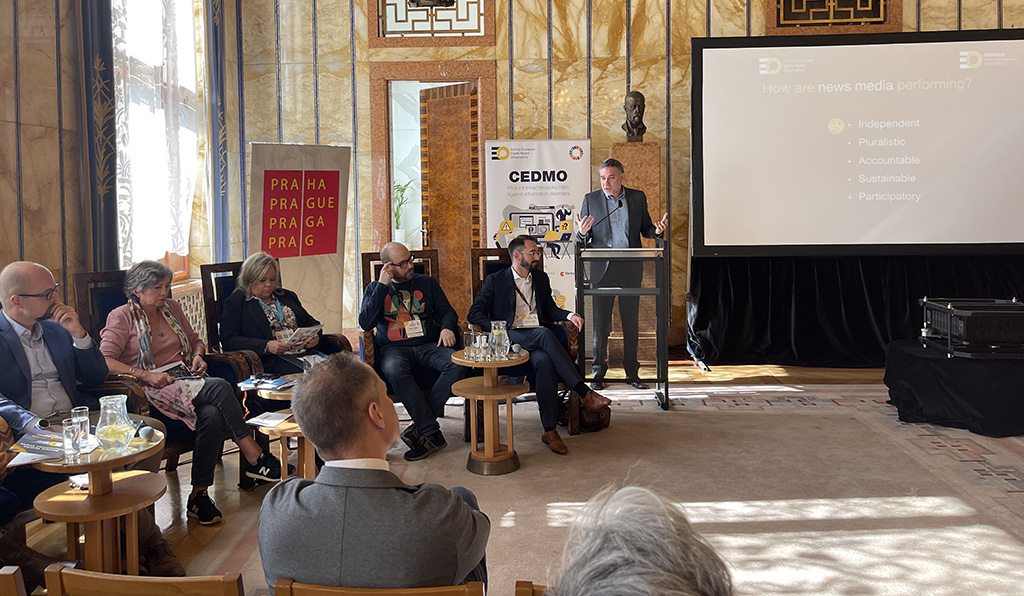
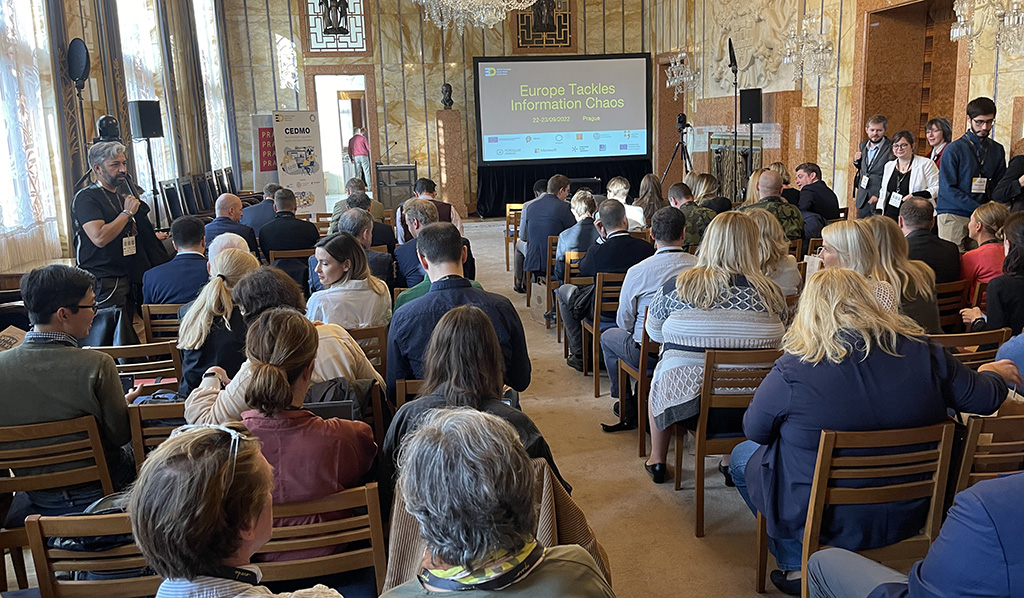
Precisely this reasoning was the most shared within the Czech walls of the Mayor's Residence during the grand opening of the conference on CEDMO in Prague on September 22.
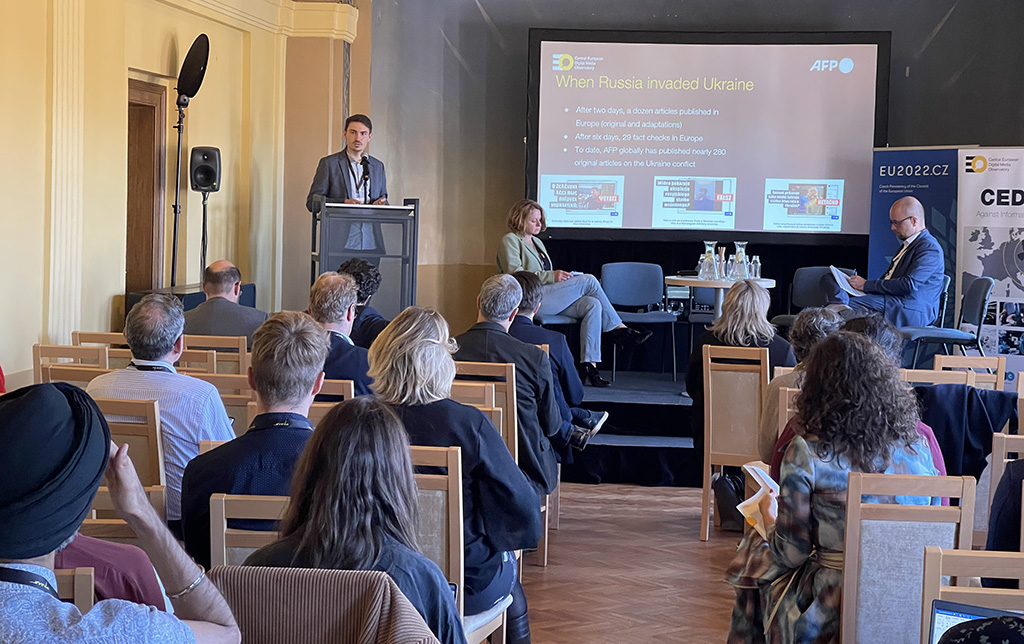
Europe faces disinformation responsibly
Vera Jourová, vice president of the European Commission, spoke of how "the manipulation of foreign information and disinformation is a threat that the EU takes very seriously. It corrodes trust in democracy and the rules-based international order." He added that "democracies have to be very precise when addressing it. You cannot resort to censorship."
The specter of Russia's war in Ukraine, fueling the greatest fears of the leaders of democratic countries, took little time to rear its head. He also did so in several of the presentations at the world meeting of the Global Fact Check-9, in the Norwegian capital of Oslo, before summer. According to Jourová, "we find ourselves in a crisis situation, with the war raging on the border of Europe. We have to make an additional effort."
The other great message of the CEDMO International Conference has been that of Alexander Stubb, director of the European University Institute (EUI), who recalled that “freedom of expression entails responsibility.”
 European alliances: from IFCN to EFCSN
Responsibility crosses borders and has become a focus of attention on a global scale. This is demonstrated by the fact that the International Fact-Checking Network (IFCN) of the Poynter Institute, an initiative that was launched in the United States in 2015, has created a network of verification organizations from the 5 continents and has established a series of quality standards which are offered as a guarantee that the procedure, verification methodology and principles under which verification organizations are governed, are adequate.
In fact, when Facebook wanted to calm the waters with that message on Zuckerberg's wall, the IFCN, As an epicenter platform that brings together dozens of entities from around the world, it has already partnered with five media outlets, curiously, all members of the Poynter’s International Fact Checking Network: Snopes, Factcheck.org y Politifact, in addition to ABC News and the news agency AP.
According to the alma mater of Iberify and professor at the University of Navarra, Ramon Salaverria, the guarantee seal will continue in the coming years and, in parallel, the verification organizations of the European countries, not only of the 27 of the Union, but also other countries on the European continent, "have seen it necessary to seek a form more adapted to the characteristics of journalistic work in Europe."
Under this need, the experience of the IFCN for trying to reinforce aspects that were considered fragile and, thanks to the efforts of the European Commission Because it has its own quality standards for verification platforms in Europe, its own code has been developed.
European Code of Fact Checkers
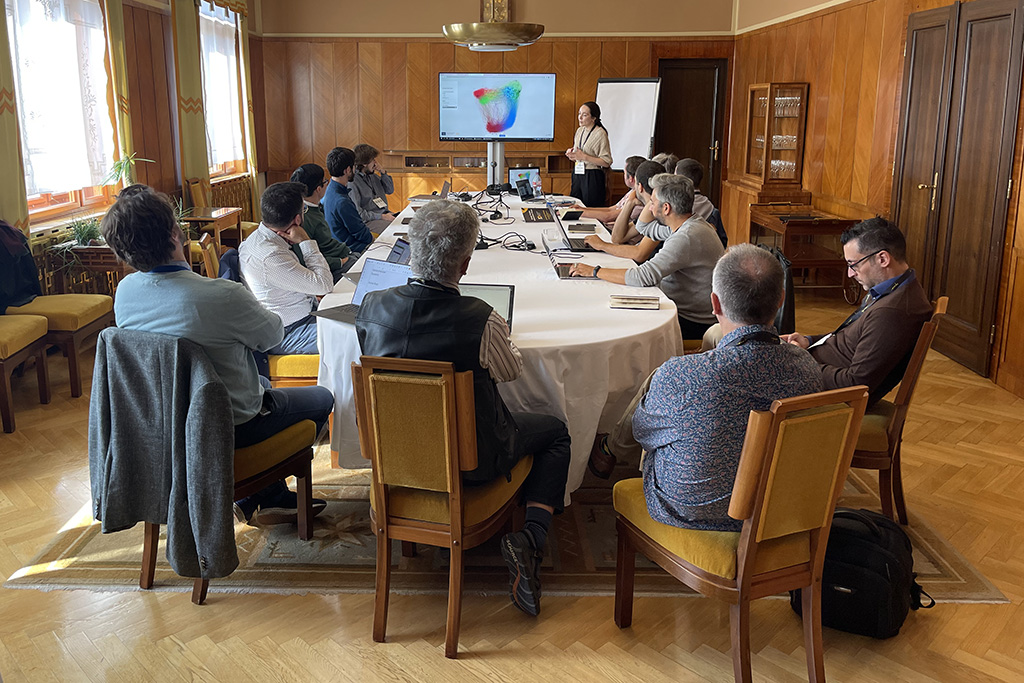
The meeting in the Czechoslovak capital of scientists, journalists and verification experts has served, precisely, to present for the first time the Code of Practices of the newly created Red European Fact-Finding Standards (EFCSN), which would be the European version of the IFCN. Both entities have the same requirements when joining them: comply with a code of principles which includes transparency of sources, methodology and organization, in addition to making checks outside the ideological bias of the author or publisher.
According to Carlos Echevarria, head of public policy at Maldita.es[3], it is about “going a little further, demanding more to achieve extra trust from the citizen and to achieve this it is necessary to make transparent what methodology is applied, how and when the money comes in.” For Echevarría, it is not a code of good intentions, but “an evaluation that must be passed every time.”
Hence the EFCSN code is supervised by two experts from outside the organization.
 An accreditation seal
It is striking that 44 fact-checking organizations from more than 30 countries across Europe have agreed to the call European Code of Standards for Independent Fact-Checking Organizations[4]. If you comply, they say, you have a “seal of membership in the network as evidence that you verify that it was done independently, ethically and with the commitment to serve the public interest.”
It seems logical that a own standard for these European countries without harming or having to compete in any way with the standard International.
It is not ruled out that European public institutions will demand in the coming months, or years, the Code that will begin to be put into practice from January of the year, as a condition for verification platforms based in Europe to be able to carry out their work. For the teacher Salaverria, This fact would make sense “because at this time let us not forget that this seal is being determined by an international organization based in the United States.”
It seems logical, then, that a standard of its own be developed for these European countries without harming or having to compete in any way with the international standard.
 Iberifier in Prague
From the point of view of Zdenek Hrib, Prague Mayor, “in current times the independence of journalism is more relevant than ever.” A statement shared by the main researcher at Iberifier, Ramon Salaverria, who adds that "the big difference between a digital platform and a journalistic medium is responsibility" while "without the veracity of the information, content disclosed by any media can be challenged and even sued judicially." This, curiously, does not happen in the case of digital platforms where content is good as long as it is shared a lot “almost independently of its truth or falsehood.”
Often, it is individual users who share false content, but it is the digital platforms that profit from this circumstance. For experts, the solution is to appeal to responsibility. They ask to be held responsible, perhaps not for the content that is shared (after all, it is the individual users themselves who produce it) but for “the algorithms that manage that content” because in many cases they give greater visibility to that content because they generate more business.
According to the professor Salaverria, it would be “sensible to look for a collaboration of classic journalism and this new generation of digital native media, among which are the verification agencies” fruit of the need to manage a large amount of contaminated content, fake content.
In fact, the philosophy of Google is that of being only a container for information in circulation and not being responsible for the contents, a statement that is “very advantageous, because it means that you take advantage of everything that is convenient for you and, on the other hand, you evade any responsibility for those aspects that are negative.”
Precisely, for Miguel Poiares Maduro, president of the Board of Directors of EDMO, “misinformation is not new but it has changed due to the impact of the networks”, so journalism must be rethought and, according to Professor Salaverría, it would be “sensible to seek a collaboration of classic journalism and this new generation of digital native media, among which are verification agencies” as a result of the need to manage a large amount of contaminated content, false content.
 Conclusion: tools, still pending
Hence, AI is essential in the task of selecting the enormous amount of information that reaches us in the newsrooms in the form of a constant bombardment through conventional channels, but, above all, social networks. Javier Cantón, researcher at the University of Granada, assures that “disinformation must be treated with the same weapons with which it was created.”
If we talk about weapons, the fact checkers present in Prague agree that the most common tools are Truly Media (paid) and INSIDE, open to individuals. According to Cantón, “it works well, but it is basic.” The Granada-based computer engineer and Iberifer researcher, Andrés Montoro, adds that “there are still no well-developed tools, although the synergy between engineers, fact-checkers and information professionals is important to create robust tools.”
At the level of Spain and Portugal, mapping of the technologies is still being done. While we wait for the creation of common tools, the deputy director of Pagella Política, in Italy, Tomaso Canetta, affirms that the IVERES project is a good idea... (IDMO (Italian Digital Media Observatory)).
Taking into account that It is not the role of journalists señalar que un contenido circulando por una determinada red social sea una falsedad, es razonable pensar que el papel de los fact checkers no es sustitutivo, sino complementario de los medios de comunicación para garantizar que toda la información que circula es sólida, que responde a criterios de veracidad y, por supuesto que debe ser atractiva[5]. Por ende, urge encontrar la manera de prototipar una herramienta de ayuda, en abierto y exenta de intereses comerciales, que solucione las necesidades de verificación para los profesionales de la comunicación. Y esto sólo puede liderarse desde el public service con alianzas entre entidades, compañías e instituciones.
[1] Universidad de Navarra (IP), Instituto Universitário de Lisboa - ISCTEUniversidad de Granada, Universidad Carlos III de Madrid, Universidad de Santiago de Compostela, Universidad Politécnica de Valencia, Universidad Politécnica de Madrid, Universidad Miguel Hernández de Elche, Universitat de València – Estudi General Universidade de Aveiro

Fundación Universitaria San Pablo CEU Universidad Rey Juan CarlosVerificadores y agencias de noticiasMaldita.esEFE VerificaVerificatPolígrafoLusa - Agência de Notícias de PortugalOtros centros de investigaciónReal Instituto ElcanoFECYTBarcelona Supercomputing Center - Centro Nacional de SupercomputaciónCentro Protocolar de Formação Profissional para Jornalistas - CenjorOberCom - Observatório da ComunicaçãoAssociação Literacia Para os Media e Jornalismo

[2] IVERES: Identificación, Verificación y Respuesta. El Estado democrático ante el reto de la desinformación interesada. Es un proyecto liderado por la Corporación de RTVE junto a la UAB y con la participación de UC3M, UGR y UPC. Su fin es desarrollar un sistema de verificación de información de dominio público en abierto y en lengua castellana.

[3] Maldita.es es se define como una fundación y un medio de comunicación sin ánimo de lucro, firmante verificado del Código de Principios de la RICF desde 2018, y actualmente forma parte del centro Iberifier EDMO para España y Portugal.

[4] Presentarlo en el CEDMO de Praga, ante la presencia de representantes de la UE, ha tenido todo su sentido teniendo en cuenta que la organización apoya a la comunidad europea en el desarrollo de directrices como la Convocatoria de Integridad de los Medios Sociales de la Comisión Europea (Call of Integrity of Social Media) liderada por 6 organizaciones europeas: Fundación Maldita.es (Spain), AFP (France), CORRECTIV (Germany), DEMAGOG (Poland), Pagella Politica / Facta (Italy) and EU DisinfoLab (Bélgica).

[5] Esta necesidad mutua la puso también encima de la mesa en Praga, Alexander Stubb, Director European University Institute, quien dijo que “el CEDMO está luchando contra la desinformación porque si no tuviéramos fact checkers no tendríamos Democracia”.
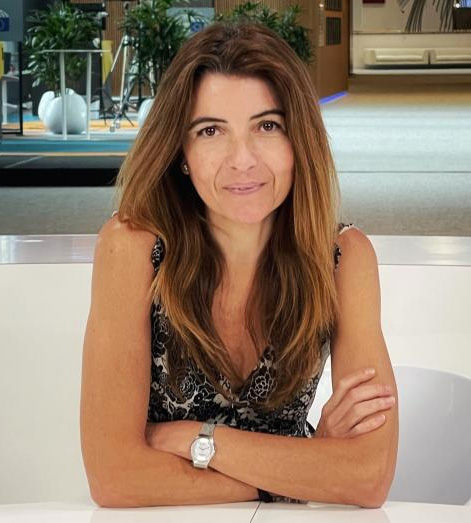
Montserrat Rigall
Periodista de RTVE.
Did you like this article?
Subscribe to our NEWSLETTER and you won't miss anything.
Related articles
 Without people there is no intelligence (or artificial) in broadcasting
 The RTVE-UAB Chair publishes the 6th report on Artificial Intelligence and Journalism
 Limecraft proposes the concept of Media Intelligence versus Artificial Intelligence
 Intelligence and Artificial AI. Unstoppable and Active AI. Let's Try to Take Advantage of It AI
 The Television Academy addresses the main audiovisual challenges in the face of Artificial Intelligence
 RTVE Institute promotes a new master's degree in Journalism and Artificial Intelligence
 RTVE launches 'Hiperia', a format created 100% with artificial intelligence
 VSN incorporates Artificial Intelligence into the RTVE Documentary Fund
 Making the Sustainable Development Goals visible in RTVE with Artificial Intelligence
 2020, a year of Artificial Intelligence in RTVE Innovation
 TVE's news programs implement artificial intelligence with Etiqmedia and Aicox
 The IV OI² Conference will reflect on artificial intelligence applied to journalism
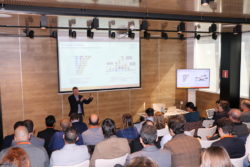 'AI Meets Media Forum': Ooyala and Microsoft bring together the media industry to face the challenge of artificial intelligence
 CNN will promote alliances with media throughout Europe