





CEI (Coruña Immersive Studio): the technological keys of the last large virtual production set
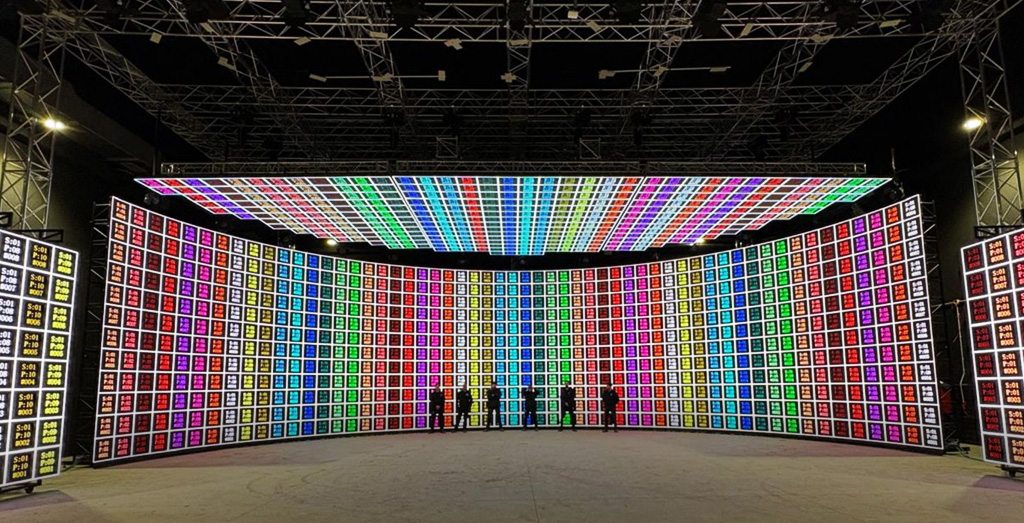

Driven by the Council of A Coruña and managed by Pedralonga Estudios, a gigantic joint venture made up of 10 key companies in the Galician audiovisual ecosystem, CEI (Coruña Estudio Immersivo) arrives to offer a virtual production set with the latest technological solutions to Spanish and international production companies.
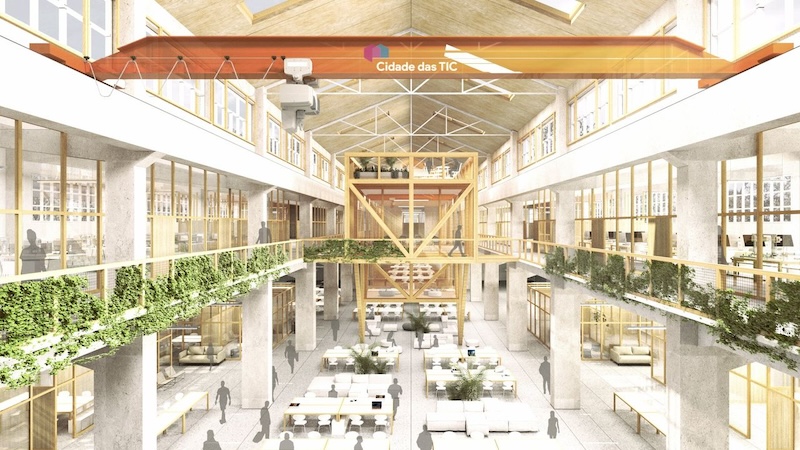
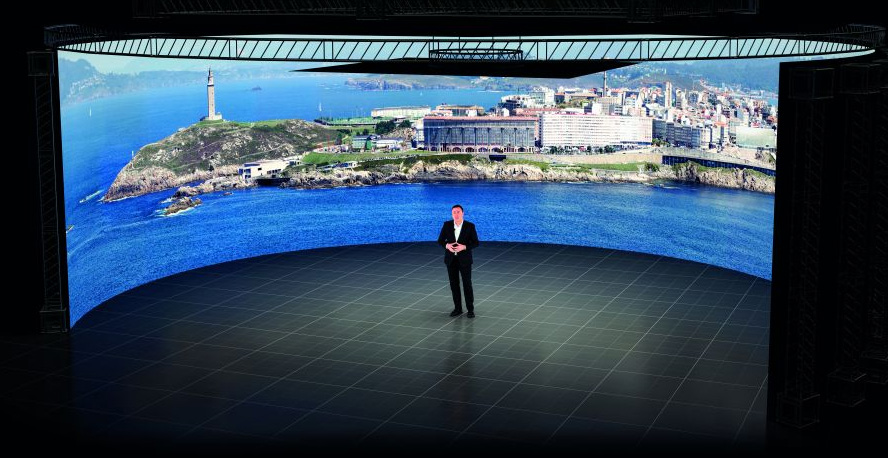
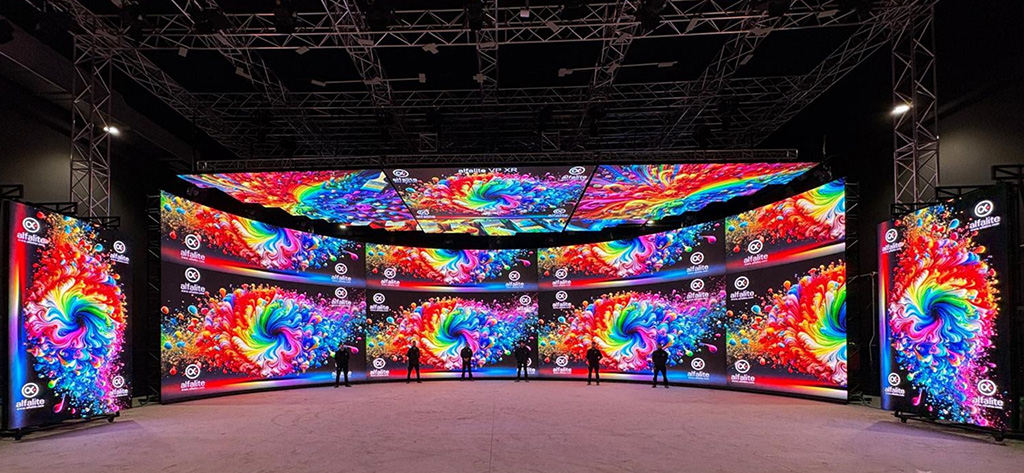
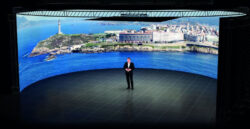
The countdown is almost over. February It will be the month in which it officially starts Coruña Immersive Study (CEI), a mammoth project defined as “the largest set of virtual production of Spain.” Located in the Cidade das ICT of A Coruña, this study of more than 2.000 m² aims to consolidate Galicia as a reference in the international audiovisual industry with a LED surface of 28 x 6 meters as the absolute protagonist.
This project, which has involved an investment of nearly 9 million euros co-financed between the Deputation and the Government of Spain, will be managed by a private joint venture: Pedralonga Studios, a company incorporated in 2024 and owned by Cluster Audiovisual Galego and by companies in the audiovisual sector such as Portocabo, TEX45 Producciones, Vaca Films, Voz Audiovisual, Congo Producciones, Zenit Television, Siete Media Audiovisual Productions, Undodez, Avendaño Estudio and Centro de Estudios Marcote. This company will be in charge of managing, exploiting, promoting and positioning this initiative for a period of 20 years, extendable for another 5 more.
Manuel Meijide, director of Digital Worlds Closely related to the CEI project, it explains the philosophy, objectives and technique of an infrastructure created to position itself as a reference in the European panorama of the most avant-garde production.
CEI: the culmination of the momentum of the Galician industry
The news was made public in December 2022 by the Council of A Coruña. As a result of the administration's renewed push for the ICT City, a Galician hub of creativity and technology, the construction of a virtual production studio was announced. In 2023, was awarded the construction of space and, once the facilities were consolidated, the technological integration by the hand of TSA (Telefónica Audiovisual Services) with the collaboration of Tangram.
Meijide, who does not believe in “coincidences”, sets the origen conceptual of this strategy at the beginning of the new millennium, when the Coruña-based and now defunct Dygra Films marked a milestone in Spanish three-dimensional animation with the creation of The animated forest (2001). This project, followed by numerous other initiatives in the fields of the avant-garde, demonstrates a commitment to innovation which has been reinforced in recent years with the promotion of production companies especially close to the new television fiction (Portocabo), veterans who continue to contribute talent to the spanish cinematography (Vaca Films) o pioneering European initiatives as Europe's first state artificial intelligence agency (AESIA). In the words of the person in charge of Mundos Digitales: “When you start to put together a part of specialized training, and on the other hand there is a strong, robust and consolidated business fabric, administrations make efforts to go one step further.”
Valentin González Formoso, president of the Deputation of Coruña, confirmed that currently audiovisual represents the 28% of the cultural industry in Galicia, adding more than 4.500 jobs, 411 million euros annual in billing and more than 707 companies. Given this, and taking reference to both state initiatives and the Spain Audiovisual Hub, such as private hubs of the likes of Pinewood, the decision was made to complete the Cidade das ICT with a study that, for Meijide, represents “the icing on the cake” of a work that has been carried out for more than two decades.
Galicia, future hub of Spanish production?
The consolidation of the industrial fabric of production stands as one of the most important objectives of multiple Spanish initiatives. From the City of Light from Alicante, to Madrid Content City of the capital, seek to consolidate a set of services around business collaboration nodes.
In the case of the Coruña Estudio Immersivo, its location in the Cidade das TIC is not trivial: "Right now, with digital creation, new business models and new work teams, production and creation have to go hand in hand. When you add, you not only add, but multiply"Meijide, in this regard, confirms that companies in the food sector VFX, animation or virtual production itself They are considering settling in Galicia.
This differentiating element, which seeks to offer not only different production services, but also digital creation and post-production, is complemented by a privileged location which allows promoting the arrival of national and international productions. "The set is four minutes from the center of A Coruña, and another four minutes from the airport. In that sense, everything is thought of globally so that production can be done in the city," comments the head of Mundos Digitales, aware that, given the strong competition from Canary Islands and Basque Country as production nodes, Galicia must seek differentiating elements.
Pedralonga Studies: collaboration against smallholding
At the end of 2024 it was made public that Pedralonga Estudios would be in charge of the management and exploitation of the CEI virtual production center. Composed of a dozen key companies in the Galician audiovisual sector, its mission also includes consolidating milestones such as its positioning in the “national and international market”, its “sustainable growth”, are “continuous innovation” and guarantee its “operability and optimal functioning”.
For Meijide, this collaborative spirit is one of the keys that gives “strength to the project” and will ultimately benefit the Galician and Spanish audiovisual sector. "In Galicia we already have a very important territorial smallholding, and what we sought was to avoid smallholding when working. When you have ambitious and strategic projects, with a vision of more than a decade, it is important to promote collaborative initiatives," he comments.
Currently, Pedralonga Estudios is in the final phases of defining its structure to coordinate the actions of this joint initiative, as well as to offer the industry all the opportunities presented by the CEI.
CEI technology
To conform Coruña Immersive Study, the Deputation of Coruña and the Government of Spain have opted to carry out a ambitious investment of 9 million euros (2 more than initially budgeted) to bet on the latest technological innovations in the field of virtual sets. This injection, apart from covering the infrastructure of screens and control common in this type of environment, it also combines cameras, optics or network infrastructure.
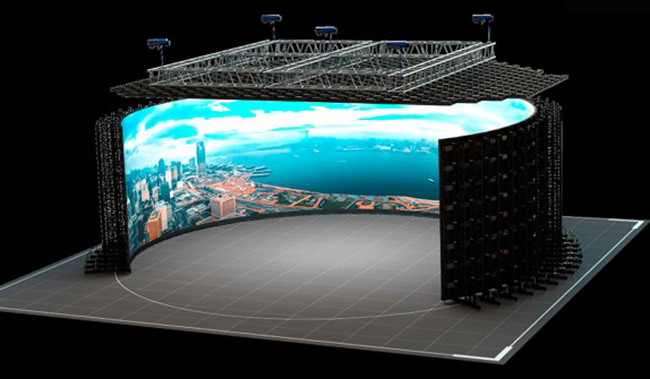
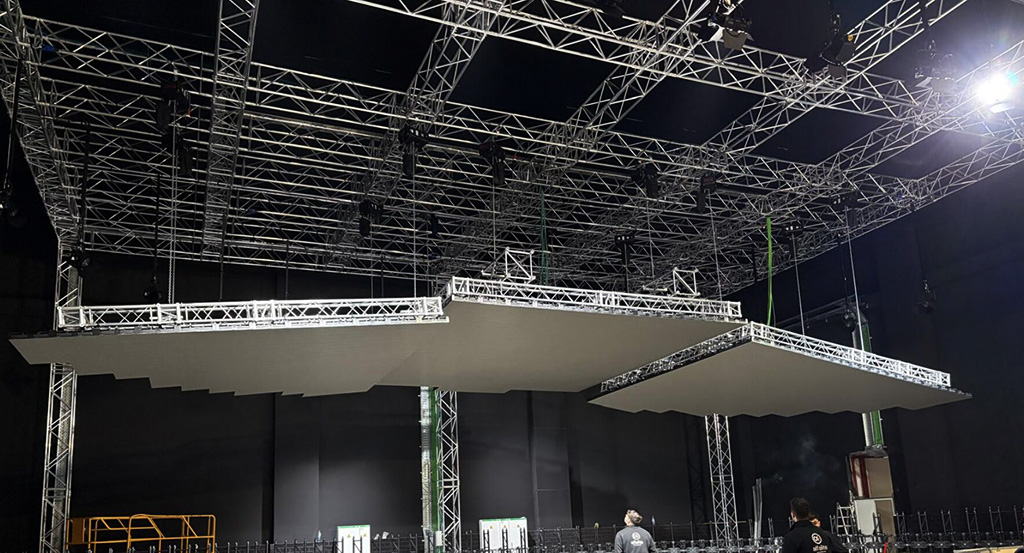
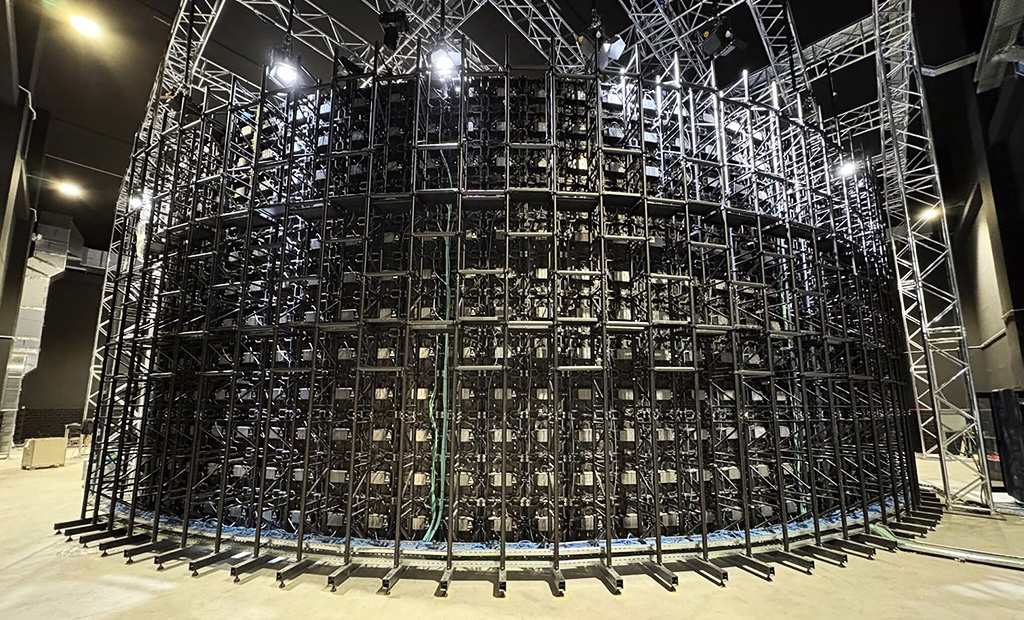 The main protagonist of this study is a led wall of 28 x 6 meters, with panels Alfalite Modularpix Pro 1.9 1/16s with a pixel pitch 1.9. In total, 672 0.5 x 0.5 meter modules have just made up a total resolution of 14,336 x 3072 pixels. This main support is accompanied by a ceiling screen (Modularpix Pro 3.9, with a pixel pitch of 3.9 and 5,000 candelas per square meter) and two mobile totems (Modularpix Pro 2.6 1/12s pixel pitch of 2.6 and 1,550 candelas per square meter) whose function is to provide lighting and reflections.
The screens are connected to 10 processors Novastar MX40 that receive SDI video signals from the equipment and send them to the LED screens. As for the tracking, has opted for Pixotope Vision, a system based on software installed on a computer HP Z4 that communicates with sensors located in the camera, collecting data from the lens and evaluating its movement based on the infrared capture of the 90 trackers placed in the truss.
 Pixotope has a double role in CEI with its graphic system XR edition, which fulfills two functions. On the one hand, 5 HP Z4 computers equipped with the Nvidia RTX 3090 and the solution AJA Corner 5 for sending the 3D scenery to led wall and sending images to ceiling displays and totems. In this way, four of the teams will send eight 4K signals to fill the surface, with the software in charge of “stitching” each signal, offering fluid and synchronous movement. The fifth team will send two separate signals to represent the lighting on the ceiling and totems. Likewise, there is another unit with the same characteristics connected to the camera whose mission is to capture the entire scene.
CEI's great technological commitment is completed with a camera ARRI Alexa Mini LF, accompanied by six prime optics Canon ranging from 14 mm to 135 mm; lighting composed of 8 Ultrapanel 30 y 20 Dayled fresnel 2000 Pro Po of Lupo, connected to a control table LightShark manageable from the table itself or on an iPad; a network communication established around 3 different segments of electronics Cisco, to separate the control network and internet, the graphics communications network and the tracking communications network; a 40x40 channel matrix Blackmagic to be able to duplicate or derive the signals, and a chest with cards for synchronization, time code and signal distribution.
First steps, in February 2025
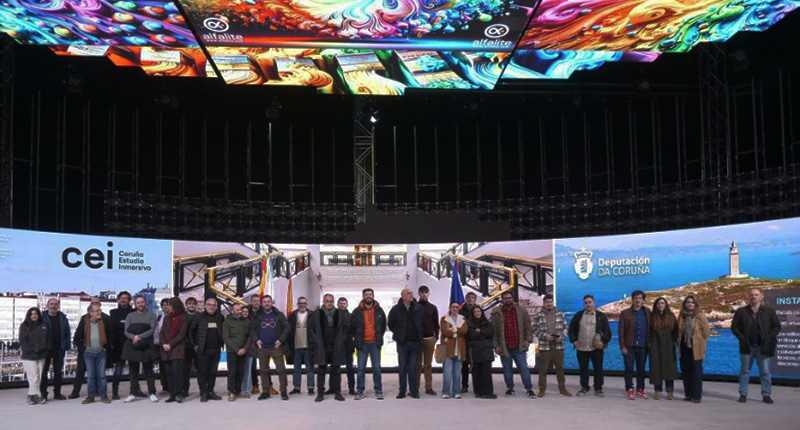
Currently, CEI is taking its final steps before an inauguration that will take place throughout February 2025. The technology is already integrated, and the TSA They are completing the integration tests of all the systems and training the staff who will be in charge of managing the set on a day-to-day basis.
There is already confirmed projects that they are going to begin to take advantage of this infrastructure, but these will be revealed soon. Some of them will benefit from the full studio offer, with production support, while others will opt for more complex production models using their own cameras. Above all, the objective is to offer all kinds of opportunities to the different production companies so that they can face all their projects: "For years we have had to be in line to be able to have the Pinewood available and go to film. Now we can do it here and offer an alternative to both national and international production," says Meijide.
In 2026 y 2027, the environment of the Cidade das ICT will continue to grow with new infrastructure, like a adjacent chroma set with a surface of 4,000 square meters that will share with the CEI facilities such as post-production rooms, dressing rooms and other complementary services. For Meijide, this is just the beginning: "The set is going to be the excuse, not the end. It is necessary, but from there what has to grow is the sector. The studies can be changing and evolve, but what is necessary to highlight is how it can help consolidate the sector, always supported by training and administration. (...) As Severiano Ballesteros would say, "the more I train, the luckier I am." And that is what happens here: we are starting to see the fruits after many complicated years”.
A report by Sergio Julián Gómez
Did you like this article?
Subscribe to our NEWSLETTER and you won't miss anything.
Related articles
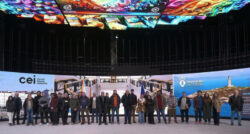 The Galician Audiovisual Cluster opens the doors of the Coruña Estudio Immersive (CEI) to its members
 Pedralonga Estudios exposes the advantages of Coruña to the European industry in San Sebastián Immersive Study
 The Galician Audiovisual Cluster reaffirms its commitment to I+P and the new Coruña Immersive Studio (CEI)
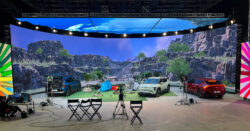 Coruña Estudio Immersivo (CEI) opens its doors with 1,152 Alfalite VP XR LED panels
 Pedralonga Estudios will manage Coruña Estudio Immersivo (CEI), the “largest virtual production set in Spain”
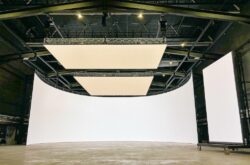 ARRI, Video Cine Import and ROE Visual launch a virtual production set in Gran Canaria
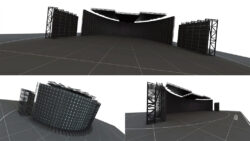 TSA will integrate the VPxR virtual production center of the Cidade das TIC (A Coruña)
 Studio 26miles launches immersive studio with Genelec equipment to improve its broadcast production
 The Cabildo of Gran Canaria puts out to tender a virtual extended reality (XR) study
 INFiLED returns to ISE 2023 with a virtual production and extended reality studio
 Tangram Solutions will give the keys to virtual production and Unreal Engine 5 at Weird Market
 The technological keys to Mediapro's 9:16 production for LaLiga and TikTok
 AJA gives the keys to Bridge NDI 3G, its latest NDI/SDI converter
 Mo-Sys transforms a radio studio into a virtual television set