





Delayed consumption, key for fiction content, grows 20% in three years
Un 91% de los individuos que consumen diferido en 2019 reciben TV de pago. Una media diaria de 3,5 millones de espectadores han consumido algún contenido en diferido durante 2019. Más de la mitad del visionado en diferido se hace entre el mismo día y el día siguiente de la emisión lineal.

El consumo de contenidos televisivos en diferido se encuentra dentro de una tendencia ascendente en los últimos 4 años, al contrario de lo que ocurre con el visionado de televisión lineal. Los espectadores que han visto al menos un minuto de audiencia en diferido ha crecido significativamente desde que Kantar Media comenzó a medir este consumo en febrero de 2015. Según el análisis realizado por GECA, el aumento de este tipo de consumo ha sido constante año a año, llegando a incrementarse un 20% entre 2017 y 2019.
Varios factores influyen en el aumento progresivo de este tipo de consumo. Los cambios en los hábitos de los espectadores es uno de estos factores, y todo hace indicar que el diferido irá ganando más peso en los próximos años en cierto tipo de contenidos como la ficción. El progresivo retraso en la hora de inicio de los contenidos estrella del prime time en las principales cadenas es otro factor que favorece esta actividad, como ya quedó patente en el primer número del Informe GECA. Un tercer factor es el aumento, por sexto año consecutivo, de la televisión de pago en España. La creciente oferta de operadores, unido a la comercialización de paquetes que combinan la televisión con otros servicios como el teléfono o internet y al uso de claves compartidas, ha favorecido que en la actualidad el 48,3% de los hogares españoles que consumen televisión reciban pago.
La televisión de pago, un factor clave
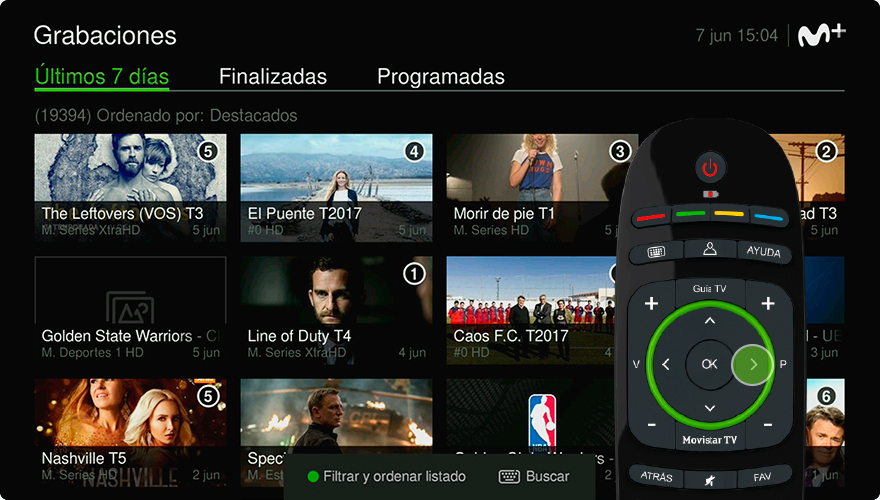
El porcentaje de hogares españoles con capacidad para ver contenido diferido en 2019 ya ha alcanzado el 87%, lo que supone una subida de 34,5 puntos con respecto a 2012, cuando se empezó a medir esta variable. Este incremento deriva del aumento de los suscriptores de pago, con la consiguiente implementación en más hogares de descodificadores con disco duro y con la función ‘Últimos 7 días’, y de la popularización de las Smart TV’s y los dispositivos para reproducir aplicaciones de contenido bajo demanda.
A pesar de esta tendencia ascendente, el análisis de GECA pone de manifiesto que este tipo de visionado representa todavía una pequeña parte del consumo total de minutos. De los 214 minutos de media que un español dedica a ver la TV al día en 2019, solo 7 minutos pertenecen a consumo de televisión en diferido. Esta cifra sube hasta los 9 minutos en el target de 45 a 64 años
Si estos minutos se traducen a contactos (visionados de al menos un minuto) observamos que, durante 2019, una media de 3,5 millones de espectadores ha consumido diariamente algún contenido en diferido. En el periodo que transcurre entre enero y septiembre de 2019 el dato ha aumentado un 6% con respecto al mismo periodo del año 2018. Según se extrae de la investigación de GECA, un 91% de estos contactos provienen de espectadores que reciben en sus hogares alguna plataforma de pago.
En el estudio de estos contactos por targets se evidencia que las mayores diferencias en este tipo de visionado se encuentran en las segmentaciones por grupos de edad. Los menores de 45 años acaparan un 48% del consumo diferido frente al 42% que estos espectadores representan en el consumo lineal. En el polo opuesto se sitúan los mayores de 65 años, que continúan consumiendo televisión lineal (24%) de forma mucho más intensa que en diferido (15%).
Por Comunidades Autónomas, Madrid es el territorio puntero en consumo diferido con un 19% del total, seguido por Andalucía (16,5%) Cataluña (16%). Esto supone un cambio de tendencia con respecto al reparto de la audiencia lineal, en la cual lidera Andalucía con un 18% por delante de Cataluña (16%) y Madrid (13%).
Al desglosar el visionado por días de la semana, el fin de semana presenta el mayor número de contactos del diferido en todas las franjas excepto en el prime time. Parece lógico pensar que la mayor cantidad de consumo de timeshift en fin de semana durante diversas franjas se debe al aumento del tiempo de ocio durante esos días. El consumo se hace de forma más común los domingos, y va ascendiendo gradualmente hasta llegar a su punto álgido en prime time.
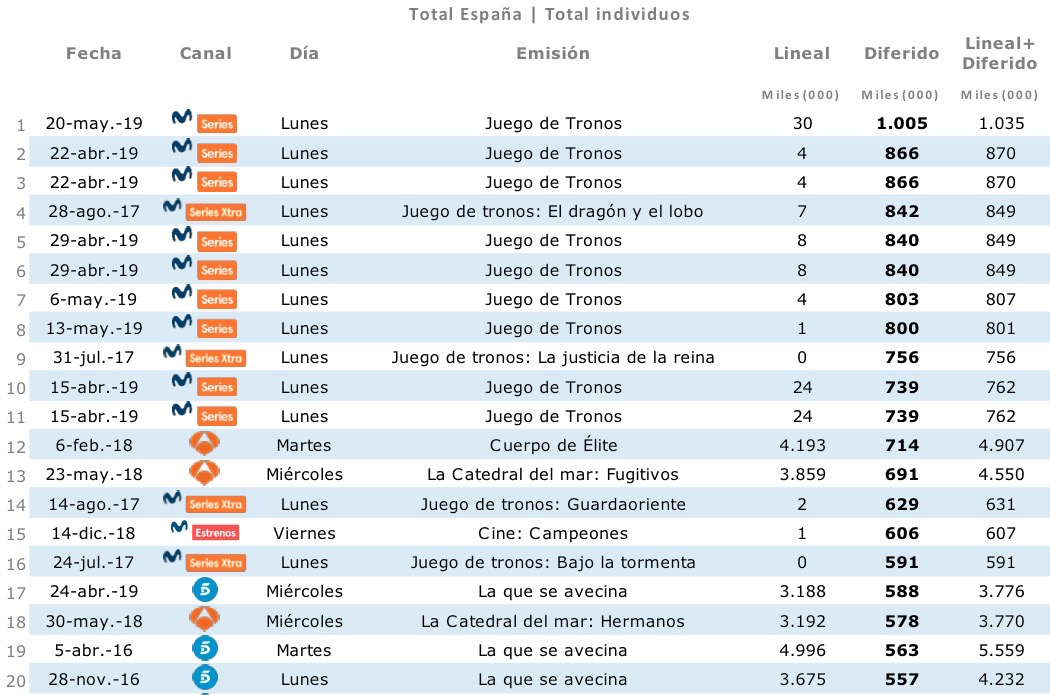
En 2019 se da un caso particular con el consumo diferido en el prime time de los lunes, día en el que se ha producido el gran fenómeno de Game of Thrones. Esta serie se emitía en lineal en la madrugada del domingo al lunes en Movistar Series, por lo que su visionado mayoritario parece hacerse hecho en diferido la noche del lunes.
El cambio en el modelo de visionado también trae diferencias en cómo se consumen los contenidos televisivos, tal y como se desprende del análisis realizado por GECA. La posibilidad de poder elegir cuándo se ve un contenido trae consigo que se consuma más en pareja o de manera grupal que cuando la televisión se ve en lineal. En todos los targets por sexo y edad el consumo individual de contenidos disminuye cuando éste es en diferido. En los targets más jóvenes (4-24 años) aumenta el consumo grupal, mientras que en los mayores de 25 lo que más gana es el consumo en pareja cuando nos centramos en el consumo fuera del horario de emisión.

La ficción: el género preferido en diferido
Observando las 30 emisiones más vistas en diferido desde que se comenzó a medir en febrero 2015, se extrae que las 24 primeras corresponden al género de ficción. Más concretamente, la tipología favorita de los espectadores que usan esta opción de visionado es el de las series.
Si no centramos en la temporada actual (2019/20, hasta el 15 de octubre), series como Malacca y I'm alive se posicionan en lo más alto del ranking con una aportación del diferido que llega a superar el 20%, lo que refleja la tendencia al alza de este tipo de consumo.
En el informe de GECA también se pueden apreciar notables diferencias en lo que representa el consumo diferido sobre la audiencia total de la ficción entre las diferentes tipologías de canales. Así, mientras que entre las cadenas generalistas el incremento no supera el 20% de la audiencia lineal, en las Temáticas TDT este llega a representar hasta el 50% de la audiencia total y en los canales de pago llega a convertirse en el tipo de consumo mayoritario.
En lo que respecta a los formatos de entretenimiento, los realities culinarios son los que más crecimiento experimentan al sumarles el consumo diferido. Formatos como Masterchef o Sewing masters son los más influidos por este comportamiento, condicionados posiblemente por su perfil más familiar. El aumento de audiencia de estos programas de prime time -al incluir el consumo fuera de su horario de emisión- suele rondar entre el 15% y el 20%, según el estudio llevado a cabo por GECA.
Considerando que se mide el consumo en diferido hasta 7 días después de la emisión lineal, cabe destacar que casi la mitad del total de visionados en ficción se produce entre el mismo día de emisión o el día siguiente. Por ejemplo, en las series de cadenas en abierto como La Caza Monteperdido o The one that is coming se observa que el consumo el día después es ligeramente superior al del mismo día. Son series con una hora de inicio tardía (22:45 horas), por lo que tiene sentido que la mayoría del consumo se haga el día después. El caso de Game of Thrones esta temporada es más particular; una serie cuyo primer pase se emitía en la madrugada del domingo al lunes y con una gran expectación social. Estos dos factores favorecen que el 65% de su consumo en diferido se hiciera el mismo lunes.
Did you like this article?
Subscribe to our NEWSLETTER and you won't miss anything.
Related articles
 Sennheiser celebrates 80 years as a key agent for innovation in audio
 Max's sports offering grows with the PGA Tour, a key circuit for golf fans
 El consumo de televisión cae un 9% en 2023, manteniéndose por encima de las tres horas
 Liferay advances three predictions on digital experience for the coming years
 8K is already key for the content of BBC Studios' natural history division
 First 5G Multicast experience with 4K content live and recorded from Barcelona
 GECA cierra un acuerdo con Parrot Analytics para análisis de tendencias de consumo de contenidos
 Récord histórico de ‘Cuerpo de élite’ en consumo en diferido
 Conecta Fiction: three intense days dedicated to promoting the co-production of fiction for television between Europe and America
 The Junta de Andalucía allocates 418.5 million to Canal Sur for the next three years
 Online TV consumption grows at a rate of 388%
 Second EGM wave: the number of moviegoers grows and radio and television consumption decreases
Content consumption on smart televisions grows by 18%
Second EGM wave: the number of moviegoers grows and radio and television consumption decreases
Content consumption on smart televisions grows by 18%
 ITV relies on Altabox to manage its digital signage in the next three years