





Event Cinema: the last alternative for cinemas to guarantee their survival?
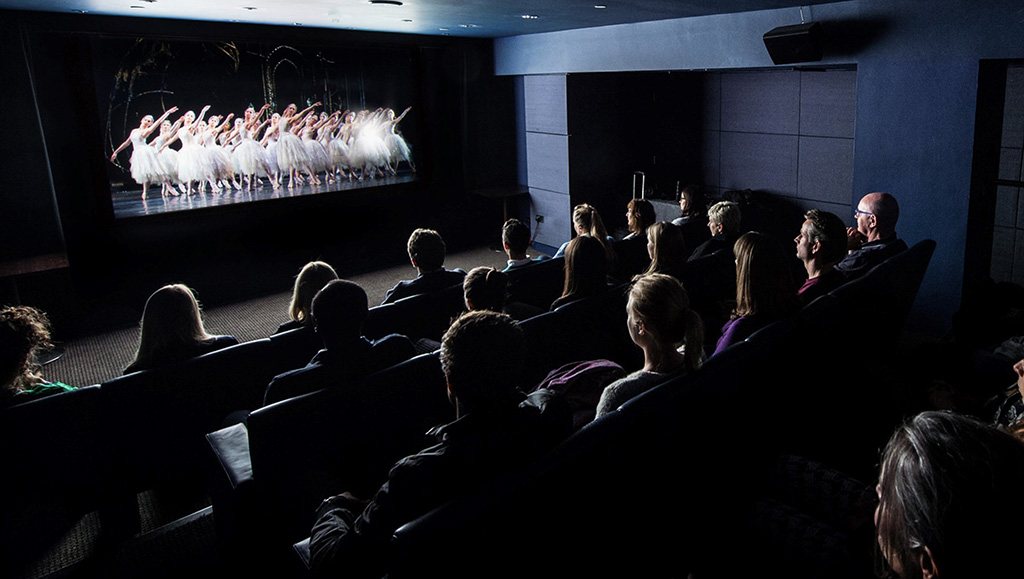

María Cazorla, head of programming and cinemas at the distributor Digital Version, allows you to know in detail the concept Event Cinema, which seeks to provide new uses for movie theaters to create experiences around alternative programming such as concerts, plays, series or meetings.
Before the changes in the consumption of audiovisual content on the part of viewers, production companies and distributors address the issue of film exhibition from all kinds of perspectives. While some voices claim the cultural relevance of the event and its value as a business model, as demonstrated by the Bowfinger success story, others recognize that they barely represent a small percentage of total profits, focused on the preferred exhibition windows on platforms.
Before an audience that does not fill the large multiplexes in our country except with large film-loving events, what the phenomenon could have been like Barbenheimer of the year 2023 or already almost extinct attracting capacity of the great superhero movies, there is a gap in the market to once again attract society around other types of events: concerts, operas and family events. The value congregator of cinema, that small dark box that provides a collective experience, manifests itself in a moment of mass consumption via social channels and is claimed with a exclusive programming, defined by its temporality and by the value experiential and live.
It is in this field that it operates Digital Version, a distributor based in Valencia that for more than 15 years has opted for Event Cinema, or as they themselves define it, “experiences that transcend the everyday” and that take place in movie theaters. Since its inception, the result of a reconversion of the Proyecson company, it has led to 645 cinemas more than 600 contents which cover opera, ballet, zarzuela, concerts, documentaries or fictional content differentiated by the value of the anniversary or event. Maria Cazorla, from the programming and cinemas team, allows us to know the keys to this type of use of movie theaters, their reception by Spanish viewers and all the possibilities it presents in a constantly evolving market.
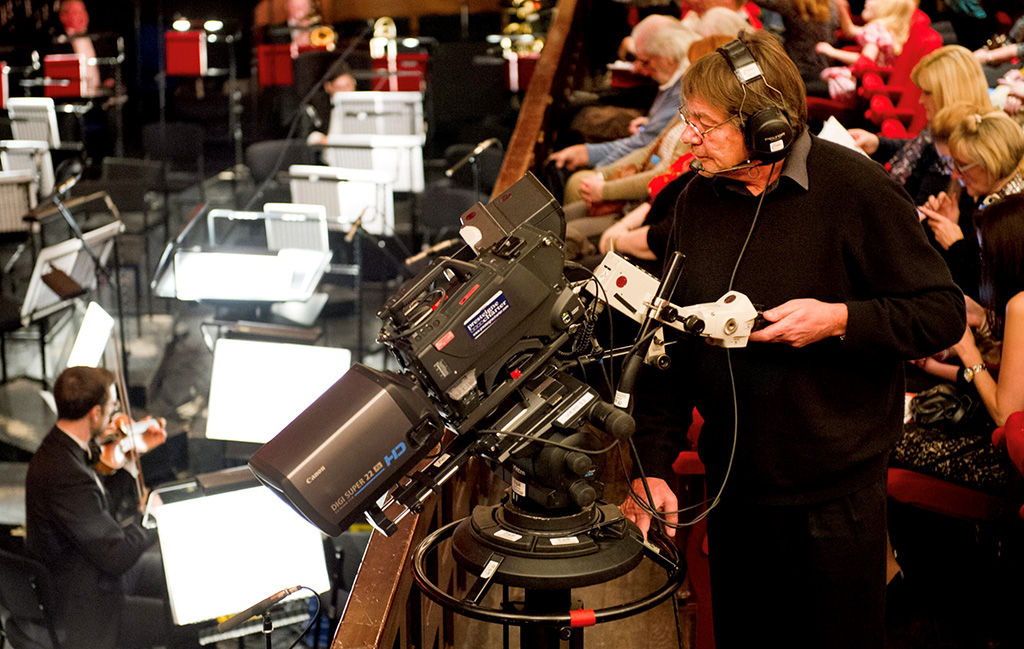
Event Cinema: an origin in classical terrain
He Event Cinema took its first steps at the beginning of the millennium under the impulse of the great theaters of opera or ballet. These agents, accompanied by concert promoters, saw that it could be interesting to broadcast live some of the largest events with the aim of giving new visibility to their productions and, in the process, “trade marketing” in other latitudes, as Cazorla explains. In this way, institutions such as the Metropolitan Opera of New York, or later the Royal Opera House of London, began to implement live broadcast workflows that combined broadcast production with live and satellite distribution to selected cinemas, a workflow that evolves step by step in the face of a exclusive streaming model.
This trend has reached our days, with great institutions of classical opera and theater, such as the Royal Theater or the Grand Theater of the Liceu in our country, with its own content production and distribution divisions. “Today it will be broadcast in cinemas throughout Spain Turandot from the Royal Opera House in Covent Garden," says Cazorla at the time of the interview, "and I will be sitting in Valencia at 8:15 p.m. watching something that would practically be unfeasible unless I had a lot of money to be able to take a plane and enjoy a ticket of about 400 pounds."
For Digital Version, this democratization of culture from the movie theaters has been one of its great objectives. The evolution, however, has been far from simple. A few brave people who opted for this type of proposals 15 years ago have been joined little by little by more and more cinemas that have allowed the distributor to reach our days and achieve milestones such as programming live content in 198 cinemas throughout Spain simultaneously. But that is just one of the expressions of the Event Cinema.
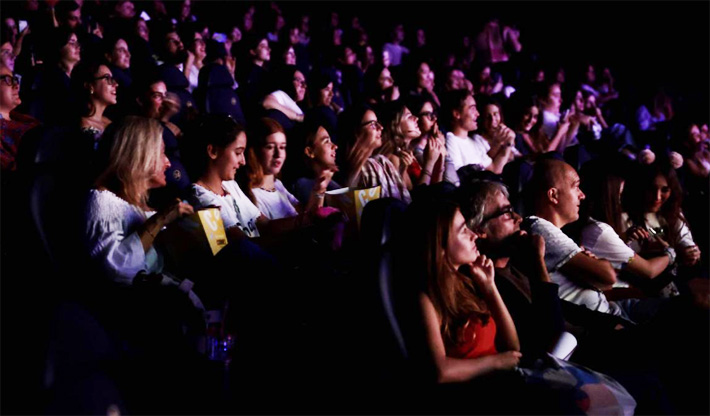
Exclusivity and encounter, keys to success
This type of alternative film content requires a very specific approach to achieve success. For this, marketing teams work hand in hand with programming with the aim of creating an unavoidable event, supported by pillars such as live, exclusivity, interaction or collectivity. As Cazorla explains: "The opposite happens to me than to other distributors, who have to ask that their film be shown in as many cinemas as possible throughout Spain. Our job involves analyzing very well where that event is going to be shown."
“Los displays with get angry with me because I mark a top to concerts. I don't want it to be cannibalize, but that they are located and geolocated very good to be able gather the public”.
To do this, the Digital Version team seeks to “give dimension to content” so that it is not just another projection, but rather a “meeting of people who share cultural tastes and interests. As examples, the person in charge of the distributor shows the screening with a discussion of the documentary Chronicle Team, which has reached several cinemas in the center of Valencia, but only a few Spanish cities. Another case of greater scope is the concert pass Pink Floyd: Live at Pompeii of 1972 in only 80 cinemas throughout Spain: "The exhibitors get angry with me because I put a limit on concerts. I don't want them to be cannibalized, but rather for them to be located and geolocated very well to be able to gather the public."
In this regard, the distributor does not hesitate to make external alliances to the world of cinema to expand the scope of its programming. In this way, Digital Version has closed alliances with Sony Music, which is the record company that manages the catalog of the legendary British band, since "all possible alliances" are necessary, as well as those communication channels "not usual to the world of cinema." “You have to do all the general marketing work, but also much more localized work,” he explains.
Live music: the case of Taylor Swift
Before the pandemic, opera screenings were the 80% of Digital Version revenues. A certainly elderly audience attended the theaters in their best clothes to attend these events, thus visiting a particular theater within their favorite movie theater. Now, that number has fallen to 30%Cazorla acknowledges: “The decline has been brutal, since there have been changes in cultural consumption habits on the part of the older public.”
"He Movistar Arena are filming all the events because they have many screens. And the same could be done send via streaming to all the rooms we want depending on the artist dimension”.
Given this context, and seeking both to take advantage of the opportunities offered by the content and to achieve the rejuvenation of the public, Digital Version has found in the concerts a new niche. Aside from projections like that of Pink Floyd, the company identifies success in the name itself Taylor Swift, whose film The Eras Tour It exceeded 228 million euros at the box office in theaters around the world. In Spain, this concert film premiered in 222 screens, was screened for more than a month, had a higher than average price at the request of the American artist (€13.13), became number one at the box office and It raised more than €1.7 million: “We anticipated it because we knew it was going to be a huge global movement,” says the Digital Version professional, thus justifying the decision to program it for several weeks in dozens of cinemas, thus escaping the concept of exclusivity.
This commitment to screening concerts in cinemas could multiply in the future if the distributor's talks with the distributor come to fruition. Movistar Arena, Madrid pavilion that hosts the main tours of national and international artists: "They are already filming all the events because they have many screens. And the same could be send via streaming to all the rooms we want depending on the size of the artist. What is the added value? "Let it be projected at the same time that the concert is taking place."
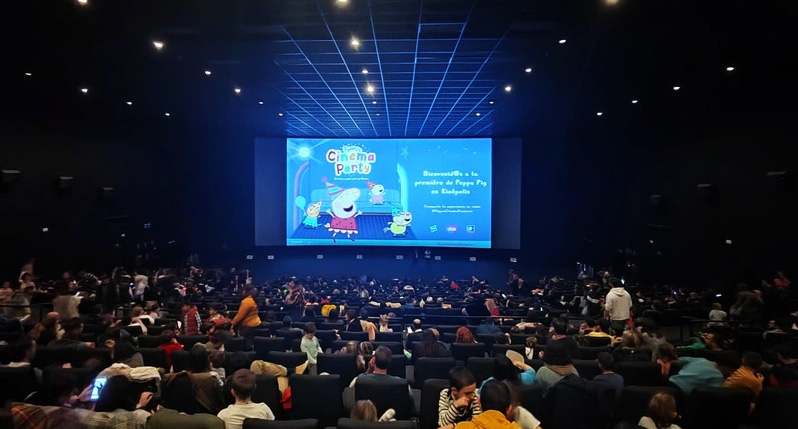
The opportunities of family event cinema
Apart from the consolidated route of concerts, Cazorla identifies in the family content great opportunities for the market Event Cinema. These types of projections, conceptualized as great events for the whole family with an audiovisual framework in the background, allow the little ones in the house to gather together to experience a collective experience away from the usual codes of the movie theater.
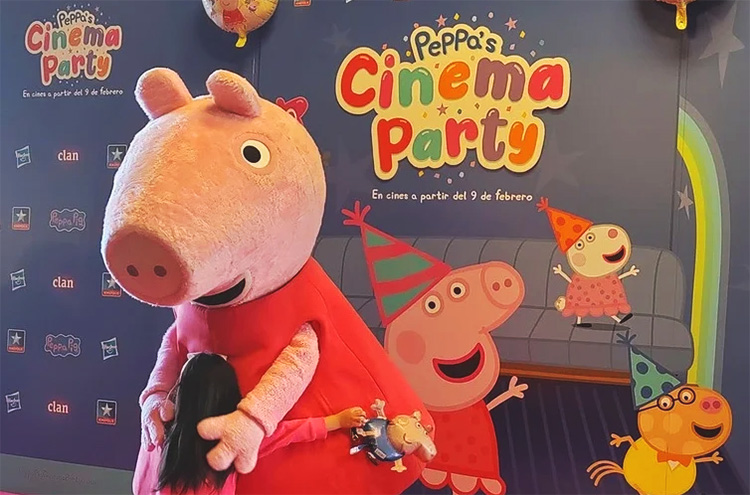 In 2024, Versión Digital dedicated itself to this field with the Peppa Pig Cinema Party, a meeting in which several chapters of the exclusive series with interaction elements under the pretext of celebrating the birthday of the most famous pig in global animation. Now, this event, which was a complete success, is repeated with another great event: the mom pregnancy from Peppa Pig. "Nine episodes are going to be screened. The first, in which the news was revealed, has already been shown on television around the world. The rest are exclusive to theaters. The expectation is tremendous," Cazorla said.

The absence of sport in event cinema
Aside from a handful of experiences more than a decade ago, as well as the projections of the big World Cup matches, football has barely gone through the movie theaters. Although one might think that these sporting events, often associated with collective consumption, could have a place in venues, the reality is that it is a complex issue both for management rights as in response to the audiences.
“RTVE does not allow charging an entrance fee, since they allow the cinemas project the content, but they do not transfer the rights. What they do take is the 50% collection of drinks”.
Cazorla explains that, when acquiring the exhibition rights for football competitions, these include clauses in which its use is limited to television, excluding exhibition in movie theaters. Likewise, the “gathering event” was not such after several experiences: “What happens in a bar when there is a soccer game? You are with a beer next to you, all commenting with your colleagues, you can get up, point to the referee... That in a cinema, obviously, cannot be done; nor drink alcohol, although it is true that in some cinemas it is allowed.”
RTVE is possibly the only broadcaster today that, apart from series previews, uses movie theaters to participate in the Event Cinema. Specifically, Spanish public radio and television projects Eurovision and some special galas like the Benidorm Fest. What happens is that, paradoxically, these events do not generate large income for the theaters: "RTVE does not allow charging an entrance fee, since they allow the cinemas to project the content, but they do not give up the rights. What they do take is 50% of the proceeds from the drinks."
The union of experience and immersion
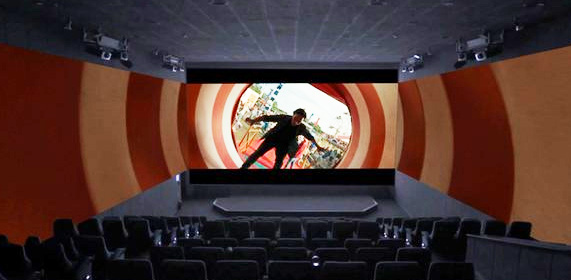
He Event Cinema It is also largely associated with immersive cinematic experiences. The greatest current example could be the projection of V-U An Immersive Concert Film in it The Sphere from Las Vegas, a show broadcast in 16K with immersive sound, vibrations in each seat and lighting effects.
“If you make a study of the rooms, and you look at how it has worked, for example, Minecraft in Kinépolis Paterna, you can realize that They haven't sold much more in the 4DX room”.
Spain has already taken its first steps in this direction hand in hand with the global phenomenon of K-Pop, a product that combines music, experience and technology. This is how Cazorla explains it: "Six years ago, with the first event we had, which was for BTS, we were amazed by the size of this event. These bands are ultimately merchandising products, and behind their management There are even companies that develop technology. “They are the ones who have brought ScreenX side display technology to the world.”
This innovation that generates a 270º immersive experience which in Spain coexists with other cinematographic technology proposals such as IMAX o 4DX, is barely found in “six or seven” Spanish rooms. However, even away from your applications Event Cinema, are not having a great response from viewers: “If you do a study of the theaters, and you look at how it has worked, for example, Minecraft in Kinépolis Paterna, you can realize that they have not sold much more in the 4DX room,” explains Cazorla, adding that Spain still has a pending issue with the most standard “image and sound” technologies.
The necessary (and improbable) technological evolution of the rooms
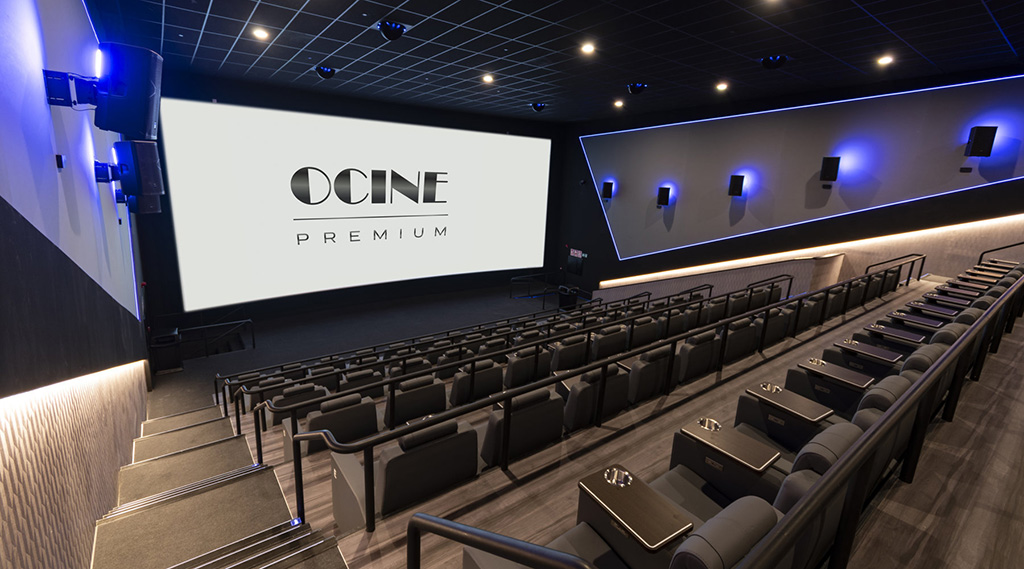
The E.wind Cinema can continue to develop without the need for first-class innovations in cinemas, although it is true that an improvement in the technical conditions of cinemas can help provide spectacularity and immersion to their proposals. “In Spain, only international chains such as Yelmo, Kinépolis and Cinesa, and the Spanish Ocine, which have made a commitment to sound with Dolby Atmos, are the ones that are making a strong investment in technological reconversion,” says Cazorla.
“In Spain, only international chains like Yelmo, Kinépolis and Cinesa, and the Spanish Ocina, which have made a commitment to sound with Dolby Atmos, are the ones that are making a strong investment in technological reconversion”
For the most part, these chains are prioritizing the improvement of your stalls and opting for premium models, often leaving the updating of projection and sound solutions for later. Furthermore, there is not much room to reinvest income, since a large scale renovation It would be an effort in a context of falling spectators: "When you attend meetings of the Federation of Exhibitors in Spain you see everyone pessimistic, because they see that they had 10% less than last year, when they are already coming from low figures."
He event Could it be the solution to fill movie theaters again? Does the consolidation of this model involve increase the spectacularity of experience with first-class technology? There are unknowns to be answered, but there is certainty that can be shared by anyone who has experienced the rise of the world of consumption on demand: "If in your home you have a window open to the world through the platforms, when you are going to get a ticket to the cinema and touch your wallet, you have to think about where you are going. And where you are going is where you are guaranteed an infinitely greater experience than the one you have at home."
A report by Sergio Julián Gómez
Did you like this article?
Subscribe to our NEWSLETTER and you won't miss anything.
Related articles
 Five tips to ensure security in remote audiovisual production
 Cleanfeed Cinema debuts at NAB 2024 to ensure synchronous remote collaboration in film and TV
 Manifesto takes its first steps to guarantee technological training in broadcast
 Apollo Kinas cinemas are born with the latest projection and audio technology from Christie
 The European Union will defend a common position to guarantee access to radio space at WRC-23
 AVOD, key to the survival of video on demand
 Mercedes chooses Blackmagic's Cinema Camera 6K Pro for its latest campaign
 'What you give me', Pau Donés's last talk with Jordi Évole, hits theaters
 Definitive agreement in the European Union to guarantee free Internet access points
 Eurovision will deploy IP Flex technology to guarantee the signal during voting at the Festival
 José Antonio Sánchez presents five strategic points in Parliament to guarantee the viability of RTVE
 Globosat selects Tektronix equipment to guarantee 4K signal coverage at the World Cup
 'Being digital: Survival manual for converts to electronic culture'
 Anevia proposes a solution to guarantee quality and optimize expenses in OTT services