





El nuevo Centro de Conservación y Restauración de la Filmoteca Española, al detalle
El secretario de Estado de Cultura acompañado por el director de Filmoteca Española, José María Prado, y el arquitecto Víctor López Cotelo inauguran una obra que, ubicada en la Ciudad de la Imagen de Madrid, ocupa una superficie de 15.429m² y ha supuesto una inversión de 23,6 millones de euros.
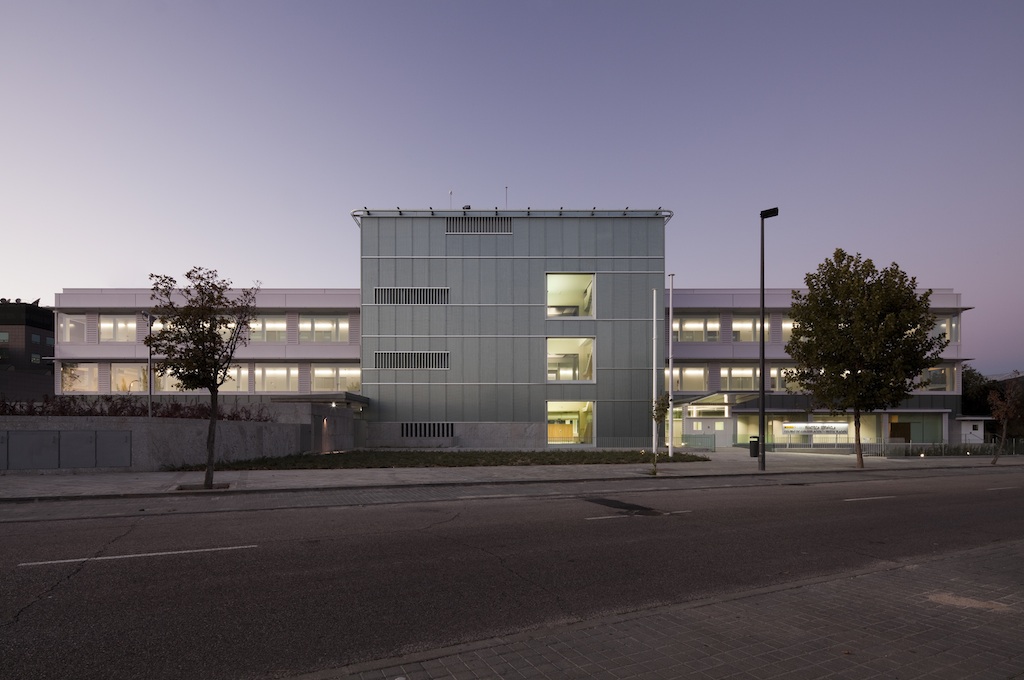
El secretario de Estado de Cultura, José María Lassalle, ha presentado el nuevo Centro de Conservación y Restauración de la Filmoteca Española, ubicado en la Ciudad de la Imagen. La obra ha supuesto una inversión de 23.609.382 euros.
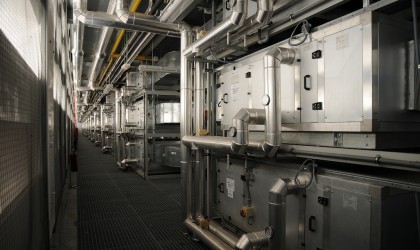
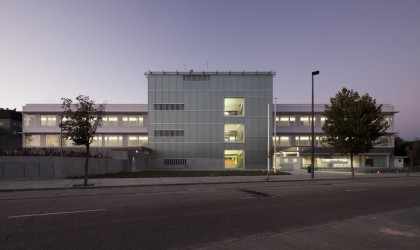
El Centro se ha levantado sobre una parcela de 8.118 m²; la superficie total construida es de 15.429 m², de los que 9.885 están bajo rasante, conformando tres grandes plantas destinas a las más modernas instalaciones de almacenamiento, distribuidas en archivos, servicios técnicos y administrativos e instalaciones de climatización, conocidas como “Vagón de climatización”.
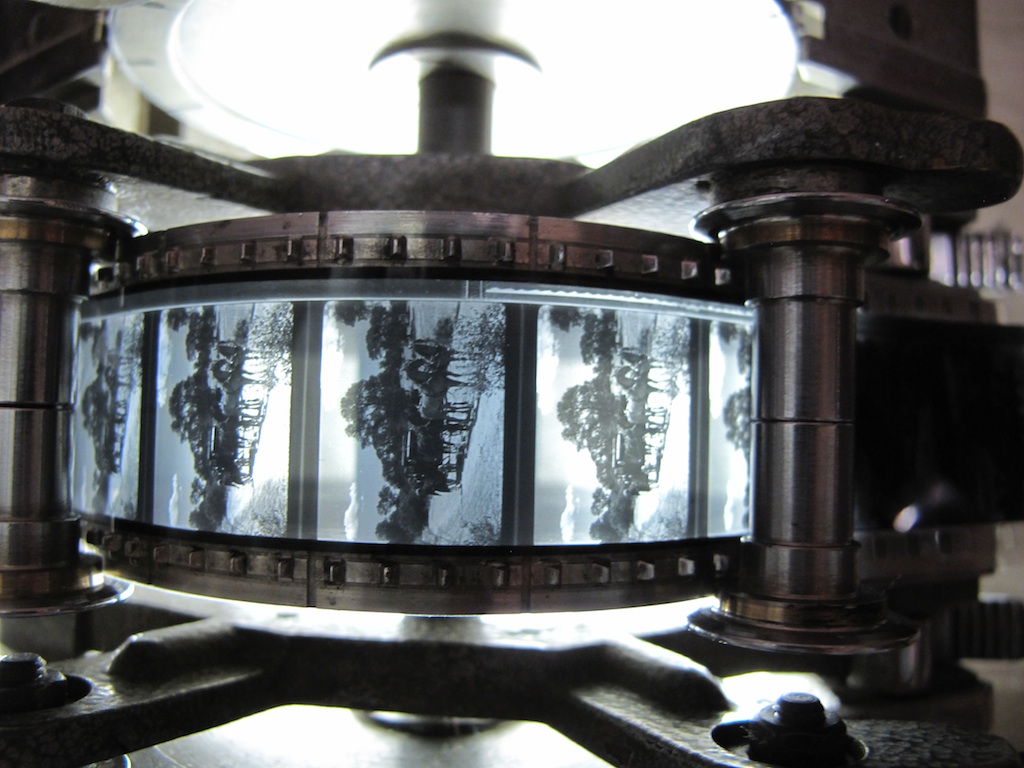
Fondos fílmicos
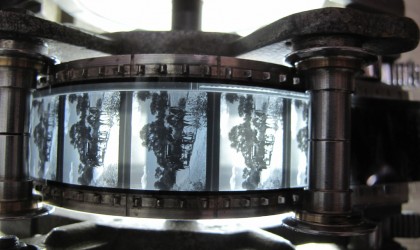
En su conjunto, se trata de unas modernas instalaciones dedicadas a la conservación, restauración y recuperación de los fondos documentales de nuestra cinematografía, además de contenedor de las colecciones más importantes o significativas del patrimonio filmado. Entre ellas destacan las colecciones Sagarminaga y Tramullas, que guardan películas realizadas desde 1896 a 1908, la primera, y desde 1910 a 1927, la segunda.
A estos fondos, se suman los archivos filmados sobre la Guerra Civil española, el Archivo del No-Do, la colección Daniel Jorro (de reportajes rodados en 16 milímetros entre los años 1930-1955), las colecciones procedentes de la Escuela de Cine (EOC), de cine amateur (realizadas por cineastas aficionados en 8, Súper 8, 9,5 y 16 milímetros), los fondos de Turespaña y de la ‘Sección Femenina’, las colecciones en vídeo de TVE referentes al programa La noche del cine español, con todas las entrevistas a personalidades relevantes de la cinematografía española, realizadas por Fernando Méndez-Leite. A todas estas colecciones se suman los archivos de los ministerios de Agricultura, Educación y Cultura, Exteriores, Defensa, Economía y embajadas con departamento de cine, así como de empresas, Universidades, cine-clubs y festivales de cine.
Es importante destacar que los productores de películas españolas que han recibido algún tipo de ayuda otorgada por organismos oficiales están obligados, desde 1964, a entregar una copia a la Filmoteca Española para su conservación, lo que ha supuesto un gran avance para la conservación del patrimonio fílmico español, que de otra manera acabaría destruido.
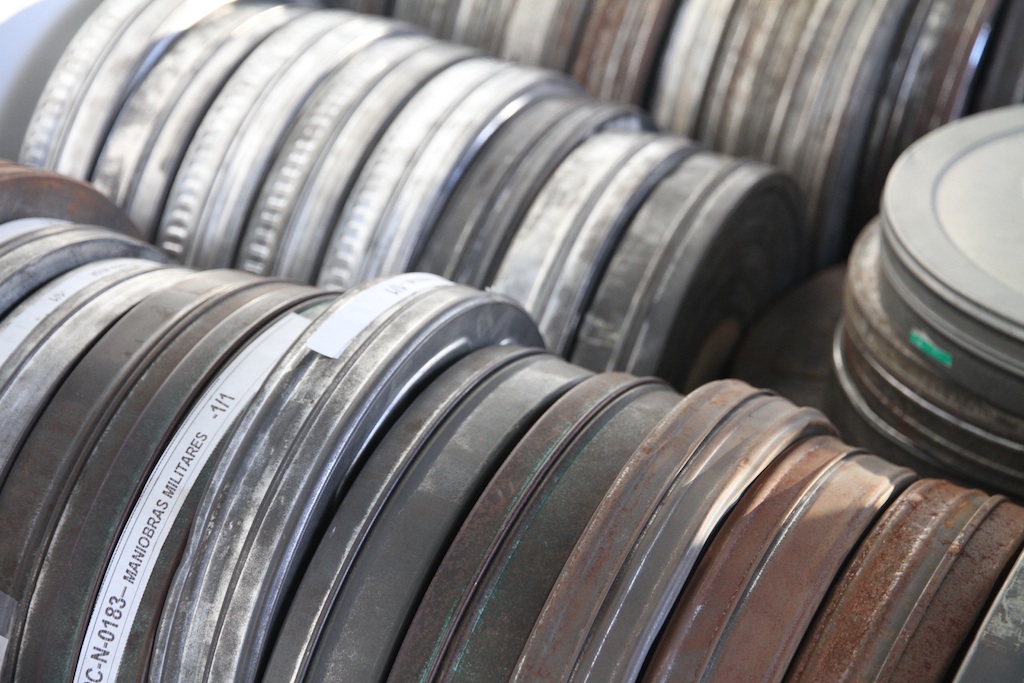
Cinco años de trabajos
Las instalaciones del CCR se han construido sobre dos parcelas, cedidas por la Comunidad de Madrid, en el término municipal de Pozuelo de Alarcón, comenzando las obras en octubre de 2009, siendo terminadas tres años después (octubre de 2012). La presentación del Centro se ha pospuesto hasta que las instalaciones han estado totalmente equipadas y operativas, tal y como ahora es el caso.
En 1999, la Filmoteca Española promovió la contratación del proyecto para el CCR, que finalmente fue adjudicado al equipo encabezado por el arquitecto Víctor López Cotelo. El proyecto se redactó y aprobó en el 2000, y la Gerencia de Infraestructuras y Equipamiento del Ministerio de Cultura, que coordinó su edificación, se adjudicó a la empresa VIAS en 2009.
Con este gran equipamiento, la Filmoteca Española ha podido reunir sus fondos y archivos desperdigados por diferentes ubicaciones. Además cuenta con una edificación anexa y subterránea, conocida como “Voltio”, donde se conservan los soportes inflamables de nitratocelulosa, triacetato y poliéster, que exigen condiciones especiales de almacenamiento y seguridad.
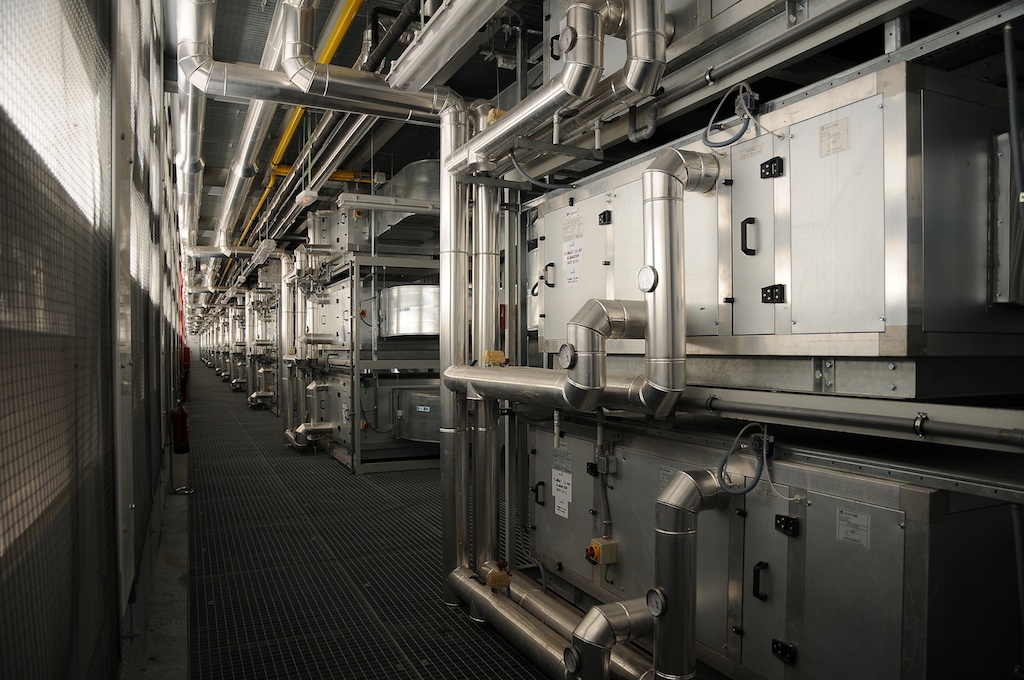
El Votio
El bloque de archivos constituye el núcleo del proyecto. Enteramente subterráneo, para garantizar su aislamiento del terreno, este bloque ha sido concebido como una caja dentro de otra caja, estando la caja interior totalmente separada de la exterior por un conjunto de cámaras de aire de más de un metro de anchura. Estas cámaras se utilizan para el paso de los conductos del aire acondicionado y, si fuese el caso, se podrían utilizar para la evacuación de humos, en caso de incendio, o para mantener permanentemente la ventilación en condiciones de fallo muy prolongado del suministro eléctrico.
Atendiendo a sus características para la conservación, los 36 almacenes que alberga este bloque están clasificados en 7 archivos.
En el nivel más profundo del bloque de archivos, el 3°’ sótano se sitúan los archivos números 2 y 3, para materiales fotoquímicos de color y blanco y negro, exclusivamente reservados para preservación y restauración de las obras cinematográficas.
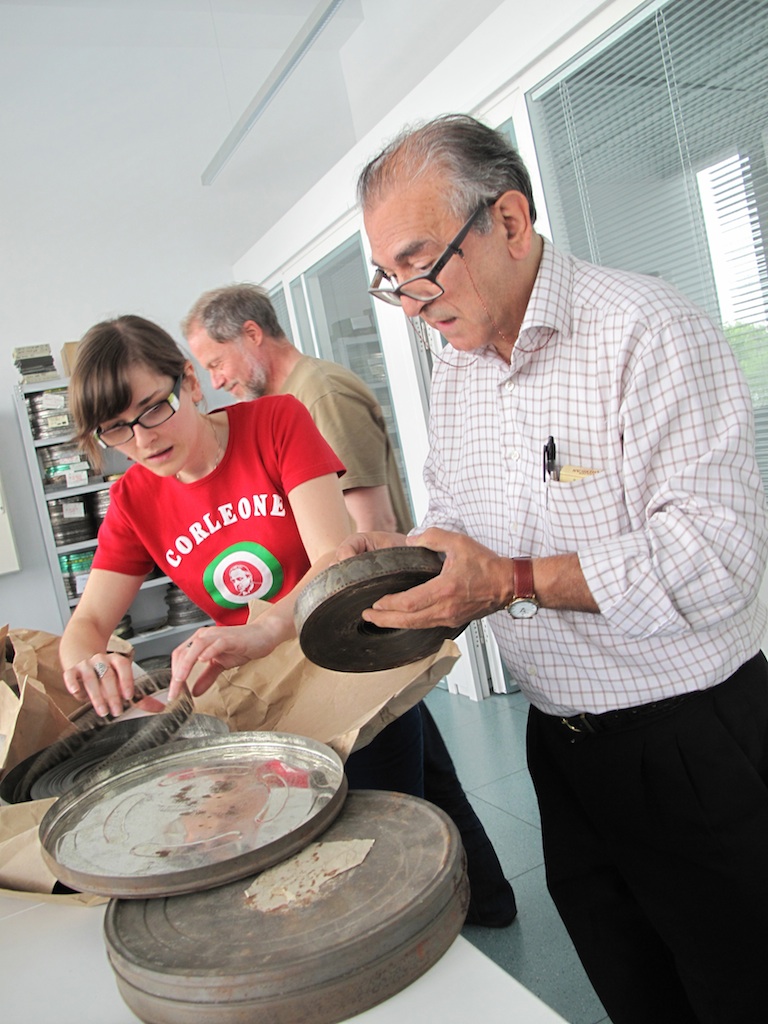 El Archivo 2, con siete almacenes para materiales color, está climatizado para 5°C y 30% de humedad relativa. Los cinco almacenes del Archivo 3, para materiales en blanco y negro, están preparados para 10°C de temperatura y 35% HR.
Los archivos 4 y 6 se reservan para materiales de reproducción y copias de reserva o de uso restringido.
En el Archivo 4, para color, cuenta con cinco almacenes a 10°C de temperatura y 35%HR. El Archivo 6, también con cinco almacenes, se destina a materiales en blanco y negro, situándose a 15°C y 35-40% de humedad relativa.
Pero, hoy día los archivos fílmicos se enfrentan a un gran problema: la degradación de los soportes de acetato por la disociación del ácido acético.
Experiencias desarrolladas por el Instituto de Permanencia de la Imagen de Rochester, han determinado que la congelación llevaba a cabo con los materiales que han alcanzado el nivel de degradación 2, manteniendo un protocolo correcto en cuanto a la ventilación y humectación, ralentiza considerablemente el citado proceso de degradación, el síndrome del vinagre.
En el sótano 2, el Archivo 5 está destinado a las películas afectadas por el síndrome de vinagre que se conservaran en condiciones de congelación, a -5°C de temperatura. Dispone de dos almacenes, uno en funcionamiento y otro corno reserva.
En el nivel superior, 1°’ sótano, se ubicarían los archivos 7 y 8 para copias de uso y materiales magnéticos y digitales.
El Archivo 7, se destina a copias fotoquímicas de uso en proyección, de color y de blanco y negro, y el Archivo 8 a materiales magnéticos. Cada uno de estos archivos dispone de seis almacenes, preparados para 15° de temperatura y a 40-45% de humedad.
En los vestíbulos de cada planta, junto con las comunicaciones verticales y otras instalaciones necesarias para el archivo, existen cámaras de acondicionamiento para la realización de los protocolos de entrada y salida de las películas. En todos los archivos, excepto en los de congelación, el sistema está calculado para renovar completamente el aire 24 veces al día.
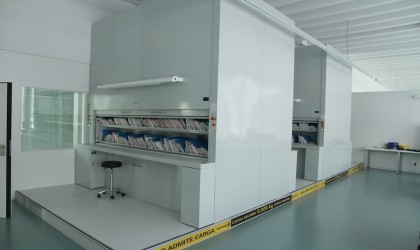
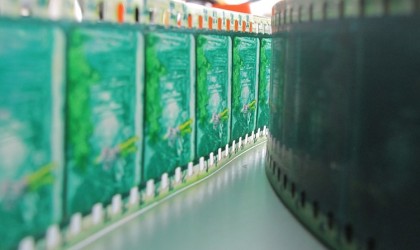
Los almacenes para materiales fotoquímicos disponen de estanterías móviles, compactables, con una capacidad teórica de 38.000 rollos de película por almacén. Los almacenes para materiales magnéticos y digitales y los destinados a soportes con degradación acética tienen estanterías fijas y una capacidad de 20.000 rollos por almacén.
El bloque de servicios técnicos, administrativos y de comunicaciones se desarrolla en tres plantas situadas en el lado sur del Centro. En la Planta baja, junto con los servicios generales y de control, la Jefatura de Fondos Fílmicos, las oficinas de mantenimiento y Administración se encuentra el Área de movimiento y circulación de materiales que registra la entrada y salida de los rollos y cintas de película que integran los Fondos Fílmicos del CCR. En este espacio se ha situado un almacén de 250 metros cuadrados para la clasificación de entrada de películas; el conocido como Almacén de Tránsito.
Áreas de trabajo
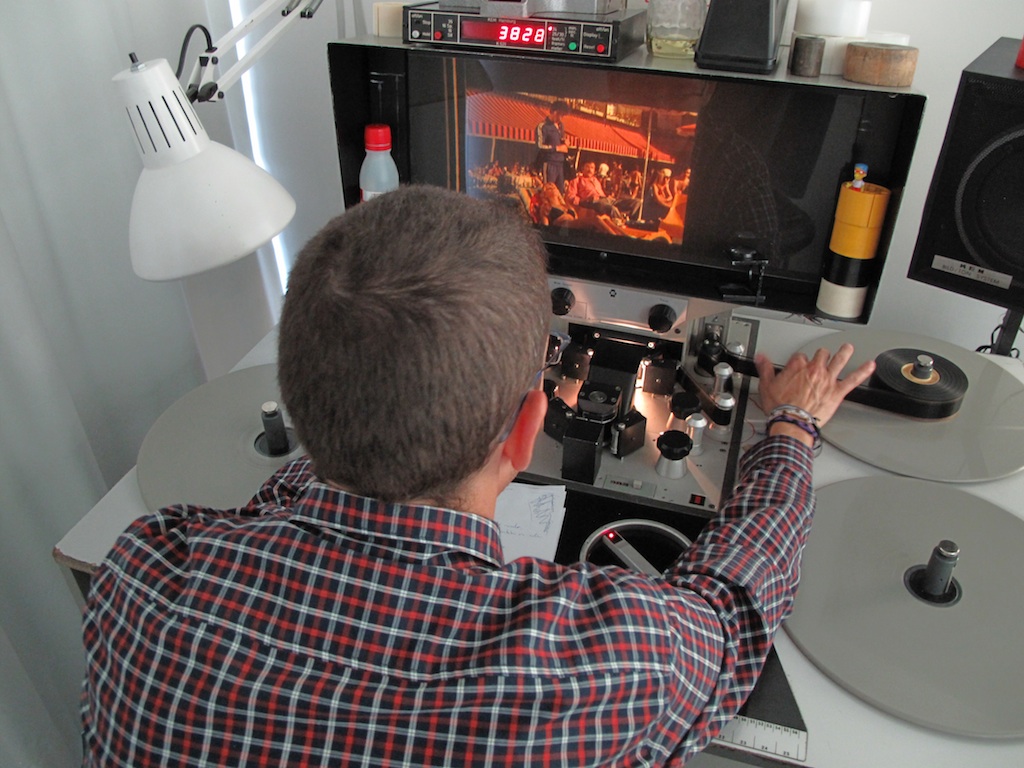
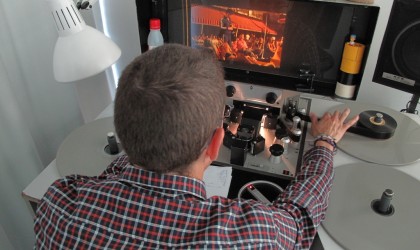
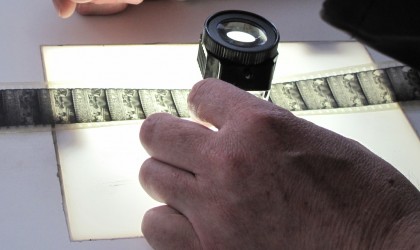
En la primera y segunda planta del complejo se ubican el Departamento Recuperación, cuya función principal es la localización, inventario e identificación de materiales; el Departamento de Inspección Técnica, donde se controlan y catalogan los materiales, elaborando pormenorizados informes de visionado y revisión, con especial atención a los materiales ingresados en los archivos en concepto de Ayudas de la Administración a la Producción cinematográfica y los reproducidos por encargo en laboratorios; y el Departamento de Documentación y Etiquetado, que se ocupa de gestionar las bases de datos de los títulos y documentos audiovisuales que componen el catálogo de Filmoteca Española además de custodiar en los archivadores y armarios rotarios toda la documentación en soporte papel vinculada a los fondos fílmicos. Se gestionan más de 35.000 expedientes con información relativa a derechos, procedencias, acuerdos de colaboración, informes de visionado,…
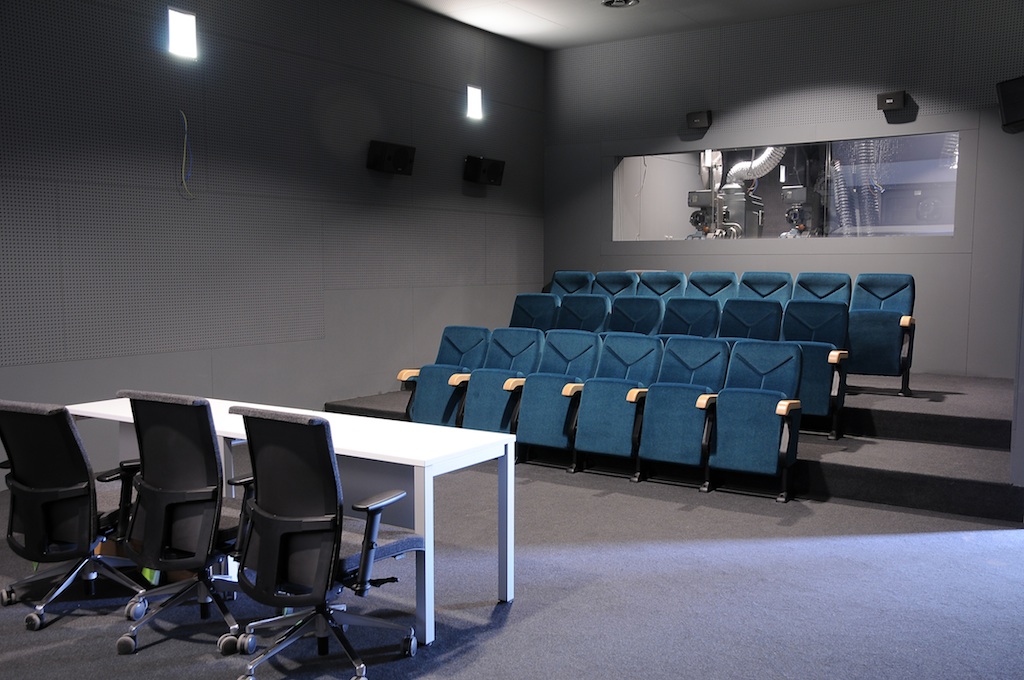
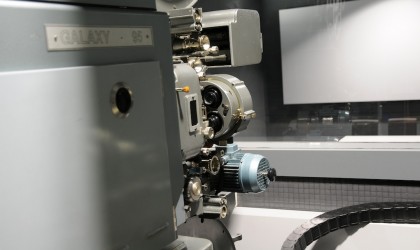
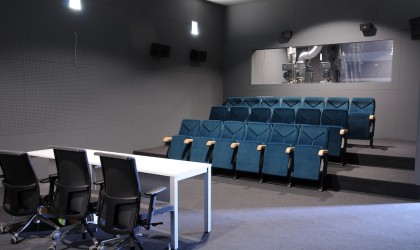
La instalación cuenta con una pequeña sala de proyección equipada con proyectores de 35mm, 16mm y un proyector digital que permite controlar la calidad de las reproducciones y restauraciones
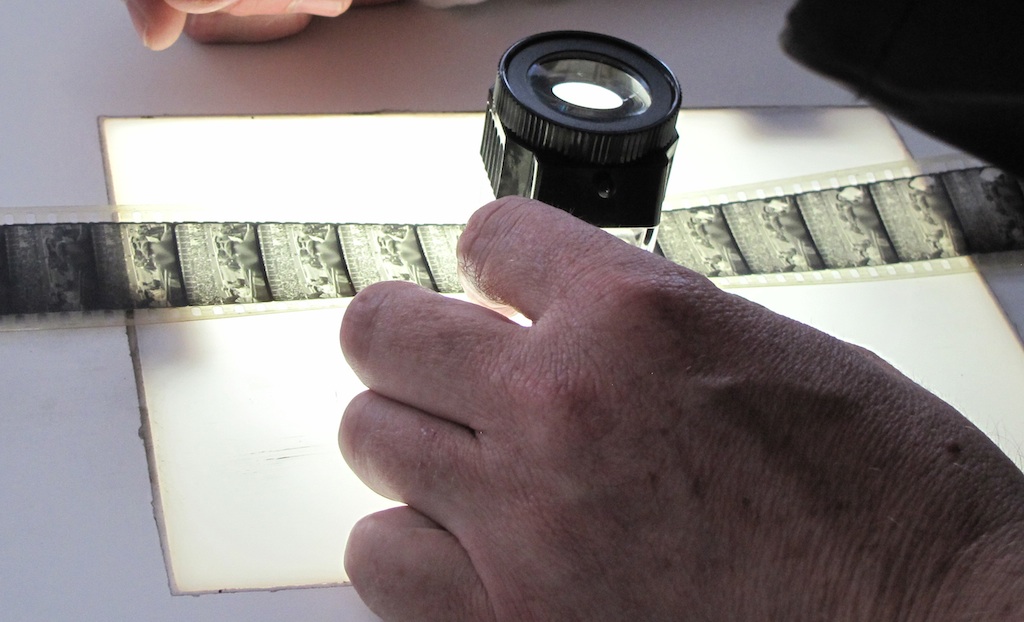
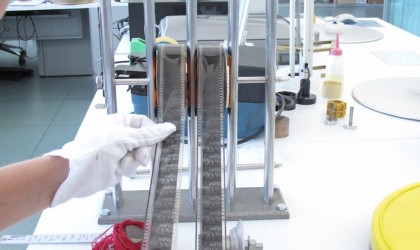
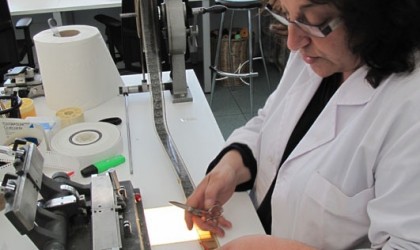
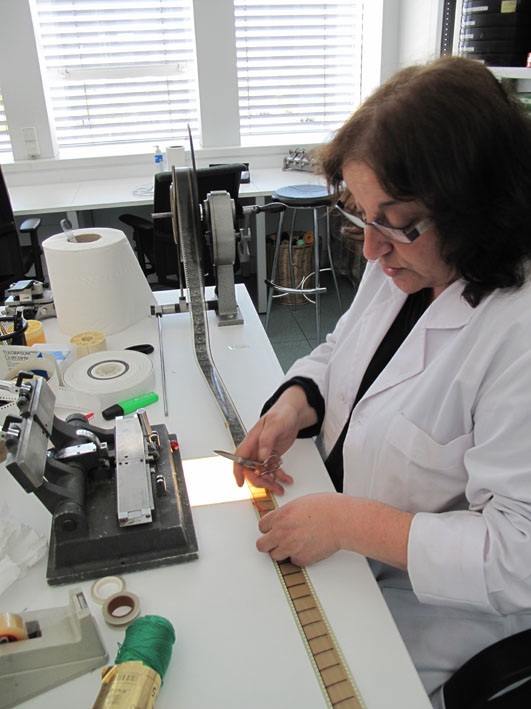 En la segunda planta se sitúan el Departamento de Investigación y Restauración, donde se examinan con detalle los materiales primigenios del archivo, estableciendo también las comparaciones de diferentes materiales para futuras reproducciones. En esta área, entre otras tareas, se desarrollan las colaboraciones con Instituciones públicas o privadas; el Departamento de Restauración física, donde se preparan los materiales fotoquímicos para su proyección o entrada en laboratorio, reparando, en la medida de lo posible, su deterioro; y el Laboratorio fotoquímico y electrónico-digital, que permiten reproducir en soportes electrónicos y archivos de datos, materiales fotoquímicos y electrónicos que así lo precisen así como identificar y catalogar los novedosos materiales electrónicos y digitales que impone la Industria.
Todas las áreas del CCR participan en el estudio monográfico de las diferentes colecciones que integran los Fondos Fílmicos de Filmoteca Española.
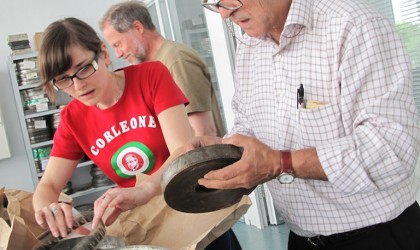
La formación de becarios, estudiantes en prácticas, personal temporal y la participación en programas reglados de enseñanza superior de grado y postgrado se diversifica por las diferentes áreas del CCR. La formación en técnicas de conservación y restauración de materiales fílmicos sólo se puede recibir aquí ya que no existe ningún centro reglado en el que se imparta esta capacitación. Aquí se han formado grandes profesionales que están trabajando en los distintos archivos fílmicos del mundo.
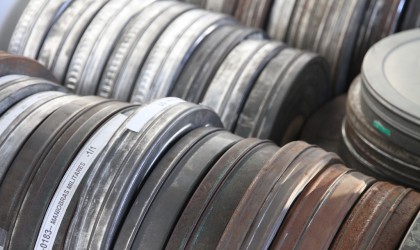
Con una capacidad teórica de almacenamiento cercana al 1.200.000 de rollos de película, actualmente los almacenes del CCR albergan más de 300.000 envases. Cuando se termine el traslado de los materiales almacenados en la sede de Alcalá de Henares, el total de envases en el CCR será de 600.000.
Los archivos del CCR están perfectamente acondicionados para alojar las más de 40.000 obras audiovisuales que componen el catálogo de títulos de Filmoteca Española. Los almacenes dan cobijo también a los aproximadamente 83.000 rollos de película de la Colección No-Do, y 124.170 documentos audiovisuales en soporte fotoquímico, de los cuales 53.654 son materiales de preservación, que corresponden a 173.655 envases. El resto son copias de proyección y otros materiales. Además, alberga 77.955 documentos audiovisuales en soporte electrónico y 1.027 en formato digital.
Donde duerme el cine
En primer lugar, es importante destacar que, a partir de 1964, los productores de películas españolas, tanto de largometraje como de cortometraje, que han recibido algún beneficio económico otorgado por los organismos oficiales debían entregar una copia a la Filmoteca Española para su conservación. Depósito que se hace obligatorio desde el año 1990, lo que ha supuesto un gran avance para la conservación del cine español.
A partir de 1976, el nuevo equipo que se iba formando, tanto en Madrid como en Barcelona, constató que se había producido una destrucción sistemática de las películas españolas anteriores a 1954. Los contactos con los profesionales y la industria sirvieron para determinar las principales causas de esta destrucción: el soporte donde se impresionaban era nitrato, material inflamable muy peligroso de manipular y de almacenar. Consecuencia de ello fueron los incendios sufridos en los laboratorios Arroyo, Cinematiraje Rieja y Madrid Film, en los años 40, 50 y 60, donde se guardaban gran número de negativos de películas españolas. Esta peligrosidad en el almacenamiento y la falta de interés comercial para muchos productores, trajo como consecuencia la destrucción masiva de los negativos supervivientes de estos incendios.
Para facilitar y conseguir una mayor eficacia en la recuperación de películas españolas perdidas, se desarrolló una serie de trabajos concretos como desarrollar un inventario de películas españolas rodadas, consultando libros, revistas, anuarios y otros medios; incorporar al inventario los negativos, dup-negativos, copias y otros materiales existentes, tanto en Filmoteca, como depositados en otros almacenes: laboratorios españoles, TVE, coleccionistas, distribuidoras, productoras, Ministerios y otros organismos oficiales; y recopilar información sobre los materiales de películas españolas en otros archivos extranjeros (filmotecas, laboratorios…).
Gallery
(click on any photo to start the carousel - scroll right and left by clicking on the arrow)
Did you like this article?
Subscribe to our NEWSLETTER and you won't miss anything.
Related articles
 El ICAA honra a Carlos Saura dando su nombre al Centro de Conservación y Restauración de Filmoteca
 Filmoteca Española gestionará sus colecciones con tecnología de Axiell
 Spanish Film Archive celebrates one hundred years of Juan Mariné with an annual cycle
 ‘Buñuel restaurado’, en Filmoteca Española
 The Cine Doré of the Spanish Film Archive celebrates thirty years
 Filmoteca Española rinde homenaje a su primera bibliotecaria, Dolores Devesa
 Josetxo Cerdán, nuevo director de la Filmoteca Española
 EducaFilmoteca: Filmoteca Española intentará acercar el cine a los jóvenes
 El Cine Doré y el Centro de Conservación y Restauración celebran el Día Mundial del Patrimonio Audiovisual
 Cultura opta por un perfil administrativo para la dirección de la Filmoteca Española
 Carlos Reviriego, nuevo director adjunto de Filmoteca Española
 The Secretary of State for Culture meets with the staff of the Filmoteca Española
 RTVE y Filmoteca Española ponen a disposición del público, por vez primera, el archivo completo de NO-DO
 Trigital instala el nuevo laboratorio digital de la Filmoteca Española