





ARTE unites horror and art in 'Haunted Places' with solutions from Blackmagic Design
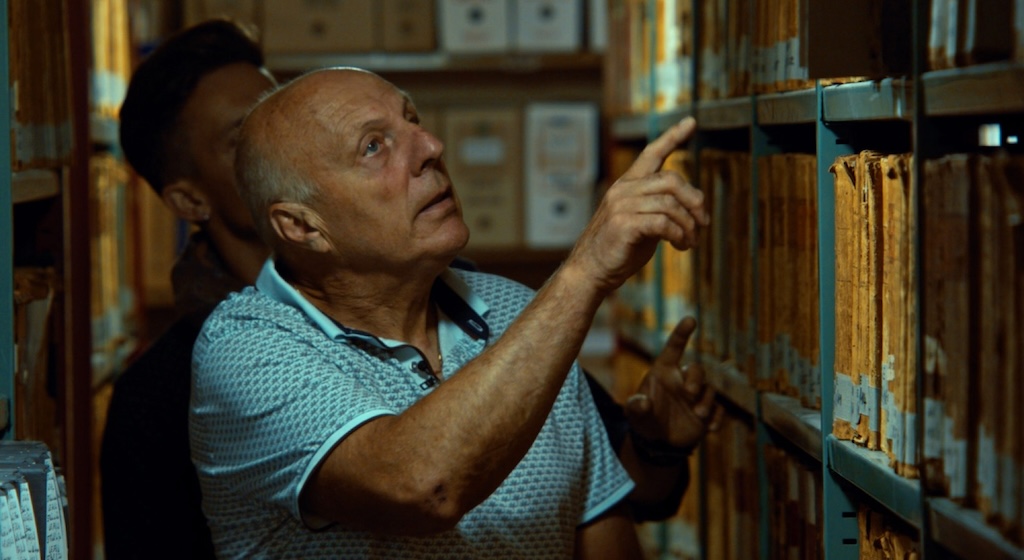
‘Haunted Places’, la nueva serie documental de Mineworks Film to ART, encargada por Saarländischer Rundfunk (SR) y Hessischer Rundfunk (HR), emplea soluciones de Blackmagic Design.
El director y director de fotografía de la serie, Frank Mirbach, destaca que “el rodaje principal se llevó a cabo entre el otoño de 2023 y el verano de 2024, con la posproducción en paralelo para su entrega a finales de 2024. Algunas grabaciones, especialmente en Luisiana y Rumanía, se pospusieron debido al clima y a retrasos en los permisos. A pesar de ello, la posproducción de los dos primeros episodios siguió su curso y ambos están listos para su emisión”.
El uso de la cámara digital URSA Mini Pro 12K y Blackmagic RAW permitió a Mineworks Film mantener un equipo reducido sin comprometer la calidad de la imagen. «La configuración compacta de la cámara y los controles intuitivos redujeron considerablemente el tiempo de configuración e iluminación. El rodaje en 8K Blackmagic RAW logró un equilibrio entre la flexibilidad en la posproducción (reencuadre, estabilización) y un tamaño de datos manejable, lo que era especialmente importante para la producción de documentales con muchas localizaciones”.
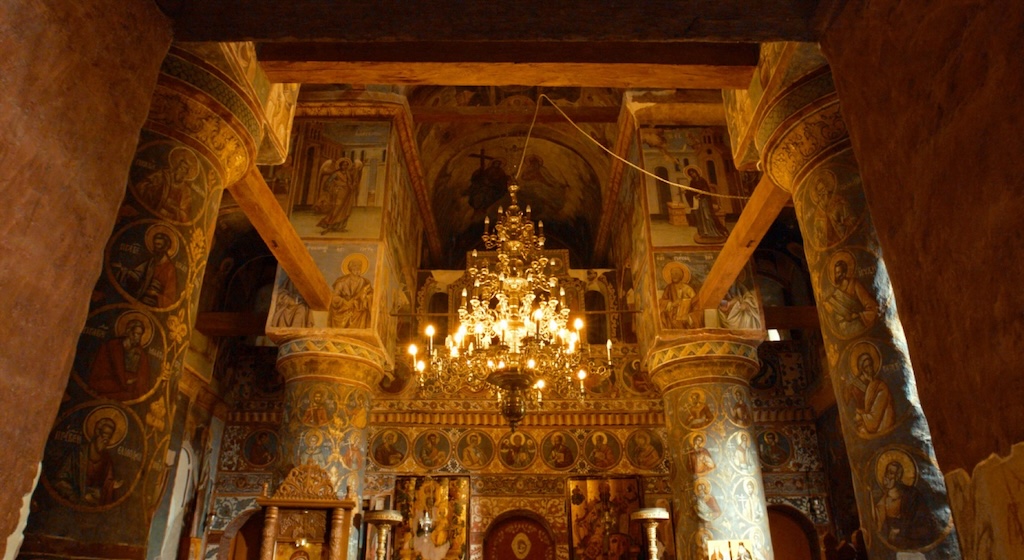
Almacenar el DIT
La producción promedió entre una y dos horas de metraje al día, a menudo en lugares remotos. Al finalizar, el DIT del set clonó los medios en DaVinci Resolve Studio en dos destinos: un sistema SanDisk ProBlade y un dispositivo de almacenamiento en red Blackmagic Cloud Store Mini de 8 TB. “Este flujo de trabajo garantizó tanto la redundancia como la disponibilidad inmediata para el equipo de posproducción”, señala Mirbach.
Además, añade que “los originales de nuestra cámara se almacenaron en el Cloud Store Mini, con proxies generados automáticamente mediante la aplicación Blackmagic Proxy Generator, y luego se sincronizaron a través de Blackmagic Cloud con los editores en Alemania. A continuación, se montaron los cortes preliminares en DaVinci Resolve Studio utilizando esos proxies y, una vez cerrado el corte, volvimos a vincularlos al 8K Blackmagic RAW para la gradación, el acabado y la entrega”.
“Día a día, confiamos en Blackmagic Cloud Store, Blackmagic Cloud sync y el intercambio de proyectos de DaVinci Resolve», afirma Mirbach. “Con equipos y editores en diferentes lugares, esa combinación ayudó a acortar la distancia. Podíamos intercambiar escenas, compartir archivos de proyectos en directo y mantener ciclos de retroalimentación cortos mientras aún estábamos en el lugar”.
El principal reto de la serie era la abundancia de localizaciones, protagonistas e historias interesantes. “Había mucho material, pero el tiempo de emisión era limitado”, explica Mirbach. “Refinamos la historia durante la edición para mejorar el ritmo y la tensión narrativa, con el objetivo de crear una experiencia más atractiva. La edición se realizó en gran parte en paralelo a la producción utilizando Blackmagic Cloud. Con el metraje subido y sincronizado a diario, el equipo de posproducción podía empezar a montar las escenas incluso mientras el equipo trabajaba en el lugar de rodaje”.
It is flujo de trabajo paralelo redujo significativamente los tiempos de entrega y permitió un feedback creativo continuo durante el rodaje. En el proceso de edición, los principales retos radicaban en la gestión de medios en múltiples localizaciones y la coordinación del feedback en diferentes zonas horarias, lo que se simplificó en gran medida gracias a las herramientas de colaboración de Blackmagic Cloud.
Una secuencia en el castillo de Slains, en Escocia, muestra cómo Mineworks Film creó el ambiente. “Abrimos con planos generales de las ruinas envueltas en niebla y los mantuvimos más tiempo del que era cómodo”, sentencia Mirbach. “Ocultamos deliberadamente los diálogos y dejamos que el viento y las olas llevaran la escena. Esperar a revelar a los personajes o las pistas narrativas claras creó inquietud sin un solo efecto visual”.
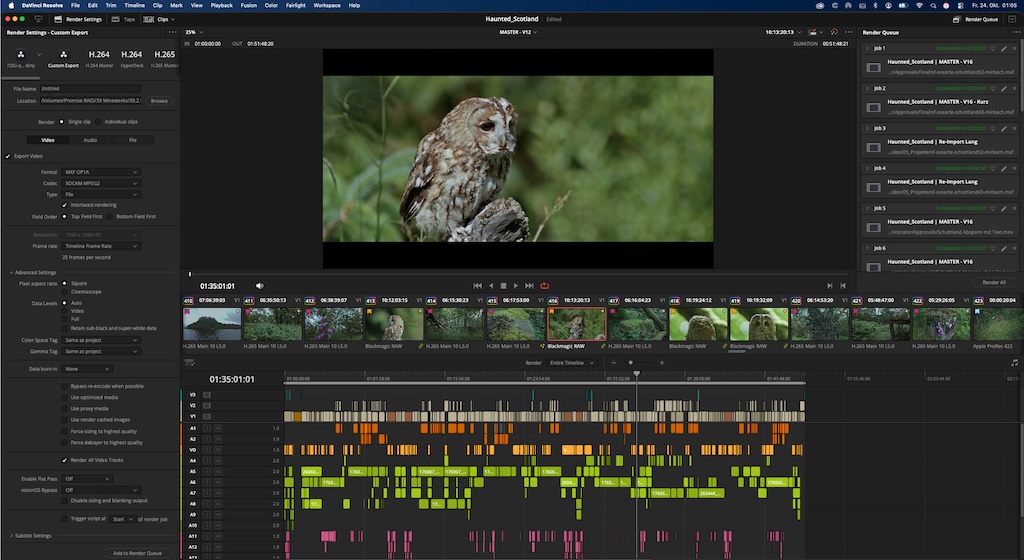
Montaje y etalonaje
Cada episodio fue gestionado inicialmente por un único editor, Frank Glencairn, que se encargó del montaje completo, la sincronización, los metadatos y la preparación del sonido. “Trágicamente, Frank falleció inesperadamente en medio de la posproducción. Sustituirlo fue extremadamente difícil. No solo era un editor excepcional, sino también un amigo íntimo”, reflexiona Mirbach.
A partir de la mitad del episodio de Luisiana, Jonathan Fuß tomó el relevo y demostró ser un sucesor excepcional y digno, lo que permitió a Mineworks Film completar la serie honrando el trabajo y la visión de Frank. “Los archivos del proyecto y los medios continuaron intercambiándose a través de Blackmagic Cloud sync, lo que garantizó la continuidad y una colaboración fluida a pesar de la transición inesperada”, afirma.
The application Blackmagic Proxy Generator, la detección de cortes de escena de DaVinci Resolve Studio y las funciones de colaboración de Blackmagic Cloud permitieron ahorrar mucho tiempo. “El flujo de trabajo automático de proxies mantuvo el proceso offline rápido y estable, mientras que la capacidad de trabajar de forma nativa con archivos Blackmagic RAW sin transcodificación y compartir archivos de proyecto a través de la nube agilizó la colaboración y simplificó significativamente el acabado”, afirma.
La línea de tiempo de cada episodio se versionó y etiquetó dentro de DaVinci Resolve Studio utilizando etiquetas y marcadores de color. “En lugar de depender en gran medida de los efectos visuales tradicionales, utilizamos secuencias asistidas por IA para ciertos efectos y mejoras», dijo Mirbach. «Las notas y las instrucciones se compartieron directamente a través de las herramientas de comentarios integradas en Resolve, lo que eliminó la necesidad de hojas de cálculo externas o seguimiento manual”.
Los editores encargados de ARTE, HR y SR revisaron los cortes preliminares a través de Resolve, dejando notas con códigos de tiempo para Mineworks Film. “A continuación, abordamos esos comentarios en Resolve y los incorporamos sin necesidad de largas cadenas de correos electrónicos”, señala.
Cada episodio se entrega en 4K UHD (3840×2160) en versiones graduadas y sin texto, junto con pistas de audio estéreo para emisión. “Todo el etalonaje y la masterización se completaron en DaVinci Resolve Studio, manteniendo un flujo de trabajo totalmente nativo de Blackmagic desde el rodaje hasta la entrega”, afirma Mirbach.
Las versiones de 43 minutos de los dos primeros episodios, Dracula’s Transylvanian y Die Bestie von Gévaudan, están ya disponibles en ARTE Mediathek.
Did you like this article?
Subscribe to our NEWSLETTER and you won't miss anything.
Related articles
 ‘Blindsided’: a horror experience powered by Blackmagic audio and solutions
 The Art Institute of Chicago opens to the world with a cinema look and Blackmagic Design
 The era of deepfake, revealed with solutions from Blackmagic Design
 Joseph Kahn's new horror film 'Ick' was shot and finished with Blackmagic Design solutions
 Rockets inaugurates virtual studio with Blackmagic Design solutions
 EWTN Hungary renews its studio with solutions from Blackmagic Design
 PBS shoots and grades ‘When We Were Shuttle’ with solutions from Blackmagic Design
 Blackmagic Design Solutions Bring Horror Movie 'Alone With You' to Life
 The Japanese production company Kan-Nari relies on Blackmagic Design solutions
 ESL reinforces its eSports production studios with Blackmagic Design solutions
 Hibino launches into virtual production with 12G solutions from Blackmagic Design
 Summer billboard benefits from Blackmagic Design solutions
 Blackmagic Design solutions allow the 'Shein Together' event to be broadcast
 The Indian Formula 1 Grand Prix with Blackmagic Design solutions